“The 'uncanny' is that class of the terrifying which leads back to something long known to us, once very familiar.”
— Freud's core definition of the uncanny.

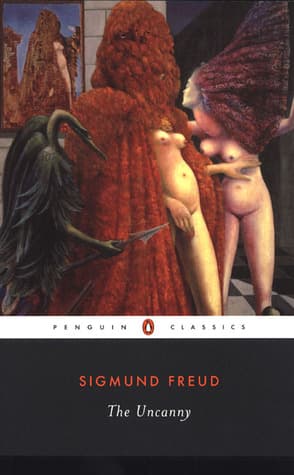
Sigmund Freud (2002)
Genre
Thriller / Fantasy / Mystery / Young Adult
Reading Time
240 min
Key Themes
See below
Sign in to track this book
Freud explores the unsettling familiarity of the 'uncanny,' showing how deep fears and desires can be hidden by trivial memories and imagination.
Sigmund Freud begins 'The Uncanny' by exploring the German word 'unheimlich' and its connection to 'heimlich' (homely, familiar). He notes that 'unheimlich' is not simply the opposite of 'heimlich,' but often includes familiar elements that have been repressed or changed, leading to a disturbing unease. Freud examines how dictionaries define 'heimlich' as both 'belonging to the house' and 'concealed,' suggesting a built-in ambiguity that hints at the uncanny's nature. This initial linguistic exploration sets up his psychological analysis, proposing that the uncanny comes from something once familiar that has become strange.
Freud suggests that the uncanny often happens when something once familiar and comforting, but later repressed, reappears in a troubling way. He highlights how childhood complexes, like the castration complex or the return to the womb fantasy, can resurface in disguised forms, causing dread and unease. For example, a severed limb or a doll that seems too real can trigger these deep anxieties. The essay explores how old beliefs, like animism or the power of thoughts, can also create the uncanny when they seem to be confirmed by reality.
Freud focuses on the double, or doppelgänger, as a strong source of the uncanny. He discusses how the double, originally a protection against the ego's disappearance (like a soul-image), turns into a sign of death when the early self-love that created it fades. Literary examples, such as E.T.A. Hoffmann's 'The Sandman,' show how characters who meet their doubles feel deep discomfort. Freud also explores the uncanny from involuntary repetition, where someone repeatedly encounters the same numbers, situations, or people, leading to a sense of fate and a feeling that something beyond their control is happening, echoing an old belief in the power of thoughts.
A key part of Freud's analysis links the uncanny nature of dolls, automatons, and other lifelike inanimate objects to the castration complex. He discusses Hoffmann's 'The Sandman' in detail, focusing on Olympia, an automaton the protagonist, Nathanael, falls in love with. Freud argues that the anxiety around Olympia, and similar figures, comes from a basic fear related to eyes and the threat of blindness, which he sees as a symbolic stand-in for castration. The uncertainty of whether Olympia is alive or dead, or if her eyes are real, taps into deep anxieties about sexual difference and bodily wholeness, making her deeply uncanny.
Freud explores another form of the uncanny: the unsettling feeling from symbols or situations that bring up the desire to return to the maternal womb. He discusses how enclosed spaces, darkness, silence, or even certain architectural features can unconsciously trigger this basic longing. However, when this desire appears in a context that is no longer comforting or protective, but threatening or suffocating, it creates an uncanny effect. The familiar origin of life, the womb, becomes a source of dread when its symbolic representation suggests entrapment or a return to helplessness, rather than safety.
In his broader work on memory, Freud introduces 'screen memories' as vivid, seemingly unimportant childhood recollections that hide or 'screen' more important, often traumatic or anxiety-causing, earlier experiences. These memories are not simply forgotten but are actively replaced by a trivial substitute. He explains that the feeling tied to the original memory attaches itself to the screen memory, which then becomes unusually clear or vivid. This mechanism lets the person avoid directly confronting the repressed material, yet the act of screening itself hints at something deeper and potentially unsettling beneath the surface, adding to the uncanny feeling when these disguised elements reappear.
Freud compares the imaginative world of literature to the private world of daydreaming. He suggests that writers, like children playing, create fictional worlds that fulfill their wishes and desires. These literary creations, while often seeming new, are frequently based on the author's own childhood experiences, fantasies, and repressed desires. He argues that the pleasure from reading fiction comes from the author's ability to 'bribe' the reader with aesthetic pleasure, allowing the reader to enjoy their own forbidden fantasies or wishes indirectly, without guilt. This process uses the same psychological mechanisms as daydreaming, making literature a complex form of wish-fulfillment.
Freud explores how writers create the uncanny in their readers. He notes that authors do this by deliberately blurring the lines between reality and fantasy, making the reader question what is real and what is imagined. By presenting events that could be seen as supernatural or coincidental, but offering no clear explanation, writers tap into the reader's old beliefs and repressed anxieties. The literary uncanny often happens when the author suggests that the irrational or magical might be true, unsettling the reader's rational view of the world and allowing repressed fears and desires to surface, creating a strong sense of unease and dread.
In his psychobiography of Leonardo da Vinci, Freud applies psychoanalytic theory to a historical figure for the first time. He carefully examines Leonardo's childhood memories, especially a recollection of a vulture's tail entering his mouth as a baby, interpreting it through early sexuality and the 'vulture fantasy.' Freud connects this memory to Leonardo's artistic themes, his scientific curiosity, and his presumed homosexuality. He suggests that Leonardo's strong drive for knowledge and his artistic genius were partly sublimations of repressed desires and unresolved childhood conflicts, particularly those related to his mother and absent father.
Freud's analysis of Leonardo da Vinci focuses significantly on a single childhood memory Leonardo wrote down: being in his cradle when a vulture came down, opened his mouth with its tail, and struck him many times between the lips. Freud interprets this 'vulture fantasy' as a deeply symbolic expression of a passive homosexual desire, stemming from an early fixation on his mother and the absence of his biological father. He links the vulture, a maternal bird in ancient Egyptian mythology, to Leonardo's complex mother relationship. Freud argues that Leonardo's vast scientific curiosity and artistic output were powerful sublimations of these unresolved early sexual desires, turning them into a relentless pursuit of knowledge and beauty.
The Protagonist
Freud's arc is intellectual, developing and applying his psychoanalytic theories to new domains, from literature to psychobiography.
The Mentioned
N/A
The Mentioned
N/A
The Mentioned
N/A
The Mentioned
N/A
This is the main theme of 'The Uncanny.' Freud argues that the uncanny feeling appears when something once familiar and part of the 'heimlich' (homely, secret) that has been repressed, suddenly returns. This repressed content often comes from childhood complexes, old beliefs, or early experiences that were too disturbing to process consciously. When these elements resurface, they bring dread and unease because they are both familiar (from the unconscious) and alien (to the conscious mind). This is clear in the analysis of automatons like Olympia, which bring up the repressed fear of castration.
“The 'uncanny' is that class of the frightening which leads back to what is known of old and long familiar.”
Freud often links the uncanny to the basic fear of castration. This anxiety, rooted in early childhood experiences and the Oedipus complex, shows up in various symbolic forms within uncanny events. The fear of losing one's eyes, as seen in Nathanael's trauma in 'The Sandman,' is directly interpreted as a stand-in for castration anxiety. Similarly, the unsettling nature of dolls or automatons that seem not fully alive, or appear 'broken,' can tap into this fundamental fear of bodily wholeness and loss, making them deeply unsettling.
“The fear of going blind is often enough a substitute for the dread of castration.”
The uncanny also connects to old beliefs that humanity supposedly overcame with rational thought. Freud suggests that the feeling arises when these ancient ways of thinking—like animism (the belief that inanimate objects have souls), the power of thoughts, or a belief in fate—seem to be confirmed by reality. For example, repeated events can trigger a sense that a higher, irrational power is at play. The sight of a seemingly lifelike doll can briefly reawaken the animistic belief that objects can be alive, causing a brief but deep sense of dread.
“It seems as if the factor of repetition by itself would be enough to transform something into something uncanny.”
The double is a significant source of the uncanny. Originally, the idea of a double or a soul-image protected the ego from disappearing. However, as the ego develops and early self-love fades, the double becomes a terrifying sign of death, a symbol of the uncanny. Encounters with one's double, or characters who are identical to others, create deep psychological disturbance, challenging the person's sense of unique identity and suggesting a loss of self. This is clearly shown through literary examples where characters are haunted by their own reflections or identical figures.
“The 'double' was originally an assurance against destruction, an 'energetic denial of the power of death'.”
In 'Screen Memories' and the Leonardo da Vinci study, Freud explores how repressed desires and unresolved conflicts, especially from childhood, can be turned into productive and creative work. Sublimation is the process where unacceptable impulses become socially acceptable and even highly valued activities, like art or science. Leonardo's strong pursuit of knowledge and his artistic genius are prime examples of sublimation, where his 'vulture fantasy' and early sexual fixations were redirected into intellectual and creative work, showing a complex defense mechanism.
“His sexual life had been arrested at the stage of an infantile investigation, and the greater part of his libido had been sublimated into an urge to know.”
Applying Freudian theory to explain psychological phenomena and art.
Freud consistently employs psychoanalytic interpretation as his primary plot device. He takes seemingly disparate phenomena – linguistic definitions, literary narratives, personal anecdotes, and historical biographies – and subjects them to a rigorous psychoanalytic lens. This involves tracing current psychological states or artistic expressions back to infantile experiences, repressed desires, and unconscious conflicts. For instance, the unsettling feeling of the uncanny is 'interpreted' as the return of the repressed, and Leonardo da Vinci's art is 'interpreted' as sublimation of childhood fixations.
Using fictional texts to illustrate and support psychological theories.
Freud heavily relies on literary analysis, particularly of E.T.A. Hoffmann's 'The Sandman,' to provide concrete examples and compelling illustrations for his abstract psychological theories. By dissecting the plot, characters, and symbolic elements of these stories, he demonstrates how authors, perhaps unconsciously, tap into universal human anxieties and complexes. The fictional narratives serve as case studies, allowing Freud to show his theories in action and make them more accessible and persuasive to the reader, such as using Olympia to demonstrate castration anxiety.
Investigating the origins and nuances of words to reveal deeper psychological meanings.
Freud begins 'The Uncanny' with an extensive etymological exploration of the German word 'unheimlich' and its counterpart 'heimlich.' This device is crucial because it reveals the inherent ambiguity and paradoxical nature of the concept even within language itself. By showing that 'heimlich' can mean both 'homely' and 'concealed,' he lays the groundwork for his argument that the uncanny is precisely that which was once familiar but has become hidden or repressed. This linguistic deep dive provides a foundational, almost 'scientific,' basis for his subsequent psychological analysis.
Applying psychoanalytic theory to the life and work of a historical figure.
In his study of Leonardo da Vinci, Freud utilizes psychobiography as a plot device. This involves reconstructing and interpreting the psychological development of a historical individual based on available biographical data, artistic works, and personal writings. By analyzing Leonardo's childhood memories (like the 'vulture fantasy') and connecting them to his adult pursuits, Freud demonstrates how early experiences and unconscious drives can shape genius and creativity. This device extends psychoanalysis beyond clinical cases to encompass broader cultural and historical figures.
“The 'uncanny' is that class of the terrifying which leads back to something long known to us, once very familiar.”
— Freud's core definition of the uncanny.
“The uncanny is in reality nothing new or alien, but something which is familiar and old-established in the mind and which has become alienated from it only through the process of repression.”
— Explaining the psychological mechanism behind the uncanny.
“The uncanny is not something which is to be contrasted with the beautiful, the sublime, or the charming.”
— Clarifying that the uncanny is a specific type of terrifying feeling, not an aesthetic category.
“We can understand why the uncanny so often concerns something that should have remained hidden but has come into the open.”
— Connecting the uncanny to the revelation of repressed or concealed elements.
“Many people experience the feeling in the highest degree in relation to the uncanny effect of waxwork figures, dolls and automata.”
— Providing examples of common triggers for the uncanny.
“The uncanny is that class of the frightening which harks back to what is known of old and long familiar.”
— A rephrasing of the central thesis, emphasizing the return of the familiar.
“The uncanny arises either when the infantile repressed complexes have been revived by some impression, or when the primitive beliefs we have surmounted seem once more to be confirmed.”
— Two main sources of the uncanny feeling.
“The uncanny is something which is secretly familiar, which has undergone repression and then returned from it.”
— A concise summary of the uncanny's nature.
“The uncanny is, in fact, nothing new or alien, but something which is familiar and old-established in the mind and which has become alienated from it only through the process of repression.”
— Another iteration of the core argument, highlighting alienation through repression.
“The uncanny feeling is not only a subjective experience; it is often produced by specific objective situations.”
— Acknowledging both subjective and objective aspects of the uncanny.
“When we find ourselves in a foreign country, we often experience an uncanny feeling in connection with the language.”
— An example of the uncanny in relation to language and unfamiliarity.
“The uncanny effect of repetition is due to the fact that it reminds us of the 'compulsion to repeat' of the death instinct.”
— Connecting repetition as an uncanny trigger to the death drive.
“The uncanny is related to the return of the repressed, especially concerning primitive beliefs about omnipotence of thoughts, animated objects, and the double.”
— Linking the uncanny to specific primitive beliefs and the concept of the double.
“The feeling of the uncanny is the result of the mind's being confronted with a conflict between two judgments: one that something is alive, and another that it is not.”
— Describing the cognitive dissonance that can lead to the uncanny.
Ready to see how well you understood this book? Take our interactive quiz with 10 questions.
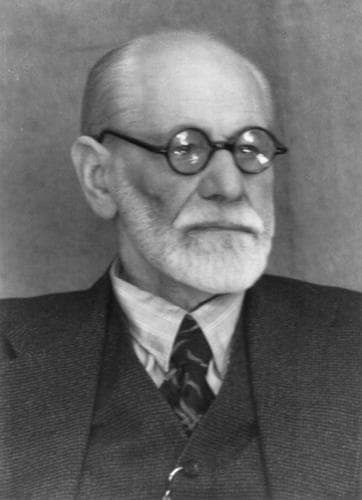
Biography coming soon.







