“The only certainty is that there is no certainty.”
— A reflection on the nature of life and existence.

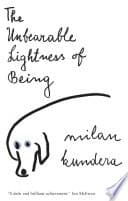
Milan Kundera (2020)
Genre
Literary Fiction / Philosophy / Romance
Reading Time
300 min
Key Themes
See below
Sign in to track this book
After the Prague Spring, a surgeon, his lover, and their friends navigate love, betrayal, and existence, where every choice is final.
The novel introduces Tomas, a successful surgeon in Prague, who lives a life of 'lightness,' marked by frequent, casual sexual encounters. He meets Tereza, a shy waitress from a small town, at a restaurant. Their connection is immediate, though Tomas first sees her as another brief encounter. However, Tereza falls deeply in love and, after a short time apart, moves to Prague to be with him. Tomas, despite his habit of philandering, finds himself drawn to Tereza's sincerity and vulnerability, feeling a new sense of 'heaviness' in their relationship. This meeting and Tereza's move begin their complex, intertwined lives.
Tereza's love for Tomas is all-encompassing, but she struggles intensely with his continued affairs. She is tormented by nightmares, especially one where she sees Tomas with other women, and feels deep humiliation and betrayal. Tomas, while truly caring for Tereza, cannot give up his womanizing, which he sees as a separate, non-emotional part of himself. His inability to balance his love for Tereza with his need for sexual freedom creates constant pain for Tereza and tension in their relationship. This dynamic highlights the main conflict between lightness and heaviness, as Tereza's love brings a weighty commitment that Tomas's nature resists.
Sabina is Tomas's long-term mistress and a painter who values freedom above all else. She actively embraces 'lightness,' finding meaning in betrayal, both of social norms and personal expectations. Her art, which uses paradoxes and breaks down kitsch, reflects her philosophy. She has a deep, complex bond with Tomas, based on shared intellectual curiosity and a mutual understanding of their need for casual physical relationships. Sabina represents lightness, constantly moving, rejecting attachments, and even finding joy in betraying her own past and principles, which she sees as a path to true freedom.
Franz, a respected and serious Swiss professor, becomes Sabina's lover. He represents 'heaviness,' taking everything seriously and seeking deep meaning and commitment. He admires Sabina's artistic freedom and unconventional spirit, believing her to be a revolutionary. However, his understanding of her is ultimately his own desire for depth and meaning projected onto her. Sabina, true to herself, eventually finds Franz's sincerity and desire for commitment stifling. She leaves him suddenly, a betrayal that devastates Franz and reinforces her philosophy of lightness and constant movement, leaving Franz to cope with his idealized image of her.
The story moves to the historical setting of the 1968 Prague Spring, a time of liberal reform in Czechoslovakia, followed by the Soviet invasion. Tomas, seeing tanks in the streets, feels he must write an editorial criticizing the new regime, giving up his neutral stance. Tereza, a photographer, bravely documents the invasion, capturing images of resistance and suffering, which she later smuggles out of the country. This political upheaval forces the characters to make difficult choices, showing how personal lives connect with major historical events. The invasion marks a turning point, threatening their freedoms and forcing a possible exile.
After the Soviet invasion, Tomas and Tereza flee to Geneva for refuge. Tereza finds work as a photographer but struggles with the language barrier and feeling out of place. Tomas, however, adapts more easily, even resuming his affairs, which deeply hurts Tereza. Despite the new setting, the basic tension in their relationship continues. Tereza, wanting stable, exclusive love, feels increasingly isolated and depressed. Her despair reaches a point where she believes she is holding Tomas back, leading her to make a drastic decision.
Overwhelmed by her unhappiness in Geneva and her inability to accept Tomas's infidelities, Tereza returns to Prague with her dog, Karenin, leaving Tomas behind. Her departure causes Tomas a deep personal crisis. He realizes the depth of his love for Tereza and the 'heaviness' she brings to his life, a weight he now finds he cannot live without. Torn between the lightness of his free life in Geneva and the unbearable weight of missing Tereza, Tomas makes the crucial decision to give up his successful career and return to Czechoslovakia, knowing it means facing political repression and a much lower quality of life.
Upon his return to Prague, Tomas immediately faces consequences for his earlier political writing. The communist regime pressures him to retract his views and sign a loyalty statement. Tomas, driven by quiet but firm integrity, refuses. As a result, he loses his medical license and is forced to take on increasingly low-level jobs, first as a window cleaner, then as a truck driver. This fall from a celebrated surgeon to a manual laborer is a direct result of his adherence to his principles, showing the high cost of moral conviction in a totalitarian state.
Seeking to escape the constant surveillance and pressure of Prague, Tomas and Tereza move to a collective farm in the countryside. Here, their lives are simpler, without intellectual pursuits or social standing. Tomas drives a truck, and Tereza works with animals. Despite their reduced circumstances, they find a new, though fragile, sense of peace and closeness. Tomas's infidelities mostly stop, and Tereza finds comfort in caring for the farm animals, especially Karenin. This period represents a different kind of 'heaviness,' one of shared struggle and quiet domesticity, a sharp contrast to their earlier turbulent life.
Karenin, Tomas and Tereza's beloved dog, gets cancer. His suffering and eventual death become a main focus for the couple, bringing them closer in shared grief. Tereza devotes herself to nursing him, and Tomas also shows deep affection for the dog. Karenin's death is a poignant moment, symbolizing life's fragility and the deep bonds that form, even with animals. For Tereza, Karenin represents unconditional love and loyalty, a sharp contrast to her struggles with Tomas's human nature. His passing highlights the preciousness of unique, unrepeatable moments.
Franz, still searching for meaning and purpose after Sabina's departure, joins a humanitarian march to Cambodia. He seeks to align himself with noble causes and find the 'grand march' of history. During the march, he is brutally attacked and later dies from his injuries. His death is a tragic result of his earnest idealism and his inability to grasp the complexities and inherent 'lightness' of the world. His story contrasts with Sabina's, showing the dangers of taking everything too seriously and the ultimate pointlessness of seeking absolute meaning.
The novel ends with Tomas and Tereza driving to a nearby town for a dance. Their truck is in an accident, and they both die. Their deaths, though seemingly accidental, feel inevitable and mark a final, shared embrace of their 'heavy' love. In their last moments, they find a deep sense of peace and belonging together, free from the external pressures and internal conflicts that had troubled their lives. Their end, though tragic, solidifies their bond and leaves a lasting impression of their unique, intertwined existence.
The Protagonist
Tomas evolves from a detached philanderer to a man who chooses love and principle over personal comfort, embracing the 'heaviness' of shared life and political conviction.
The Protagonist
Tereza moves from a state of insecurity and torment over Tomas's infidelities to finding a fragile peace and accepting the 'heaviness' of her love and life, even in diminished circumstances.
The Supporting
Sabina remains largely consistent in her embrace of lightness and betrayal, finding freedom in constantly shedding attachments and refusing to conform.
The Supporting
Franz's arc is one of unfulfilled idealism, culminating in a tragic death while seeking a grand, meaningful cause.
The Supporting
Karenin's arc is one of unwavering loyalty and love, culminating in a poignant death that deeply affects Tomas and Tereza, solidifying their bond.
The Mentioned
The Narrator's arc is less about personal development and more about the evolving exploration and articulation of the novel's central philosophical themes.
This main theme explores the contrast between a life lived without consequence or ultimate meaning ('lightness') and a life burdened by responsibility, commitment, and fate ('heaviness'). Tomas initially embraces lightness through his frequent affairs, seeing it as freedom. Tereza, however, experiences love and loyalty as a deep heaviness, suffering greatly from Tomas's lightness. Sabina embodies lightness through her constant betrayal and rejection of sentimentality, while Franz represents heaviness through his earnest idealism and search for grand meaning. The novel suggests that both extremes have their own forms of suffering and beauty, and characters often move between them, as seen when Tomas gives up his career to return to Tereza, choosing heaviness.
“The heavier the burden, the closer our lives come to the earth, the more real and true they become. Conversely, the absolute absence of burden causes man to be lighter than air, to soar into the heights, take leave of the earth and his earthly being, and become only half real, his movements as free as they are insignificant.”
The novel deeply examines the complex relationship between love, sexual desire, and fidelity. Tomas separates love (for Tereza) and sex (with other women), arguing they are distinct. Tereza, however, cannot separate them, viewing Tomas's affairs as profound betrayals of their love. Sabina has a more detached view of sex, using it to express her freedom and challenge norms. The characters' struggles highlight social and personal pressures around fidelity, the pain of jealousy, and the search for true connection amid conflicting desires. Their relationships show that love is rarely simple and often involves significant suffering.
“Love is the renunciation of strength, the abdication of power. In short, it is humility.”
Kitsch, defined as the absolute denial of anything unpleasant in life, is a recurring theme, especially through Sabina's artistic and philosophical view. Sabina actively seeks to betray kitsch, finding freedom in rejecting sentimentality, conformity, and idealized versions of reality. This theme extends to political kitsch, where the communist regime creates a false, idealized image of society. Betrayal, for Sabina, becomes an act of authenticity and a way to escape the oppressive weight of conformity and the illusions of kitsch. Her art often aims to dismantle and expose the kitsch in everyday life and political rhetoric.
“Kitsch causes two tears to flow in quick succession. The first tear says: How nice to see children running on the grass! The second tear says: How nice to be moved, together with all mankind, by children running on the grass! It is the second tear that makes kitsch kitsch.”
The historical setting of the Prague Spring and the Soviet invasion deeply affects the characters' lives, showing how major political events collide with individual destinies. Tomas's refusal to retract his political views costs him his career and freedom, while Tereza's brave photography during the invasion puts her life at risk. The regime's attempt to control thought and expression forces characters to make difficult choices between personal safety and moral integrity. The novel explores how totalitarianism erodes personal freedom, forcing individuals to adapt, resist, or flee, and how even seemingly apolitical lives are shaped by political realities.
“A person who lives in a country where the only way to survive is to lie, a person who is forced to choose between telling the truth and keeping his job, is living in a country where there is no freedom.”
The novel often explores the separation and intertwining of the body and the soul. Tomas's philosophy of womanizing is based on the idea that sexual encounters are purely physical, separate from the love he feels for Tereza. He sees his body as distinct from his soul, allowing him to pursue multiple women without feeling unfaithful to his emotional bond. Tereza, however, finds this distinction impossible, experiencing her body and soul as linked, making Tomas's infidelities deeply painful. This theme explores the question of a person's true self – whether it's their physical actions, emotional attachments, or a combination of both, and how these aspects contribute to their 'lightness' or 'heaviness'.
“The soul is what makes the body different from all other bodies.”
The narrator frequently pauses the story to delve into philosophical concepts.
The narrator regularly interrupts the chronological plot to present philosophical essays and reflections on the nature of lightness, heaviness, kitsch, betrayal, and the eternal return. These interjections are not just commentary but integral to the novel's structure, exploring the intellectual underpinnings of the characters' actions and motivations. They provide a framework for understanding the broader existential questions Kundera is posing, inviting the reader to engage with the ideas as much as with the narrative. This device blurs the line between fiction and philosophical treatise.
A Nietzschean concept used to explore the significance (or insignificance) of single events.
Kundera introduces Nietzsche's concept of eternal return – the idea that everything that happens has happened before and will happen again endlessly. He then immediately refutes it, stating that because human life is unrepeatable ('einmal ist keinmal' – one time is no time), every choice and event holds an 'unbearable lightness.' This device serves as a foundational philosophical premise, highlighting the unique, unrepeatable nature of existence and the weight (or lack thereof) that this bestows upon human actions and relationships. It underscores the preciousness and fragility of each moment, as there are no second chances.
Tereza's dreams reveal her subconscious fears and anxieties.
Tereza's recurring dreams and nightmares serve as a powerful psychological device, revealing her deepest fears, insecurities, and the trauma she experiences from Tomas's infidelities. Her dream of women parading nude around Tomas, or her feeling of being reduced to a mere body, vividly externalizes her emotional pain and sense of humiliation. These dreams are not just narrative embellishments but offer profound insights into her subconscious, providing a window into her soul that words alone cannot convey. They also foreshadow future events and reinforce the novel's themes of betrayal and vulnerability.
The narrator openly discusses the creation of the characters and their motivations.
The narrator frequently steps out of the story to discuss his own role as the creator of the characters, explaining why he chose certain traits for them or why a particular event unfolded. This metafictional device draws attention to the constructed nature of the narrative, reminding the reader that they are engaging with a work of art rather than pure reality. It allows the narrator to offer direct insights into the characters' inner lives and the philosophical dilemmas they embody, making the reader a co-conspirator in the exploration of ideas rather than just a passive observer of events.
“The only certainty is that there is no certainty.”
— A reflection on the nature of life and existence.
“Human time does not turn in a circle; it runs ahead in a straight line. That is why man cannot be happy, because happiness is the result of repetition.”
— A contemplation on the linear nature of time and its impact on human happiness.
“Love is the renunciation of strength, the giving up of all defenses.”
— A definition of love as vulnerability and surrender.
“We can never know what to want, because living only one life, we can neither compare it with our previous lives nor perfect it in our future lives.”
— A musing on the uniqueness of each life and the inability to learn from past experiences.
“The heaviest of burdens crushes us, we sink beneath it, it pins us to the ground. But in the love poetry of every age, the woman longs to be weighed down by the man's body. The heaviest of burdens is therefore simultaneously an image of life's most intense fulfillment.”
— A famous paradox exploring the 'lightness' and 'heaviness' of being, particularly in love.
“Making love with a woman and sleeping with a woman are two utterly different passions. Love does not make itself felt in the desire for copulation but in the desire for shared sleep.”
— Tomas's distinction between physical intimacy and emotional connection.
“A person who longs to leave the place where he lives is an unhappy person.”
— A simple yet profound observation about contentment and belonging.
“Kitsch causes two tears to flow in quick succession. The first tear says: How nice to see children running on the grass! The second tear says: How nice to be moved, together with all mankind, by children running on the grass!”
— A critical definition of kitsch as a second, self-admiring tear.
“The only true love is a love that is not afraid to show its weakness.”
— A statement on the nature of genuine love and vulnerability.
“What happens but once, says the German proverb, might as well not have happened at all. If we have only one life to live, we might as well not have lived at all.”
— A reflection on the ephemeral nature of a single life, without repetition or comparison.
“She was a child of the country, and the country was always there, in her eyes, in her skin, in the way she moved.”
— A description of Tereza's connection to her rural origins.
“The brain is an organ of love. The heart is an organ of survival.”
— A provocative re-evaluation of the roles of the brain and heart in human experience.
“To cast a spell on a man is to give him a taste of what he is missing.”
— Sabina's perspective on attraction and desire.
“Fidelity, compassion, trust, forgiveness. The entire vocabulary of love.”
— A listing of the essential components of love, often challenged by the characters.
Ready to see how well you understood this book? Take our interactive quiz with 10 questions.
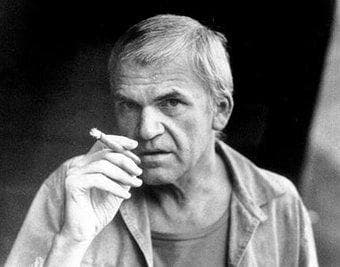
Milan Kundera is a Czech-born French writer. Kundera went into exile in France in 1975, acquiring citizenship in 1981. His Czech citizenship was revoked in 1979 and restored in 2019. He "sees himself as a French writer and insists his work should be studied as French literature and classified as such in book stores".







