BookBrief
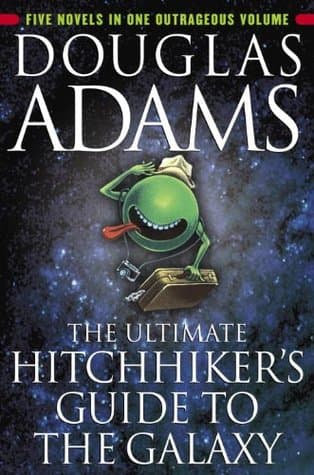
The Ultimate Hitchhiker's Guide to the Galaxy cover
Archivist's Choice

The Ultimate Hitchhiker's Guide to the Galaxy

Douglas Adams (1996)

Genre

Fantasy / Science Fiction

Reading Time

1200-1600 min (approx. 20-27 hours)

Key Themes

See below

Track Your Reading

Sign in to track this book

Arthur Dent, a perpetually confused human, navigates the cosmos with an odd crew, avoiding galactic demolition, existential dread, and the constant search for a good cup of tea, armed only with a towel and an unreliable digital guide.

Synopsis

Arthur Dent's ordinary Thursday turns extraordinary when his house, and then Earth, is destroyed for a hyperspace bypass. His alien friend, Ford Prefect, a writer for 'The Hitchhiker's Guide to the Galaxy', saves him. They begin a series of strange adventures across the cosmos, meeting Zaphod Beeblebrox, a two-headed ex-President of the Galaxy; Marvin, a depressed robot; and Trillian, a human woman. Their journey includes finding the planet Magrathea, eating at the Restaurant at the End of the Universe, stopping a war by the Krikkiters, and finding the answer to 'Life, the Universe, and Everything'. Arthur is often lost, confused, and wanting tea, as he deals with galactic bureaucracy, philosophy, and the universe's randomness, searching for a place to belong amid chaos.
Reading time
1200-1600 min (approx. 20-27 hours)
Difficulty
Medium
Pacing
Fast
Mood
Hilarious, Absurdist, Witty, Existential, Chaotic
✓ Read this if...
You enjoy absurd humor, philosophical musings disguised as jokes, and a sprawling, unpredictable space opera.
✗ Skip this if...
You prefer straightforward plots, serious science fiction, or easily digestible narratives.

Plot Summary

The Demolition of Earth

Arthur Dent, an ordinary Englishman, wakes to find his house about to be demolished for a bypass. Before he can fully process this, his friend Ford Prefect reveals he is an alien from Betelgeuse and a writer for 'The Hitchhiker's Guide to the Galaxy'. Ford explains that the Vogons, a notoriously bureaucratic and unpleasant alien race, are about to demolish Earth for a hyperspace bypass. Despite Arthur's protests, the Vogons arrive, and Earth is destroyed. Ford saves himself and Arthur by hitchhiking onto a Vogon constructor fleet ship just seconds before the planet's destruction, starting their involuntary journey through the galaxy.

Escape from the Vogon Ship and the Heart of Gold

After being found by the Vogon captain, Prostetnic Vogon Jeltz, Arthur and Ford are forced to listen to awful Vogon poetry, then thrown into space to die. By chance, they are picked up by the 'Heart of Gold', a spaceship with the Infinite Improbability Drive, stolen by Ford's semi-cousin, Zaphod Beeblebrox, the two-headed, three-armed ex-President of the Galaxy. On board, they also find Trillian (Tricia McMillan), an astrophysicist Arthur once met, and Marvin, a very depressed robot. Zaphod is on a mysterious quest, driven by a deep urge he does not understand.

The Search for Magrathea

Zaphod's quest leads them to Magrathea, a planet fabled to have built planets for the wealthy. Despite warnings from the planet's automated defense system, they land. Inside, they find a large, dormant planet-building industry. They meet Slartibartfast, an old Magrathean designer, who reveals that Earth was not destroyed for a bypass. Instead, it was a supercomputer built by the Magratheans for a highly intelligent pan-dimensional race (mice) to find the Ultimate Question to the Answer of Life, the Universe, and Everything, which is 42.

The Restaurant at the End of the Universe

After escaping the Magratheans and the angry mice, the crew travels to Milliways, the Restaurant at the End of the Universe, to see the final moments of creation. Here, a group of intelligent, but doomed, marketing executives from Squornshellous Zeta pursue them, believing Zaphod holds the key to their salvation. They also meet Hotblack Desiato and his bored bodyguard, Zarniwoop. The group gets separated, and Arthur and Ford are stranded on a prehistoric Earth after an accident with the Infinite Improbability Drive.

Life, the Universe and Everything: Krikkit and the Supercomputer

Arthur, Ford, and Slartibartfast are recruited to stop the Krikkitmen, a xenophobic race who once decided to destroy the universe, from completing their old plan. They learn that the Krikkitmen were trapped in a 'fast time bubble' but are about to escape. The protagonists must get the 'Wikkit Gate', a crucial part, to prevent the Krikkitmen from activating their doomsday weapon. This involves a journey through strange places and meetings with unusual characters, eventually leading them back to Earth's ruins.

The Return to Earth and the Grebulons

Arthur unexpectedly finds himself back on a seemingly intact Earth, eight years after its supposed destruction. He tries to resume a normal life, but strange things, like a sentient fishbowl, suggest something is wrong. He soon discovers that this Earth is a copy, made by the Grebulons, a dim-witted alien race who mistake him for an expert on Earth and its mysteries. He reunites with Ford Prefect, who explains parallel universes and his true return, leading them on another unexpected journey.

So Long, and Thanks for All the Fish

Arthur's return to Earth is brief. He meets Fenchurch, a woman who also experienced a similar 'return' after Earth's disappearance. They fall in love while trying to understand the cosmic joke played on them. Their search leads them to discover that all the dolphins had left Earth before its destruction, leaving a message: 'So long, and thanks for all the fish.' Arthur eventually finds the real Earth, restored by the dolphins, and lives a relatively peaceful life with Fenchurch, thinking his adventures are over.

Mostly Harmless: Random Events and the Guide's Demise

Arthur Dent, now settled on a peaceful, seemingly untouched planet, is enjoying a simple life. However, his calm is broken by the arrival of his daughter, Random Frequent Flyer Dent, the result of a past encounter with Trillian. Random is a rebellious and troubled teenager. At the same time, the Hitchhiker's Guide to the Galaxy publishing company is taken over by the Vogons, who plan to replace the original Guide with a more sinister and manipulative version. This new 'Guide Mark II' can destroy all possible alternate Earths.

The Guide Mark II and the End of All Earths

The Vogons, now controlling the Guide, arrange events to bring all the main characters — Arthur, Ford, Trillian, Zaphod, and Random — to a single alternate Earth. The new Guide Mark II is a sentient, reality-altering device designed to collapse all possible Earths into a single, final destruction. Random, frustrated with her father and the universe, accidentally triggers the final disaster. All remaining versions of Earth, including the one they are on, are destroyed, ending Arthur's long, strange journey and the entire story.

Young Zaphod Plays It Safe

This short story explains Zaphod Beeblebrox's early life and his reputation. It details an event where a hyperspace bypass project threatens an endangered animal species. Zaphod, despite his usual reckless behavior, takes surprisingly careful and manipulative steps to ensure their safety. This shows a more complex and calculating side to his character, proving that even a seemingly irresponsible figure like Zaphod can act with a deeper, though self-serving, goal when needed, hinting at the reasons behind his later actions.

Principal Figures

Arthur Dent

The Protagonist

Arthur transforms from a bewildered bystander to a resigned, if still slightly confused, cosmic traveler, eventually finding temporary peace before a final, inevitable destruction.

Ford Prefect

The Supporting

Ford remains largely consistent, a chaotic good figure who navigates the universe with a blend of nonchalance and survival instinct, always looking for the next adventure.

Zaphod Beeblebrox

The Supporting

Zaphod's arc is less about development and more about fulfilling his pre-ordained destiny, often against his will, remaining a chaotic force throughout.

Trillian (Tricia McMillan)

The Supporting

Trillian adapts to her cosmic life, becoming more independent and adventurous, eventually having a child with Arthur (Random) and navigating the complexities of parenthood in space.

Marvin the Paranoid Android

The Supporting

Marvin remains consistently depressed, a static comedic figure whose suffering is a running gag, eventually reaching his own philosophical end.

Slartibartfast

The Supporting

Slartibartfast serves as a wise, if slightly senile, guide who imparts crucial cosmic knowledge to Arthur, remaining true to his ancient profession.

The Vogons

The Antagonists/Mentioned

The Vogons remain consistently antagonistic, representing mindless bureaucracy and ultimately becoming the architects of the Guide's sinister transformation and the final destruction of Earths.

Random Frequent Flyer Dent

The Supporting

Random struggles with her identity and parentage, eventually becoming a catalyst for the final cataclysm, highlighting themes of generational conflict and cosmic indifference.

Themes & Insights

The Absurdity of Existence

The universe in 'The Hitchhiker's Guide to the Galaxy' is illogical and uncaring. Events happen randomly, bureaucracy wins over reason, and important questions often have meaningless answers (like 42). This is clear in Arthur's constant confusion, the Vogons' arbitrary destruction of Earth, and Zaphod's often illogical motives. The characters constantly try to find meaning in a cosmos that offers none, leading to both humor and existential sadness.

Space is big. Really big. You just won't believe how vastly, hugely, mind-bogglingly big it is. I mean, you may think it's a long way down the road to the chemist's, but that's just peanuts to space.

The Hitchhiker's Guide to the Galaxy

The Search for Meaning and Identity

Arthur Dent, a displaced human, spends the entire series searching for a home, a cup of tea, and an explanation for the universe's chaos. Similarly, Zaphod is on a quest he does not understand, and Marvin seeks a purpose for his intelligence. Even Earth itself was a supercomputer meant to find the Ultimate Question. This theme explores how individuals deal with an uncaring universe, trying to create a purpose or find a place to belong, even if that search is ultimately pointless, as seen when all Earths are finally destroyed.

The Answer to the Ultimate Question of Life, the Universe, and Everything is 42.

Deep Thought

Bureaucracy and Inefficiency

Adams satirizes the widespread and often harmful nature of bureaucracy. The Vogons, with their love of paperwork and rules, are the main example of this theme. They demolish Earth for a hyperspace bypass that could have been easily avoided. This shows how rigid systems and blind obedience to rules can cause terrible results and a lack of empathy. Even the Galactic Government is shown as mostly incompetent and self-serving, further emphasizing that cosmic order is often just cosmic red tape.

Vogon poetry is of course the third worst in the universe. The second worst is that of the Azgoths of Kria. The very worst of all is that of Paula Nancy Millstone Jennings of Greenbridge, Essex, England.

The Hitchhiker's Guide to the Galaxy

Technology and Its Pitfalls

The series shows advanced technology as both amazing and deeply flawed. The Infinite Improbability Drive allows instant travel but often with unpredictable and absurd side effects. Marvin, a highly intelligent robot, is always depressed, showing the psychological cost of advanced AI. The Guide itself, an electronic book, becomes a tool for manipulation and destruction in its Mark II form. This theme explores the double-edged sword of technological progress, where innovation can lead to unexpected problems, existential anxiety, or even total destruction.

I'd make a terrible cup of tea, but I could do a really fantastic job of sorting out the entire galactic economy.

Marvin the Paranoid Android

The Importance of Friendship and Connection

Despite the vast, uncaring, and often hostile universe, the lasting friendships between Arthur, Ford, Trillian, and even Zaphod provide comfort and stability. Their shared experiences and support, however reluctant, help them navigate the absurdities. Arthur's desire for human connection, ending in his relationship with Fenchurch, highlights the basic human need for companionship in the face of cosmic loneliness. These relationships offer a small anchor in the chaotic sea of space.

He knew that at some point of time in the future he would be meeting Ford Prefect again, and that would be a good thing. He just hoped it wouldn't involve any more being thrown out of spaceships.

Narrator about Arthur Dent

Plot Devices & Literary Techniques

The Hitchhiker's Guide to the Galaxy (the book)

A ubiquitous electronic encyclopedia and survival manual for galactic travelers.

The Guide is a central plot device, serving as both a source of information and a narrative voice. Its entries often provide exposition, humorous footnotes, and philosophical asides that comment on the events of the story and the nature of the universe. It's an unreliable narrator, full of contradictions and biases, but essential for understanding the setting. Its later iteration, the 'Guide Mark II', becomes a powerful and sinister tool for manipulating reality, driving the plot towards its final apocalyptic conclusion.

The Infinite Improbability Drive

A propulsion system that allows instantaneous travel by passing through every conceivable point in every conceivable universe simultaneously.

This device is the primary means of interstellar travel for the 'Heart of Gold'. It functions by generating highly improbable events, allowing the ship to cover vast distances instantly. As a plot device, it introduces unpredictable and often absurd elements into the narrative, such as turning missiles into petunias or creating a whale, leading to humorous and unexpected twists that propel the characters into new situations and locations. It embodies the series' theme of cosmic absurdity and randomness.

The Supercomputer Earth

The Earth itself was a giant organic computer designed to find the Ultimate Question to Life, the Universe, and Everything.

This revelation provides a major twist, redefining Earth's purpose and the significance of its destruction. It's a grand cosmic joke, as the 'Answer' (42) was known, but the 'Question' was lost. This device highlights themes of existential meaninglessness and the futility of grand quests. It also serves to explain Arthur's inexplicable connection to Earth's fate and his constant displacement, as he is literally a part of the failed experiment.

Parallel Universes/Reality Manipulation

The existence of multiple realities and the ability to alter them.

This device becomes more prominent in the later books, particularly with the introduction of the 'Guide Mark II'. It allows for the return of Earth in 'So Long, and Thanks for All the Fish' and sets up the final, catastrophic events of 'Mostly Harmless'. It enables the narrative to reset or dramatically alter the stakes, suggesting that the universe is not singular but a tapestry of possibilities that can be woven and unraveled, ultimately leading to the collapse of all possible Earths.

Critical analysis

Notable Quotes

Quiz

Test Your Knowledge

Ready to see how well you understood this book? Take our interactive quiz with 10 questions.

10
Questions
~5
Minutes
?
Best Score

Key Questions (FAQ)

The Earth is demolished to make way for a hyperspace bypass, an entirely bureaucratic and indifferent act by the Vogons. This destruction serves as the catalyst for Arthur Dent's journey into space, highlighting the universe's absurd indifference to human existence.

About the author

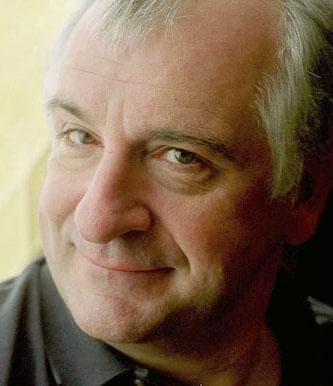
Douglas Adams

Douglas Noël Adams was an English author, humorist, and screenwriter, best known for The Hitchhiker's Guide to the Galaxy. Originally a 1978 BBC radio comedy, The Hitchhiker's Guide to the Galaxy developed into a "trilogy" of five books that sold more than 15 million copies in his lifetime. It was further developed into a television series, several stage plays, comics, a video game, and a 2005 feature film. Adams's contribution to UK radio is commemorated in The Radio Academy's Hall of Fame.