“Drizzt would know and Drizzt would come. She knew it as certainly as she knew that the sun would rise in the east.”
— Catti-brie's unwavering faith in Drizzt's return.

Sign in to track this book
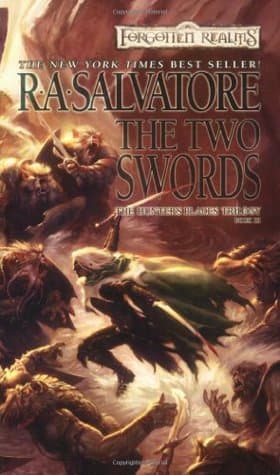
In the trilogy's end, Drizzt Do'Urden uses his twin swords against a huge orc army, fighting for the Forgotten Realms.
The book starts with the desperate defense of Mithral Hall. King Bruenor Battlehammer, Drizzt Do'Urden, and his friends lead the dwarven and human forces against King Obould Many-Arrows's huge army of orcs and giants. The defenders are outnumbered and losing many soldiers. Drizzt, fighting with his scimitars Twinkle and Icingdeath, is a powerful warrior, giving hope but also feeling the battle's heavy cost. Catti-brie, though not a fighter, uses her intelligence to help with plans and offer comfort. The siege is a hard test of strength and bravery for everyone in the dwarven stronghold, with the outcome uncertain.
After weeks of constant fighting and running out of supplies, Mithral Hall's defenses are broken. This happens partly because some dwarven allies were secretly working for Obould. Facing total destruction, Bruenor sadly decides to order a retreat, leaving his home. Drizzt and the Companions of the Hall cover the escape, fighting to protect those leaving. The survivors, a small number of the original defenders, must flee into the dangerous Spine of the World mountains, defeated but still determined. Losing Mithral Hall is a terrible blow, showing the orc king's growing power.
While the main group retreats, Regis the halfling, guided by dreams and wanting his lost magical ruby pendant back, separates from the others. His journey takes him through dangerous lands where he meets Wulfgar, who has been magically forced by the drow wizard Kimmuriel Oblodra to hunt Guenhwyvar. Regis, clever and quick, avoids Wulfgar while trying to understand the barbarian's problem. This side story shows Regis's often overlooked courage and his growing independence as he faces dangers mostly alone, forming a tense partnership with Wulfgar against the hidden controllers.
Wulfgar, under Kimmuriel Oblodra's magic, is forced to hunt Guenhwyvar. He has clear moments where he sees that his actions are wrong and fights the control, but the magic is strong. He is troubled by visions and memories of his past, especially his bond with Drizzt and Catti-brie, which go against his commands. His inner fight is fierce, showing his good nature trying to break through the dark magic. Regis sees this inner battle, understanding that Wulfgar is not acting freely, and tries to help him resist, hoping to free him completely.
After the difficult retreat from Mithral Hall, Drizzt, Catti-brie, and the few remaining forces make their way to the Moonwood, a familiar and once safe place. Here, they hope to gather themselves, care for their wounded, and make a new plan. The loss weighs heavily on them, especially on Bruenor, who feels the defeat deeply. Drizzt, always practical, tries to keep spirits up and focus on future plans, even as he deals with the great suffering he has seen. Catti-brie offers emotional support and good sense, her quiet strength a guide for the tired warriors.
Bruenor, refusing to accept defeat, starts to get help from other dwarven clans and human towns in the area. He travels widely, using his reputation and strong will to convince doubtful leaders to join his fight against the growing orc threat. This involves careful talks, old disagreements, and overcoming long-held biases. While some are convinced by his passionate pleas, others remain cautious of Obould's power and see fighting him as pointless. The process is slow and frustrating, but Bruenor eventually gathers a varied, though loosely connected, army, united by a common enemy.
The new army, led by Bruenor, faces Obould's army on the Plains of Gracklstugh. This battle is huge and messy, with dwarves, humans, and other races fighting together against the many orcs and giants. Drizzt is at the front, his two scimitars a blur, inspiring his allies and causing confusion among the enemy. Catti-brie, though not directly fighting, uses her understanding of strategy to help organize the allied forces. The battle shows the allied races' toughness, but Obould's army is so powerful that victory is not certain, leading to many losses on both sides.
During the intense battle, Wulfgar, still partly under Kimmuriel's influence, is brought near Regis and Guenhwyvar. Being close to his old friends and the fight's intensity, along with Regis's subtle efforts and the ruby pendant's strong magic, allows Wulfgar to finally break free from the drow's control. Angry at being enslaved, Wulfgar turns his strength against Obould's forces. Regis, meanwhile, uses the powerful illusion magic of his ruby pendant to create distractions and confuse the orc ranks, proving his value in the battle, beyond his small size.
In the middle of the chaotic battle, King Bruenor Battlehammer, filled with anger and a desire to get revenge for Mithral Hall, confronts King Obould Many-Arrows. Their duel is epic, a clash of brute force, dwarven strength, and orcish fierceness. Bruenor, though older, fights like a king defending his people. Obould, a strong warrior, matches him blow for blow. The outcome of their personal fight seems to decide the larger war. In the end, through pure determination and a well-aimed strike, Bruenor fatally wounds Obould, ending the cruel orc king's rule and changing the battle's direction.
With King Obould Many-Arrows defeated, his army, discouraged and without a leader, mostly scatters. The allied forces, though tired and smaller, take back Mithral Hall. The victory is mixed with sadness, marked by the many losses during the conflict. Bruenor, though winning, is a changed king, having seen the true cost of war. The companions, reunited, begin the hard work of rebuilding and healing. The experience has made a stronger bond between the different races, and Mithral Hall, though damaged, shows their lasting spirit, now a more welcoming home than before.
Even with victory, Drizzt Do'Urden finds little peace. The large scale of the conflict, the great suffering, and the seemingly endless cycle of violence between races weigh heavily on him. He questions what victory truly means and if lasting peace is possible. His inner thoughts show his ongoing struggle with his drow background and his dedication to his chosen beliefs. He sees the continuing biases and hatred even among the winning allies, realizing that defeating one evil does not remove the chance for others. This time of thought highlights his role as a thinker as much as a warrior.
Throughout the conflict, Catti-brie grows a lot. She moves beyond being just a warrior's companion, showing sharp strategic insight during battles and giving important emotional support to Bruenor and Drizzt. Afterward, she takes a bigger role in healing and making peace, using her calm manner and deep understanding of people to bridge gaps between the different allied groups. Her wisdom becomes a guiding force, helping the survivors deal with their sadness and look toward a more united future. She is a voice of hope and reason, showing the potential for peace and cooperation.
Regis, once seen mostly as a charming rogue and a bit fearful, changes significantly. His solo quest to get his ruby pendant back and his actions in the final battle, where he skillfully used its illusion magic, confirm his new confidence. He is no longer happy to just follow or depend on others. He uses his unique talents and his magical item, understanding that he has an important role among the Companions. This growth makes him a more active and respected member of the group, ready to help in ways beyond just humor or clever theft.
Wulfgar, completely free from Kimmuriel Oblodra's magical control, is left with the scars of his forced actions. He struggles with guilt and the trauma of being controlled, but he also feels great relief and a renewed sense of purpose. His reunion with Drizzt and Catti-brie is emotional, showing their lasting friendship. He begins the slow process of coming to terms with his past, seeking to rebuild his life and his identity as a free man and a warrior of his own will. He is more mature, humbled by his experience, and more thankful for the bonds he shares with his chosen family.
The book ends with the Companions of the Hall, along with the newly allied races, starting the long process of rebuilding and creating a new future. While Obould's immediate threat is gone, the world remains dangerous, and the scars of war are deep. Drizzt, Catti-brie, Bruenor, Regis, and Wulfgar stand together, their bonds stronger because of their difficulties. They face the future with a mix of tiredness and hope, understanding that their journey is not over. The novel ends not with all problems solved, but with a feeling of lasting friendship and a promise to protect their home and each other, no matter what comes.
The Protagonist
Drizzt continually grapples with the weight of conflict, seeking meaning beyond mere victory and reaffirming his commitment to his ideals despite the world's harsh realities.
The Protagonist/Supporting
Bruenor faces the devastation of losing his home and the burden of leadership, ultimately learning to adapt and forge new alliances while retaining his core dwarven spirit.
The Protagonist/Supporting
Catti-brie matures into a wise and influential figure, contributing strategically and emotionally, solidifying her role as a vital leader within the group.
The Supporting
Regis overcomes his fears and insecurities, embracing his unique talents and emerging as a genuinely brave and valuable member of the Companions.
The Supporting
Wulfgar battles and ultimately breaks free from magical control, beginning the difficult journey of reclaiming his identity and reconciling with his past actions.
The Supporting
Guenhwyvar remains a steadfast and vital companion, demonstrating her unwavering loyalty and resilience even when targeted by powerful magic.
The Antagonist
Obould achieves his dream of uniting the orcs and threatens the established order, only to meet his end in a climactic duel, leaving a legacy of chaos and a nascent orc nation.
The Antagonist/Supporting
Kimmuriel's manipulations partially succeed but ultimately fail to achieve his full objectives, leading him to retreat and continue his shadowy schemes.
The Supporting
Pwent fights with unwavering loyalty and ferocity, embodying the dwarven spirit of resistance until his eventual demise in the defense of his home.
The novel clearly shows the terrible results of war, from losing lives and homes to the mental impact on survivors. The attack on Mithral Hall and the battles are described in detail, showing the physical and emotional scars left on Drizzt, Bruenor, and everyone who fought. This theme also looks at the endless cycle of fighting between different races, especially orcs and dwarves/humans, and Drizzt's constant search for lasting peace amid the violence. The story questions if true victory can ever be achieved when the cost is so high.
“And still the blades met, and still the blood flowed, and Drizzt Do'Urden wondered, as he always did, if it would ever truly end.”
Many characters deal with who they are and where they belong. Drizzt, a drow in the surface world, always faces prejudice and tries to define himself by his actions, not his background. Wulfgar's fight against magic forces him to fight for his own will and regain his true self. Bruenor's identity is tied to Mithral Hall, and losing it makes him rethink what 'home' means. The diverse alliance against Obould also explores finding belonging not just within one's own race, but in a wider community formed by shared goals and difficulties.
“He was a drow, and yet he was not. He was Drizzt Do'Urden, and that was all the identity he needed, or perhaps, all he could ever truly claim.”
The novel explores different sides of leadership and the sacrifices leaders make. Bruenor is a king who leads from the front, making hard choices like retreating to save his people, even if it means losing his home. His efforts to gather different allies show the difficulties of uniting varied groups. Drizzt's leadership is more about morals and inspiration, leading by example and carrying the burden of his friends' safety. The story shows that true leadership often involves personal sacrifice, tough decisions, and the ability to inspire hope even in the darkest times, often at a great personal cost.
“A king's burden was not the crown he wore, but the lives he carried on his shoulders.”
The strong bond between the Companions of the Hall—Drizzt, Bruenor, Catti-brie, Regis, and Wulfgar—is a main theme. Their loyalty, support, and willingness to sacrifice for each other are tested repeatedly and ultimately made stronger by difficulties. Even when Wulfgar is magically controlled, the memory of his friends and their bond helps him fight the compulsion. This 'found family' gives emotional stability and motivation amid the chaos of war, showing that love and friendship are powerful forces against despair and division. Their relationships are the emotional center of the story, offering comfort and purpose.
“They were not merely friends; they were a family forged in the fires of battle and bound by an unbreakable love.”
The theme of making up for past mistakes is clearest in Wulfgar's story. Having been enslaved and then magically controlled, he fights to regain his free will and make amends for actions that were not his own. His struggle highlights the possibility of overcoming past traumas and outside influences to create a new path. Even Regis, traditionally seen as less brave, finds a form of redemption by proving his worth and courage. The story suggests that even in a world of conflict and prejudice, people can change, grow, and get second chances, either from others or from themselves.
“He had walked in shadows not his own, but now, the light was his to claim, and with it, the chance to be Wulfgar once more.”
A magical item capable of creating powerful illusions.
Regis's ruby pendant is a powerful magical artifact that allows him to create convincing illusions. Throughout the story, it serves as a key tool for deception, distraction, and even escape. In 'The Two Swords,' its significance is elevated as Regis, having retrieved it, uses its illusionary capabilities to great effect during the final battle, sowing confusion among Obould's forces. This device not only provides Regis with a unique skillset but also highlights his often-underestimated cunning and resourcefulness, allowing him to contribute meaningfully to combat despite his physical limitations.
A magical compulsion used to manipulate Wulfgar.
Kimmuriel Oblodra's psionic control over Wulfgar serves as a major plot device, driving Wulfgar's subplot and creating internal conflict for the character. This device establishes a powerful external threat that is not purely physical, highlighting the insidious nature of drow magic and the vulnerability of even strong individuals to mental manipulation. It also provides a narrative challenge for Regis and Guenhwyvar, as they must find a way to free Wulfgar without directly confronting Kimmuriel. The eventual breaking of this control is a significant moment of triumph and redemption for Wulfgar.
A symbolic representation of loss, resilience, and renewed hope.
Mithral Hall, the ancestral home of Bruenor Battlehammer, functions as a powerful symbolic plot device. Its initial loss represents the dire stakes of the conflict and the overwhelming power of Obould's forces, serving as a major defeat that fuels Bruenor's drive for vengeance and reunion. Its eventual reclamation, though costly, symbolizes resilience, the enduring spirit of the allied races, and the potential for rebirth and rebuilding after devastation. The hall is not just a location; it is a repository of history, identity, and the hopes of the dwarven people, making its fate deeply impactful on the narrative and characters.
Philosophical reflections on good, evil, and the nature of conflict.
Drizzt's frequent internal monologues serve as a crucial plot device to explore the deeper philosophical themes of the novel. These reflections allow the reader access to Drizzt's thoughts on the morality of war, the cycle of violence, racial prejudice, and his personal struggle to maintain his ideals in a harsh world. They provide exposition for his character's internal landscape and offer a counterpoint to the external action, adding depth and introspection to the narrative. This device elevates the story beyond simple fantasy action, inviting readers to consider complex ethical questions alongside the protagonist.
“Drizzt would know and Drizzt would come. She knew it as certainly as she knew that the sun would rise in the east.”
— Catti-brie's unwavering faith in Drizzt's return.
“It was not about the fight; it was about the resolve to never give up the fight.”
— The internal strength of the characters facing overwhelming odds.
“Some roads are best walked alone, but few are best walked without the hope of meeting another.”
— Drizzt's reflections on solitude and companionship.
“The greatest weapon in any war is not the sword, but the heart.”
— Jarlaxle's cynical yet insightful view on the true nature of conflict.
“A warrior's purpose is not to find a glorious death, but to live a glorious life.”
— Drizzt's philosophy on the meaning of a warrior's existence.
“Fear can be a friend, a warning, a spur to action. Or it can be a master, paralyzing and destructive.”
— Catti-brie's internal struggle with her fears.
“Even in the darkest times, light can be found, if one only remembers to look.”
— A moment of hope amidst despair for the companions.
“The past is a stubborn thing. It does not easily let go of its grip.”
— Bruenor's thoughts on the lingering impact of past events and grudges.
“Survival is not merely about staying alive, but about preserving what makes life worth living.”
— Drizzt's internal monologue about the cost of survival.
“Some bonds are forged in fire, and they prove unbreakable.”
— The enduring friendship between the Companions of the Hall.
“To yield is not always to surrender. Sometimes, it is to choose a different path.”
— A reflection on tactical retreat or changing one's approach.
“The truest measure of a hero is not how many foes he defeats, but how many hearts he inspires.”
— Drizzt's impact on those around him, particularly the common folk.
“There are always two swords, the one you hold, and the one that is your soul.”
— The metaphorical title of the book, referring to physical and spiritual strength.
Ready to see how well you understood this book? Take our interactive quiz with 10 questions.

Biography coming soon.







