BookBrief
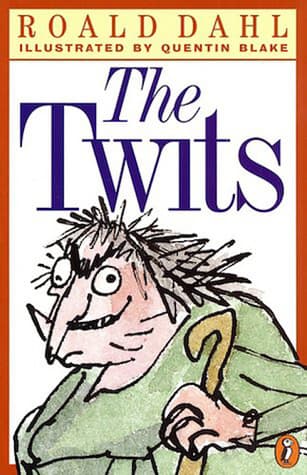
The Twits cover
Archivist's Choice

The Twits

Roald Dahl (1967)

Genre

Fantasy / Children's / Young Adult

Reading Time

60 min

Key Themes

See below

Track Your Reading

Sign in to track this book

When the world's most revolting couple, the Twits, push their pranks too far, their mistreated monkeys and a family of Roly-Poly birds conspire to turn the tables in a hilariously grotesque act of poetic justice.

Synopsis

Mr. and Mrs. Twit are a foul, grotesque, and cruel couple. They enjoy playing nasty tricks on each other and tormenting animals. Mr. Twit has a disgusting beard full of food scraps. Mrs. Twit has a glass eye and a generally nasty personality. They live together in a grimy house. They frequently play escalating pranks on one another, like Mrs. Twit putting her glass eye in Mr. Twit's beer or Mr. Twit putting a frog in Mrs. Twit's bed. Their main cruelties involve catching birds for bird pie using a sticky, glue-covered tree. They also force their pet monkeys, the Muggle-Wumps, to stand on their heads for hours. The Muggle-Wumps, with the Roly-Poly Bird, plan revenge. They trick the Twits into believing the world is turning upside down by secretly gluing all of the Twits' furniture to the ceiling. The Twits, confused, are then tricked into standing on their heads for extended periods. This causes them to shrink and eventually disappear entirely, leaving the Muggle-Wumps and the Roly-Poly Bird free.
Reading time
60 min
Difficulty
Easy
Pacing
Fast
Mood
Humorous, Mischievous, Darkly Comedic, Satisfying
✓ Read this if...
You enjoy dark humor, absurd situations, and seeing vile characters get their comeuppance in a fantastical way. Perfect for young readers who like a bit of mischief and a clear good vs. evil dynamic.
✗ Skip this if...
You dislike grotesque descriptions, animal cruelty (even if it's avenged), or stories without a clear moral lesson beyond 'be kind'.

Plot Summary

Introducing the Hideous Twits

The story introduces Mr. and Mrs. Twit. They are incredibly ugly and dirty individuals who hate children, animals, and each other. Mr. Twit has an enormous, unkempt beard that collects food scraps from every meal. Mrs. Twit is equally repulsive, with a glass eye and a nasty personality. Their main pastime is creating increasingly elaborate and cruel tricks to play on one another, showing their deep-seated malice. This initial setup establishes the central characters and the dark, humorous tone of the book, preparing for their eventual comeuppance.

The Glass Eye in the Beer

One of the first tricks shown involves Mrs. Twit removing her glass eye and dropping it into Mr. Twit's beer mug when he is not looking. When Mr. Twit finds the eye staring up at him from the bottom of his drink, he is terrified, believing it to be a real eye from a creature in his beer. Mrs. Twit finds this amusing and laughs at his fright. This incident shows their constant competition and the pleasure they get from each other's discomfort. It also shows their willingness to use their own physical attributes, no matter how unappealing, as tools for their malicious games.

The Frog in the Bed

In return for the glass eye trick, Mr. Twit plays an even nastier prank on Mrs. Twit. He sneaks a large, slimy frog into her bed. When Mrs. Twit climbs into bed and feels the cold, squishy creature, she screams in terror, convinced it is a monstrous slug. Mr. Twit then calmly pulls back the covers to reveal the frog, to his amusement and Mrs. Twit's disgust. This exchange further illustrates their dysfunctional relationship, where every action leads to a more severe reaction, creating a cycle of petty cruelty that defines their daily lives.

The Stretching Machine

Mr. Twit creates a particularly cruel prank using a 'Stretching Machine.' He convinces Mrs. Twit that she is shrinking and needs to be stretched back to her original size. He covers her in glue and attaches her to a series of ropes and pulleys, then hoists her up towards the ceiling, stretching her body. Mrs. Twit, initially believing this is for her own good, endures the painful process. However, the 'stretching' only makes her limbs elongated and painful, instead of restoring her to a normal height. This elaborate trick shows Mr. Twit's creativity in cruelty and Mrs. Twit's gullibility when presented with a seemingly reasonable, though absurd, solution.

The Bird-Catching Tree

The Twits are cruel to animals as well as each other. They enjoy eating 'Bird Pies' and have a gruesome way of catching birds. Mr. Twit smears 'Hug-Tight Sticky Glue' onto the branches of a large tree in their garden, called the 'Big Dead Tree.' Birds, unaware of the trap, land on the sticky branches and get stuck, unable to fly away. The Twits then collect the trapped birds, which will become the filling for their pies. This practice shows their complete disregard for other living creatures and their pleasure in causing suffering, making them truly villainous characters.

The Muggle-Wumps and the Roly-Poly Bird

The Twits keep a family of monkeys, the Muggle-Wumps, in a cage in their garden. They force the Muggle-Wumps to stand on their heads for hours, punishing them if they fail. One day, a magnificent bird called the Roly-Poly Bird, from Africa, lands on the sticky 'Big Dead Tree.' The Roly-Poly Bird quickly realizes the danger and manages to escape, but sees the Muggle-Wumps' trouble. He understands that the Twits are evil and decides to help the monkeys, setting up the animals' rebellion against their tormentors.

The Great Escape Plan

The Roly-Poly Bird, having narrowly escaped the sticky tree, returns to the Muggle-Wumps' cage. He talks to the monkeys, explaining the Twits' plan to turn them into Bird Pie. Together, they plan revenge and escape. The Roly-Poly Bird, who can fly, brings the Muggle-Wumps the key to their cage, letting them escape when the Twits are away. Their plan involves not just freedom, but a clever way to turn the tables on their cruel captors, using the Twits' own tools of torture against them.

Revenge of the Muggle-Wumps

While the Twits are out buying new glue for their bird-catching tree, the Muggle-Wumps, with the help of many other birds called by the Roly-Poly Bird, carry out their plan. They use the Twits' own 'Hug-Tight Sticky Glue' to glue all the furniture in the Twits' living room to the ceiling, completely turning the room upside down. They carefully arrange everything, including the rug, the table, and the chairs, to look as if gravity has reversed. Their goal is to confuse the Twits when they return, making them believe they are standing on the ceiling.

The Twits' Upside-Down World

Mr. and Mrs. Twit return home, tired and grumpy. Entering their living room, they are baffled by the sight of all their furniture glued to the ceiling. The Muggle-Wumps, hidden, watch their reaction. Mr. Twit first thinks it is a trick by Mrs. Twit, and vice-versa. After much argument, they decide that the world has somehow turned upside down, and they are standing on the ceiling. This elaborate prank, created by the Muggle-Wumps and the birds, uses the Twits' lack of intelligence and their tendency to believe absurdities when it suits their own twisted logic.

The Final Trick and the Shrinking

Convinced they are upside down, Mr. and Mrs. Twit decide they must also stand on their heads to be 'right-side up' in their inverted world. As they stand on their heads, the Muggle-Wumps and birds sneak out of the house and escape. The Twits remain on their heads, waiting for the 'world to turn right-side up' again. However, as they continue to stand on their heads, they begin to shrink. They shrink smaller and smaller until they completely disappear. This is their ultimate, poetic justice, as their nastiness literally consumes them.

Principal Figures

Mr. Twit

The Antagonist

He remains consistently vile throughout the story, never learning or changing, ultimately meeting a fitting end due to his own foolishness.

Mrs. Twit

The Antagonist

Like Mr. Twit, she shows no character development, remaining a horrid individual until her final, bizarre demise.

Muggle-Wumps

The Protagonist

They transition from abused captives to clever liberators and orchestrators of revenge, achieving freedom and justice.

Roly-Poly Bird

The Supporting

He arrives as an accidental victim, transforms into a rescuer, and helps orchestrate the Twits' downfall.

Other Birds

The Supporting

They transition from potential victims to active participants in the Twits' downfall.

Themes & Insights

Justice and Retribution

A main theme is that bad deeds will be punished. The Twits, through their constant cruelty towards each other, animals, and simply being unpleasant, accumulate a debt that is ultimately paid by the Muggle-Wumps and the Roly-Poly Bird. Their final, bizarre shrinking and disappearance is a clear act of poetic justice, where their inner nastiness physically appears and consumes them. The elaborate prank created by the animals is a deliberate act of retribution, making sure the Twits get a taste of their own medicine.

If a person has ugly thoughts, it begins to show on the face. And when that person has ugly thoughts every day, every week, every year, the face gets uglier and uglier and more and more crooked, until nobody can bear to look at it.

Narrator

Cruelty and Malice

The book explores unadulterated cruelty. Mr. and Mrs. Twit show malice, getting joy from each other's suffering, tormenting their captive monkeys, and creating gruesome ways to catch birds. Their actions are not motivated by need but by pure nastiness and a lack of empathy. From the glass eye in the beer to the stretching machine, their lives are a continuous cycle of causing pain. This theme is important in establishing the characters and justifying the extreme measures taken by the animals for their revenge.

Mr. and Mrs. Twit were on of those people who suddenly became so ugly that you couldn't bear to look at them.

Narrator

Intelligence vs. Stupidity

The story contrasts the intelligence of the animals with the stupidity of the Twits. While the Twits are cunning in their cruelty, they are foolish and easily tricked. The Muggle-Wumps, despite being caged, show better problem-solving skills and strategic thinking by planning their escape and revenge. The Roly-Poly Bird's ability to communicate and coordinate the animal uprising further shows this. The Twits' downfall is a direct result of their inability to see beyond their own limited, nasty perspectives and their gullibility when faced with an unusual situation, like their inverted house.

The Twits were so stupid that they never thought of looking up.

Narrator

Freedom and Oppression

The problems of the Muggle-Wumps and the birds under the Twits' rule highlight the theme of freedom versus oppression. The monkeys are caged and forced into degrading acts, while the birds face capture and death. Their desire for freedom is a strong driving force in the story, leading them to unite and fight back against their oppressors. The escape of the Muggle-Wumps and the birds means freedom triumphs over brutal confinement and exploitation.

Oh, how we hate those Twits! We hate their house! We hate their garden! We hate their horrid, ugly faces!

Muggle-Wumps

Plot Devices & Literary Techniques

Exaggeration and Hyperbole

Used to create grotesque and humorous descriptions of the Twits and their actions.

Dahl employs extreme exaggeration to depict the Twits' ugliness, dirtiness, and cruelty. Mr. Twit's beard is not just messy; it's a 'hairy, unwashed, food-encrusted horror.' Mrs. Twit's face is not just unattractive; it's 'a fearsome sight.' This hyperbole serves to make the characters comically repulsive and to underscore the fantastical nature of their comeuppance, allowing for a more outlandish and satisfying resolution where they physically shrink out of existence.

Anthropomorphism

Giving human-like qualities to animals, enabling their revenge.

The Muggle-Wumps and the Roly-Poly Bird are given human-like intelligence, the ability to understand human speech, and complex emotions like hatred, planning, and a desire for justice. This device is crucial as it allows the animals to be active agents in the plot, capable of devising and executing the elaborate prank that leads to the Twits' downfall. Without anthropomorphism, the story's central conflict and resolution would not be possible, as the animals would simply be helpless victims.

Poetic Justice

The antagonists' punishment fitting their crimes in a symbolic way.

The ultimate fate of the Twits—shrinking into nothingness while standing on their heads—is a prime example of poetic justice. Their entire existence was based on nastiness and turning things upside down (through their pranks and treatment of others). Their final act of being tricked into believing the world is inverted and then physically shrinking symbolizes their moral decay and the idea that their ugliness and unpleasantness ultimately consumed them entirely. It's a fantastical, yet perfectly fitting, end to their cruel lives.

The 'Big Dead Tree' and Sticky Glue

A symbolic trap and a key tool for both cruelty and revenge.

The 'Big Dead Tree' smeared with 'Hug-Tight Sticky Glue' serves as a literal plot device for the Twits' bird-catching scheme, highlighting their cruelty. However, the glue itself becomes a crucial element in the animals' revenge. The Muggle-Wumps use this very same sticky glue to turn the Twits' house upside down, transforming a tool of oppression into an instrument of liberation and retribution. This reversal adds a layer of irony and demonstrates the cleverness of the animals in using the Twits' own methods against them.

Critical analysis

Notable Quotes

A person who has good thoughts cannot ever be ugly. You can have a wonky nose and a crooked mouth and a double chin and stick-out teeth, but if you have good thoughts they will shine out of your face like sunbeams and you will always look lovely.

Narrator's reflection on inner beauty versus outer appearance.

If a person has ugly thoughts, it begins to show on the face. And when that person has ugly thoughts every day, every week, every year, the face gets uglier and uglier until it gets so ugly you can hardly bear to look at it.

Narrator explaining the consequences of Mr. Twit's nasty thoughts.

Mr. Twit was a twit. He was born a twit. And now at the age of sixty, he was a bigger twit than ever.

Introduction of Mr. Twit's character.

The hair on Mr. Twit's face didn't grow smooth and matted as it does on most hairy-faced men. It grew in spikes that stuck out straight like the bristles of a nailbrush.

Description of Mr. Twit's disgusting beard.

Mrs. Twit was no better than her husband. She was just as nasty and she was even uglier.

Introduction of Mrs. Twit's character.

A person who has good thoughts cannot ever be ugly. You can have a wonky nose and a crooked mouth and a double chin and stick-out teeth, but if you have good thoughts they will shine out of your face like sunbeams and you will always look lovely.

Repeated for emphasis on the book's moral lesson.

If you have good thoughts they will shine out of your face like sunbeams and you will always look lovely.

Condensed version of the inner beauty theme.

The Twits were a nasty, ugly couple who lived in a nasty, ugly house.

Summarizing the Twits' lifestyle and environment.

Mr. Twit was a dirty old man. He never washed. He never brushed his teeth. He never cleaned his fingernails.

Detailing Mr. Twit's poor hygiene habits.

Mrs. Twit had a glass eye. She kept it in a glass of water by her bed at night.

A quirky and grotesque detail about Mrs. Twit.

The Twits were always playing nasty tricks on each other.

Describing the couple's antagonistic relationship.

Mr. Twit was a twit. He was born a twit. And now at the age of sixty, he was a bigger twit than ever.

Repeated to highlight his unchanging nature.

A person who has good thoughts cannot ever be ugly.

Core message of the book, often quoted.

The Twits were a nasty, ugly couple who lived in a nasty, ugly house.

Repeated to emphasize their overall repulsiveness.

Quiz

Test Your Knowledge

Ready to see how well you understood this book? Take our interactive quiz with 10 questions.

10
Questions
~5
Minutes
?
Best Score

Key Questions (FAQ)

'The Twits' follows the grotesque and cruel married couple, Mr. and Mrs. Twit, who spend their days playing nasty tricks on each other, capturing birds for Bird Pies, and tormenting their pet monkeys, the Muggle-Wumps. The story centers on the Muggle-Wumps' clever plan to escape and get revenge by turning the Twits' own maliciousness against them.

About the author

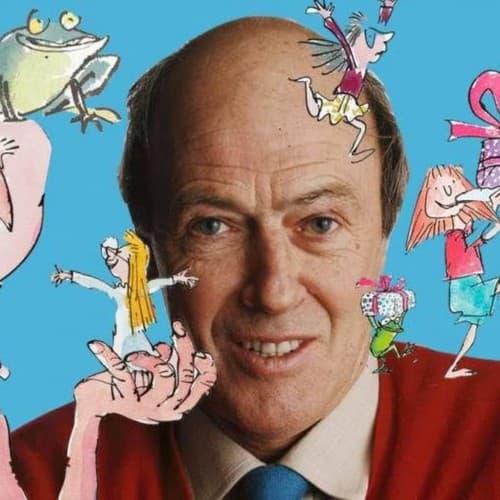
Roald Dahl

Roald Dahl was a British popular author of children's literature and short stories, a poet, and wartime fighter ace. His books have sold more than 300 million copies worldwide. Dahl has been called "one of the greatest storytellers for children of the 20th century".