“We are all just trying to survive, and sometimes survival means doing things you never thought you could.”
— Samuel Hawley reflecting on his criminal past and the choices he made to protect his daughter.

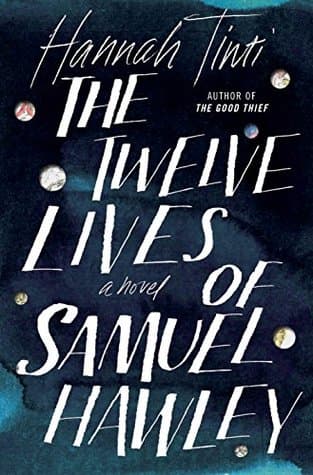
Hannah Tinti (2017)
Genre
Literary Fiction / Thriller / Mystery
Reading Time
500 min
Key Themes
See below
Sign in to track this book
A daughter learns about her father's violent past, a life on the run marked by twelve bullet wounds. His history affects her present, leading to a confrontation about love and family.
Twelve-year-old Loo Hawley and her father, Samuel Hawley, move to Olympus, Massachusetts. This is the hometown of Loo's mother, Lily, who has died. They have moved often because of Samuel's mysterious past. Samuel, a man with twelve bullet wounds, starts working as a fisherman. Loo has trouble fitting in at her new school and making friends. She finds comfort in watching the townspeople and her father. She wants to know more about her mother, Lily, who died before Loo remembers her. Samuel does not like to talk about Lily's death. The town, especially Lily's family, is suspicious of Samuel. This makes Loo feel more alone and makes her ask more questions about her father's true identity and his secrets.
The story goes back to Samuel Hawley's youth in the Adirondacks. A young Samuel, living in poverty, tries to steal an elk from a wealthy man's property to feed his family. During the failed theft, the property owner, Mr. Black, shoots Samuel for the first time. This starts Samuel's life of crime and running. He must flee to avoid arrest and protect his family. This first bullet wound, on his shoulder, becomes a lasting reminder of his past and the choices he made out of need and loyalty.
Back in Olympus, Loo starts looking into her mother's life and death. She finds old photos and letters, putting together parts of Lily's past. She learns that Lily was a talented artist and free-spirited, but also had secrets. Loo becomes close to her grandfather, Bernard. He is distant at first but later shares some details about Lily's life and the town's history. Loo also sees the tense relationship between Samuel and Lily's family, especially Lily's sister, Mildred, who dislikes Samuel. Through her questions, Loo finds that Olympus has its own dark secrets and unresolved issues, which connect with her family's story.
The story goes back to Samuel's past, showing how his second and third bullet wounds happened. These occurred during a bank robbery in a small town. Samuel, now an experienced criminal, was part of a crew. The robbery went wrong, leading to a shootout with the police. Samuel was shot twice, in the leg and arm, while escaping. These wounds show him as a man on the run, always avoiding capture and living under his past actions. Each bullet wound is a big turning point, a moment of violence and results that shaped the man Loo knows as her father.
Loo becomes friends with Todd, a kind and watchful classmate who accepts her unusual background. Their friendship gives Loo a needed feeling of belonging. Meanwhile, Samuel's past starts to catch up with him in Olympus. He sees suspicious people around and gets veiled threats, showing that someone from his criminal life has found him. Samuel becomes more protective of Loo. His watchfulness grows as he realizes the danger he has tried to escape is now at their home, threatening the fragile peace they have found in Olympus.
The story returns to Samuel's past, focusing on two more bullet wounds he got while with a criminal gang. Samuel, involved in a desert heist, is betrayed by his partners. During the double-cross, he is shot twice, in the stomach and chest, barely surviving. This experience makes Samuel distrust others and rely on his own cleverness and strength. It also shows the brutal nature of his world, where loyalty was short-lived and survival depended on expecting betrayal. These wounds are physical signs of the emotional scars he carries from a life of constant danger.
Loo finally learns the truth about her mother, Lily's, death. She finds out that Lily knew about Samuel's criminal past and was involved in some of his efforts to help him escape that life. Lily died not from an accident, as Samuel had suggested, but during a violent fight related to Samuel's past. She was caught in the crossfire, sacrificing herself to protect Samuel and, at the time, Loo. This discovery shatters Loo's perfect idea of her mother and makes her face the full extent of her father's dangerous life and the sacrifices made for their family.
The story revisits Samuel's life with Lily, showing their strong love despite constant danger. While on the run, Samuel is shot many times while trying to protect Lily and himself from various threats. These include a shootout with bounty hunters and a desperate escape from a corrupt police officer. Lily, despite her fears, stays loyal and resourceful, often helping Samuel escape. These bullet wounds, on different parts of his body, show the growing risks and the deep sacrifices Samuel made to keep Lily safe, showing their strong bond against a background of violence.
The threats around Samuel finally appear in Olympus. A dangerous group of criminals from his past, led by an old enemy, arrives in town. They want to settle old scores and get back something Samuel supposedly stole. The quiet of Olympus breaks as Samuel must face his past. Loo, now aware of her father's full history and their danger, stays by his side. The town becomes a battleground. Samuel, despite his age and old wounds, gets ready for a final, desperate fight to protect his daughter.
In the violent fight in Olympus, Samuel Hawley fights hard to protect Loo from the criminals. During the intense fight, Samuel is shot three more times, in his chest, leg, and shoulder. Each bullet is a desperate act of defense. Loo sees her father's courage and strength. She helps them survive, using her knowledge of the town and quick thinking to aid him. The battle is brutal. Both Samuel and Loo are hurt, but their combined efforts and Samuel's strong will to keep Loo safe push them forward against many odds. These wounds are the newest and most painful reminders of his violent life.
The twelfth and last bullet wound is self-inflicted. Samuel chose it to save Loo. During the fight's peak, when Loo is in direct danger, Samuel makes a desperate move that causes him to be shot by his own hand, or by a ricochet he caused, to create an opening or distraction that saves Loo's life. This final bullet is not a mark of past wrongs but of ultimate sacrifice and love. After the fight, Olympus is changed. Samuel and Loo, though wounded, understand their bond better. The surviving criminals are defeated. The Hawleys, finally safe from immediate danger, can start to heal and build a new, more honest life together, carrying their past scars but looking to a future defined by their strong love.
The Protagonist
Samuel evolves from a man constantly running from his past to one who faces it head-on, ultimately embracing the sacrifices made for his daughter's future.
The Protagonist
Loo transforms from an isolated, questioning girl into a courageous young woman who understands and accepts her family's complex history, finding her own strength in the process.
The Supporting
Her character arc is revealed posthumously, showing her evolution from a carefree artist to a woman deeply entangled in Samuel's dangerous life, ultimately making the ultimate sacrifice.
The Supporting
Bernard moves from a position of resentment towards Samuel to one of grudging acceptance, and from emotional distance to a loving connection with his granddaughter, Loo.
The Supporting
Todd remains a consistent, supportive friend to Loo, offering her a vital connection to a 'normal' life amidst her family's chaos.
The Supporting
Mildred remains largely unchanged in her resentment towards Samuel, embodying the town's suspicion of him.
The Mentioned
His role is limited to a single, impactful event in Samuel's past, initiating Samuel's criminal trajectory.
The Antagonist
He serves as the catalyst for the final confrontation, bringing Samuel's past to a violent head in the present.
Samuel and Loo both deal with their identities in the novel. Loo, having moved a lot, tries to define herself apart from her father and her mother's mysterious past. Her search into Lily's life is a search for her own origins and a better understanding of herself. Samuel also struggles with his identity as a criminal versus a father. He tries to escape his past while building a 'normal' life for Loo. The twelve bullet wounds on his body are physical signs of his past identity, which he eventually faces and brings into his current self. The truth about the twelfth bullet makes him redefine himself from a criminal to a self-sacrificing protector.
“"He was a man made of holes, a map of all the places he'd been and all the things he'd done."”
The novel looks at what it means to be a hero, often questioning common ideas. Samuel Hawley, despite his criminal past, is a hero to Loo and through his strong devotion to her. Each bullet wound shows survival or protection, ending with the ultimate sacrifice of the twelfth bullet. Lily also shows heroism through her sacrifices for Samuel and Loo. The book suggests that heroism is not about being morally perfect but about how far one will go to protect loved ones, even if it means violence or breaking the law. It asks if a 'bad' man can still be a 'good' father.
“"A hero was someone who did something that nobody else could, or would, do. A hero was someone who chose to fight, when everyone else chose to run."”
The past is always present in the novel, haunting Samuel and shaping Loo's present. Samuel's twelve bullet wounds are literal scars of his past. Each represents an event he cannot escape. His life on the run is an attempt to get away from these past actions, but the story shows that the past always catches up. Loo's search for the truth about her mother's death and her father's secrets is an attempt to understand and come to terms with a past she never knew but that affects her deeply. The town of Olympus also has its own historical secrets, showing how pasts, both shared and individual, affect the present.
“"The past was a thing that clung to you, no matter how far you ran, no matter how many times you changed your name."”
At its heart, the novel is about a father's strong, unconditional love for his daughter. Samuel's whole life is about protecting Loo, even if it means violence or living a life of constant escape. His criminal past, though dangerous, often comes from a desire to provide for or protect his family. Loo, in turn, loves her father deeply, despite his secrets, and eventually understands the sacrifices he made. The relationship between Samuel and Loo shows how far parents will go to keep their children safe and well, and the problems that arise when that protection comes from unusual or morally unclear sources.
“"He had given her everything he had, which was not much, but it was all he had. And he would give her more, if he could."”
The story moves forward by slowly revealing truths that have been hidden for years. Samuel keeps his criminal past from Loo, thinking he is protecting her, but this secrecy creates a distance between them. Loo's constant search for the truth about her mother's death and her father's past is central to her growing up. The uncovering of these secrets, though painful, leads to a better understanding and a more honest relationship between father and daughter. The book suggests that while secrets may be meant to protect, they often cause more harm than good.
“"Secrets were like bullets. They lodged inside you and festered, until one day they exploded."”
A symbolic and structural device representing Samuel's past and character arc.
The twelve bullet wounds on Samuel Hawley's body serve as the central structural and symbolic device of the novel. Each wound corresponds to a specific event in his criminal past, revealed in non-linear flashbacks. They are physical manifestations of his experiences, choices, and the dangers he has faced. As Loo learns the story behind each bullet, she pieces together her father's identity and the truth of their family history. The wounds also symbolize the cumulative weight of the past and Samuel's resilience. The revelation of the twelfth bullet's origin provides the ultimate emotional core of the story, signifying sacrifice and love.
Alternating chapters between Loo's present and Samuel's past.
The novel employs a dual timeline narrative structure, alternating between Loo's present-day experiences in Olympus and Samuel's past, which is revealed through the stories behind his twelve bullet wounds. This structure builds suspense, as readers gradually learn about Samuel's criminal history alongside Loo's discoveries. It also allows for a deeper understanding of Samuel's character and motivations, showing the cause-and-effect relationship between his past actions and his present life with Loo. The intertwining timelines ultimately converge in the climax, where Samuel's past catches up to his present, forcing a reckoning.
A town name evoking classical mythology and a false sense of peace.
The choice of 'Olympus, Massachusetts' as the setting is symbolic. In Greek mythology, Olympus is the home of the gods, a place of peace and order, seemingly untouched by mortal strife. This contrasts sharply with the reality of the town, which, despite its quaint appearance, harbors its own secrets and eventually becomes a battleground for Samuel's violent past. The name creates an ironic backdrop for the chaos and danger that unfolds, highlighting the fragility of peace and the impossibility of escaping one's destiny, even in a seemingly idyllic setting. It also connects to the idea of Samuel as a flawed, almost mythical figure in Loo's eyes.
Samuel's profession as a fisherman, symbolizing his connection to the depths and his solitary nature.
Samuel's profession as a fisherman in Olympus carries symbolic weight. The fisherman archetype is often associated with solitary, introspective figures who work with the hidden depths. It reflects Samuel's own deep, often unseen past and his quiet, watchful nature. Fishing is a solitary pursuit, mirroring his isolation and his attempts to maintain a low profile. The act of fishing itself—casting a line into the unknown and patiently waiting—can also symbolize his endurance, his hope for a peaceful future for Loo, and his connection to the wild, untamed aspects of nature, much like his own character.
“We are all just trying to survive, and sometimes survival means doing things you never thought you could.”
— Samuel Hawley reflecting on his criminal past and the choices he made to protect his daughter.
“The ocean doesn't care if you're good or bad. It just wants to swallow you whole.”
— Hawley describing the indifferent and dangerous nature of the sea, a recurring theme in his life.
“Every scar tells a story, and I've got enough stories to fill a library.”
— Hawley explaining the twelve bullet wounds on his body, each representing a chapter of his violent life.
“Love is the one thing that can make a man do both the best and worst things in his life.”
— Hawley contemplating how his love for his wife and daughter drove his actions.
“You can't outrun your past, but you can try to build a future in spite of it.”
— Hawley's realization as he attempts to create a normal life for his daughter Loo.
“Sometimes the quietest people have the loudest secrets.”
— Narrator observing the townspeople of Olympus, Massachusetts, and their hidden histories.
“A gun is just a tool. It's the person holding it that decides what it's for.”
— Hawley explaining his pragmatic view of violence and self-defense.
“Grief is like a tide—it comes in waves, and sometimes it drowns you.”
— Loo coping with the loss of her mother and the emotional weight of her family's history.
“Home isn't a place; it's the people you're willing to die for.”
— Hawley defining home through his protective instincts toward his daughter.
“The truth is a slippery thing. It changes shape depending on who's holding it.”
— Reflection on the multiple perspectives and secrets in the story.
“You don't get to choose your parents, but you can choose what you inherit from them.”
— Loo grappling with her father's legacy and deciding her own path.
“Fear is a compass. It points you toward what you need to face.”
— Hawley advising Loo on how to confront challenges and dangers.
“Some people are born with tragedy in their blood, and it follows them like a shadow.”
— Narrator describing the Hawley family's cursed or fated nature.
“In the end, all we have are the stories we leave behind.”
— Closing reflection on memory, legacy, and the novel's narrative structure.
Ready to see how well you understood this book? Take our interactive quiz with 10 questions.







