“Every country has its own geography of grief, and in Russia, that geography is vast.”
— Early in the novel, reflecting on Russia's history of suffering.

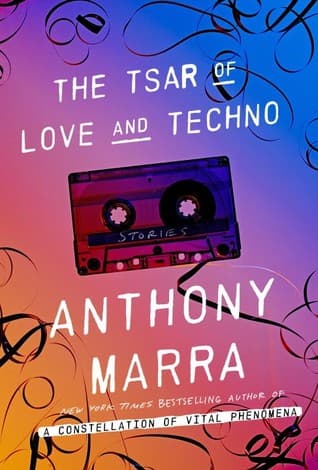
Anthony Marra (2015)
Genre
Literary Fiction / Historical Fiction
Reading Time
9-10 hours
Key Themes
See below
Sign in to track this book
From the Soviet Union's past to its war-torn present, interconnected lives deal with censorship, sacrifice, and art's ability to rewrite history, one altered photograph and forgotten song at a time.
In 1937 Leningrad, Roman Markin works as a censor in a hidden facility, airbrushing people considered 'enemies of the people' from photographs. He is skilled at his job, removing faces and sometimes entire crowds from historical records. His work constantly reminds him of the regime's power and how fragile life is. Roman becomes fixated on a specific image: a photograph of a disgraced prima ballerina, Galina, whose face he is ordered to remove. Instead of erasing her completely, he secretly keeps a small, unnoticed detail of her, a leopard print on her scarf. This is a subtle act of rebellion and a wish to keep a trace of beauty in a world determined to destroy it. This act plants a seed of defiance and personal connection in his otherwise sterile and dangerous life.
This story is told through the voices of women in Kirovsk, a remote Siberian mining town. They recount the experiences of their grandmothers, who were political prisoners in the gulag during Stalin's time. These women were exiled, forced to labor in harsh conditions, and suffered greatly, yet they formed strong bonds and showed resilience. The granddaughters, living with this brutal history, reflect on how their grandmothers' pasts shaped their own lives and community. The narrative shows the lasting trauma and strength passed down through generations, as they remember and honor the sacrifices made by their ancestors to survive and build a life in a harsh land.
Ruslan, a Chechen veteran of the Chechen Wars, tries to create a 'Grozny Tourist Bureau' in the destroyed city. His aim is not to attract actual tourists, but to create a fictional, perfect version of Grozny through detailed brochures and a city model, complete with miniature landmarks. He is driven by a deep desire to reclaim the city's identity and beauty, which war and conflict have shattered. His younger brother, Akhmed, still involved in the conflict, views Ruslan's effort with skepticism and quiet admiration. Ruslan's project is an act of defiance against destruction, a desperate attempt to show hope and preserve the memory of what was, and what could be, through art and imagination.
Akhmed, Ruslan's younger brother, is active in the Chechen resistance. The story explores his experiences as a fighter, the constant threat of violence, and the moral compromises war demands. He deals with the loss of family members and his homeland's destruction. His path crosses with that of a Russian soldier, creating a complex and dangerous dynamic. Akhmed’s loyalty to his cause is strong, but he is also burdened by the human cost of the conflict. He struggles to balance his life's brutal realities with memories of a peaceful past and his brother's efforts to rebuild Grozny, finding comfort and purpose in fighting for his people's survival.
Sasha, a young man who served in the Chechen Wars, returns to his Russian hometown, carrying the physical and psychological scars of combat. He struggles to adapt to civilian life, haunted by the violence he saw and took part in. He finds comfort in music and technology, especially at a local club where he deejays. The story explores his attempts to find meaning and connection in a world that feels alienating and broken. He meets other veterans and civilians also dealing with the aftermath of war, showing conflict's widespread impact on individuals and society. Sasha's journey is about seeking healing and understanding, trying to bridge his traumatic past and uncertain future.
Kolya, a veteran of the Chechen Wars, now lives on society's edge, involved in petty crime and struggling with his own issues. His story is linked to his brother, Vanya, who was also a soldier and a source of both admiration and concern. Kolya is haunted by Vanya's memory and the circumstances of his death. He gets caught in a dangerous situation involving stolen goods and local thugs, forcing him to face his loyalties and his capacity for violence. The narrative shows war's lasting effects on those who return, how its brutality can seep into civilian life, shaping choices and relationships in profound and often destructive ways.
Katerina, a young art student in contemporary Russia, discovers an unusual painting in an old palace, an unremarkable oil landscape showing a peaceful, pre-war Chechen village. The painting seems to have a strange power and meaning, especially for a reclusive art restorer she meets. As Katerina looks into the painting's history, she finds a connection to the Chechen Wars and the experiences of those who lived through the conflict. The painting becomes a focus for understanding memory, loss, and the human desire for beauty and peace amidst devastation. Her investigation reveals how art can hold history and witness immense suffering and strength.
This chapter brings together several characters from previous stories, including Ruslan and Katerina, through an unusual art exhibition. The exhibition features artworks that subtly question official narratives or offer different views on history and memory, especially concerning the Chechen Wars. Ruslan's miniature Grozny, which he has carefully created, is shown, as is the mysterious landscape painting Katerina discovered. The exhibition is a space for reflection, reconciliation, and the quiet challenge of state-controlled narratives. It shows art's power to provoke thought, evoke empathy, and connect individuals across different experiences and generations, revealing their lives' interconnectedness and shared history's lasting impact.
The final chapter is a poignant ending, weaving together the fates and legacies of various characters from the collection. It revisits themes of memory, loss, and the lasting power of human connection and art. The narrative subtly reveals how the small acts of defiance, the preserved memories, and the artistic creations of characters like Roman and Ruslan affect generations. It emphasizes history's cyclical nature, hope's persistence, and the quiet ways individuals resist erasure and keep their humanity. The ending offers a sense of closure while acknowledging that the past's echoes continue to shape the present and future.
The Protagonist
Roman evolves from a compliant, if internally conflicted, censor to a subtle rebel who preserves fragments of forbidden beauty, leaving a legacy of hidden truth.
The Mentioned
Her image, though static, becomes a dynamic symbol of resistance and enduring beauty across generations.
The Protagonist/Supporting
Ruslan transforms from a war-weary veteran into an artist who reclaims his city's identity through imaginative reconstruction, leaving a legacy of hope.
The Protagonist/Supporting
Akhmed's arc shows the brutalizing effects of war, but also his enduring loyalty and the hidden depths of his humanity.
The Protagonist
Sasha seeks to heal from his war trauma, finding solace and a new identity through music and connection, moving towards a fragile peace.
The Protagonist/Supporting
Kolya's journey is marked by a struggle with the violent legacy of war, attempting to navigate a path between his past and a desire for redemption.
The Protagonist/Supporting
Katerina develops from a curious student into a seeker of truth, using art to bridge historical narratives and connect with the human stories behind them.
The Mentioned
Vanya's presence, though posthumous, profoundly shapes Kolya's arc, representing the lasting impact of war on individuals and families.
Art, in its various forms, is a powerful means of resistance, memory, and healing throughout the collection. Roman Markin's subtle preservation of Galina's image defies the regime's erasure. Ruslan's miniature Grozny and fictional tourist bureau offer an imaginative reconstruction of a war-torn city, showing hope amidst devastation. Katerina's discovery and investigation of the landscape painting reveal hidden histories and connect individuals across time. Art allows characters to process trauma, preserve identity, and challenge oppressive narratives, providing comfort and a path toward understanding and reconciliation.
“What is art if not an attempt to make the ordinary extraordinary, the broken whole?”
War's widespread and devastating impact is a central theme, explored across generations and conflicts (Stalin's purges, Chechen Wars). Characters like Sasha, Akhmed, and Kolya bear deep physical and psychological scars, struggling to return to civilian life or find peace. The collective narrative of the 'Granddaughters' shows the intergenerational trauma inherited from the gulag. The stories consistently demonstrate how violence shapes individuals, families, and entire societies, with its echoes lasting long after the fighting has ended, affecting identity, relationships, and a nation's very landscape.
“War leaves its mark not just on the land, but on the souls of those who survive it.”
The conflict between official narratives and personal memory is a recurring idea. Roman Markin's job as a censor literally involves erasing individuals from history, yet his act of preserving Galina's image defies this erasure. The 'Granddaughters' carefully preserve memories of their gulag experiences, ensuring their grandmothers' suffering and strength are not forgotten. Ruslan's tourist bureau is an act of memory-making, reclaiming Grozny's past and future from its destruction. The collection explores how memory, personal or collective, is a vital act of resistance against totalitarian attempts to control and rewrite history.
“History is not what happened, but what survives the telling.”
The bonds between family members, especially brothers, are explored with tenderness and complexity. The relationships between Ruslan and Akhmed, and Kolya and Vanya, highlight fierce loyalty, shared trauma, and sometimes different paths shaped by war. These family ties provide both comfort and conflict, acting as anchors in a turbulent world. The stories show how family can be a source of strength and identity, but also a site of deep pain and unresolved grief, as characters deal with the loss, sacrifice, and lasting love that define these intimate connections.
“A brother's love is a complicated thing, both a burden and a blessing.”
Characters often deal with questions of identity in a post-Soviet landscape scarred by conflict and political change. From Chechen fighters struggling to preserve their cultural identity to Russian veterans alienated from their homes, the search for belonging is central. Characters' identities are shaped by their war experiences, their heritage, and their attempts to find new meanings in a world that often feels fractured. This theme explores how individuals define themselves amidst national and personal crises, finding or losing a sense of place and purpose.
“Who are we, if not the sum of our pasts, both chosen and inherited?”
Independent stories that subtly connect, building a larger narrative tapestry.
The novel is structured as a collection of seemingly disparate short stories that gradually reveal their interconnectedness. Characters or objects (like Galina's image, the landscape painting, or the miniature Grozny) reappear or are referenced across different narratives, creating a mosaic effect. This device allows Marra to explore a wide range of experiences and historical periods while demonstrating the profound, often invisible, ways in which lives and legacies are intertwined across generations and geographies, ultimately forming a cohesive and expansive narrative about Russia and Chechnya's shared past.
Everyday items imbued with deeper meaning and narrative significance.
Throughout the collection, specific objects carry immense symbolic weight, acting as anchors for memory, defiance, and connection. Galina's leopard-print scarf, subtly preserved by Roman, symbolizes beauty and resistance against erasure. Ruslan's miniature model of Grozny represents hope, reconstruction, and the power of imagination. The unassuming landscape painting discovered by Katerina becomes a vessel for hidden histories and a link between past and present conflicts. These objects transcend their material form, becoming silent witnesses to profound human experiences and vehicles for complex themes.
The narrative perspective changes frequently, offering multiple viewpoints.
The novel employs a shifting narrative perspective, moving between first-person collective ('Granddaughters') and various third-person limited points of view. This allows the author to delve deeply into the interior lives of diverse characters—from a Soviet censor to a Chechen fighter to an art student—providing a comprehensive and empathetic understanding of their struggles and motivations. The shifting perspectives highlight the multifaceted nature of truth and memory, demonstrating how historical events are experienced and interpreted differently by individuals based on their background, loyalties, and personal traumas, enriching the overall thematic complexity.
The tension between official, manipulated history and individual, lived experience.
This device highlights the constant struggle between state-controlled narratives and the persistent power of individual and collective memory. Roman Markin's role as a censor directly embodies historical revisionism, yet his personal actions undermine it. The stories of the 'Granddaughters' are acts of preserving personal memory against the official silence surrounding the gulag. Ruslan's tourist bureau counters the official narrative of a destroyed Grozny by creating an idealized, hopeful version. This tension underscores the fragility of truth and the human need to remember and bear witness, even when powerful forces attempt to erase the past.
“Every country has its own geography of grief, and in Russia, that geography is vast.”
— Early in the novel, reflecting on Russia's history of suffering.
“The greatest trick the devil ever pulled was convincing the world he didn't exist. The greatest trick the Soviet Union ever pulled was convincing its people that there was no alternative.”
— A character's cynical observation about Soviet control.
“To forget is to betray. To remember is to suffer.”
— A common dilemma faced by characters dealing with traumatic pasts.
“Love, it turned out, was not a singular emotion, but a collection of them: hope, fear, regret, resentment, and a hundred others, all jostling for position.”
— Reflecting on the complex nature of love in difficult circumstances.
“He understood then that history wasn't a story told by the victors, but a story told by the survivors, and often, the two weren't the same.”
— A character's realization about the subjective nature of historical narratives.
“The past was a country, and he was an undocumented immigrant, forever trying to cross its borders.”
— A character grappling with their inability to escape or fully understand their past.
“Art, like love, was a dangerous business. It demanded everything and offered little in return, except perhaps a fleeting glimpse of beauty in a world that often seemed determined to deny it.”
— Reflecting on the challenges and rewards of artistic creation.
“A lie, like a song, could travel the world before the truth had even laced up its boots.”
— A character musing on the speed and spread of misinformation.
“There are some things you can't outrun, no matter how fast you go, or how far.”
— A character acknowledging the inescapable nature of certain realities or memories.
“Every person was a library, filled with stories, some bound in leather, some in rags, some still being written.”
— A reflection on the richness and complexity of individual lives.
“The only way to survive was to invent a new future, even if it was a lie.”
— A character's desperate strategy for coping with an unbearable present.
“Grief was a language spoken only by those who had lost, and it had a thousand dialects.”
— Describing the varied and personal experience of grief.
“Perhaps that was the nature of all revolutions: they devoured their own children.”
— A cynical observation about the destructive tendencies of political upheavals.
“He had learned that forgiveness was not a single act, but a lifetime of small decisions.”
— A character's understanding of the long and arduous process of forgiveness.
Ready to see how well you understood this book? Take our interactive quiz with 10 questions.

Anthony Marra is the author of "The Tsar of Love and Techno," a collection of short stories lauded for its intricate narratives and exploration of Chechnya. His debut novel, "A Constellation of Vital Phenomena," also garnered critical acclaim and won the National Book Award for Fiction. Marra's work is known for its lyrical prose and profound humanism, often set against the backdrop of conflict and resilience.







