“The trees were so close together that they seemed to be holding hands, whispering secrets to each other.”
— Describing the dark, dense forest Hansel and Gretel enter.

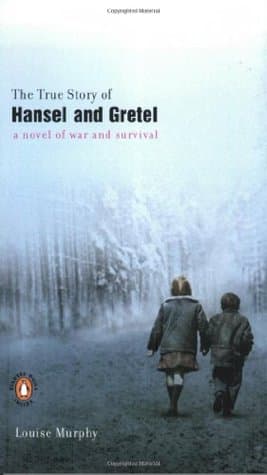
Louise Murphy (2003)
Genre
Historical Fiction / Young Adult
Reading Time
320 min
Key Themes
See below
Sign in to track this book
In a WWII-ravaged Polish forest, two Jewish children, renamed Hansel and Gretel, navigate the brutal realities of survival and the dangerous sanctuary offered by an eccentric old woman, all while evading a relentless German officer.
In Nazi-occupied Poland, Natan and his younger sister, Malca, are taken deep into a dense forest by their father and stepmother. Their parents, fearing for their safety due to their Jewish heritage, make the heartbreaking decision to leave them. They instruct them to change their names to Hansel and Gretel to hide their identity. The children receive a small piece of bread and are told to follow a path, hoping to find safety. Initially confused and scared, the children soon realize the seriousness of their situation as they are left alone amid the war and wilderness. This desperate act begins their perilous journey for survival.
Hansel and Gretel wander through the vast, cold forest, their initial hope fading each day. They ration their small piece of bread, enduring hunger, thirst, and constant fear of discovery. The forest, while offering concealment, also poses threats from wild animals and German patrols. Gretel, being younger, struggles more physically and emotionally, often looking to Hansel for comfort. Hansel, despite his own terror, tries to act brave for his sister, drawing on his older brother's responsibility to protect her. Their journey becomes a test of endurance and their bond.
After days of wandering, weak from hunger and exhaustion, Hansel and Gretel find a small, isolated hut deep within the forest. It looks dilapidated and overgrown, suggesting a solitary existence. Driven by desperation and a faint hope, they cautiously approach. The hut belongs to Magda, an eccentric old woman who lives a reclusive life. Villagers in the nearby settlement often call her a 'witch.' Her appearance is disheveled, and her initial demeanor is gruff, but the children's desperate state touches her.
Magda, initially wary of taking in the two strange children, eventually agrees. She is moved by a mix of compassion and perhaps her own loneliness. She gives them food — simple, but life-sustaining — and a place to sleep in her small, cluttered hut. The children are relieved to be safe but remain cautious of Magda, given her unusual appearance and the villagers' whispers. Magda, in turn, is gruff but methodical in her care. She teaches them about foraging and the ways of the forest, subtly preparing them for a life of hiding while protecting them from the immediate dangers of the war outside her isolated home.
Life with Magda is very different from their previous existence but provides some safety. They learn to help with chores, gather food, and understand the forest's rhythms. Magda, despite her rough exterior, begins to show affection and a deep determination to protect them. She teaches them the importance of silence, observation, and how to blend into their surroundings — vital skills for their survival as Jewish children in wartime Poland. The children, in turn, bring purpose and companionship to Magda's solitary life, slowly softening her hardened exterior and forming an unusual, makeshift family.
The fragile peace of Magda's secluded life ends with the arrival of an SS officer, Obersturmführer Karl von Stahler, in the nearby village. His presence means an increase in the Nazi regime's efforts to remove Jews and partisans from the region. Von Stahler is a shrewd and ruthless man, determined to uncover hidden Jews and exert his authority. His arrival casts a long shadow over the forest, making Magda's efforts to protect Hansel and Gretel even more uncertain. The children become acutely aware of the heightened danger, understanding that their very existence is a direct threat in this new, more vigilant environment.
As the German presence grows, Magda, with her knowledge of the forest and her cunning, develops strategies to keep Hansel and Gretel hidden. She creates secret hiding places, teaches them to remain absolutely silent, and uses her reputation as a 'witch' to deter curious villagers and German soldiers. When questioned, she acts senile or eccentric, deflecting suspicion. Her defiance is subtle but strong, driven by a commitment to the children's safety, even at great risk to her own life. She becomes a formidable protector, using her wit and the isolation of her home as her main weapons.
Obersturmführer von Stahler, a meticulous and suspicious officer, becomes particularly interested in Magda and her isolated hut. The rumors of a 'witch' and the remote location pique his curiosity. He suspects she might be harboring something or someone. He conducts searches, interrogates villagers, and carefully watches Magda's movements. His investigation is thorough and relentless, driven by his fanatical ideology and desire for promotion. Magda and the children are constantly on edge, knowing that one wrong move could lead to their discovery and capture, threatening their fragile existence.
During one of von Stahler's frequent and aggressive searches, Hansel and Gretel have a terrifying close call. German soldiers search the area around Magda's hut, forcing the children to hide in a cramped, secret compartment, barely daring to breathe. The sounds of boots and voices outside are loud, and they feel the vibrations of the soldiers' movements. Magda distracts the soldiers with her usual eccentric behavior, feigning confusion and playing on their superstitions. The incident traumatizes the children but reinforces Magda's resourcefulness and their complete dependence on her protection.
The forest, which first offered refuge, becomes a character itself, providing both sustenance and new threats. While Magda teaches Hansel and Gretel how to forage for food and water and use its natural camouflage, the increased German presence means that even the deepest woods are no longer entirely safe. Partisan activity also increases, leading to skirmishes that ripple through the forest, further endangering the children. Changing seasons bring new challenges, from harsh winters to the need for constant vigilance against human and natural predators. The children learn to read the forest, understanding its rhythms as key to their survival.
As the war ends, and the Germans become desperate and brutal, von Stahler closes in on Magda and the children. Realizing their time is running out, Magda plans for Hansel and Gretel to escape. In a final, heroic act of self-sacrifice, she creates a diversion, drawing the German soldiers' attention away from the children's escape route. She confronts von Stahler, her defiance unwavering, ensuring the children have enough time to flee deeper into the forest, hopefully toward the approaching Allied forces. Her actions confirm her role as their protector and savior, leaving a lasting impact on the children.
After Magda's sacrifice, Hansel and Gretel are again alone in the vast forest. But this time, they have the survival skills and resilience Magda taught them. They continue their journey, guided by the distant sounds of battle and the hope of liberation. They encounter other refugees, some helpful, some dangerous, and see the devastating aftermath of the war. Their bond, formed through shared trauma and survival, strengthens. They press on, clinging to the hope of a world free from persecution, forever changed by their experiences but determined to find a new beginning.
Weak but determined, Hansel and Gretel eventually find Allied soldiers. The sight of the liberating forces brings overwhelming relief, exhaustion, and the deep realization that their long nightmare is finally over. The soldiers, recognizing their plight, offer them food, comfort, and safety. While the immediate danger has passed, the emotional scars of their journey and the loss of Magda remain. This encounter marks the formal end of their physical struggle for survival, but the beginning of their healing process and the daunting task of processing their trauma and finding a place in a world changed by war.
After liberation, Hansel and Gretel, now using their real names, Natan and Malca, begin the slow, painful process of confronting their past. The memories of their parents, their abandonment, Magda's sacrifice, and the constant fear of the war weigh heavily on them. They are forever marked by their experiences, carrying the trauma of their journey. The novel implies a future where they must learn to live with these memories, finding ways to honor those they lost while building new lives. Their story shows resilience, the power of familial bonds, and the long shadow cast by historical atrocities.
The Protagonist
Transforms from a frightened boy into a resilient and self-reliant young man, deeply scarred but capable of leading and protecting.
The Protagonist
Starts as a dependent child and slowly develops inner strength and adaptability, though forever marked by her experiences.
The Supporting
From a solitary, cynical recluse, she becomes a selfless protector, finding purpose and connection through her bond with the children.
The Antagonist
Remains a static character, representing the unwavering evil of the regime, ultimately failing in his objective to capture the children.
The Supporting
A static character who makes a pivotal, tragic decision that sets the entire plot in motion.
The Supporting
A static character whose actions contribute to the children's initial plight.
The Mentioned
Remain largely static, representing the general populace caught between fear of the Germans and their own local beliefs.
The most prominent theme is Hansel and Gretel's unwavering will to live despite immense hardship. From their abandonment in the forest, enduring hunger and fear, to their adaptation to Magda's unconventional life, their journey shows human resilience. Magda herself embodies this, having survived a lifetime of isolation and now defying the Nazis. The children's ability to learn, adapt, and keep going, even after Magda's sacrifice, highlights the human spirit in the face of overwhelming adversity.
““They were not children of the forest, but the forest was becoming their only home.””
The war forces Hansel and Gretel to lose their childhood innocence early. They are exposed to extreme violence, fear, and the harsh realities of survival. Their change from sheltered children to hardened survivors, capable of understanding complex dangers and making difficult decisions, is central to the story. The fairy tale names 'Hansel and Gretel' are a poignant reminder of the childhood they lost, contrasting sharply with the brutal reality they face. Their experiences leave lasting emotional scars, permanently changing how they see the world.
““The forest had erased their names, and the war had erased their childhood.””
The novel explores the complex shades of good and evil beyond simple categories. Obersturmführer von Stahler represents overt, systemic evil, driven by hateful ideology. However, 'good' is also nuanced: the parents' 'abandonment' is a desperate act of love, and Magda, initially seen as a 'witch' (evil by local superstition), proves to be a force for good. Her actions challenge the villagers' prejudiced views and show that heroism can be found in unexpected places, often defying societal norms and overwhelming power.
““Sometimes, the greatest kindness came wrapped in the roughest cloth.””
The children's forced name change to 'Hansel' and 'Gretel' symbolizes the erasure of their Jewish identity and past. Throughout their ordeal, they struggle to remember who they are and where they came from, while also having to forget their true names for safety. Remembering, both personal and collective, is crucial for healing and understanding their place in a post-war world. The narrative suggests that while names can change, the true essence of identity and the memories of one's heritage endure.
““They carried their real names like a secret, a precious, dangerous jewel hidden deep inside them.””
The initial family unit of Hansel and Gretel is broken by their parents' desperate act. However, a new, unconventional family is formed with Magda. This 'found family' gives the children the love, protection, and stability their biological family could no longer offer. Magda's self-sacrifice reinforces the idea that family is not solely defined by blood but by shared experience, loyalty, and unconditional care. This theme highlights the human need for connection and belonging, especially in times of crisis.
““She was no grandmother, no mother, but she was all they had, and in her rough hands, they found a kind of fierce love.””
Uses the classic fairy tale as a framework for a dark, realistic narrative.
The novel deliberately invokes the 'Hansel and Gretel' fairy tale, using the children's adopted names and the forest setting. This allusion serves multiple purposes: it creates a chilling contrast between the magical, albeit dark, world of the fairy tale and the brutal reality of the Holocaust. It immediately establishes a sense of peril and abandonment, drawing on readers' existing knowledge of the story. The 'witch' figure (Magda) is subverted, becoming a protector rather than an antagonist, while the true 'monsters' are the Nazis. This device heightens the emotional impact by juxtaposing innocence with unimaginable horror.
The natural environment acts as both a protector and a threat.
The forest is more than just a setting; it plays an active role in the children's survival. Initially, it offers concealment and a place to hide from the Germans. Magda's deep knowledge of the forest's resources provides food and shelter. However, it also presents dangers: wild animals, harsh weather, and the constant threat of discovery within its depths. The forest mirrors the children's journey—it is wild, unpredictable, and ultimately indifferent, yet it provides the means for their endurance. It symbolizes both isolation and sanctuary, reflecting the ambiguous nature of their existence.
Symbolizes loss of identity and the need for concealment.
The forced renaming of Natan and Malca to Hansel and Gretel is a powerful symbol of the children's lost identity and the desperate measures taken for survival. Their Jewish names are a death sentence, so they must shed them, along with their past lives, to blend in. This act of renaming highlights the dehumanizing effects of the war and the profound sacrifice of self required to stay alive. It also connects directly to the fairy tale allusion, reinforcing the idea of a lost, almost mythical, childhood that can never be fully reclaimed.
Subverts traditional fairy tale archetypes.
Magda's character plays directly into the 'witch' stereotype from the original fairy tale, but with a profound subversion. The villagers fear her and label her as such due to her reclusive nature and eccentricity. However, instead of being the evil antagonist, she becomes the children's savior. This device challenges preconceived notions and highlights that appearances can be deceiving, especially in times of moral ambiguity. It underscores the novel's theme of finding good in unexpected places and defying societal prejudices.
“The trees were so close together that they seemed to be holding hands, whispering secrets to each other.”
— Describing the dark, dense forest Hansel and Gretel enter.
“Hunger makes you think of things you wouldn't otherwise. It makes you brave, or foolish, or both.”
— Reflecting on the desperation driving Hansel and Gretel's actions.
“A promise is like a bird in your hand. You can hold it tight, but if you squeeze too hard, you kill it.”
— A wisdom shared about the delicate nature of promises.
“Sometimes, the biggest monsters are the ones that look the most ordinary.”
— A realization about the true nature of evil, not always fantastical.
“The forest doesn't care if you're good or bad. It just is.”
— Highlighting the indifferent, primal force of nature.
“To forget is a kind of death, but to remember everything can be a kind of madness.”
— Discussing the burden of memory and trauma.
“Even in the darkest places, a small kindness can be a light.”
— An observation about hope and humanity amidst hardship.
“There are stories that live in the bones of the land, if you know how to listen.”
— Referring to the historical and cultural memory embedded in the landscape.
“Fear can make you do terrible things, but it can also make you surprisingly strong.”
— Exploring the dual nature of fear as a motivator.
“A home isn't just a place; it's the people you share it with, the memories you make.”
— Defining the true meaning of home beyond a physical structure.
“The world is full of choices, and every choice changes everything.”
— Emphasizing the impact and weight of individual decisions.
“Sometimes, you have to burn down the old to make way for the new.”
— A metaphor for drastic change and starting over after destruction.
“Hope is a small, stubborn thing. It can survive in the most unlikely places.”
— Reflecting on the enduring nature of hope despite adversity.
“The past is never truly gone. It echoes, sometimes faintly, sometimes loudly, in the present.”
— A commentary on how historical events and trauma continue to affect the present.
Ready to see how well you understood this book? Take our interactive quiz with 10 questions.







