“The trick is to keep breathing.”
— A recurring thought, often during moments of intense pain or anxiety, representing the protagonist's struggle for survival.

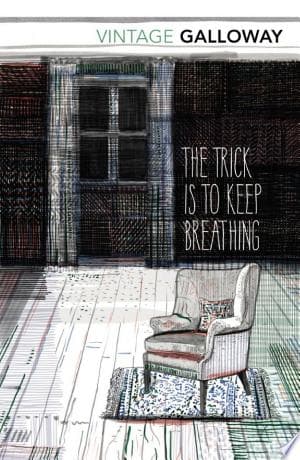
Janice Galloway (2010)
Genre
Literary Fiction / Psychology
Reading Time
240 min
Key Themes
See below
Sign in to track this book
After devastating losses, Joy Stone navigates grief with desperate clarity, searching for a way to simply keep living.
Joy Stone is in a psychiatric hospital, dealing with grief and mental health issues. The story begins with her disorientation and the reality of her new surroundings. She observes other patients and staff with a detached, often sarcastic, view, even as her own mind is in turmoil. Her hospitalization follows a severe depressive episode, made worse by the recent, traumatic death of her married lover, Michael. She struggles with basic tasks like eating and sleeping. The hospital, while offering some safety, also feels isolating and stifling. She interacts little with her doctors and therapists, often deflecting questions with evasive answers or dark humor.
Joy's mind is full of fragmented memories of Michael, her married lover, and the events of his death. She remembers their secret meetings, their intense connection, and the guilt she felt about their affair. The clearest and most painful memories are those leading up to his drowning during a holiday in Spain. She replays the scene: Michael going for a swim, her unease, and the horrifying discovery that he had drowned. These memories are not in order; they are intrusive, often triggered by everyday things in the hospital, and they make it hard for her to process her grief and move on.
A strong sense of guilt consumes Joy. She irrationally blames herself for Michael's death, examining every moment before the tragedy for what she could have done differently. This self-blame mixes with the guilt she already carried for being 'the other woman.' She feels she is being punished, not just for the affair, but for her very being and desires. This guilt leads to self-destructive behaviors and a deep feeling of unworthiness, making it hard for her to accept comfort or see a path to recovery. Her internal thoughts often return to her perceived failures and responsibility.
During her hospital stay, Joy receives visits from her sister, Margaret, and a few friends, including Jane. These interactions are often tense, as Joy struggles to connect with them or explain her suffering. Margaret, though well-meaning, often seems distant or unable to grasp the depth of Joy's despair, offering clichés or practical advice that feels irrelevant. Joy cannot truly confide in them, feeling isolated even in their presence. She observes their attempts at normalcy with a critical eye, further highlighting her detachment from the outside world and her past life.
Joy has regular sessions with her therapist, Dr. Macfarlane, but she largely resists real engagement. She often uses sarcasm, evasiveness, or dry wit to deflect questions about her feelings and experiences. She views therapy with cynicism, questioning its effectiveness and the doctor's ability to truly understand her pain. While she attends the sessions, her participation is minimal, and she rarely allows herself to be vulnerable. This resistance is a coping mechanism, a way to maintain control and protect herself from more emotional pain, even as it slows her progress toward healing.
Mixed with memories of Michael are fragmented recollections of Joy's mother, who had also died. These memories show a complex and often strained relationship. Joy's mother was demanding and critical, and Joy often felt she could never meet her expectations. Her mother's death, though less sudden than Michael's, left Joy with unresolved feelings of inadequacy and a lingering sense of duty. She thinks about her mother's illness and the burden of caregiving, which added another layer of emotional complexity to her life, contributing to her current state of overwhelming grief and exhaustion.
Joy, an actress, often thinks about her professional life and her relationship with performance. She sees her acting career as a way to inhabit other selves, offering a temporary escape from her own identity. In her current state, she feels like she is always performing, even in the hospital, putting on a brave face or a show of indifference. The lines between her true self and her performed self blur, adding to her disorientation. She remembers past roles and the camaraderie of the theater, contrasting it with her present isolation and the feeling of being completely unscripted and lost.
As her time in the hospital continues, Joy begins to face the prospect of returning to the outside world. The idea of re-engaging with her flat, her job, and her old life fills her with anxiety. She feels unprepared to face others' judgments, the memories in her surroundings, and the sheer effort of simply existing. While the hospital offers a strange kind of protective bubble, she knows she cannot stay there forever. The story shows her gradual, hesitant steps toward imagining a future, even if it is still shrouded in uncertainty and fear.
Despite her despair, Joy has intermittent moments of clarity, small victories that hint at recovery. These might be a brief, genuine laugh with another patient, a moment of appreciating a piece of music, or a fleeting sense of peace during a walk on the hospital grounds. These instances are rare but important, suggesting that her spirit, though wounded, is not entirely broken. They offer glimpses of the person she once was and the potential for her to rediscover joy, even if it feels distant. These moments are often unexpected and provide a subtle contrast to her dominant melancholic state.
Throughout her ordeal, the simple, involuntary act of breathing is a central idea. For Joy, 'the trick is to keep breathing' is not just a physical need but a deep metaphor for survival and endurance in the face of overwhelming grief and mental illness. When everything else feels impossible, focusing on her breath grounds her, anchoring her in the present moment and preventing complete collapse. It represents the most basic act of living, a continuous, though difficult, commitment to staying alive amid the chaos of her mind.
Joy is eventually discharged from the psychiatric hospital, a moment filled with both relief and apprehension. She returns to her flat, which feels both familiar and strange, full of the ghosts of her past. The transition back to 'normal' life is not a straightforward path to recovery but a continuation of her struggle. The book ends not with a clear resolution but with Joy still navigating her grief and mental health, facing the ongoing challenge of learning how to live again. She understands that healing is a process, and the 'trick' of breathing, of simply enduring, remains her main focus.
The Protagonist
Joy moves from a state of complete mental breakdown and isolation to a hesitant, uncertain re-engagement with life, accepting that recovery is an ongoing process of 'keeping breathing.'
The Supporting/Mentioned
As a deceased character, Michael's 'arc' is in Joy's changing perception of him, from idealized lover to a source of complex grief and guilt.
The Supporting
Margaret remains a consistent, if somewhat limited, source of external connection for Joy, without significant personal development within the narrative.
The Supporting
Dr. Macfarlane consistently attempts to facilitate Joy's healing, without a personal arc of his own.
The Supporting
Jane's role is primarily to provide an external perspective on Joy's situation, without a significant arc of her own.
The Mentioned
As a deceased character, her 'arc' is in how Joy processes and re-evaluates their relationship over time.
The novel is an exploration of grief in its most raw and debilitating form. Joy's emotional and mental breakdown directly results from the sudden, traumatic death of her lover, Michael, compounded by the earlier loss of her mother. The story looks at the non-linear, suffocating nature of grief, showing how it appears as physical symptoms, intrusive thoughts, and a complete inability to function. Joy's struggle to process these losses is central, as she replays events, battles guilt, and feels an overwhelming emptiness. Her journey is not about 'getting over' grief, but learning to 'keep breathing' through it, acknowledging its permanence.
“The trick is to keep breathing. It's not a trick, it's a fact. But it feels like a trick.”
The book shows mental illness, specifically depression and acute grief, from an interior perspective. Joy's hospitalization, her resistance to therapy, her distorted perceptions, and her constant internal struggle illustrate the isolating and disorienting experience of a mental breakdown. The theme also explores the difficult, non-linear path to recovery, emphasizing that it is not a cure but a continuous process of managing symptoms and finding ways to cope. The novel critiques societal understandings of mental health, showing the gap between external expectations and internal reality, and the difficulty of communicating such profound suffering.
“They want to know what's wrong with me. I want to know what's wrong with them for not knowing.”
Joy is consumed by a strong sense of guilt, both for her affair with Michael and, irrationally, for his death. This theme explores how guilt can become a self-punishing mechanism, trapping a person in a cycle of blame and unworthiness. Joy dissects every past action, seeking responsibility and believing she deserves her suffering. This deep self-blame is a significant barrier to her healing, as it prevents her from accepting comfort or forgiveness, even from herself. The story shows the destructive power of guilt and its ability to distort reality, making an already tragic situation even more unbearable.
“If I hadn't been there, he wouldn't have gone in the water. If he hadn't gone in the water, he would still be alive.”
As an actress, Joy's profession deeply connects with her search for identity. The theme explores how she uses performance as a shield, a way to inhabit other selves and avoid confronting her own fractured identity. In the hospital, she feels she is always performing, putting on a brave face or a mask of indifference for her visitors and therapists. This blurs the lines between her authentic self and her acted self, adding to her disorientation. The novel suggests that while performance can offer escape, it also hinders genuine self-discovery and vulnerability, which are important for healing.
“I was always someone else. It was easier. Now there is only me, and I don't know who that is.”
The narrative is primarily told through Joy's unfiltered thoughts and perceptions.
This device immerses the reader directly into Joy's mind, allowing for an intimate and often disorienting experience of her mental state. The narrative is characterized by fragmented sentences, non-linear recollections, sudden shifts in topic, and a mix of raw emotion and sardonic wit. This style effectively conveys the chaos, confusion, and overwhelming nature of her grief and depression, making her internal world palpably real to the reader and highlighting her isolation from external reality.
Memories of Michael and her mother are interspersed throughout the present-day hospital stay.
The story does not unfold chronologically. Instead, Joy's present experiences in the hospital are constantly interrupted by vivid, intrusive flashbacks to her affair with Michael, his death, and her relationship with her deceased mother. This device mirrors the way trauma and grief manifest in the mind, where past events continually intrude upon the present, making it difficult for Joy to find peace or move forward. It allows the author to reveal crucial backstory gradually, deepening the reader's understanding of Joy's complex psychological state.
Joy uses wit and cynicism as a coping mechanism and defense.
Despite the heavy subject matter, Joy's internal monologue is frequently punctuated by sharp, often self-deprecating, dark humor and sarcasm. This device serves multiple functions: it acts as a coping mechanism for Joy to manage her overwhelming pain, a way to deflect probing questions from therapists and visitors, and a means of maintaining a semblance of control and intellectual superiority amidst her emotional collapse. It also provides moments of levity for the reader, making Joy's character more complex and relatable, preventing the narrative from becoming solely bleak.
Recurring phrases and images emphasize Joy's internal struggles.
The novel frequently employs repetition of certain phrases, most notably 'the trick is to keep breathing,' but also specific images or thoughts related to Michael's death or her mother. This device underscores Joy's obsessive rumination and the cyclical nature of her grief and anxiety. The repetition reflects her inability to escape certain thoughts and serves to reinforce the central themes, making the reader feel the relentless pressure of her internal struggle and the difficulty of breaking free from her mental loops.
“The trick is to keep breathing.”
— A recurring thought, often during moments of intense pain or anxiety, representing the protagonist's struggle for survival.
“There was no point in telling anyone anything. They just looked at you.”
— Reflecting on the futility of expressing her inner turmoil to others, and the isolation she feels.
“My body was a map of all the places I'd been wrong.”
— A poignant self-assessment, linking physical discomfort and illness to her perceived failures and emotional state.
“It was just one foot in front of the other. Like walking a tightrope.”
— Describing the sheer effort required to perform basic daily tasks while battling depression and physical illness.
“The world was a blur of things I couldn't quite touch or understand.”
— Expressing a sense of detachment and confusion about her surroundings and her place within them.
“Pain was a language all its own, and I was fluent.”
— A stark acknowledgment of her constant experience with both physical and emotional pain.
“Sometimes you just had to shut your eyes and wish it was over.”
— A raw expression of despair and the desire for an end to her struggles.
“Silence was a heavy thing. Full of all the words I didn't say.”
— Reflecting on the weight of unexpressed thoughts and feelings, contributing to her isolation.
“The future was a dark room I had to feel my way through.”
— A metaphor for the uncertainty and fear she feels about what lies ahead.
“People always wanted you to be better. But what if you just weren't?”
— Questioning the societal pressure to recover and the difficulty of meeting those expectations when you're genuinely struggling.
“Every day was a battle. Some days I won, some days I just survived.”
— A realistic portrayal of her ongoing fight against her physical and mental health issues.
“Memory was a trick. It showed you what it wanted to show you.”
— Reflecting on the unreliable and often painful nature of her own memories.
“You learned to live in the gaps. Between the pain and the next breath.”
— A profound insight into how she navigates her existence, finding moments of respite within constant suffering.
“The world kept turning, whether you were ready for it or not.”
— A feeling of being overwhelmed by the relentless progression of life, despite her personal struggles.
Ready to see how well you understood this book? Take our interactive quiz with 10 questions.

Janice Galloway is a Scottish writer of novels, short stories, prose-poetry, non-fiction and libretti.







