“I know what gold does to men. Makes 'em mad.”
— Howard warns Dobbs and Curtin about the corrupting influence of gold.

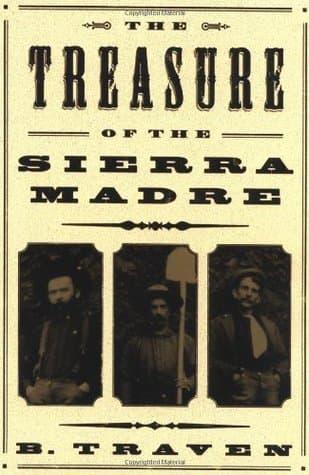
Genre
Historical Fiction
Reading Time
6-8 hours
Key Themes
See below
Sign in to track this book
In the desolate mountains of Sonora, three American drifters strike gold, only to unearth a deeper vein of paranoia and greed that threatens to consume them all.
Fred C. Dobbs, a drifter in Tampico, Mexico, struggles to find work and food. He repeatedly asks a wealthy American, McCormick, for money, who eventually gives him a small sum. Dobbs shares a flophouse with Curtin, another American equally poor. They both take odd jobs, including construction work for a dubious American contractor. One evening, an old, experienced prospector named Howard arrives at their flophouse. Howard, a veteran of the goldfields, tells Dobbs and Curtin tales of gold prospecting, warning them of the hardships but also hinting at great rewards. His stories ignite hope and greed in the two men, who are desperate to escape poverty.
Dobbs and Curtin, after more grueling and unpaid labor for the contractor, finally receive their promised wages, which are barely enough to survive. However, luck changes their fortunes dramatically: Dobbs wins a significant sum in the Mexican national lottery. Excited, he shares his winnings with Curtin, who had also contributed to buying the ticket. With this unexpected money, they approach Howard with a proposition to form a partnership and prospect for gold in the Sierra Madre mountains. Howard, initially skeptical of their inexperience, is convinced by their determination and financial backing. They agree to an equal three-way split of any gold found.
The three partners, Dobbs, Curtin, and Howard, pool their resources to buy supplies, tools, and pack animals for their expedition. They travel by train and then by mule into the rugged Sierra Madre mountains. The journey is hard, marked by extreme heat, treacherous terrain, and constant bandit threats. As they go deeper into the wilderness, their initial camaraderie begins to show cracks. Dobbs, especially, becomes more paranoid and suspicious, fueled by the harsh environment and the pressure of their shared venture. Howard, with his experience, guides them, teaching them about prospecting and survival in the wild.
After weeks of searching and digging, their efforts pay off. Howard, using his expert knowledge, finds a promising vein, and soon they begin to unearth significant quantities of gold dust and nuggets. The initial excitement is immense, but it quickly gives way to growing tension and distrust. Dobbs, consumed by avarice, becomes increasingly suspicious of Curtin and Howard, believing they might try to cheat him out of his share. He constantly watches them, meticulously weighing his gold, and makes subtle accusations. Howard, observing Dobbs's deteriorating mental state, tries to maintain order, but the lure of gold proves too powerful for Dobbs's fragile mind.
While working their claim, the three men are suddenly confronted by a group of heavily armed Mexican bandits led by Gold Hat. The bandits try to rob them of their gold. Howard, with quick thinking, devises a strategy to intimidate the bandits, pretending they are more numerous and better armed than they are. After a tense standoff and a brief exchange of gunfire, the bandits retreat, believing they are outmatched. This encounter, while repelled, deeply rattles the prospectors and further fuels Dobbs's paranoia, making him even more possessive of their gold and distrustful of his partners.
As their gold grows, so does Dobbs's obsession. One day, local indigenous people approach their camp, seeking Howard's medical help for a severely ill child. Howard, showing his humanitarian side, agrees to go, leaving Dobbs and Curtin to guard the camp and the gold. While Howard is away, a puma attacks Curtin, inflicting severe wounds. Dobbs, instead of immediately helping Curtin, hesitates, driven by his growing desire to eliminate his partner and claim his share of the gold. He eventually provides some aid, but his reluctance is clear, revealing his descent into madness and greed.
After Howard's return and Curtin's slow recovery, the tension between Dobbs and Curtin reaches a breaking point. Dobbs, consumed by paranoia and greed, decides to act. During a night watch, he ambushes Curtin, shooting him and leaving him for dead. Dobbs then flees with all the gold, convinced he has eliminated his rival. However, Curtin, though gravely wounded, survives the attack. He struggles to crawl away and is eventually discovered by the indigenous villagers, who tend to his injuries and provide him with shelter, showing their compassion and respect for Howard.
Howard, realizing Dobbs's treachery and Curtin's survival, immediately sets out with Curtin to track Dobbs and recover the stolen gold. Meanwhile, Dobbs, alone and increasingly deranged, wanders through the desert with the heavy sacks of gold. He encounters Gold Hat and his bandits again. The bandits, recognizing Dobbs's vulnerability and his suspicious cargo, attack him. They kill Dobbs, taking his donkeys and the sacks of what they believe to be gold. In their ignorance, they discard the gold dust, believing it to be worthless sand, only keeping the sacks themselves.
Howard and Curtin eventually find Dobbs's lifeless body, stripped and abandoned. They also discover the discarded sacks, now empty, scattered by the wind. A strong gust of wind blows away the last remnants of the gold dust, carrying it back into the desert. The irony is profound: the treasure they risked everything for, and which drove Dobbs to madness and murder, is now gone, dispersed by nature. Howard and Curtin are left with Dobbs's demise and the bitter realization of their ultimate failure to secure the gold.
Despite the tragic loss of the gold, Howard is approached by the indigenous villagers who had previously sought his help. Impressed by his wisdom and medical skills, they offer him a respected position as a healer and advisor within their community. Howard, having witnessed greed's destructive power, accepts this new path, finding contentment and purpose in helping others. He finds a different kind of 'treasure' in the respect and belonging offered by the villagers, a stark contrast to the fleeting pursuit of material wealth. Curtin, still recovering, prepares to return to civilization, forever changed by his harrowing experience.
The Protagonist/Antagonist
Dobbs transforms from a penniless, desperate man into a gold-crazed murderer, ultimately losing his life and the treasure he coveted.
The Protagonist/Supporting
Curtin starts as an optimistic prospector, endures betrayal and near-death, and emerges with a deeper understanding of human nature and the dangers of greed.
The Supporting/Mentor
Howard begins as a cynical but experienced prospector, witnesses the destructive power of greed, and ultimately finds fulfillment in a life of service and respect within an indigenous community.
The Antagonist
Gold Hat remains a consistent external threat, ultimately serving as the instrument of Dobbs's demise and the ironic dispersal of the treasure.
The Mentioned
McCormick's role is static; he merely serves as a catalyst for Dobbs's initial financial gain.
The Mentioned
The Contractor's role is static; he represents an obstacle for Dobbs and Curtin at the story's outset.
The novel shows how pursuing wealth can degrade human character. Dobbs, initially just desperate, quickly descends into paranoia, suspicion, and murder once he finds gold. His obsession with his share and his distrust of his partners lead him to betray those he once shared a dream with. The gold, rather than bringing happiness, becomes a curse that strips him of his humanity, ending in his violent death and the ironic loss of the treasure he killed for. This theme is central to the entire narrative, showing how material desire can destroy bonds and souls.
“Gold is a devilish sort of thing. It's got a power over men that's stronger than love or hate.”
The story contrasts gold's perceived value with other forms of wealth and fulfillment. While Dobbs and Curtin initially believe gold is the ultimate solution, Howard, with his experience, understands its fleeting and dangerous nature. The irony of the gold being scattered by the wind and mistaken for sand by the bandits highlights its inherent worthlessness outside of human constructs. Howard's eventual decision to embrace a life of service and respect among the indigenous people, finding 'treasure' in community and purpose, shows that true value lies beyond material possessions.
“Most men are not to be trusted when it comes to gold.”
The Sierra Madre mountains are not just a backdrop but an active character, constantly challenging the prospectors. The hard journey, extreme heat, lack of resources, and threat of wild animals (like the puma attacking Curtin) test physical and mental endurance. Nature acts as a crucible, stripping away civilization's veneer and exposing the men's raw instincts. It is an indifferent force that ultimately reclaims the gold, mocking human efforts to control or possess its riches. The harsh environment worsens the existing tensions among the men, pushing them to their breaking points.
“The mountain doesn't give up its gold easily. It makes you earn it with sweat and blood.”
The story explores the fragility of trust, especially when immense wealth is involved. The initial partnership between Dobbs, Curtin, and Howard is built on a shared dream and a verbal agreement, but it quickly erodes under the weight of gold. Dobbs's escalating paranoia and eventual attempt to murder Curtin represent the ultimate betrayal, destroying camaraderie. Howard's steadfastness and Curtin's eventual survival highlight the resilience of some, while Dobbs's actions serve as a cautionary tale about suspicion and selfishness's destructive power in the face of temptation.
“A partner is a partner, as long as there ain't no gold. But once there's gold, a partner ain't no partner anymore.”
Hints and warnings about future events or character developments.
The novel uses foreshadowing extensively, particularly through Howard's early warnings about the corrupting influence of gold and the dangers of prospecting. His initial reluctance to partner with Dobbs and Curtin, and his observations about men's behavior around wealth, subtly hint at the betrayals and conflicts to come. Dobbs's early paranoia and quick temper also foreshadow his eventual descent into madness and violence, preparing the reader for his tragic actions.
A situation where the audience knows more than the characters.
The most significant instance of dramatic irony occurs at the end when Gold Hat and his bandits kill Dobbs for his gold but then discard the gold dust, believing it to be worthless sand. The audience knows the immense value of the 'sand,' while the bandits remain blissfully ignorant. This creates a powerful moment of tragicomic irony, highlighting the futility of Dobbs's greed and the arbitrary nature of what humans deem valuable.
An object or device that serves merely as a trigger for the plot.
The gold itself functions as a MacGuffin. While it is the central object of desire and the catalyst for all the conflict, its actual possession is less important than the journey it forces the characters to undertake and the changes it brings about in them. The fact that it is ultimately lost to the wind and mistaken for dirt by the bandits reinforces its role as a plot driver rather than an end in itself, emphasizing the thematic focus on human nature over the material object.
A protagonist who lacks conventional heroic attributes.
Fred C. Dobbs is a quintessential anti-hero. He is driven by selfish desires, lacks a strong moral compass, and descends into villainy. He is not admirable or virtuous, yet the narrative largely follows his perspective and his journey, making him the central figure despite his deeply flawed character. This device allows the author to explore the darker aspects of human nature and the destructive consequences of unchecked greed through a relatable, albeit morally compromised, protagonist.
“I know what gold does to men. Makes 'em mad.”
— Howard warns Dobbs and Curtin about the corrupting influence of gold.
“Bad luck, that's what it is. Just plain bad luck.”
— Dobbs often attributes his misfortunes to bad luck, avoiding self-blame.
“The more gold you have, the more you want. It's a curse.”
— Howard reflects on the insatiable nature of greed once the prospectors find gold.
“We've wounded this mountain, and she's bleeding gold.”
— Curtin expresses a sense of the mountain giving up its treasure, almost as a living entity.
“You think you can trust a man with gold in his pocket? Think again.”
— Howard's cynical view on trust and the impact of wealth.
“Gold is a fiend, a devil, a worker of damnation.”
— Howard's grim assessment of gold's true nature and its destructive power.
“We're not here to make friends, we're here to make money.”
— Dobbs's pragmatic, and ultimately isolating, view of their partnership.
“A man's got to eat. And a man's got to live. And a man's got to have some gold.”
— Dobbs's justification for his relentless pursuit of wealth.
“The gold changes everything. It changes you.”
— Curtin observes the psychological transformation caused by their discovery.
“There are no friends in the mountains when there's gold involved.”
— Howard reiterates his warning about the corrosive effect of gold on relationships.
“This whole business is a lottery, and we've got the winning ticket.”
— Dobbs expresses initial euphoria and a sense of destiny after finding gold.
“A wise man knows when to quit. A fool keeps digging.”
— Howard's philosophy on knowing one's limits and avoiding excessive greed.
“It's all in the mind, this gold fever. It drives men mad.”
— Howard describes the psychological sickness that afflicts prospectors.
Ready to see how well you understood this book? Take our interactive quiz with 10 questions.
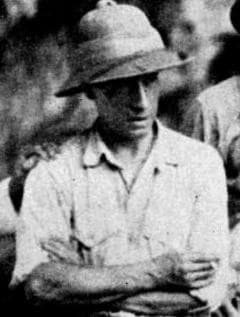
B. Traven was a prolific writer known for his adventure novels, most famously "The Treasure of the Sierra Madre." His works often explore themes of greed, exploitation, and the human condition in remote, often dangerous settings. Traven's anonymity and mysterious life added to the intrigue surrounding his impactful fiction.