“The game was always about more than just winning. It was about surviving.”
— Elara reflecting on the true nature of the Traitor Game.

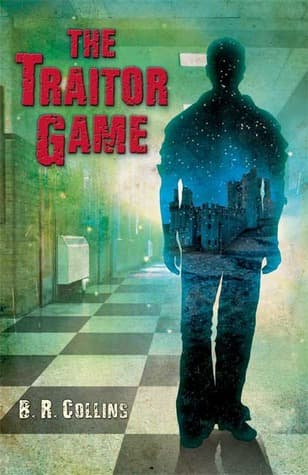
B.R. Collins (2008)
Genre
Fantasy / Mystery / Young Adult
Reading Time
300 min
Key Themes
See below
Sign in to track this book
When a secret fantasy world becomes a real-life weapon, two friends are caught in a treacherous game of betrayal where the line between hero and villain blurs and the truth is the ultimate casualty.
Michael and Francis are best friends, united by their secret fantasy world, Evgard. They've spent years developing its lore, characters, and history, documented in notebooks and shared role-playing sessions. Evgard is a dangerous land, a contrast to their school life, where bullies like Shitley target them. Michael, the more imaginative, often dictates the narrative and character roles, with Francis usually following. Their shared creation is a sacred space, a sign of their unique bond, and its secrecy is important, making it their most cherished shared experience.
One day, Michael finds a cryptic note in his locker, written in Evgard's style, referencing their secret world. The note implies someone knows about Evgard, shattering their privacy. Michael immediately suspects Francis. He believes Francis has betrayed their trust, possibly sharing their secret with others. This discovery creates paranoia and anger in Michael, changing his view of his best friend and setting the stage for a dramatic shift in their relationship.
Convinced of Francis's betrayal, Michael decides to retaliate. He knows Francis has been struggling with his sexuality, a personal secret Francis confided only in Michael. In a fit of vengeful rage, Michael tells Shitley, the school's bully, that Francis is gay. He knows this information will lead to Francis being severely beaten and humiliated, ensuring a painful and public punishment for what Michael sees as Francis's treachery. This act of betrayal by Michael is a devastating blow, far more damaging than any perceived slight from Francis.
As Michael anticipated, Shitley confronts Francis. The confrontation quickly escalates into a brutal physical assault, with Shitley and his friends attacking Francis. Michael witnesses parts of the beating, feeling a mix of guilt, satisfaction, and horror. The violence confirms the power of his revenge, but also its devastating consequences. Francis is left bruised and battered, physically and emotionally, by the revelation of his secret and the attack. This event marks a point of no return for their friendship, leaving Francis wounded and confused about Michael's actions.
In the days after Francis's beating, Michael feels consumed by guilt. He sees Francis's pain and isolation, and the weight of his own betrayal sinks in. Their friendship, once strong and defined by shared fantasy, is now shattered. Michael tries to avoid Francis, but the silence and unspoken accusations are loud. Evgard, which once bound them, now feels tainted and empty. Michael starts to question his hasty judgment and the true source of the note, wondering if his revenge was justified or if he made a terrible mistake.
As Michael thinks about the note and the events, his focus shifts from Francis. He starts noticing unusual behavior from Jamie, a quiet and eccentric classmate who has always shown interest in fantasy. Jamie's detailed drawings and peculiar mannerisms start to match the style of the note, making him a new, more plausible suspect. Michael starts observing Jamie more closely, connecting subtle clues and coincidences that suggest Jamie might have been the one to discover and expose Evgard, not Francis. This shift in suspicion opens a new path for Michael's investigation.
Driven by his growing suspicions, Michael confronts Jamie. He corners Jamie, pressing him about the note and his knowledge of Evgard. To Michael's surprise, Jamie doesn't deny it. Jamie confesses he found Michael and Francis's Evgard notebooks, likely by accident, and was captivated by their world. He explains he left the note not out of malice, but out of a desperate desire to connect with them, to be part of their world. Jamie reveals a deep admiration for their creativity, explaining his isolation and longing for connection.
Jamie's confession clarifies the true intent behind the note. He wasn't trying to expose or betray Michael and Francis; he was trying to reach out, clumsily, to bond over their shared passion for fantasy. He admired their world and felt a kinship, hoping the note would be a bridge, not a weapon. This revelation hits Michael hard, as he realizes his own misunderstanding and the injustice he inflicted upon Francis. Jamie's genuine, if socially awkward, desire for friendship contrasts with Michael's vengeful actions, increasing Michael's remorse.
The full weight of his actions crashes down on Michael. He now understands he wrongly accused Francis and caused him immense pain and humiliation. Overwhelmed by regret, Michael attempts to apologize to Francis. However, Francis is too deeply hurt and traumatized by Michael's betrayal to easily accept it. The physical scars from Shitley's beating are healing, but the emotional wounds from Michael's treachery are deep. Francis struggles to reconcile the friend he thought he knew with the person who so cruelly exposed his secret, making reconciliation a difficult and uncertain path.
Michael begins a long journey to earn back Francis's trust. This involves more than just apologies; it requires consistent effort, genuine remorse, and a willingness to confront the consequences of his actions. He attempts to protect Francis from further bullying and tries to be supportive, even when Francis pushes him away. The process is slow, marked by setbacks and moments of despair, but Michael remains persistent. He understands that rebuilding their friendship, and perhaps even their shared world of Evgard, will take time, patience, and true atonement for his betrayal.
The Protagonist
Michael transforms from a self-righteous, vengeful friend to a deeply remorseful individual who learns the true meaning of friendship and responsibility.
The Supporting/Victim
Francis endures a profound betrayal and physical assault, forcing him to confront trust issues and the true nature of his friendships.
The Supporting
Jamie moves from an unnoticed, isolated figure to an accidental catalyst for the protagonists' conflict, revealing his own yearning for connection.
The Antagonist
Shitley remains a static character, serving primarily as an instrument of violence and a representation of external threats.
This theme explores the complexities and fragility of close friendships. Michael and Francis's bond, built on the shared secret of Evgard, is shattered by Michael's rash accusation and betrayal. The novel shows how easily trust can be broken and the impact of such an act, especially when it involves revealing a personal secret. The difficult path to reconciliation highlights the effort required to mend broken trust and the lasting scars of betrayal, as seen in Francis's struggle to forgive Michael after the attack Michael orchestrated.
“A secret shared is a sacred trust, and the breaking of it can shatter worlds, both real and imagined.”
Evgard, the fantasy world Michael and Francis created, is a symbol of imagination and escapism. For the boys, it's a refuge from school life and bullying, a place where they have control and can be heroes. The details of Evgard highlight the human mind's creative capacity to build alternative realities. However, the novel also shows how this escapism can become intertwined with real-world conflicts, as the 'betrayal' within Evgard's context leads to real-world violence, showing the blurry line between fantasy and reality.
“Evgard wasn't just a game; it was a shield, a kingdom where we were kings and the bullies of the real world held no sway.”
The novel tackles identity, especially Francis's struggle with his sexuality. His fear of exposure and the public humiliation Michael orchestrated underscore the vulnerability of personal identity, especially in school. Michael's betrayal weaponizes this vulnerability, causing emotional and physical harm. The story emphasizes empathy and respect for others' private struggles, illustrating how a single act of malice can devastate someone's sense of self and security.
“Some secrets are not meant for games; they are parts of who you are, and to expose them is to tear a piece of someone's soul.”
Michael's decision to get revenge on Francis is based on a hasty and incorrect assumption about who exposed Evgard. This theme highlights the destructive power of acting on incomplete information and unchecked anger. Michael's immediate suspicion of Francis, without seeking clarification, leads to negative consequences, including Francis's brutal beating and the near-destruction of their friendship. The story is a cautionary tale about critical thinking, communication, and emotional regulation before taking irreversible actions.
“Hate is a blind guide, leading you down paths you'll regret, and leaving wreckage in its wake.”
A shared imaginative world that mirrors and influences real-world conflict.
Evgard functions as both a sanctuary and a catalyst for the plot. Initially, it symbolizes Michael and Francis's close bond and their shared escape from reality. The 'betrayal' of Evgard's secrecy directly triggers Michael's vengeful actions. The language and style of the mysterious note, mimicking Evgard's lore, are crucial plot points, misdirecting Michael's suspicions. The contrasting elements of the fantastical Evgard and the mundane, often brutal, school reality highlight the boys' internal lives and external struggles, creating a rich backdrop for the emotional drama.
A cryptic message that ignites the central conflict and propels the plot.
The note found in Michael's locker is the primary inciting incident of the story. Its ambiguous wording and Evgard-themed content are specifically designed to mislead Michael and fuel his paranoia. It acts as a MacGuffin, driving Michael's initial suspicion and subsequent act of revenge against Francis. The eventual revelation of its true author and innocent intent by Jamie resolves the central mystery and exposes Michael's grave error, turning the plot on its head and shifting the focus to Michael's guilt and redemption.
The story is told primarily through Michael's subjective viewpoint.
The novel is largely narrated from Michael's perspective, allowing readers deep insight into his thoughts, emotions, and flawed reasoning. This device is crucial for building suspense and empathy, even as Michael makes terrible choices. We experience his initial anger, his certainty of Francis's betrayal, and later, his overwhelming guilt and regret. This subjective lens initially blinds the reader to the truth, mirroring Michael's own misjudgment, and makes his journey of realization and atonement more impactful as we witness his internal struggle firsthand.
“The game was always about more than just winning. It was about surviving.”
— Elara reflecting on the true nature of the Traitor Game.
“Trust is a weapon, and it can be turned against you faster than any blade.”
— A warning given to Kael early in the game, highlighting its treacherous nature.
“Every secret has a price, and the longer you keep it, the higher the cost.”
— Elara pondering the burden of her hidden knowledge.
“Sometimes, the only way to find the truth is to break all the rules.”
— Kael justifying his unorthodox methods in investigating the mysteries.
“The past isn't just something you remember; it's something you carry.”
— A character reflecting on the lasting impact of past events and trauma.
“Fear can make you do terrible things, but it can also show you what you're truly capable of.”
— Elara facing a difficult decision under duress.
“The line between friend and foe blurs when everyone is playing for their lives.”
— An observation about the shifting alliances within the Traitor Game.
“Not all monsters lurk in the shadows. Some walk in plain sight, wearing smiles.”
— Kael's realization about the true antagonists.
“Hope is a dangerous thing in a game like this, but it's also the only thing that keeps you going.”
— A character grappling with despair and the need to persevere.
“To truly win, you must understand not just the game, but the players.”
— An insight into the psychological aspect of the Traitor Game.
“The greatest betrayals often come from the people you least expect.”
— A reflection on a pivotal moment of treachery.
“Silence can be louder than any scream when it carries the weight of a lie.”
— Elara recognizing the unspoken truths and deceptions around her.
“What defines us is not whether we fall, but how we choose to rise.”
— A moment of resilience and determination after a setback.
“Sometimes, the hardest choices are the only ones that truly matter.”
— Kael making a difficult decision with far-reaching consequences.
Ready to see how well you understood this book? Take our interactive quiz with 10 questions.

B.R. Collins is a fiction author known for "The Traitor Game." Her work often explores themes of suspense and intrigue within compelling narratives, drawing readers into intricate plots and character-driven stories.







