“I am a reservation Indian, and that is all I am, and all I will ever be.”
— The narrator reflects on his identity and the constraints of his upbringing.

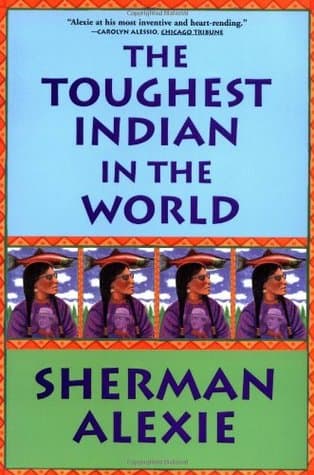
Sherman Alexie (2000)
Genre
Literary Fiction
Reading Time
320 min
Key Themes
See below
Sign in to track this book
Sherman Alexie writes about modern Indigenous life, from Spokane journalists to Lummi boxers and IHOP bandits. He shows the tender, often funny, love stories in his characters' everyday struggles.
The collection begins with the title story, where a Spokane Indian journalist, living in the city away from his reservation, picks up a Native American hitchhiker. The hitchhiker, a Lummi boxer named Seymour, wants to find and fight 'the toughest Indian in the world.' As they drive, Seymour challenges the journalist's ideas about Native identity and masculinity. The journalist, at first resistant, becomes interested in Seymour's honest world. Their talk covers strength, tradition, and what it means to act 'Indian' today. The meeting makes the journalist face his own distance from his heritage and the complexities of being a modern Native man.
In 'Assimilation,' a Spokane Indian son, Junior, deals with his diabetic father's hospital stay. The story shows Junior's thoughts as he cleans his father's house, finding hidden Hershey Kisses—a sign of his father's struggles with his illness and his endearing, yet unhealthy, habits. Junior thinks about his father's life, his strength, and how he showed both traditional Spokane values and the pressures of assimilation. The story explores family love, illness, and the complex legacy passed down through generations. It shows the daily realities of reservation life and its effect on people.
'Flight' tells about a separated interracial couple, a Spokane Indian man and a white woman, who reunite and face their feelings after a car accident. Separated by the chaos and the arrival of emergency services, they feel fear, concern for each other, and a reawakening of their bond. The accident helps them drop their emotional defenses and reminds them of the deep love still between them despite past problems. The story explores reconciliation, the fragility of life, and the lasting power of connection across cultures.
In 'The Sin Eaters,' a white drifter named Harlan robs an International House of Pancakes. He asks for a dollar from each customer and 'someone to love.' Among the surprised customers is an overweight Spokane Indian man, whom Harlan calls 'Salmon Boy.' This strange meeting turns into an even stranger friendship, as Harlan and Salmon Boy travel together. The story explores loneliness, finding connections in unexpected places, and how human relationships can be random. It is a dark but tender story about two outsiders finding comfort together in an absurd world.
'Dear John Wayne' features a Spokane Indian writer who feels conflicted about his identity and the common, often harmful, stereotypes of Native Americans from Hollywood, especially John Wayne. The writer thinks about his own 'Indianness' and the expectations placed on him by both Native and non-Native communities. He considers the irony of being an educated, successful Native American who still feels the burden of historical misrepresentation. The story is about storytelling, the power of media, and the ongoing struggle for real representation and self-definition after colonialism.
'The Approximate Size of My Favorite Tumor' follows James, a Spokane Indian man, as he faces a terminal cancer diagnosis with dark humor and deep love for his family. He jokes about his 'favorite tumor' and uses humor to cope, often annoying and amusing his wife and children. The story explores how illness affects a family, how people deal with grief and loss, and the strength found in shared experiences and cultural traditions. It shows the strength of the human spirit and lasting family bonds when facing death.
'The First Indian on the Moon' presents a story about a Native American astronaut, a Spokane man, who becomes the first Indian to walk on the moon. From the moon, he thinks about his journey, his identity, and the deep isolation he feels, both physically and culturally. Despite his achievement, he remains connected to his earthly roots and the Spokane reservation. The story uses space travel to explore displacement, the desire for belonging, and the unique view of a Native person looking at the world from afar, showing the lasting pull of heritage.
'The Private Life of a Public Man' looks at the life of a famous Native American actor. Despite his success in Hollywood, he feels disconnected and watched. He struggles with the public seeing him as a symbol of his people, while privately fighting his own insecurities and desires. The story explores the pressures of fame, the burden of representation, and the difficulty of keeping a personal identity when constantly seen by the public. It comments on how Native identity is used for profit and the challenges for those who become successful in the mainstream while staying connected to their culture.
'Indian Killer' (a short story in this collection, not Alexie's novel of the same name) follows a Native American man who becomes a vigilante, targeting white men to get revenge for historical wrongs and personal pain. The story explores the psychological effects of racism and cultural oppression, showing the character's descent into madness as he tries to regain power and control through extreme actions. It is a raw story about anger, historical pain, and the desperate search for justice in a world that often denies it to marginalized communities.
'The Loneliest Road in America' features two Spokane Indian men on a road trip. They want to escape their daily lives and also confront unspoken tensions and shared histories. As they drive through empty areas, their conversations range from funny stories to deep thoughts about their lives, their tribe, and their place in the world. The journey shows their individual and collective searches for meaning and belonging. The story explores male friendship, the weight of cultural expectations, and the bittersweet reality of living as modern Native Americans, often feeling lost between two worlds.
The Protagonist
He begins as an assimilated, somewhat detached observer and ends with a deeper, albeit complicated, understanding of his cultural identity and the meaning of 'toughness.'
The Supporting
He remains steadfast in his quest, serving as a catalyst for the journalist's self-reflection rather than undergoing a significant internal change himself.
The Protagonist
He moves from anxious observation to a deeper acceptance of his father's humanity and his own role in carrying forward their family's story.
The Supporting
His arc is largely static, as he is seen during his illness, but his life story, as recalled by Junior, shows a journey of enduring reservation life.
The Protagonist
He begins as a lonely, desperate individual and finds an unlikely form of companionship and purpose through Salmon Boy.
The Supporting
He moves from a mundane existence to an adventurous journey, finding an unexpected friend and a temporary escape from his ordinary life.
The Protagonist
He faces mortality with courage and humor, leaving a legacy of love and resilience for his family.
The Protagonist
He achieves an extraordinary physical journey but experiences a profound internal journey of cultural longing and self-realization.
The Protagonist
He grapples with the pressures of public identity and seeks to reconcile his personal self with his public persona.
A main theme is the complex and often conflicted nature of Native American identity today. Alexie explores how 'Indianness' is shown, seen, and truly lived, challenging simple stereotypes. In the title story, the journalist and Seymour discuss what makes an 'Indian' tough, looking beyond physical strength to include resilience, cultural knowledge, and emotional strength. Characters like the journalist, the actor, and the astronaut deal with balancing traditional heritage with urban life, fame, or extraordinary achievements, always questioning what is real.
““I’m looking for the toughest Indian in the world,” Seymour said. “I’m looking for the one who can beat me.””
Alexie often addresses the lasting effects of historical trauma, colonialism, and common stereotypes of Native Americans in media and society. Stories like 'Dear John Wayne' directly confront the harmful legacy of Hollywood's portrayal of Indigenous peoples, making characters reconcile their personal identities with these external narratives. The 'Indian Killer' story, though dark, explores the anger and desperation that can come from centuries of injustice and misrepresentation, showing the psychological toll of such historical burdens on individuals.
““I’m tired of being an Indian,” he said. “I’m tired of being a symbol.””
Despite difficult circumstances, the collection shows moving portrayals of family love and the bonds that support people through hardship. 'Assimilation' captures the bittersweet love between a son and his ailing father, full of unspoken understanding and shared history. 'The Approximate Size of My Favorite Tumor' shows a husband's and father's lasting love when facing terminal illness, using humor to show his affection. These stories emphasize the strength of families and the deep effect of love in dealing with life's losses.
“He knew he loved his father more than anything, even if his father was killing himself with Hershey Kisses.”
Many characters in Alexie's stories feel deep loneliness and a strong desire for connection, often in unexpected places. Harlan, the drifter in 'The Sin Eaters,' literally asks for 'someone to love' during a robbery, leading to an unlikely friendship with Salmon Boy. The Native American astronaut feels intense isolation even on the moon, longing for the familiarity of home and community. This theme shows the universal human need for belonging and companionship, often found in unusual pairings or through shared vulnerability.
““I just want somebody to love,” Harlan said, and it sounded like the saddest thing in the world.”
Alexie uses dark humor and wit to discuss difficult themes such as illness, death, and cultural trauma. James in 'The Approximate Size of My Favorite Tumor' jokes about his cancer to cope with his impending death and to ease his family's pain. The absurd premise of Harlan's IHOP robbery in 'The Sin Eaters' offers humor while showing deeper emotional truths. This use of humor lets characters keep their dignity, connect with others, and find moments of lightness amidst suffering, showing a common coping strategy in many Native cultures.
““My favorite tumor is about the size of a grapefruit,” James said, and his wife sighed, a familiar sound.”
A collection of distinct narratives that collectively explore overarching themes and character types.
Alexie utilizes the short story collection format, where each story stands alone but often features recurring themes, character archetypes (e.g., the Spokane Indian writer, the estranged father, the urban Indian), and sometimes even loosely connected narrative threads or settings. This allows for a multifaceted exploration of Native American identity, reservation life, and the broader human condition from various angles, without being confined to a single continuous plot. The cumulative effect builds a richer, more nuanced understanding of Alexie's world and concerns.
Stories told from various character viewpoints, offering intimate access to their thoughts and feelings.
Many of Alexie's stories employ first-person narration, but from different characters across the collection. This device provides immediate, intimate access to the protagonists' internal struggles, biases, and unique perspectives. For example, the journalist's voice in the title story or Junior's reflections in 'Assimilation' allow readers to deeply empathize with their specific experiences, whether grappling with cultural identity, familial love, or existential angst. This multiplicity of voices creates a diverse and authentic representation of the Native American experience.
Everyday objects and cultural figures imbued with deeper meaning.
Alexie frequently uses symbolism to enrich his narratives. In 'Assimilation,' the hidden Hershey Kisses symbolize the father's struggle with his illness, his small acts of rebellion, and the bittersweet nature of his love. In 'Dear John Wayne,' the iconic cowboy actor represents the pervasive and often damaging stereotypes of Native Americans in popular culture. These symbols are not merely decorative but serve as powerful shorthand for complex ideas, cultural critiques, and emotional states, allowing for layers of interpretation within the stories.
Incorporation of fantastical or improbable elements into realistic settings.
While largely grounded in realism, some stories introduce elements of magical realism or speculation. 'The First Indian on the Moon' is a prime example, taking a fantastical premise (a Native American astronaut) to explore very real themes of alienation, cultural identity, and longing for home. This device allows Alexie to push beyond conventional boundaries, using the extraordinary to illuminate profound truths about the human and Native American experience, creating a unique blend of the mundane and the mythical.
The use of wit and sarcasm to address serious or painful subjects.
Alexie's signature use of dark humor and irony is a prominent plot device. Characters often employ sarcasm, self-deprecating jokes, or absurd situations to cope with hardship, injustice, or the bleak realities of their lives. James's jokes about his 'favorite tumor' or Harlan's demand for 'someone to love' during a robbery are examples. This humor serves not only as a coping mechanism for characters but also as a way for Alexie to critique societal norms, highlight absurdities, and engage readers in complex issues without resorting to pure tragedy.
“I am a reservation Indian, and that is all I am, and all I will ever be.”
— The narrator reflects on his identity and the constraints of his upbringing.
“The toughest Indian in the world is the one who survives.”
— A character discusses resilience in the face of historical and personal struggles.
“We are all wounded, but some of us are better at hiding it.”
— Observation about the hidden emotional scars within the Native American community.
“Love is a foreign country, and I don't have a passport.”
— The narrator expresses his difficulty with intimacy and connection.
“Stories are the only things that save us.”
— Emphasizing the importance of storytelling in preserving culture and sanity.
“I wanted to be a warrior, but I became a journalist instead.”
— A character laments the modern displacement of traditional roles.
“The white man's world is a ghost that haunts us all.”
— Commentary on the lingering effects of colonialism and assimilation.
“We dance to remember what we cannot forget.”
— Describing the role of cultural rituals in coping with historical trauma.
“Sometimes, the only way to heal is to bleed.”
— A metaphor for the painful but necessary process of addressing deep wounds.
“I am a ghost in my own life, watching from the sidelines.”
— The narrator feels disconnected from his own experiences and community.
“The reservation is a beautiful prison.”
— Reflecting on the dual nature of the reservation as both home and confinement.
“We are all searching for a map to a place that no longer exists.”
— A poignant statement about the loss of traditional ways and homeland.
“Laughter is the sharpest knife we have.”
— Highlighting humor as a tool for survival and critique.
“I carry my ancestors in my bones, and they are heavy.”
— The burden of history and lineage felt by the narrator.
Ready to see how well you understood this book? Take our interactive quiz with 10 questions.
Biography coming soon.







