“America. It was a nation of immigrants, after all, and the melting pot was still bubbling, wasn't it?”
— Delaney Mossbacher's internal thoughts on immigration.

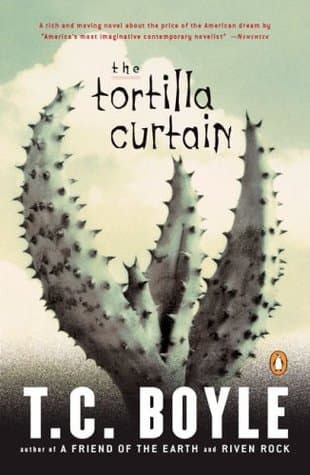
T. Coraghessan Boyle (1995)
Genre
Literary Fiction
Reading Time
700 min
Key Themes
See below
Sign in to track this book
In Southern California's canyons, the lives of a wealthy, white couple and a struggling, undocumented Mexican couple become tragically linked after a car accident.
One morning, Delaney Mossbacher, a liberal nature writer, accidentally hits Cándido Rincón, an undocumented Mexican day laborer, with his car in Topanga Canyon. Cándido, who was looking for food, is thrown and suffers minor injuries. Delaney, worried, offers Cándido twenty dollars as hush money, fearing legal trouble and disruption to his life. Cándido, desperate, takes the money and leaves before Delaney can fully process what happened. This small collision starts a series of events that will connect the two men and their families, despite their different social and economic statuses. Delaney feels uneasy and vaguely responsible, which he tries to dismiss.
Cándido and his pregnant wife, América Rincón, live a difficult life in a makeshift camp in a Topanga Canyon ravine. They are undocumented immigrants from Mexico, constantly struggling with hunger, poor sanitation, and the fear of deportation. Cándido, despite his injuries, continues to look for day labor, often facing exploitation and hostility. América tries to make their camp livable and save their few resources, all while dealing with pregnancy and the constant threat of being discovered. Their hopes for a better life in America are challenged daily by their harsh reality, making every day a fight for survival.
Delaney's wife, Kyra Mossbacher, a successful real estate agent, worries about crime and 'undesirables' entering their wealthy, new gated community, Arroyo Blanco Estates. She supports building a large, expensive wall around the community, believing it will protect their property values and security. Kyra sees the wall as necessary to preserve their lifestyle, unaware of the deeper social and economic forces at play. Her desire for order and control shows the community's wish to separate itself from the perceived chaos outside, especially from the people struggling nearby.
Cándido's attempts to find work face constant setbacks. He experiences wage theft, racial discrimination, and a lack of jobs. The twenty dollars from Delaney quickly runs out, and their hunger worsens. Their secluded camp in the ravine is discovered and destroyed by a local watchman, forcing Cándido and América to move. They keep looking for new, hidden spots for shelter, facing the same challenges of concealment, lack of resources, and the threat of discovery. América's pregnancy makes these moves harder, adding to their desperation.
While Kyra focuses on the wall, Delaney, an environmentalist, becomes absorbed in the fate of local wildlife. He writes articles about habitat destruction from development and obsesses over a lone coyote he often sees near his property. He views the coyote as a symbol of nature under threat and dedicates himself to its protection. His concerns, though well-intentioned, often overshadow the human struggles happening nearby, showing his selective empathy and the gap between his environmental ideals and the social realities around him. He believes he is protecting nature but remains blind to the human suffering at his doorstep.
As the wall debate grows, the Mossbachers' home is vandalized with graffiti and a 'wetback' sign. This incident, along with other small crimes and perceived threats, strengthens Kyra's resolve to build the wall and increases the residents' fear of outsiders. Delaney, though bothered, first tries to explain away the events, but even he starts to feel paranoid. The vandalism solidifies the division between the wealthy community and the unseen, struggling population outside, leading to more calls for security and separation, rather than any attempt to understand the cause of the tension.
América goes into labor early while they are hiding in a remote part of the canyon. Without medical help, she gives birth to a fragile baby boy they name Socorro. The birth intensifies Cándido's desperation to provide for his family. Overwhelmed by hunger and the baby's cries, Cándido steals food from a supermarket, an act that shows their extreme poverty. This theft, born from a father's love and a family's need to survive, further highlights the gap between the two worlds, where one family's basic needs drive them to break the law, while the other lives in comfort.
A devastating brush fire, likely from a discarded cigarette, starts in Topanga Canyon, quickly spreading and threatening both the wealthy homes of Arroyo Blanco and the hidden camps in the ravines. The fire forces an evacuation. The Mossbachers are terrified for their home, which is partly damaged. The Rincóns, with nowhere to go, are caught in the fire's path, their few possessions destroyed, and their lives again in chaos. The fire shows nature's uncontrollable power, affecting rich and poor alike, and exposing the fragility of their lives.
Amid the fire's chaos, Delaney, trying to save his property and the environment he loves, finds Cándido by the creek. Misunderstanding Cándido's actions and driven by fear, prejudice, and a desire to protect his territory, Delaney confronts him. The encounter quickly becomes a violent struggle, with both men fighting for their lives and their ways of survival. Cándido, having just lost his son Socorro to the elements and fire, is in deep grief and desperation. This brutal fight removes the pretense of civility, revealing the raw forces of class, race, and survival that have been present throughout the story.
As the fire dies down, both families assess the damage. The Mossbachers' home is damaged but repairable, and their material world, though shaken, is mostly intact. However, their sense of security is broken, and their illusions of control are gone. For Cándido and América, the tragedy is much greater. They have lost their baby, Socorro, to the elements and the fire, and their few possessions are gone. They are left with only grief and the desperate hope of starting over, their American Dream seemingly further away than ever. The novel ends with Cándido, now alone, moving toward an uncertain future, while Delaney, having survived the physical fight, must confront the moral implications of his actions and the human cost of his privileged life.
The Protagonist
Delaney's arc is one of gradual disillusionment and a forced confrontation with his own hypocrisy, culminating in a violent encounter that shatters his comfortable worldview.
The Protagonist
Kyra's arc shows her increasingly hardening stance on security and exclusion, culminating in a successful but ultimately unsatisfying realization of her desire for a walled-off community.
The Protagonist
Cándido's arc is a tragic descent into deeper poverty and loss, culminating in the ultimate heartbreak of losing his child, yet he maintains a resilient spirit.
The Protagonist
América's arc is one of profound suffering and loss, culminating in the devastating death of her infant son, leaving her heartbroken but still enduring.
The Supporting
Jordan's arc is largely static, serving as a foil to the adult characters and representing the insulated ignorance of the next generation.
The Supporting
Frank's arc reinforces the community's increasing desire for isolation and security.
The Supporting
Jack's arc shows the hardening of prejudice within the community, culminating in him taking part in aggressive actions against the undocumented.
The Mentioned
Socorro's arc is tragically cut short by his death, serving as a devastating symbol of the Rincóns' lost hopes and the harsh realities of their existence.
The novel contrasts the American Dream with the harsh realities for undocumented immigrants. Cándido and América come to the U.S. hoping for prosperity and safety, but instead find extreme poverty, discrimination, and constant danger. Their journey is a continuous struggle for basic survival, far from the promised opportunities. This theme is clear in their constant search for food and shelter, their exploitation by employers, and the tragic loss of their child, Socorro, which shatters their hopes.
“He knew it for a fact: the world was not a fair place, and he was not a lucky man.”
The novel shows the vast gap between the wealthy residents of Arroyo Blanco and the poor, marginalized undocumented workers in the canyon. The proposed wall symbolizes this division, also seen in the characters' views and interactions. Delaney's initial twenty-dollar payment to Cándido highlights the economic difference and his attempt to avoid responsibility. The Mossbachers' worries about property values and security contrast sharply with the Rincóns' struggle for food and shelter, showing how wealth creates a bubble that blinds one group to the struggles of another.
“He was a liberal, an environmentalist, a humanitarian. He knew he was. But there was a limit.”
Delaney Mossbacher shows hypocrisy. As a self-proclaimed liberal and nature writer, he supports environmental causes and animal rights, yet he lacks empathy for the human suffering happening nearby. His obsession with protecting a coyote, while largely ignoring Cándido and América's struggles, highlights his selective compassion. His internal thoughts show his attempts to rationalize his discomfort and keep his progressive self-image, even as his actions and thoughts reveal a deeper prejudice and self-interest. This theme challenges readers to examine their own biases.
“He wanted to do the right thing, to be sure, but what was the right thing when you were talking about a wetback?”
Fear, especially xenophobia, drives the novel. The residents of Arroyo Blanco, led by Kyra and others, are consumed by fear of 'outsiders' and a perceived threat to their security and lifestyle. This fear appears in their desire to build a wall, their suspicion of anyone different, and their tendency to blame undocumented immigrants for community problems. The vandalism of the Mossbachers' home increases this paranoia, leading to an 'us vs. them' mentality that prevents understanding across the social divide. This theme explores how fear can justify prejudice and exclusion.
“It was them, wasn't it? The illegals. They were everywhere.”
Topanga Canyon's natural environment is both a refuge and a hostile force. Delaney, a nature writer, sees nature romantically, but the novel shows its indifferent, brutal reality. The canyon is where Cándido and América try to survive, exposed to its dangers, ending in a devastating brush fire that affects everyone. This theme highlights humanity's vulnerability to nature's power, regardless of social status, and contrasts Delaney's intellectual appreciation of nature with the Rincóns' raw, physical struggle against it for survival.
“The canyon was alive, teeming, indifferent. It took no sides.”
A physical and symbolic barrier representing class, racial, and social division.
The proposed and eventually constructed wall around Arroyo Blanco Estates serves as the central plot device. Physically, it's meant to keep 'undesirables' out and protect property values. Symbolically, it embodies the growing social, economic, and racial divide between the affluent residents and the undocumented immigrants. It represents the desire for isolation, security, and the refusal to acknowledge the human struggles on the other side. Its construction drives much of the community conflict and highlights the themes of xenophobia and class stratification.
A recurring animal symbol representing wildness, nature, and selective empathy.
The coyote frequently appears throughout the novel, particularly in Delaney's observations. For Delaney, it symbolizes the wild, untamed nature he champions and seeks to protect. However, its presence also highlights Delaney's selective empathy, as he often expresses more concern for the animal's welfare than for the human beings struggling in the same environment. The coyote acts as a mirror, reflecting Delaney's intellectualized environmentalism versus the Rincóns' primal battle for survival in the wilderness.
A natural disaster that acts as a catalyst for chaos and a great equalizer.
The massive brush fire that engulfs Topanga Canyon late in the novel functions as a powerful plot device. It is a force of nature that indiscriminately destroys property and displaces both the rich and the poor, stripping away their illusions of control. It acts as a great equalizer, forcing both the Mossbachers and the Rincóns into direct, desperate confrontation with the elements and ultimately, with each other. The fire brings the simmering tensions and conflicts to a violent, tragic climax, exposing the raw survival instincts of all characters.
A symbolic gesture of payment and a representation of guilt and economic disparity.
The twenty dollars Delaney gives Cándido after the car accident is a crucial symbolic device. For Delaney, it's a quick way to assuage his guilt and avoid legal trouble, a small price to pay to make the problem disappear. For Cándido, it's a desperately needed sum, but also a humiliating exchange that underscores his vulnerability and the vast economic chasm between the two men. It represents Delaney's attempt to buy off responsibility and Cándido's immediate need for survival, setting the tone for their unequal relationship.
“America. It was a nation of immigrants, after all, and the melting pot was still bubbling, wasn't it?”
— Delaney Mossbacher's internal thoughts on immigration.
“It wasn't a question of right or wrong, but of us and them, and that was the way of the world.”
— Delaney reflecting on the growing division between his community and the immigrants.
“The wall was a symbol, a declaration, a line drawn in the sand.”
— Referring to the wall built around Arroyo Blanco Estates.
“He wanted to be good. He really did. But sometimes the world just wouldn't let him.”
— Cándido Rincón's struggle to provide for his family and remain moral.
“They were invisible, a part of the landscape, like the brush and the rocks and the coyotes.”
— Delaney's initial perception of the undocumented immigrants.
“Money was the great divider, the thick wall that separated one life from another.”
— A general observation on the role of wealth in society.
“The good intentions paved the road to hell, and he was taking the express lane.”
— Delaney's increasing frustration and less charitable actions despite earlier intentions.
“Every day was a battle, a desperate scramble for survival.”
— Cándido's daily experience trying to find work and food.
“You couldn't escape your past, no matter how far you ran, no matter how many borders you crossed.”
— Reflecting on the enduring impact of personal history and circumstances.
“The irony of it all, the rich getting richer and the poor getting poorer, right on their doorstep.”
— Delaney's grudging acknowledgment of the economic disparity.
“What did it mean to be a citizen? A piece of paper? A birthright? Or something more profound?”
— Delaney pondering the deeper meaning of citizenship and belonging.
“Nature, red in tooth and claw, was everywhere, even in the manicured lawns of Arroyo Blanco.”
— The intrusion of the wild and primal into the civilized suburban setting.
“He felt like a man walking on a tightrope, with the abyss yawning on either side.”
— Cándido's precarious existence and constant threat of disaster.
“It was the price of progress, the inevitable friction when two worlds collided.”
— A general observation on the conflict arising from cultural and economic clashes.
“The American Dream, he thought, was a different dream for everyone.”
— Delaney's realization about the varied aspirations and realities of the American Dream.
Ready to see how well you understood this book? Take our interactive quiz with 10 questions.
Biography coming soon.







