“The wind was a living thing, pushing and pulling, whispering secrets in the rustling leaves.”
— Early in the story, as Tane and his friends explore the mysterious forest.

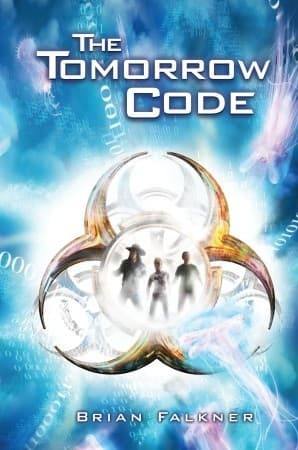
Brian Falkner (2008)
Genre
Fantasy / Mystery / Science Fiction / Young Adult
Reading Time
450 min
Key Themes
See below
Sign in to track this book
Two ordinary teens stumble upon cryptic binary messages from their future selves, revealing a desperate plea to avert a cataclysmic end of the world they unknowingly hold the key to preventing.
Tane Williams, an ordinary teenager in New Zealand, finds an old, broken cell phone on the beach. He gives it to his friend Rebecca Richards, who is more technologically adept. Rebecca discovers a peculiar message on the phone's screen: a long sequence of ones and zeros. Intrigued, they attempt to decode it, initially thinking it might be a prank or a random glitch. Their efforts lead them to realize it's a binary code, and after some trial and error, they convert parts of it into text and numbers. The first decoded message appears to be a series of lottery numbers, which they initially dismiss as coincidence.
Despite their skepticism, Tane and Rebecca decide to use the decoded lottery numbers for the upcoming draw. To their astonishment, the numbers win, making them instant millionaires. This unbelievable stroke of luck confirms that the message is not random. They realize someone is deliberately sending them information, and the precision of the lottery win suggests an extraordinary source. The incident sparks a mix of excitement and unease, as they grapple with the implications of receiving such accurate, predictive data. They begin to wonder who could be sending these messages and, more importantly, why they were chosen.
Following the lottery win, more messages arrive on the old phone, each more complex and urgent than the last. These messages contain warnings about an impending global catastrophe, hinting at a future where humanity faces extinction. The senders, who remain anonymous, instruct Tane and Rebecca to follow specific directions, often involving seemingly trivial actions or observations. The teenagers realize that these messages are sent from their own future, and they are tasked with preventing the very events that will lead to the world's demise. The weight of this responsibility begins to settle on them.
Through diligent decoding, Tane and Rebecca discover the nature of the future threat: a highly aggressive and rapidly evolving fungus. The messages explain that this fungus, initially appearing benign, will mutate into a sentient, parasitic organism that consumes all organic life, leading to the collapse of ecosystems and human civilization. The future versions of Tane and Rebecca, the presumed senders, provide specific scientific data, locations, and experimental procedures that are crucial for understanding and combating the fungus before it reaches its critical stage. The urgency intensifies as they learn the scale of the impending disaster.
The decoded messages direct Tane and Rebecca to Professor Ardis, a mycologist, and to a remote, high-security seed bank. Professor Ardis, initially skeptical of the teenagers' claims, eventually becomes convinced by the detailed scientific data they present, which aligns with his own nascent research into unusual fungal growths. The seed bank, they learn, contains genetic material vital for rebuilding life after the catastrophic fungal spread. However, the messages also warn that the seed bank itself is a target, and its destruction is a key event in the timeline of the future catastrophe.
The messages become increasingly frantic, detailing a specific date and time for an attack on the seed bank. Tane and Rebecca, now working closely with Professor Ardis, realize they must intervene directly. They uncover evidence of planned sabotage, seemingly orchestrated by a shadowy organization or individual who, for unknown reasons, wants the fungal apocalypse to occur. The climax involves a tense confrontation at the seed bank, where Tane and Rebecca, using their wits and the future information, thwart the saboteurs, saving the invaluable genetic repository and preventing a critical step towards the future catastrophe.
Even with the seed bank secured, the threat of the fungus remains. The messages continue, revealing that the fungus is adapting at an alarming rate, developing new ways to spread and resist eradication. Tane and Rebecca learn that the fungus is not just a simple organism; it possesses a form of collective intelligence, learning and evolving to overcome obstacles. This makes the challenge far more complex than a simple scientific problem. They must now find a way to combat a living, thinking adversary that is constantly one step ahead, pushing the boundaries of their understanding and resilience.
A message reveals the true identity of the senders: their own future selves. Tane and Rebecca from the future are trapped in a decaying, fungus-ridden world, desperately sending back information through a rudimentary time-travel device, hoping to alter their past and prevent the catastrophe. This revelation adds a deep layer of personal stakes and urgency to their mission. They realize that every action they take now directly impacts their own future, and the future of all humanity, creating a powerful motivation to succeed at all costs, despite the immense pressure.
The future messages provide the ultimate solution: a specific biological agent, a genetically engineered bacterium, that can target and destroy the sentient fungus without harming other life forms. The messages detail the precise genetic sequence and conditions for its creation. Tane and Rebecca, with Professor Ardis's help, embark on a mission to synthesize this bio-weapon. This involves navigating complex scientific challenges and evading those who would prevent their success, culminating in a race against time to deploy the agent before the fungus reaches an irreversible tipping point.
In a climactic sequence, Tane and Rebecca, guided by their future selves, successfully deploy the bio-weapon across key fungal infection zones. The effects are not immediate, but the messages from the future begin to change, becoming less desperate and more hopeful, indicating that their actions are having the desired impact. The future Tane and Rebecca are experiencing a gradual reversal of the apocalypse, a slow but steady healing of their world. This moment marks a turning point, suggesting that humanity has a second chance, thanks to the children's courage and the paradox of time travel.
As the present-day Tane and Rebecca succeed in averting the fungal apocalypse, the messages from their future selves become increasingly intermittent and then cease altogether. This is a positive sign: their future selves' reality is being altered, potentially to one where the catastrophe never happened, or at least one where they are no longer in a position of desperation requiring them to send messages back. It signifies the success of their mission and the closing of the time loop, leaving Tane and Rebecca with the knowledge that they have saved the world, but also with a sense of loss for the future versions of themselves they interacted with.
With the immediate threat neutralized and the messages gone, Tane and Rebecca are left to ponder the extraordinary events they've experienced. They are no longer ordinary teenagers; they are heroes who have saved the world. They carry the weight of their knowledge and the unique bond forged through their shared mission. While the world around them remains unaware of the averted disaster, Tane and Rebecca, along with Professor Ardis, are left with the responsibility of ensuring the long-term safety of the planet and understanding the delicate balance of life. They look towards a future that is now truly their own to shape.
The Protagonist
Tane transforms from an unassuming teenager into a courageous, world-saving hero, learning to trust his instincts and embrace immense responsibility.
The Protagonist
Rebecca evolves from a curious, intelligent girl into a pivotal scientific problem-solver, using her intellect to confront an existential threat.
The Supporting
Professor Ardis moves from academic curiosity to active global defense, validating the children's claims and becoming instrumental in humanity's survival.
The Supporting/Mentioned
Their arc is not explicitly shown but implied through their evolving messages, moving from desperation to a gradual sense of hope as their past selves succeed.
The Antagonist
The fungus continuously evolves and adapts throughout the story, becoming more intelligent and widespread until it is finally countered.
The Antagonist/Mentioned
Their plot to sabotage the seed bank is thwarted, preventing a key step in the future catastrophe.
Tane and Rebecca are burdened with information about a future catastrophe, placing the fate of humanity in their hands. This theme explores the moral and psychological weight of knowing something terrible is coming and being uniquely positioned to prevent it. Their initial excitement over the lottery win quickly turns into a sense of duty as they realize the messages are not for personal gain but for global survival. This is evident when they dedicate their time and resources, including their lottery winnings, to follow the cryptic instructions, such as seeking out Professor Ardis and protecting the seed bank, demonstrating their commitment to their newfound responsibility.
““They were children, but they were also the only hope humanity had. The weight of that knowledge was a heavy thing.””
The success of Tane and Rebecca's mission hinges on their combined strengths and unwavering friendship. Tane's resourcefulness and grounded perspective complement Rebecca's scientific acumen and decoding skills. Their ability to trust each other, communicate effectively, and use their individual talents is crucial in deciphering the complex messages and navigating dangerous situations. Rebecca's tech skills are essential for decoding, while Tane's courage is vital during the confrontation at the seed bank. Their bond extends to Professor Ardis, forming a vital trio capable of addressing the global threat.
““One had the code, the other the key. Together, they had a chance.””
The central conflict of the book revolves around an ecological catastrophe caused by a sentient, rapidly evolving fungus. This theme highlights the fragility of ecosystems and the potential for seemingly benign organisms to become existential threats when conditions change. It implicitly raises questions about human impact on the environment and the delicate balance of nature. The descriptions of the fungus's spread and its devastating effects on flora and fauna underscore the importance of ecological awareness and the potential consequences of environmental negligence, even if the fungus's origin is not directly human-caused, its unchecked growth represents an unchecked natural force.
““The planet was a single organism, and the fungus was its cancer, spreading with relentless, silent hunger.””
Despite the grim warnings from the future and the overwhelming nature of the threat, the narrative maintains a strong sense of hope. The very act of sending messages back in time signifies a desperate, yet persistent, hope for change. Tane and Rebecca, though often scared, never give up, driven by the belief that they can alter the future. This hope is manifested in their tireless efforts to decode messages, seek out allies, and deploy the bio-weapon, even when the odds seem insurmountable. The fading of the future messages, indicating a change for the better, serves as the ultimate proof of this enduring hope.
““Even from a future choked with death, a whisper of hope could still travel back through time.””
The entire premise of the story is built upon a time paradox: messages from the future are sent to prevent that very future. This theme explores the intricate implications of altering timelines. The future Tane and Rebecca are actively trying to erase their own existence in a ravaged world, creating a causal loop where their past actions are influenced by their future selves. The narrative plays with the idea of a mutable future, where choices made in the present can directly impact what is to come, leading to the gradual fading of the future messages as their success alters the timeline.
““They were trying to unwrite their own history, to make the future that sent the message disappear.””
The initial artifact that delivers the time-traveling messages.
The broken cell phone found by Tane serves as the central conduit for all communication from the future. It's a classic 'found object' plot device that kickstarts the entire narrative. Its mundane appearance belies its extraordinary function, creating an immediate sense of intrigue. The phone's limitations (e.g., only receiving binary code, needing careful handling) also create challenges for Tane and Rebecca, adding to the mystery and the difficulty of their task, effectively driving their decoding efforts and subsequent actions.
The language of the future messages, requiring decryption.
The use of binary code as the medium for the messages is a crucial plot device. It immediately establishes a mystery and a challenge for the protagonists, requiring Rebecca's intelligence and Tane's persistence to decipher. The slow, painstaking process of decoding builds suspense and allows for the gradual revelation of information, preventing the protagonists (and the reader) from being overwhelmed by the full scope of the disaster too early. It also reinforces the scientific and technological aspects of the story.
A paradoxical narrative structure where future events influence the past to prevent themselves.
This is the overarching structural device of the novel. The messages sent from the future are specifically designed to alter the past, thereby preventing the very future from which the messages originate. This creates a powerful dramatic irony and a sense of urgency, as the protagonists are literally fighting to erase their own future selves' suffering. The fading of the future messages as the present-day actions succeed is a direct consequence of this time loop, demonstrating the success of their paradoxical mission and the mutable nature of the timeline.
An early, tangible proof of the messages' authenticity and a source of resources.
The lottery win serves multiple functions early in the plot. Firstly, it provides undeniable proof to Tane and Rebecca that the messages are real and accurately predict future events, solidifying their belief in the extraordinary circumstances. Secondly, it provides them with the financial resources necessary to pursue the increasingly complex and expensive instructions from the future, such as travel, scientific equipment, and avoiding suspicion, allowing the plot to move beyond local concerns to a global scale.
“The wind was a living thing, pushing and pulling, whispering secrets in the rustling leaves.”
— Early in the story, as Tane and his friends explore the mysterious forest.
“It wasn't just a game anymore. It was real, and the stakes were higher than anything we could have imagined.”
— Tane's realization after discovering the true nature of the 'game' he's playing.
“Sometimes the answers you're looking for are hidden in the questions you're afraid to ask.”
— A philosophical thought Tane has while trying to decipher clues.
“The past isn't just behind us; it's all around us, shaping who we are and what we will become.”
— Reflecting on the historical elements and their impact on the present.
“Fear can be a powerful motivator, but courage is what truly sets you free.”
— As the characters face a dangerous situation and must overcome their anxieties.
“Every choice we make, no matter how small, sends ripples through time.”
— Discussing the implications of their actions and the butterfly effect.
“The greatest mysteries aren't always in the stars, but in the human heart.”
— A moment of introspection about the motivations and secrets of people.
“You can't change the past, but you can learn from it to build a better future.”
— A key theme emphasized as the characters grapple with past events.
“The impossible is just a word until someone proves it wrong.”
— Encouraging a belief in their ability to solve seemingly insurmountable problems.
“Sometimes the most dangerous thing isn't what you don't know, but what you think you do.”
— Warning about assumptions and preconceived notions.
“The line between fantasy and reality is often blurred, especially when you're not looking closely.”
— As the fantastical elements of their adventure become more tangible.
“Trust is a fragile thing, easily broken, but essential for survival.”
— When characters' loyalties are tested and alliances are formed.
“We weren't just solving a puzzle; we were writing our own destiny.”
— A powerful realization about their agency in the unfolding events.
Ready to see how well you understood this book? Take our interactive quiz with 10 questions.

Brian Falkner is a critically acclaimed author known for his fast-paced, engaging young adult fiction. His notable works include the award-winning 'Brain Jack' and the thrilling sci-fi novel 'The Tomorrow Code.' Falkner's writing often explores themes of technology, identity, and the future, earning him a dedicated readership.







