“There are people who can't stand the truth, and people who can't stand anything else.”
— Adela explaining human nature to Becky.

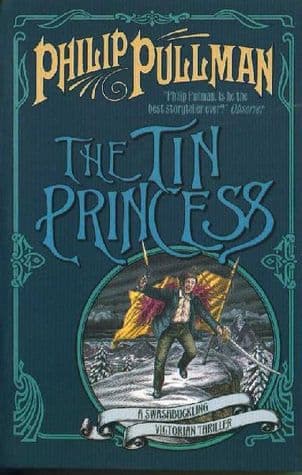
Philip Pullman (1994)
Genre
Fantasy / Children's / Historical Fiction / Mystery / Young Adult
Reading Time
240 min
Key Themes
See below
Sign in to track this book
From the smoky back alleys of London to the perilous, snow-laden streets of a fictional European principality, Jim Taylor must protect his long-lost friend Adelaide as she navigates a dangerous path from enslaved orphan to imperiled crown princess of Razkavia.
Jim Taylor, now a young man working for Sally Lockhart, finally finds Adelaide, the girl he knew as a child in Mrs. Holland's opium den. He finds her living with an elderly woman, Miss Bevan, in a respectable boarding house. Adelaide, now Adelaide Ashton, is engaged to Crown Prince Rudolf of Razkavia, a small, fictional European kingdom. Rudolf loves her and believes her to be a suitable bride, despite her unknown past. Jim is protective and suspicious, determined to ensure Adelaide's safety and happiness, fearing she might be used again. He cautiously accepts Rudolf's invitation to accompany them to Razkavia as a bodyguard, recognizing the potential dangers of her new royal status.
Upon their arrival in Razkavia, Jim, Adelaide, and Prince Rudolf enter the rigid world of the Razkavian court. They are met by Rudolf’s father, King Otto, a stern king, and Rudolf’s younger brother, Prince Boris, a charming but seemingly lighthearted figure. Adelaide, despite her common background, tries to navigate the elaborate rules of royal life. Jim, always watchful, senses tension and hostility, especially from certain Razkavian nobles who resent Adelaide's origins and Rudolf's modern ideas. He observes strange events and veiled threats, confirming his belief that Adelaide is in danger.
During a royal procession through Razkavia, an assassination attempt is made on Crown Prince Rudolf. A bomb is thrown, causing chaos and injuring several people, though Rudolf is unharmed thanks to Jim's quick actions. This event raises the stakes and solidifies Jim's position as Rudolf's trusted bodyguard. It also highlights the political instability within Razkavia and the powerful groups opposed to Rudolf's reign and his choice of bride. Jim begins his investigation, trying to find out who is behind the attack, suspecting it is a planned conspiracy.
Adelaide struggles with the change to royal life. She finds the court stifling, the expectations overwhelming, and the constant scrutiny isolating. Her attempts to connect with the Razkavian people are met with suspicion by the nobility, and her past is a constant source of gossip. She confides in Jim, expressing her doubts and her sense of being trapped. Despite Rudolf's affection, Adelaide feels like a symbol rather than a person, a 'tin princess' forced into a role. This internal conflict is made worse by the external threats, making her question the true cost of her new status.
Crown Prince Rudolf, who supports modernization, plans to introduce a new constitution that would limit the king's power and grant more rights to the people. This move meets strong opposition from the conservative nobility, led by figures like Count Karl von Richter, who see it as a threat to their traditional privileges. The unveiling of this constitution becomes a major point of disagreement, fueling the political tensions already present in Razkavian society. Jim recognizes that Rudolf's political goals are linked to the dangers facing him and Adelaide, as the conspiracy aims to prevent this shift in power.
Another, more direct attack is made on Rudolf, this time made to look like a hunting accident. Jim's investigations uncover evidence linking Prince Boris, Rudolf's seemingly cheerful younger brother, to the assassination attempts. Boris, despite his charm, is deeply involved in the conspiracy, driven by ambition and a desire to take the throne, supported by the conservative group. This betrayal shocks Rudolf and Adelaide, showing the treacherous nature of the Razkavian court. Jim realizes the conspiracy is more complex and personal than he first thought, reaching into the heart of the royal family.
Despite the growing dangers and revelations, Adelaide and Rudolf proceed with their royal wedding. The ceremony is grand, but the tension is clear. Shortly after the wedding, a final, devastating act of the conspiracy unfolds. Crown Prince Rudolf is murdered, a direct result of the political schemes and the plot to prevent his reforms. This tragic event leaves Adelaide a widowed queen, placed in a position of immense power and vulnerability. Jim is devastated by Rudolf's death but more determined than ever to protect Adelaide and uncover the full extent of the conspiracy.
Rudolf's death changes Adelaide. The 'tin princess' sheds her passivity and accepts her new role as Queen. She bravely confronts the conspirators and, with Jim's help, works to expose the true masterminds behind the plots. They discover that Count Karl von Richter, a powerful noble, was the main planner of the conspiracy, manipulating Boris and others to achieve his own political goals and maintain the old order. Adelaide, now empowered, uses her position to gather support for Rudolf's constitutional reforms, showing a strength and resolve no one expected.
Jim and Adelaide gather enough evidence to confront Count Karl von Richter and his co-conspirators. A tense confrontation follows, where Adelaide, as the new Queen, publicly accuses them of treason and regicide. With Jim's testimony and the gathered proof, the conspirators are exposed and their plans fail. Boris is arrested, and Richter's influence is shattered. The Razkavian people, seeing Adelaide's courage and commitment to Rudolf's vision, support her. Justice is served, and the immediate threat to the throne and the proposed reforms is removed.
With the conspirators defeated, Queen Adelaide begins her reign, committed to implementing Crown Prince Rudolf's constitution and leading Razkavia into a new era. She is a wise and capable ruler, earning the respect of her people. Jim, having fulfilled his promise to protect Adelaide and ensure her safety, decides to return to England. Their paths separate, but their friendship and shared experience remain. Jim leaves Razkavia knowing that Adelaide, once a vulnerable girl, has found her true strength and purpose as a queen, no longer a 'tin princess' but a sovereign in her own right.
The Protagonist
Adelaide transforms from a passive, vulnerable girl into a strong, decisive queen who champions her late husband's reforms and leads her country.
The Protagonist
Jim develops from a protective friend to a crucial investigator and strategist, ultimately ensuring Adelaide's safety and the stability of Razkavia before returning to his own life.
The Supporting
Rudolf champions progressive ideals but ultimately becomes a tragic figure, his death serving as a catalyst for Adelaide's transformation and the eventual implementation of his vision.
The Antagonist
Boris transforms from a seemingly harmless royal sibling into a key conspirator and betrayer, eventually facing the consequences of his actions.
The Antagonist
Richter's plans to maintain aristocratic power are ultimately thwarted by Adelaide and Jim, leading to his downfall.
The Supporting
King Otto is forced to confront the reality of betrayal within his family and the necessity of change, ultimately accepting Adelaide's leadership.
The Supporting
Miss Bevan serves as a temporary haven and a symbol of Adelaide's past, allowing her to transition to her royal future.
The Mentioned
Mrs. Holland's influence is historical, her past cruelty serving as a foundational trauma for Adelaide and a motivator for Jim.
The novel explores how individuals deal with their past and adapt to new roles. Adelaide, initially defined by her traumatic childhood, struggles to accept her identity as Crown Princess and then Queen. She feels like a 'tin princess,' a manufactured persona, but eventually finds her authentic voice and strength through hardship. Her journey shows the internal conflict between who she was and who she must become. Jim also changes from a street-wise orphan to a trusted royal protector, adapting his skills to a new, dangerous environment.
“She was the Tin Princess, and she had no choice but to play her part, no matter how much it might hurt.”
The story is set in the treacherous world of Razkavian court politics, where ambition, tradition, and modern ideals clash. The conspiracy against Rudolf and Adelaide shows the corruption and how far powerful figures like Count von Richter will go to keep their status and prevent change. The novel exposes the hidden dangers beneath royal grandeur, where betrayal can come from within one's own family, as seen with Prince Boris. This theme shows the fragility of power and the constant threat of those who seek to take it.
“The palace was a gilded cage, and the bars were made of lies and ambition.”
Loyalty is a central force, especially for Jim Taylor, whose devotion to Adelaide guides his actions. His commitment to protecting her, from their shared past, contrasts with the widespread betrayal in the Razkavian court. Prince Boris's betrayal of his own brother, Rudolf, highlights the damaging nature of ambition and the impact of treachery within families. Conversely, Rudolf's loyalty to Adelaide and his modern vision inspires her to continue his legacy after his death.
“Jim would have faced a thousand dangers for Adelaide, because he was Jim, and that was what he did.”
The story champions justice, both personally for Adelaide and societally for Razkavia. Rudolf's desire to introduce a constitution and empower his people reflects a yearning for social reform and a fairer society. The conspiracy against him is an attempt to stop these modern ideals. Ultimately, Adelaide's change into a strong queen committed to implementing Rudolf's vision ensures that justice prevails, not just for the conspirators but also for Razkavia's future, moving it towards a more equitable system.
“He wanted to give the people a voice, a right, a future that wasn't just dictated by the whims of kings.”
A symbolic representation of Adelaide's initial passivity and manufactured identity.
The 'Tin Princess' metaphor highlights Adelaide's initial feeling of being an inauthentic, ornamental figure, forced into a role she doesn't fully understand or embrace. It symbolizes her lack of agency and the external pressures defining her royal identity. As the story progresses, she sheds this 'tin' facade, revealing her true strength and becoming a genuine, powerful queen. This device effectively charts her character arc from a passive object to an active subject of her own destiny.
A MacGuffin that drives the political conflict and conspiracy.
The proposed Razkavian Constitution acts as a MacGuffin, a plot device that drives the main conflict without necessarily being the central focus itself. Its existence and Rudolf's determination to enact it are the primary motivators for the conservative nobility's conspiracy and the assassination attempts. It represents the clash between tradition and progress, providing a concrete goal for Rudolf and a tangible threat for his enemies. The fight over its implementation fuels the entire political drama.
Adelaide's concealed origins as a source of vulnerability and suspicion.
Adelaide's hidden past as an orphan from Mrs. Holland's opium den is a crucial plot device. It makes her vulnerable to blackmail and manipulation by the Razkavian court, who view her as an unsuitable commoner. This concealed identity creates an air of mystery and suspicion around her, fueling aristocratic disdain and providing a pretext for the conspirators to undermine her and Rudolf. Her ability to overcome this past and rise above it is integral to her character development and the story's resolution.
The manipulation of seemingly disparate events by a central, hidden antagonist.
The 'unseen hand' device is employed through Count Karl von Richter. Initially, the assassination attempts and political unrest appear to be random or the work of multiple factions. However, Jim's investigation gradually uncovers that these events are orchestrated by a single, powerful individual working behind the scenes. This creates suspense and intrigue, as the characters must uncover the true mastermind rather than just reacting to individual threats. It highlights the insidious nature of political power and manipulation.
“There are people who can't stand the truth, and people who can't stand anything else.”
— Adela explaining human nature to Becky.
“It's a strange thing, but the more you know about something, the less you understand it.”
— Becky reflecting on her growing knowledge of the political situation.
“Power is like a drug. Once you've had a taste, you never want to give it up.”
— Prince Rudolf discussing the corrupting influence of power.
“Every secret has a price, and sometimes the price is higher than you can imagine.”
— Adela warning Becky about the dangers of uncovering secrets.
“The world isn't divided into good people and bad people. It's divided into people who are trying, and people who aren't.”
— Becky's realization about morality and effort.
“Sometimes the most dangerous thing you can do is nothing at all.”
— Captain Josef urging action in a desperate situation.
“You can't choose your family, but you can choose what kind of person you're going to be.”
— Becky contemplating her identity amidst royal intrigue.
“A lie can travel halfway around the world while the truth is still putting on its shoes.”
— A common saying quoted by a character, highlighting the spread of misinformation.
“Courage isn't the absence of fear, but rather the judgment that something else is more important than fear.”
— Becky defining courage for herself in a moment of peril.
“History is written by the victors, but the truth often whispers in the cracks.”
— A character reflecting on the subjective nature of historical accounts.
“The greatest prison people live in is the fear of what other people think.”
— Adela advising Becky to ignore societal pressures.
“It's easy to be brave when you have nothing to lose. It's much harder when everything is at stake.”
— Becky observing the difference between reckless and true bravery.
“To truly know someone, you have to see them when they think no one is watching.”
— A character's insight into genuine character.
“Hope is a dangerous thing, but sometimes it's all we have left.”
— Becky considering the role of hope in dire circumstances.
Ready to see how well you understood this book? Take our interactive quiz with 10 questions.

Sir Philip Nicholas Outram Pullman is an English writer. His books include the fantasy trilogy His Dark Materials and The Good Man Jesus and the Scoundrel Christ, a fictionalised biography of Jesus. In 2008, The Times named Pullman one of the "50 greatest British writers since 1945". In a 2004 BBC poll, he was named the eleventh most influential person in British culture. He was knighted in the 2019 New Year Honours for services to literature.







