“The past is a story we tell ourselves, and the future is a story we tell ourselves.”
— A reflection on the nature of time and personal narrative.

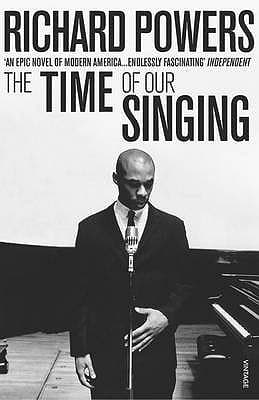
Richard Powers (2002)
Genre
Literary Fiction / Historical Fiction
Reading Time
15-20 hours
Key Themes
See below
Sign in to track this book
Three mixed-race siblings, raised with music and a dream of transcending identity, find their lives separating as one becomes an activist, another faces racial stereotypes in opera, and the third tries to hold their fractured family together.
The novel begins with David Strom, a Jewish German physicist, and Delia Daley, a Black American singer, meeting at Marian Anderson's Lincoln Memorial concert in 1939. David, a refugee from Nazi Germany, is deeply moved by Anderson's voice and the event's symbolism. Delia, a determined young woman from Philadelphia, is also affected, seeing in Anderson a path for her own goals. Their shared experience of music and the moment brings them together, despite their different backgrounds. This sets the stage for their unusual family and the complex racial and cultural dynamics that will shape their children's lives. This first meeting shows art's power to connect people.
David and Delia marry and settle in Maryland. They decide to raise their children — Jonah, Joseph, and Ruth — in a unique way, protecting them from the racial biases of the time. They avoid labeling their children by race, instead surrounding them with classical music, scientific inquiry, and a deep love for art and intellect. Their home becomes a haven where racial identity is less important than universal humanism and a shared love for music, especially singing. This ideal upbringing, while nurturing their children's talents, becomes hard to maintain as the children grow and face society's racial realities.
As the Strom children grow, their individual talents appear. Jonah, the oldest, has a magnificent tenor voice, meant for opera. Joseph, the narrator, becomes a talented pianist and a close observer of his family. Ruth, the youngest, shows early talent for science and a strong independent spirit, also possessing a powerful voice. Their home is full of music, practice, and intellectual talks, encouraged by their parents' belief in their potential. This period shows the family's strong connection through art, even as the first signs of future differences appear, especially as their talents bring them into contact with the outside world.
Jonah's extraordinary tenor voice leads him into professional opera. He achieves great success, performing on stages worldwide. However, his career is tied to his racial identity. Despite his talent, he is often cast in roles specifically because of his Black heritage, or his race becomes a main topic in reviews and interviews, often overshadowing his artistic skill. This constant racial scrutiny affects Jonah deeply, forcing him to confront the societal labels his parents tried to shield him from. It creates inner conflict about his identity and purpose in the music world.
Ruth, increasingly unhappy with the perceived elitism and racial politics of classical music and society, rejects the path her parents imagined. She becomes involved in social activism, particularly environmental and civil rights causes. Her activism leads her to give up her musical pursuits and distance herself from her family's more traditional artistic goals. She finds a new community and purpose in her political work, representing a strong move away from her siblings' musical careers. This change highlights her sense of justice and her struggle to find an authentic identity outside the family's musical legacy.
Joseph, the middle child and narrator, finds himself observing and trying to understand his siblings' increasingly different lives. As a pianist, he stays connected to classical music, but his role often feels more supportive than leading. He struggles with his own identity, trying to reconcile his parents' ideals with the harsh realities his siblings face. Joseph tries to keep connections with both Jonah and Ruth, acting as a link between their separate worlds, while also trying to build his own artistic and personal path amid the family's complex history and current struggles.
The novel often discusses America's history of racial injustice, especially through Delia's family history and the broader civil rights movement. The children, despite their parents' efforts, cannot escape the societal implications of their mixed heritage. The story shows how past events, from slavery to the Jim Crow era, continue to affect the present, influencing opportunities, perceptions, and personal choices. These historical threads are woven into the Strom family's current struggles, showing race's lasting impact on individual lives and American society.
Jonah commissions an opera called 'The Time of Our Singing,' based loosely on his family's history and the complexities of race and music in America. This project helps Jonah process his own experiences and express the unspoken tensions and hopes within his family. The creation and performance of this opera combine art and life, allowing Jonah to confront his identity publicly. It also becomes a central point for the family, bringing their story to a wider audience and offering a form of artistic reckoning.
The family faces a tragedy that breaks their fragile balance. This event is a turning point, forcing each family member to confront loss, grief, and the fragility of their connections. The tragedy deeply affects Jonah, Joseph, and Ruth, intensifying their individual struggles and challenging their ability to find comfort or resolution. It shows how outside forces affect their lives, demonstrating that even within their musical sanctuary, they are not immune to the world's harsh realities.
After the tragedy, Joseph tries to understand and reconnect with his increasingly distant siblings, especially Ruth. He travels to find her, aiming to bridge the emotional and ideological gap that has grown between them. His journey comes from a desire to keep what remains of their family bond and to make sense of their shared history. This quest highlights Joseph's lasting love for his siblings and his role as the family's storyteller, trying to put together the fragmented story of their lives and find a path toward healing and understanding.
Throughout their lives, despite personal tragedies, racial struggles, and different paths, music remains a strong and often unifying force for the Strom family. Whether it is the classical compositions of their childhood home, Jonah's opera performances, or Joseph's piano playing, music acts as a language, comfort, and a way to express themselves when words fail. Even for Ruth, who rejects classical music, life's underlying rhythm and harmony continue to resonate. The novel ends by emphasizing music's lasting power to connect, heal, and express the complex human experience, even in the face of deep sorrow and division.
The Protagonist/Narrator
Joseph evolves from a quiet observer to a dedicated chronicler, actively seeking to understand and reconcile his family's fragmented history and maintain their bonds.
The Protagonist/Supporting
Jonah rises to operatic fame, but his journey is marked by increasing frustration with racial classification, leading him to confront his identity through his art.
The Protagonist/Supporting
Ruth moves from a musical prodigy to a committed activist, consciously distancing herself from her family's path to pursue social justice.
The Supporting
Delia strives to create a haven for her children free from racial prejudice, a dream challenged by societal realities and her children's choices.
The Supporting
David attempts to build a world free of prejudice for his family, but gradually confronts the limits of his idealistic vision against societal forces.
The Supporting
Michael remains a steadfast partner to Ruth, supporting her through her personal and political struggles.
The Mentioned
N/A
The novel explores racial identity in America, especially for mixed-race individuals. The Strom parents try to raise their children 'beyond race,' but society's need for categorization forces the children to confront their Black identity in different ways. Jonah struggles with tokenism in opera, Ruth rejects the system through activism, and Joseph grapples with his own place. The book shows that race is not just biological but a social construct with major effects on opportunity, perception, and self-definition, demonstrating the difficulty of overcoming racial lines in a race-conscious society. For example, Jonah's entire career is seen through his Blackness, regardless of his talent.
“What do you call 'mixed'? What do you call 'pure'? Where does one begin and the other end? We were just us. That was the point.”
Music is central to the Strom family, initially uniting them and offering refuge from the world's divisions. It is a language, a passion, and a source of deep connection. David and Delia believe music can transcend race, and their children are immersed in it. However, the novel also examines the limits of music's power to redeem. Jonah's opera career still faces racial politics, and Ruth eventually rejects classical music for its perceived elitism and inability to bring immediate social change. Despite these limits, music remains a powerful way to express, comfort, and understand, especially for Joseph, who uses it to try to bridge the family's divides.
“Music was the only thing that worked. The only thing that didn't care what color you were, what country you came from.”
A main conflict in the novel is between the Strom parents' idealism and the world's harsh realities. David, a refugee from Nazi Germany, and Delia, a Black woman facing systemic racism, try to create a sanctuary where their children can live 'beyond time, beyond identity.' They give their children a universal worldview based on science and art. However, this idealism is constantly challenged by the outside world's racial categorization, social injustice, and personal tragedies. The children's struggles show how hard it is to keep such a pure vision in a world full of prejudice and suffering, forcing them to reconcile their upbringing with the world as it is.
“My parents believed in a world without categories. But the world had categories, and we were always being sorted.”
The novel explores the lasting, yet often strained, bonds within the Strom family. Despite their love for each other, the siblings' different responses to racial identity and societal pressures lead to growing distance. Jonah's public career, Ruth's activism, and Joseph's mediating role pull them in different directions. The story details Joseph's efforts to understand and reconnect with his siblings, especially after a family tragedy. It highlights the complexities of family love, the pain of separation, and the desire for connection, even when ideological and life choices seem impossible to reconcile. The family's journey is about trying to stay connected amid diverging paths.
“We were a family, yes. But we were also three separate experiments, running off in different directions.”
The novel shows how historical events, especially those related to race and injustice, shape the present. Delia's family history, rooted in slavery and the Jim Crow South, and David's experience fleeing the Holocaust, both inform their desire to protect their children. The civil rights movement and ongoing racial tensions in America are not just background; they directly affect the characters' choices and opportunities. The past is not over but a living force that influences the children's identities, struggles, and understanding of their place in the world. The story suggests that understanding history is key to understanding the present.
“The past was never past. It was always here, humming in our bones, in our voices.”
The story is primarily told through the reflective voice of Joseph Strom.
Joseph Strom serves as the central narrator, offering an intimate and often melancholic perspective on his family's history. His role as the middle child, a pianist, and an intellectual observer allows him to reflect on his siblings' diverging paths and his parents' idealistic vision with a unique blend of empathy and critical distance. His narration is non-linear, weaving between past and present, allowing for a deep exploration of memory, regret, and the search for understanding. This narrative choice emphasizes the subjective nature of family history and the challenge of truly knowing another's experience.
Classical music, particularly opera, serves as a central metaphor and structural element.
Music is not merely a theme but a fundamental structural and metaphorical device. The novel is imbued with musical terminology and concepts, such as harmony, dissonance, counterpoint, and aria. The family's life is often described in musical terms, and the narrative itself can feel symphonic in its complexity and emotional range. Opera, especially, serves as a powerful metaphor for grand human drama, performance, and the tension between individual expression and societal expectation. Jonah's commissioning of 'The Time of Our Singing' opera is a meta-fictional device that allows the characters to reflect on their own story through art.
The story unfolds through shifts in time and memory, rather than strict chronology.
The novel employs a non-linear narrative structure, frequently moving back and forth in time, interweaving childhood memories with adult reflections and present-day events. This allows for a deeper exploration of cause and effect, demonstrating how past experiences continue to shape the characters' present lives and choices. It mirrors the subjective nature of memory and Joseph's process of piecing together his family's fragmented history. This device also creates suspense and allows for the gradual revelation of key events and their profound impact on the Strom family.
Integration of historical facts and events into the family's personal narrative.
The novel seamlessly weaves significant historical events and figures—such as Marian Anderson's concert, the Holocaust, the Civil Rights Movement, and scientific discoveries—into the personal story of the Strom family. These interjections provide crucial context for the characters' struggles with race, identity, and their place in society. They demonstrate how macro-historical forces directly impact individual lives and choices, transforming the family's story from a mere domestic drama into a broader commentary on American history and the human condition. This device grounds the personal in the universal.
“The past is a story we tell ourselves, and the future is a story we tell ourselves.”
— A reflection on the nature of time and personal narrative.
“Music was the only thing that could make sense of the world, even if it didn't make the world make sense.”
— Elucidating the profound role of music for the family, particularly Jonah.
“Every life is a fugue, a set of variations on a theme.”
— A musical metaphor applied to the complexities and repetitions of human existence.
“We are all immigrants from the past.”
— A comment on the constant movement away from one's origins and previous selves.
“The truth was not a thing to be found, but a thing to be made.”
— A philosophical stance on the construction of reality and belief.
“The greatest gift you can give another is the freedom to be themselves, even if that self is not what you expected.”
— A lesson learned about familial love and acceptance.
“History is not what happened, but what survived.”
— A critical perspective on the selective nature of historical record-keeping.
“The hardest part of growing up is realizing that your parents are just people, flawed and striving.”
— A common coming-of-age realization for the children.
“Silence was not an absence, but a presence, a space where other things could begin.”
— A contemplative thought on the power and potential of quiet moments.
“We sing to make time, to make a space for what we've lost, and what we might find.”
— Explaining the profound, almost ritualistic, purpose of singing for the family.
“Every note was a prayer, a plea, a promise.”
— Describing the emotional intensity and spiritual connection in their musical performances.
“To forget was not to forgive, but to surrender the battle for meaning.”
— A character's internal struggle with past traumas and the importance of remembering.
“The world was a symphony of interconnectedness, if only you knew how to listen.”
— A broader philosophical statement about the underlying harmony of existence.
“Love was not a feeling, but a sustained act of imagination.”
— A profound definition of love that emphasizes effort and empathy.
“The future was not a blank slate, but a palimpsest, written over with all the past's indelible marks.”
— Reflecting on how history and past events shape what is to come.
Ready to see how well you understood this book? Take our interactive quiz with 10 questions.
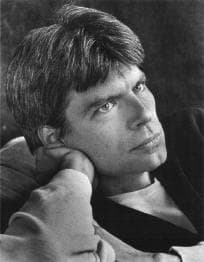
Richard Powers is an American novelist whose works explore the effects of modern science and technology. His novel The Echo Maker won the 2006 National Book Award for Fiction. He has also won many other awards over the course of his career, including a MacArthur Fellowship. As of 2023, Powers has published thirteen novels and has taught at the University of Illinois and Stanford University. He won the 2019 Pulitzer Prize for Fiction for The Overstory.







