“He was carrying a suitcase full of sorrows.”
— Rob describes his emotional state after his mother's death.

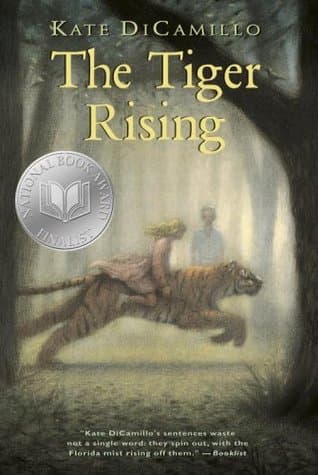
Kate DiCamillo (2001)
Genre
Fantasy / Children's / Young Adult
Reading Time
120 min
Key Themes
See below
Sign in to track this book
In the heart of the Florida woods, a quiet boy grappling with grief discovers a caged tiger and an outspoken girl, learning that some pains, like wild beasts and buried memories, refuse to stay contained.
Twelve-year-old Rob Horton lives in the Kentucky Star motel with his father, Robert. His mother recently died of cancer. Rob deals with this by 'packing' his feelings away, refusing to acknowledge his sadness. One morning, while exploring the woods behind the motel, Rob finds a large tiger in a cage. He keeps this discovery a secret. The same day, a new girl, Sistine Bailey, arrives at Rob's school. Sistine is outspoken and often fights, so other students quickly avoid her. Rob, usually quiet and alone, feels drawn to her spirit.
Rob continues to visit the tiger secretly, bringing it food and watching its quiet strength. He struggles with his hidden emotions, often getting a rash on his legs, which shows his unexpressed grief. Sistine is unhappy at school and home; her parents are separated, and she hopes her father will return. Feeling a connection to Sistine's loneliness and defiance, Rob decides to share his secret. He takes her to the hidden cage. Sistine is amazed and horrified by the tiger's captivity. This shared secret starts to form a unique bond between the two children.
Rob and Sistine often visit Willie May, the direct, elderly housekeeper at the Kentucky Star motel. Willie May has a parrot named Beauchamp and often gives blunt but thoughtful advice. She sees the pain in both children, especially Rob's hidden grief. Sistine worries about the tiger and wants to free it, believing it is wrong to keep such an animal caged. Rob is unsure, fearing what might happen and what freedom means for the tiger. Willie May tells them to 'let the tiger out' in a symbolic way, urging them to face their own emotional barriers.
Rob's father, Robert Horton, works for the motel owner, Mr. Beauchamp. Mr. Beauchamp is a rough, intimidating man who owns the land and the tiger. Rob learns that Mr. Beauchamp plans to kill the tiger, either to stuff it as a trophy or sell its parts. This news upsets Rob and Sistine greatly. Rob's father, dealing with his own grief over his wife's death, struggles to support Rob and seems distant. He often carves wood, a habit he started after his wife's passing, and finds it hard to talk about his feelings with Rob, much like Rob's own emotional repression.
Sistine becomes more determined to free the tiger, seeing its captivity as unfair. She thinks setting it free will somehow fix things, perhaps even bring her father back. Rob is conflicted; he fears the tiger and defying his father and Mr. Beauchamp, but he also feels a deep connection to the caged animal. Sistine's strong arguments and belief in the tiger's right to freedom eventually convince Rob. They plan to open the cage, despite their fears and possible problems.
One morning, Rob and Sistine go to the cage with a stick, planning to open the latch. Rob is scared, but Sistine encourages him. With much hesitation, Rob uses the stick to lift the latch, and the cage door opens. The tiger, instead of jumping out, simply walks out slowly and with dignity. It looks at the children, then walks into the woods and disappears. Freeing the tiger is an intense emotional moment for both children, especially Rob, who feels a big change inside himself.
Soon after the tiger's release, Mr. Beauchamp finds the empty cage. Angry, he confronts Rob, accusing him of letting the tiger out. Rob, still processing the experience, is at first defiant. Mr. Beauchamp, holding a gun, makes it clear he intended to shoot the tiger himself. Rob's father steps in, trying to protect Rob and calm Mr. Beauchamp. During this tense moment, Rob's father says the tiger was sick and old. Mr. Beauchamp had planned to kill it to spare it more suffering, using the taxidermy idea as a cover.
Rob's father explains that the tiger was dying, ill with cancer, just like Rob's mother. Mr. Beauchamp had brought it to the woods to live its last days in peace, away from people, before putting it down. This information changes Rob's view of the tiger and Mr. Beauchamp's intentions. The tiger was not a symbol of wild freedom being cruelly caged, but a dying creature. 'Freeing' it, in a way, just sped up the inevitable, but it also let it die on its own terms, in the woods.
Rob is crushed by the truth. He realizes that by freeing the tiger, he had sent a dying animal into the woods. He finds the tiger's body under a tree; it died peacefully. This moment is a turning point for Rob. He finally lets himself feel the grief he had hidden for his mother. The tiger's death mirrors his mother's, and by mourning the tiger, he starts to mourn her. The 'rash' on his legs, which showed his hidden emotions, begins to disappear as he faces his pain.
Rob, Sistine, and Rob's father dig a grave for the tiger. As they bury it, Rob's father tells Rob stories about his mother, something he had not been able to do before. This shared act of burying the tiger becomes a symbolic burial of their shared grief and a step toward healing. Sistine, though still hoping for her own family's reunion, finds comfort in her friendship with Rob. The ending suggests that while not all problems are solved, Rob has learned to express his feelings, and both children have found some peace and connection in their shared experience, ready to face their futures with more open hearts.
The Protagonist
Rob learns to 'unpack' his grief and confront his emotions, moving from emotional repression to a more open and honest way of feeling.
The Supporting
Sistine learns to temper her defiance with empathy and finds connection and solace in friendship, though her core hope for her family remains.
The Supporting
He moves from silent grief to sharing memories and reconnecting with his son.
The Supporting
Remains a steadfast source of wisdom and support, facilitating the emotional growth of Rob and Sistine.
The Antagonist/Supporting
His character evolves from a perceived antagonist to a more complex figure with hidden compassion.
The Mentioned
N/A
The Mentioned
N/A
The Mentioned
N/A
The Mentioned
N/A
A main theme of the novel is how people deal with deep loss. Rob hides his grief over his mother's death, which leads to physical problems like his leg rash. His father also deals with silent sorrow. The tiger, at first a distraction, helps Rob confront his 'packed-away' feelings, especially when he learns the tiger is also dying of cancer. Burying the tiger together helps Rob and his father start to mourn Rob's mother.
“He felt the suitcase of his heart unclasp, and the lid open, and all the things he had packed inside came tumbling out.”
The story contrasts Rob's tendency to hide his emotions with Sistine's open, often defiant, expression of hers. Rob's inability to grieve causes him physical and emotional pain. Sistine's outbursts, though sometimes difficult, help her process her feelings. Willie May guides them, telling both children to 'let the tiger out' — a symbol for releasing hidden emotions. The story supports expressing feelings as important for healing and growth, ending with Rob's emotional breakthrough.
“You got to let the tiger out. You got to let him out. So you can see what he's going to do.”
The tiger's physical captivity symbolizes emotional and situational confinement. Sistine feels trapped by her parents' separation and unhappiness, while Rob is held back by his unexpressed grief. Both children project their desire for freedom onto the tiger, thinking its release will free them. The discovery of the tiger's illness complicates this, showing that not all 'captivity' is cruel, and true freedom can sometimes mean accepting an inevitable end, as well as the freedom to feel.
“It ain't right, that's what. It just ain't right for a tiger to be in a cage.”
An unexpected friendship forms between the quiet Rob and the outspoken Sistine. Despite their different personalities, they find common ground in their loneliness, their shared secret about the tiger, and their individual struggles with family and sadness. Their bond gives them mutual support, helping them face their fears and feelings. Sistine encourages Rob to act, and Rob offers Sistine quiet companionship, showing how connection can heal.
“He had never had a friend before. He had never had anyone to tell his secrets to.”
The novel explores the difference between how things appear and how they really are. Mr. Beauchamp first seems like a cruel captor of the tiger, but it is later revealed he brought the dying animal to the woods out of kindness. The tiger itself appears to be a magnificent, wild creature wanting freedom, but it is actually a sick, old animal. This theme encourages readers to look past first impressions and understand the complexities of characters' reasons and situations, showing that truth is often more complex than it seems.
“Things ain't always what they seem.”
A central symbol representing wildness, freedom, and suppressed emotions.
The tiger is the primary symbol and plot device. Initially, it symbolizes wild, untamed freedom and a sense of wonder for Rob, and a cruel injustice for Sistine. Its captivity mirrors the emotional captivity of both children. Later, the revelation of its terminal illness transforms its symbolism, linking it directly to Rob's mother's death from cancer and becoming a catalyst for Rob to confront his grief. The tiger's ultimate death and burial symbolize the necessity of facing loss and letting go.
A metaphor for Rob's emotional repression.
Rob's 'suitcase' of packed-away feelings is a recurring metaphor for his emotional repression. He consciously pushes down his grief and other painful emotions, imagining them stored neatly away. This device vividly illustrates his internal struggle and the psychological toll of not processing emotions. The eventual 'unclasping' of the suitcase signifies his breakthrough in accepting and expressing his grief, making an abstract psychological concept tangible for the reader.
A physical manifestation of Rob's unexpressed grief.
Rob's persistent, itchy leg rash is a psychosomatic manifestation of his suppressed grief and anxiety. It appears when he is struggling with his emotions and begins to fade as he starts to confront and express them. This device provides a concrete, physical symptom that allows readers to understand the depth of Rob's internal pain and serves as a barometer for his emotional healing throughout the story.
A source of moral guidance and thematic exposition.
Willie May's character functions as a wise elder who provides direct and metaphorical guidance to Rob and Sistine. Her blunt advice and occasional fables (like 'letting the tiger out') serve as a plot device to move the children towards self-discovery and emotional understanding. She often articulates the book's central themes, such as the importance of feeling emotions and facing reality, in an accessible way for the young protagonists and readers.
“He was carrying a suitcase full of sorrows.”
— Rob describes his emotional state after his mother's death.
“The tiger was a thing that could not be contained.”
— Rob observes the caged tiger in the woods.
“Sometimes you have to hold your heart in your hands and carry it like a suitcase.”
— Rob reflects on dealing with his emotions.
“The tiger was a secret that was too big to keep.”
— Rob struggles with whether to tell others about the tiger.
“You can't keep a tiger in a cage and expect it to be happy.”
— Sistine argues for the tiger's release.
“The world is full of beautiful, terrible things.”
— Rob contemplates life's complexities.
“He felt like he was carrying the weight of the world in that suitcase.”
— Rob describes his emotional baggage.
“Sometimes the things that are the hardest to say are the most important.”
— Sistine encourages Rob to express his feelings.
“The tiger's eyes were like two yellow moons.”
— Rob describes the tiger's appearance.
“You have to let the tiger go, Rob. You have to let it be free.”
— Sistine urges Rob to release the tiger.
“He kept his sorrows locked up tight, like the tiger in its cage.”
— Rob's emotional repression compared to the caged tiger.
“The tiger was a roar inside him that he couldn't let out.”
— Rob's internal struggle mirrored by the tiger.
“Sometimes you have to face the thing you're most afraid of.”
— Rob confronts his fears about the tiger and his grief.
“The suitcase was heavy, but he carried it anyway.”
— Rob continues to bear his emotional burdens.
Ready to see how well you understood this book? Take our interactive quiz with 10 questions.

Biography coming soon.







