“Once there were three pigs, who lived in a house of straw.”
— The opening line, introducing the first group of pigs and their initial dwelling.

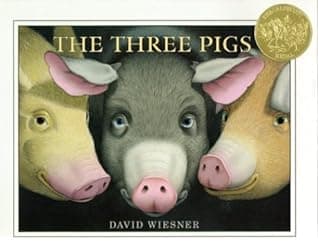
David Wiesner (2001)
Genre
Fantasy / Children's
Reading Time
10 min
Key Themes
See below
Sign in to track this book
When the Big Bad Wolf huffs and puffs, he blows the first pig out of his house and into a whimsical adventure that breaks narrative rules.
The story begins with the classic fairy tale setting. Three pigs, each with a different personality, gather materials for their homes. The first pig builds a straw house. The second pig chooses sticks. The third pig, smart and hardworking, builds a strong brick house, knowing the dangers. The scene is shown in traditional storybook panels, with a narrator's text setting up the well-known arrival of the Big Bad Wolf and the pigs' different levels of readiness.
As expected, the Big Bad Wolf arrives at the first pig's straw house. After the usual exchange, the wolf huffs and puffs. But instead of just destroying the house, his powerful breath blows the first pig out of the story frame. The pig falls through the white space between panels, a clear change from the usual story. His house breaks into straw pieces that scatter across the blank pages, showing an immediate break from the expected fairy tale and adding a new element to the plot.
The Big Bad Wolf then goes to the second pig's stick house. As expected, the wolf huffs and puffs, and the stick house is torn down. Like his brother, the second pig is also blown out of the story's panels. He finds himself floating in the blank space, where he meets the first pig. The two pigs, now outside the traditional story, look around confused, realizing they are no longer bound by the original story's rules. This confirms the breaking of the fourth wall and sets up their new, free reality.
Finding themselves floating in the white space, the first two pigs discover a loose page from their own storybook. Thinking creatively, they fold the page into a paper airplane. With a shared look, they climb aboard their plane and take flight, leaving the original story. This act of using a piece of their own story shows their control and freedom, letting them escape the wolf and explore the book's empty pages, further highlighting the story's playful nature.
As the first two pigs fly past the third pig's brick house, they see the Big Bad Wolf still trying to blow it down, unaware of their escape. Realizing their brother is still stuck in the traditional story, they decide to help. They fly their paper airplane close to the panel with the third pig. Working together, they reach in and pull the third pig out of his house and out of the story, saving him from the wolf and bringing him into their shared, free space. The brick house stays intact, but the third pig is now free.
Now all three pigs are free from their original story. They continue to fly, encountering other story pieces and characters from different fairy tales. They see a cow jumping over the moon, a dragon, and a cat playing a fiddle. These encounters are shown in different art styles, suggesting a diverse world of stories. The pigs watch these scenes with curiosity, highlighting the endless possibilities of their new freedom and how stories connect within children's literature.
During their journey through the blank pages, the three pigs meet a friendly dragon. This dragon, unlike the Big Bad Wolf, is not a threat but another character out of its own tale. The pigs, now good at navigating the story-within-a-story, find a page from a story with a dragon. They carefully pull the dragon out of its panel, freeing it to join them in the open space. This act shows their growing confidence and ability to change stories, further blurring the lines between reader, character, and author.
Continuing their adventure, the pigs and the dragon meet the Cat and Fiddle from the nursery rhyme 'Hey Diddle Diddle.' Recognizing them as fellow story inhabitants, the pigs invite them to join their group. The Cat and Fiddle agree, adding more fun and unexpected friendship to their journey. This moment further shows the theme of breaking free from story limits and forming new, unusual alliances across different literary worlds, creating a varied group of free characters.
Back in the original story's panels, the Big Bad Wolf remains. He is shown still huffing and puffing at the third pig's brick house, completely unaware that all three pigs have long escaped. His actions are now useless and funny, as he is chasing an empty story. This contrast highlights the pigs' cleverness and freedom, while the wolf's continued adherence to the script makes him a figure of ironic sadness, trapped by the very story he was meant to enforce.
The now-united group of pigs, dragon, cat, and fiddle decide to return to the original story to deal with the persistent Big Bad Wolf. They carefully re-enter the story frame. Using their new understanding of how stories work, they set a trap for the wolf. The pigs cleverly arrange the scattered pieces of their houses to lure the wolf, and when he falls for it, they fold the page around him, trapping him within the story, effectively stopping his threat and reclaiming their story space.
With the Big Bad Wolf safely contained, the three pigs, along with their new friends, begin to put the elements of their story back together. They arrange the words and images on the page, creating a brand new, happy ending. They build a new, shared house where they and their companions can live happily ever after. The final scene shows them all together, enjoying peace and friendship, having completely rewritten their destiny and changed a tale of danger into one of freedom and creative reimagining, celebrating the power of story control.
The Protagonist
Transforms from a passive victim of a traditional tale into an active agent in reshaping his own story.
The Protagonist
Evolves from a character destined for a predictable fate to a co-creator of his own narrative.
The Protagonist
Goes from being the secure, traditional hero to a participant in a revolutionary narrative reconstruction.
The Antagonist
Remains static in his villainous role, becoming a comical figure as the protagonists transcend their story.
The Supporting
Liberated from its own narrative, it finds a new family and purpose outside its original story.
The Supporting
Leaves the confines of its nursery rhyme to embark on a new adventure with the pigs.
The Supporting
Moves beyond its nursery rhyme context to join a larger, more dynamic story.
The main theme explores storytelling itself. The pigs literally break free from their story panels, interact with the blank pages, and even tear and fold parts of their own story. This breaking of the fourth wall makes readers think about how stories are made, the power of story rules, and how characters can control their own tales. The scattered text, different art styles, and interaction with story elements like dialogue balloons all emphasize this playful look at story structure. The pigs become the authors of their own destiny, changing the ending of their classic tale.
“The wolf huffed and puffed and blew the house in. But he also blew the pig right out of the story.”
This theme is central to the pigs' journey. By being 'blown out of the story,' the pigs gain an unmatched freedom from the set plot and the Big Bad Wolf. They are no longer bound by their roles or the expected ending. This freedom extends to other characters they meet, such as the dragon, who is also pulled from its story. The blank pages represent endless possibilities, and the pigs' ability to travel between stories and create their own ending highlights the joy and power that comes with breaking free from limits, whether literal story ones or metaphorical societal expectations.
“The three pigs were free. Free to go anywhere, free to do anything.”
The book celebrates the endless nature of creativity and imagination. The pigs don't just escape; they actively create. They fold a page into a paper airplane, suggesting that even parts of an old story can be used for something new. Their ability to pull other characters from different stories and, finally, to put the elements of their own tale back together into a new, happy ending shows that imagination can change and remake things. The varied art styles and the visual journey through different story pieces encourage readers to think creatively.
“They folded the page into a paper airplane and flew away.”
Wiesner uses intertextuality by referencing and changing well-known fairy tales and nursery rhymes. The initial setup is a direct nod to 'The Three Little Pigs,' but the story quickly goes against expectations. The pigs meet characters from 'Hey Diddle Diddle' and other mythical creatures, creating a shared world where different stories can interact. This theme highlights how familiar tales can be reimagined and combined, creating new meanings and questioning the idea of one definitive version of a story. It's a playful comment on the rich collection of children's literature.
“(Visual of the cow jumping over the moon in the background)”
Characters directly acknowledge and interact with the physical elements of the book.
This device is central to the story. The pigs are literally blown out of their story panels and into the blank space of the book. They interact with the text (folding a page into an airplane), the borders of the panels, and even pull other characters from their own narrative frames. This direct engagement with the book as an object, rather than just a contained story, makes the reader constantly aware of the artificiality of the narrative and invites them into the meta-narrative experience, blurring the lines between fiction and reality.
The artistic style changes to reflect different narrative states or encountered stories.
Wiesner uses distinct art styles to visually represent the narrative's shifts. The initial 'Three Little Pigs' story is depicted in a traditional, somewhat flat storybook style. When the pigs are blown out, they become more three-dimensional and realistic against the stark white background. As they encounter other stories (e.g., the dragon's tale, the 'Hey Diddle Diddle' characters), the art style subtly changes again, reflecting the aesthetics of those different narratives. This device visually reinforces the intertextual nature of the book and the idea of moving between different story worlds.
The story self-consciously refers to itself as a work of fiction.
Beyond breaking the fourth wall, the book is replete with metafictional elements. The characters are aware they are in a story, they manipulate the physical pages and text, and they actively rewrite their own ending. The narrator's text is sometimes scattered or out of order, visually reinforcing the deconstruction of the narrative. This device encourages readers to think about the nature of stories, the author's role, and the power of narrative conventions, making the act of reading a more interactive and analytical experience.
The story incorporates elements and characters from other well-known tales.
The book weaves in characters and motifs from various other children's stories and nursery rhymes, such as 'Hey Diddle Diddle' and the general concept of dragons. These references enrich the narrative by creating a shared literary landscape. They allow the pigs to interact with a broader universe of stories, demonstrating that narratives are not isolated but interconnected. This device enhances the theme of subversion by showing how familiar elements can be recontextualized into a new and imaginative plot.
“Once there were three pigs, who lived in a house of straw.”
— The opening line, introducing the first group of pigs and their initial dwelling.
“I'll huff and I'll puff and I'll blow your house down!”
— The Big Bad Wolf's classic threat, uttered before destroying the straw house.
“The end.”
— Appears on a page where a pig flies out of the story, marking a disruption of the narrative.
“They folded the page into a paper airplane.”
— The pigs, having escaped their story, use a page from the book to create a means of travel.
“Well, hello there!”
— One of the pigs greets a dragon they encounter after flying into another story.
“The wolf, however, was not so lucky.”
— The wolf, pursuing the pigs, falls out of their original story and ends up in a different one.
“And the dragon lived happily ever after... in a house of bricks.”
— A twist on the traditional ending, showing the dragon adopting the pigs' original solution.
“They scooped up the little red hen and her fox.”
— The pigs rescue characters from another story, bringing them into their own adventure.
“The wolf landed right in the middle of a rhyming story.”
— The wolf's unfortunate landing spot after falling through different narrative spaces.
“And they all lived happily ever after.”
— The traditional fairy tale ending, applied to the combined group of characters.
“The pigs looked out at the blank page.”
— The pigs contemplate their next move or the potential for a new story.
“They tumbled out of their story.”
— A description of the pigs physically leaving the confines of their narrative.
“A new story began to unfold.”
— The implication that the pigs' actions lead to the creation of a fresh narrative.
Ready to see how well you understood this book? Take our interactive quiz with 10 questions.

David Wiesner is a celebrated author and illustrator known for his imaginative and wordless picture books. His Caldecott Medal-winning work, 'The Three Pigs,' exemplifies his unique visual storytelling, allowing readers to interpret narratives through detailed and whimsical artwork. Wiesner's contributions have significantly influenced the landscape of modern children's literature.







