“Every secret has a narrative, a beginning and an end. The beginning is the fact of the secret itself, the end is the point at which it is revealed.”
— Margaret ponders the nature of secrets as she begins to unravel the mystery.

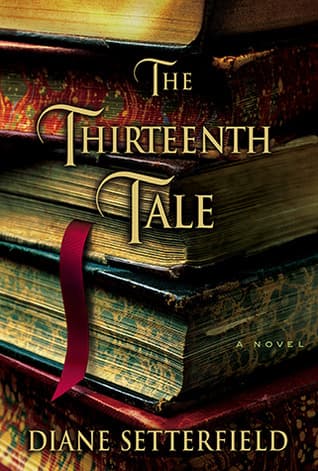
Diane Setterfield (2006)
Genre
Fantasy / Historical Fiction / Mystery
Reading Time
9-10 hours
Key Themes
See below
Sign in to track this book
A reclusive author, known for her made-up pasts, reveals the gothic truth of her life and a missing story to a young biographer, linking their lives through shared secrets, madness, and the power of stories.
Margaret Lea, a quiet biographer, works in her father's old bookshop. She is haunted by the death of her twin at birth, a secret her parents refuse to discuss. One day, she receives a letter from the famous, mysterious author Vida Winter, known for her twelve published tales and a missing thirteenth. Miss Winter, who has invented many life stories for herself, is now old and dying. She wants to tell her true, single story. Intrigued and feeling a strange connection to the author, Margaret accepts the invitation to Angelfield, Miss Winter's isolated estate.
At Angelfield, Margaret notices the decaying grandeur of the estate, a place that seems to hold its own secrets. She meets Vida Winter, a strong woman despite her age and illness. Vida begins her story, warning Margaret that truth is often stranger and more painful than fiction. She describes her early life, a unique and unusual childhood that immediately captures Margaret's attention. Vida's storytelling is captivating, painting clear pictures of a past era and a family shrouded in mystery, hinting at a gothic tale with strange characters and unsettling events.
Vida's story takes Margaret to the Angelfield of the past, focusing on the eccentric and troubled family. She describes the beautiful but cold Isabelle, her parents, and the peculiar, wild twin girls, Adeline and Emmeline. These twins are untamed and seem to exist in their own world, communicating in a private language. Their behavior is often disturbing and violent, yet they have a strange, captivating innocence. Vida, who says she was their governess, details Angelfield's isolation and the family's distance from normal society, setting a tone of gothic mystery and psychological intrigue.
As Vida continues, Margaret learns more about the intense and disturbing bond between Adeline and Emmeline. The governess, a young, naive woman, tries to civilize them. The girls show an almost supernatural connection and a strong resistance to outside influence. Their games are dark, their affections possessive, and their actions often cruel. The governess becomes more involved in their strange world, seeing things that defy logic and morality. Vida's descriptions highlight the twins' isolation and Angelfield's unsettling atmosphere, where normal rules do not seem to apply, making Margaret even more fascinated.
Vida recounts the tragic event: a devastating fire that destroys Angelfield. The details are harrowing, describing the chaos and destruction. Afterward, one of the twins, Emmeline, is thought to have died in the flames, while Adeline survives, deeply traumatized. The fire changes everything, shattering Angelfield's already fragile world and leaving many questions unanswered. Vida's story becomes more fragmented and emotional here, suggesting the deep impact this event had on everyone involved and adding to the family's mystery.
After the fire, the surviving twin, Adeline, moves in with relatives. Her move to a 'normal' life is difficult. She is withdrawn, haunted by the past, and struggles to communicate. Her behavior remains unusual, and she carries the weight of the Angelfield tragedy. Vida describes Adeline's deep loneliness and her inability to form connections, showing how her childhood left a lasting mark. Margaret notices that Vida's telling of Adeline's suffering is especially moving, hinting at a more personal connection than that of a governess.
While captivated by Vida's story, Margaret's biographer instincts take over. She begins her own research, visiting local archives and talking to people who knew the Angelfield family. She finds inconsistencies and missing details in Vida's account. Records of births, deaths, and property ownership do not quite match the story she is told. These inconsistencies make Margaret doubt Vida, leading her to believe that Vida is still hiding important information or even making up parts of her 'true' story. She confronts Vida, demanding the full truth, unwilling to accept another elaborate fiction.
Pressed by Margaret's questions and her own approaching death, Vida Winter finally reveals the full, devastating truth. She confesses that she is not the governess, but one of the twins—Adeline. The 'thirteenth tale' is the story of how she survived, how Emmeline died, and the true, complex nature of their bond. She explains that the twins were conjoined at birth, a secret kept hidden and surgically separated. This led to deep psychological trauma and an unbreakable, almost symbiotic, connection between them. The fire was a tragic accident, and the 'disappearance' was a deception to allow one twin to live as two.
With Vida's confession, the true horror and sadness of Angelfield become clear. The parents, Isabelle and her brother, were themselves products of an incestuous relationship, leading to Isabelle's emotional distance and the twins' difficult birth. The family's isolation and lack of proper care made the twins' wildness worse. The governess was well-meaning but overwhelmed, trying to connect with them. The story reveals a cycle of trauma and secrecy, showing how the twins' strange behavior resulted from their unusual birth and troubled home, ending in the fire.
Vida's account of twinship and loss deeply affects Margaret. The raw emotion and detailed descriptions of the twins' bond trigger a forgotten memory. Margaret realizes that she, too, was a twin, and her sister died at birth. Her parents, out of grief and a misguided attempt to protect her, had hidden this truth. Vida's story, more than just a biography, reflects Margaret's own hidden pain, allowing her to confront her past and understand her parents' silence. She begins to heal from her long-held sorrow.
Inspired by Vida's story and her own rediscovered memories, Margaret returns home and confronts her parents about her twin. The conversation is difficult but ultimately freeing. Her parents, relieved to finally share their burden, explain the circumstances of her twin's death and their reasons for hiding it. This open talk allows for deep emotional release and reconciliation between Margaret and her parents. The truth, though painful, frees them all from years of unspoken grief and misunderstanding, mirroring the freedom Vida herself found in telling her story.
Having told her complete story, Vida Winter dies peacefully, her life's burden lifted. Margaret, deeply changed by the experience, feels a strong sense of closure and understanding. She finishes Vida's biography, presenting the full truth of the Angelfield story and the author's identity. The experience changes Margaret, allowing her to accept her own identity as a twin and a storyteller. She learns the power of truth and the need to face one's past, carrying on Vida's legacy not just as a biographer, but as a woman who has found her own voice and story.
The Protagonist
Margaret transforms from a passive observer of others' stories into an active participant in uncovering her own, finding healing and self-acceptance.
The Protagonist/Confidante
Vida sheds her many fictional identities to reveal her true self and the painful events of her past, finding peace and closure in her final days.
The Supporting/Central to the Mystery
Emmeline's life and death define Adeline's existence, her presence continuing to shape Vida Winter's identity and narrative.
The Supporting/Antagonist (indirect)
Isabelle's character remains largely static, a symbol of the destructive cycle of inherited trauma and neglect.
The Supporting
The governess's initial optimism gives way to despair and fear as she witnesses the escalating strangeness at Angelfield, eventually leaving the estate.
The Supporting
John remains a consistent, supportive figure for Margaret, his presence emphasizing the importance of simple kindness.
The Supporting/Antagonist
Charlie's character serves as a catalyst for the Angelfield tragedy, his actions setting in motion the cycle of pain and secrecy.
The Mentioned
Aurelius's past actions and character establish the foundation for the Angelfield family's inherent dysfunction.
The novel explores how stories shape identity, hide truth, and can reveal it. Vida Winter's life shows the power of narrative, having created many fictional pasts for herself. Her decision to tell her 'thirteenth tale' highlights how sharing one's true story, however painful, can be healing. Margaret, as a biographer, first focuses on facts, but she learns that a story's emotional truth can be more meaningful. The book itself is a 'love letter to reading,' showing how stories connect us, heal us, and help us understand ourselves and others.
“All children mythologize their birth. It is a universal trait. You want to know where you come from. You want to know who you are. You want to know your fate.”
Both Vida Winter and Margaret Lea deal with basic questions of identity. Vida has hidden her true self for decades, her public image a carefully built facade. Her journey is about reclaiming her identity as Adeline and accepting her past. Margaret's identity is similarly broken by the unspoken secret of her twin. Through Vida's story, Margaret must confront her own origins and the impact of her twin's death, leading to self-discovery and acceptance. The novel suggests that true identity comes not from hiding, but from embracing one's complete, often messy, history.
“I was not afraid of the truth. I was afraid of the truth about myself.”
A central theme is the unique and complex bond between twins, and the deep impact of losing a twin. The relationship between Adeline and Emmeline is shown as intensely connected, almost a single entity split in two. This leads to devastating emotional and psychological consequences when they are separated. Margaret's own hidden history as a surviving twin mirrors this theme, showing the lasting grief and identity confusion that can result from such a loss. The novel explores the idea that twins can share a connection that defies normal understanding, and that the absence of one can leave a lasting emptiness in the other.
“We were not two but one, two halves of a whole, and when one half was lost, the other was left incomplete.”
The Angelfield family shows how secrets and problems can pass down through generations, creating a cycle of trauma. The incestuous relationships, the hidden birth of the conjoined twins, and the subsequent cover-ups all create an environment of secrecy and emotional harm. This theme is reflected in Margaret's own family, where the secret of her twin's death has created a barrier between her and her parents. The novel argues that these unspoken truths fester, causing pain until they are finally revealed and confronted.
“Secrets are like a poison, they fester and corrupt everything they touch.”
The novel uses gothic elements to create an atmosphere of decay, mystery, and psychological unease. Angelfield itself is a crumbling, isolated mansion, reflecting the family's decaying wealth and moral corruption. The wild nature of the twins, the ghost stories, the dark secrets, and the dramatic fire all contribute to a classic gothic feel. This atmosphere increases the sense of mystery and hints at the tragic events that unfold, drawing the reader into a world where the past constantly affects the present.
“The house was a living thing, breathing secrets, sighing with old sorrows.”
Vida Winter's initial narrative is intentionally misleading, forcing the reader and Margaret to question the 'truth'.
Vida Winter is a quintessential unreliable narrator. She has built a career on fabricating her life story, and even when she claims to be telling the truth, she withholds crucial information and presents events from a skewed perspective (initially claiming to be the governess, not one of the twins). This device keeps the reader and Margaret Lea constantly on edge, sifting through layers of deception to uncover the real story. It underscores the novel's theme about the nature of truth and the power of storytelling to both conceal and reveal.
Margaret Lea's present-day investigation frames Vida Winter's historical account.
The novel utilizes a frame story structure, where Margaret Lea's contemporary journey to uncover Vida Winter's past forms the outer narrative. Within this frame, Vida recounts the gothic tale of Angelfield and the Angelfield family. This allows for a dual perspective: Margaret's objective, analytical approach as a biographer, juxtaposed with Vida's deeply personal, emotional, and often unreliable storytelling. The frame story also enables Margaret's own parallel journey of self-discovery to unfold concurrently with Vida's revelations, intertwining their fates.
Angelfield, the decaying mansion, symbolizes the Angelfield family's moral and psychological decay.
Angelfield is more than just a setting; it's a character in itself, embodying the gothic genre. The isolated, crumbling mansion with its overgrown topiary garden and secret passages symbolizes the Angelfield family's hidden secrets, their isolation from society, and their moral decay. The fire that consumes it is a symbolic purification, destroying the physical manifestation of their tragic past. The wildness of the gardens mirrors the untamed nature of the twins, and the house's oppressive atmosphere reflects the psychological burdens carried by its inhabitants.
The enigma of the unpublished story serves as the central mystery driving the plot.
The 'thirteenth tale' is a powerful symbolic plot device. For decades, it has been the elusive, unpublished story that defines Vida Winter's mysterious literary career. Its absence fuels curiosity and speculation, both within the fictional world and for the reader. It represents the untold truth, the secret that Vida has guarded most fiercely. The revelation of the thirteenth tale is not just a narrative twist but the emotional climax of the novel, signifying Vida's willingness to finally confront her deepest pain and reveal her true identity.
“Every secret has a narrative, a beginning and an end. The beginning is the fact of the secret itself, the end is the point at which it is revealed.”
— Margaret ponders the nature of secrets as she begins to unravel the mystery.
“All children are monsters. It's just that some of us are given the chance to tame them, and some of us are not.”
— Vida Winter reflects on childhood and the darker aspects of human nature.
“There is more than one way to burn a book.”
— A poignant statement about censorship and the destruction of stories, not just physically.
“I am a ghost. A ghost in the house of my own life.”
— Vida Winter describes her feeling of detachment and unreality within her own existence.
“The past is a story we tell ourselves.”
— A recurring theme, emphasizing the subjective and constructed nature of memory and history.
“Books are not about stories, they are about truth.”
— Margaret reflects on the deeper purpose and impact of literature beyond mere plot.
“We are all made of stories. When they are told, we are alive. When they are not, we are ghosts.”
— Highlights the vital role of narratives in defining and sustaining human existence.
“The greatest gift you can give a child is a secret.”
— A controversial idea from Vida Winter, suggesting secrets foster imagination and independence.
“There are some stories that refuse to be told, that insist on being kept quiet.”
— Margaret grapples with the difficulty of uncovering certain truths and the resistance of the past.
“I don't believe in happy endings, but I do believe in good stories.”
— Vida Winter's pragmatic view on life and literature, valuing narrative integrity over simplistic resolution.
“The world is not always what it seems, Margaret. Things are not always what they appear.”
— A warning to Margaret, setting the stage for the unfolding deceptions and hidden realities.
“To be a writer, you must be a reader first, and a storyteller second.”
— A piece of Vida Winter's wisdom on the craft of writing and the importance of absorbing other narratives.
“Sometimes the greatest love is a love that cannot be spoken.”
— Reflects on the unspoken affections and profound connections that exist beyond words.
Ready to see how well you understood this book? Take our interactive quiz with 10 questions.







