“Being a kid is great. But it's also a lot of work.”
— Greg reflects on the challenges of childhood.

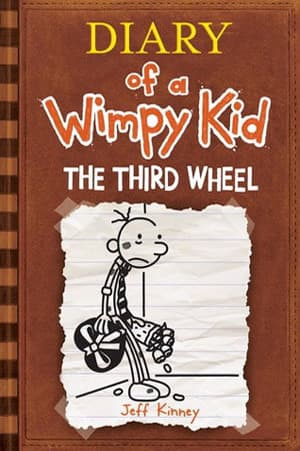
Jeff Kinney (2012)
Genre
Children's / Young Adult
Reading Time
90 min
Key Themes
See below
Sign in to track this book
Greg Heffley scrambles for a Valentine's Day dance date, finding an unexpected partner and leaving his best friend, Rowley, as the third wheel in a night of surprising romantic turns.
Westmore Middle School announces a Valentine's Day dance, causing social pressure among students. Greg is worried about finding a date, fearing he will go alone or be a 'third wheel.' He watches how his classmates get dates, from big proposals to simple pairings. His best friend, Rowley Jefferson, seems less concerned, initially thinking he won't go. This gives Greg little comfort as he deals with the complex social world of middle school romance. Greg's main goal is to avoid the shame of attending the dance without a date.
Greg tries many times to find a date for the dance, but fails. He thinks about asking several girls, but he is too shy or awkward, or they already have partners. He tries to subtly see if girls are interested, but his attempts are clumsy. He even thinks about asking girls he doesn't like, just to avoid going alone. As the dance gets closer, his desperation grows, making him overthink every social interaction and misinterpret simple gestures as romantic interest. This entire process causes him much stress and embarrassment.
To Greg's surprise and slight annoyance, Rowley Jefferson, who usually struggles socially, suddenly becomes popular with girls. This change happens because Rowley is seen as innocent and less intimidating than other boys. Girls start asking Rowley to the dance or showing interest in him. Greg, who always thought he was more socially skilled, is confused and a little jealous of Rowley's new appeal. This shift makes Greg's own dating problems harder, as he watches his best friend easily get attention.
Greg gets an unexpected chance through Fregley, an unusual and socially awkward classmate. Fregley's uncle owns a limousine and offers to drive Fregley and a friend to the dance, making for a grand entrance. Fregley, in his strange way, invites Greg to be his 'date' in a friendly sense. Even though the invitation is odd, Greg sees it as a way to solve his dateless problem. It guarantees he can attend the dance without being completely alone, and with a bit of flash thanks to the limousine.
Just as Greg accepts going with Fregley, something new happens. Abigail Brown, a popular girl, suddenly needs a date because her original partner gets sick. Abigail's best friend, who is dating Fregley's uncle, suggests Abigail could go with Fregley and Greg. This creates an unusual group of three: Fregley, Greg, and Abigail. Greg is happy about going with a popular girl, even if it means sharing the experience with Fregley. He sees it as a much better plan than before.
With Greg now with Fregley and Abigail, the original plan of Greg and Rowley going to the dance together falls apart. Rowley, who was less worried about the dance at first, now has no date and feels like the 'third wheel.' He is clearly disappointed and left out as Greg eagerly takes the chance to go with Abigail. This change causes tension between Greg and Rowley, as Rowley feels abandoned by his best friend.
The limousine ride to the dance is not as glamorous as Greg imagined. Fregley's uncle, though well-meaning, is odd, and Fregley acts in his usual strange ways, making Greg and Abigail uncomfortable. Fregley talks constantly, makes strange comments, and doesn't understand social cues. Greg tries to impress Abigail and fix the situation, but Fregley's presence and the uncle's odd driving make it hard to have a normal conversation or enjoy the ride. Greg starts to wonder if this was better than his original plan of having no date.
At the Valentine's Day dance, Greg, Abigail, and Fregley arrive, getting some attention because of the limousine. However, once inside, the dance floor's social rules become clear. Greg tries to talk to Abigail, but Fregley's constant presence and strange behavior remain a problem. Greg tries to dance, but his moves are awkward, and he feels self-conscious. He watches other couples, comparing his situation to theirs. He realizes that even with a popular girl, his night is not going well because of Fregley's unintentional interference.
Fregley's odd behaviors get worse on the dance floor. He dances in his own unique, very unusual way, drawing stares and laughs from other students. He tries to get Greg and Abigail to play his strange games and join his conversations, completely unaware of their discomfort. Greg is embarrassed, feeling his chances of impressing Abigail disappear with each of Fregley's bizarre actions. Abigail, though polite, is clearly uncomfortable. Greg struggles to manage Fregley's behavior while trying to save his date, making the night stressful for him.
While Greg struggles with Fregley, Rowley, who is at the dance alone, becomes an unexpected hero. A large punch bowl is accidentally knocked over, threatening to spill everywhere and possibly cause a power outage. Thinking fast, Rowley uses his large, baggy sweater to soak up the punch, preventing a disaster. His quick thinking and selflessness are noticed by everyone. He becomes the unlikely hero of the night, earning admiration and cheers from his classmates, including some girls who had shown interest in him before.
After Rowley's heroic act, Abigail's attention shifts. She turns to Greg, but instead of showing interest in him, she says she finds Rowley's kindness and simple nature appealing. She says she was impressed by his actions and finds him truly sweet. This news upsets Greg, who had spent the whole night trying to impress her. He realizes that despite all his efforts and the elaborate setup, Abigail was drawn to his best friend's genuine character. This shows Greg's superficial approach to romance versus Rowley's real self.
The dance ends with Greg feeling disappointed. He realizes his search for a popular date made him ignore his true friend, Rowley. His attempts to be cool failed. He thinks about the night's events, understanding that real kindness and authenticity, not fake popularity, are what truly attract people. He sees how Rowley, despite having no date at first, ended up connecting with Abigail and earning others' admiration. Greg learns a valuable, though painful, lesson about friendship, how he sees himself, and the difficulties of middle school romance.
The Protagonist
Greg learns a humbling lesson about the value of genuine friendship and the superficiality of popularity, realizing that authentic kindness can be more attractive than elaborate schemes.
The Supporting
Rowley, initially a dateless bystander, unexpectedly becomes the hero of the dance, gaining admiration for his genuine character.
The Supporting
Abigail initially accepts a date with Greg but ultimately recognizes and appreciates Rowley's genuine kindness and selflessness.
The Supporting
Fregley remains consistently eccentric, serving as a catalyst for plot developments and a source of comedic awkwardness.
The Mentioned
No significant arc; serves a functional role in the plot.
The Supporting
No significant arc in this installment; maintains his established character.
The Supporting
No significant arc in this installment; maintains his established character.
The Supporting
No significant arc in this installment; maintains her established character.
The book shows the pressure middle schoolers feel to fit in and meet social expectations, especially around events like a school dance. Greg's main reason for finding a date is his fear of being an outcast or a 'third wheel,' not true romantic interest. He sees his peers' fancy date proposals and feels he must do the same, even taking desperate steps. This theme is clear in Greg's thoughts about the 'dating pool' and social order, showing how much young people are influenced by perceived norms. The worry about seeming 'normal' drives much of the story.
“The Valentine's Day Dance is a huge deal at Westmore Middle School. It's like a big popularity contest, and if you don't have a date, you might as well not even show up.”
This theme looks at the difference between showing a fake, 'cool' image and being oneself. Greg spends the whole book trying to seem cool and desirable to impress Abigail, focusing on things like the limousine and avoiding Fregley's odd behaviors. In contrast, Rowley, not caring about social show-offs, acts genuinely all night. Rowley's real kindness and quick thinking during the punch spill, not any fancy plan, impress Abigail and earn him admiration. This shows that real character is more appealing than fake coolness. Greg fails to connect with Abigail because of his superficial approach.
“I guess I learned that sometimes, the person you think is a loser actually turns out to be the one who gets the girl.”
The story explores friendship, especially between Greg and Rowley. Greg often takes advantage of Rowley's good nature and puts his own social gain before his friend's feelings. When Greg leaves Rowley for a chance to go with Abigail, it hurts their friendship. However, Rowley's steady loyalty and eventual heroism highlight the true value of their friendship. The ending suggests Greg realizes how he treats Rowley, implying that real friendship is more valuable than short-lived popularity. It makes Greg think about how easily he would abandon Rowley for a perceived upgrade.
“I always thought that if you wanted to be popular, you had to be cool. But maybe being a good friend is more important than being cool.”
The entire story is full of the awkward and embarrassing moments of middle school life, especially first crushes and dances. Greg's clumsy attempts to ask girls out, his discomfort with his own dancing, and the general social worries around the dance are central to the story's humor and relatability. Fregley's character further emphasizes this theme, showing the extreme end of social awkwardness. The book captures the common experience of feeling out of place, misunderstanding social cues, and the general discomfort that comes with navigating the complex social world of adolescence.
“Middle school dances are like a minefield. One wrong step, and you could be humiliated for the rest of your life.”
A central event that acts as a catalyst for social pressure and conflict.
The Valentine's Day Dance is the primary setting and driving force of the plot. It serves as a classic middle school social crucible, forcing characters to confront their insecurities, desires for popularity, and romantic aspirations. The announcement of the dance immediately creates a goal for Greg (finding a date) and sets the stage for all subsequent conflicts and character interactions. It provides a clear deadline and a focal point for the social anxieties and awkwardness that are central to the 'Diary of a Wimpy Kid' series, making it a perfect backdrop for Greg's misadventures.
A comedic and ironic symbol of Greg's aspirations for a glamorous date.
The limousine ride is a key plot device that initially represents Greg's hopes for a grand and impressive date. It promises a touch of sophistication and popularity, elevating his status in his own mind. However, it quickly turns into a source of comedic irony and embarrassment due to Fregley's antics and his uncle's eccentricity. This contrast between Greg's expectations and the reality of the ride serves to highlight the theme of authenticity versus superficiality and underscores the awkwardness of his situation, making the 'glamorous' ride anything but.
A turning point that shifts the social dynamics and reveals true character.
Rowley's act of soaking up the spilled punch is a crucial plot device that serves as the climax of the dance. It abruptly shifts the focus from Greg's superficial attempts to impress Abigail to Rowley's genuine kindness and quick thinking. This moment not only saves the dance but also redefines Rowley's social standing, turning him into an unexpected hero. It directly leads to Abigail's realization about Rowley's character, providing the resolution to the romantic subplot and delivering the overarching moral lesson about authenticity to Greg.
Provides direct access to Greg's biased and often self-serving perspective.
The entire story is told through Greg Heffley's diary entries, combining text and simple drawings. This first-person perspective is a fundamental plot device of the series. It allows readers direct access to Greg's thoughts, insecurities, and often flawed interpretations of events, making him a highly unreliable narrator. This narrative style is crucial for the humor, as Greg's self-centered observations and rationalizations are often at odds with the reality of the situation, providing an ironic lens through which the awkwardness of middle school is portrayed. It also allows the reader to understand his motivations, even if they are misguided.
“Being a kid is great. But it's also a lot of work.”
— Greg reflects on the challenges of childhood.
“I've always wondered what it would be like to have a twin. But then I remember I have Manny.”
— Greg ponders having a twin but then thinks of his younger brother.
“The only reason I would ever want to be famous is so I could get free stuff.”
— Greg reveals his motivation for wanting fame.
“The problem with having a best friend is that they know all your secrets.”
— Greg considers the downsides of close friendship.
“Sometimes I think the whole world is just trying to make me look bad.”
— Greg's common feeling of being targeted or misunderstood.
“I'm starting to think that school is just a way for adults to keep kids busy so they don't cause any trouble.”
— Greg's cynical view on the purpose of school.
“If there's one thing I've learned, it's that you can't trust anyone who says they're 'just kidding'.”
— Greg's observation about people who use 'just kidding' as an excuse.
“Being a middle child is the worst. You don't get special treatment like the youngest, and you're not the favorite like the oldest.”
— Greg complains about his position as a middle child.
“I don't know why adults are always trying to get kids to 'try new things.' Most new things are terrible.”
— Greg expresses his aversion to trying new experiences.
“The only thing worse than going to a party you don't want to go to is going to a party you DO want to go to and then having it be a total bust.”
— Greg's experience with disappointing social events.
“My mom always says 'It's the thought that counts,' but usually my thoughts are pretty bad.”
— Greg humorously reflects on his less-than-noble intentions.
“I swear, sometimes it feels like my whole life is just one big social experiment.”
— Greg's feeling of being observed and judged in his daily life.
“If you're going to make a mistake, make it a big one so people remember it.”
— Greg's cynical advice regarding mistakes.
“The worst part about growing up is that you have to start making your own decisions.”
— Greg laments the increasing responsibility that comes with age.
Ready to see how well you understood this book? Take our interactive quiz with 10 questions.
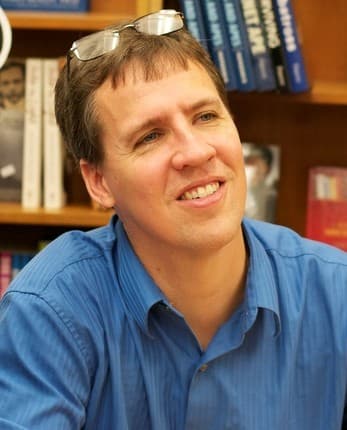
Jeffrey Patrick Kinney is an American author and cartoonist, best known as the creator of the children's book series Diary of a Wimpy Kid. He also created the child-oriented website Poptropica.

Dan Gemeinhart
4.5
Kate O'Hearn
4.4

Jeanne Birdsall
4.4

Jen Wang
4.4
Wendelin Van Draanen
4.3

John Marsden
4.3

Chris Van Allsburg
4.3
Jennifer A. Nielsen
4.2