“The price of freedom is eternal vigilance.”
— Mitch Rapp's recurring thought about the necessity of constant watchfulness against threats.

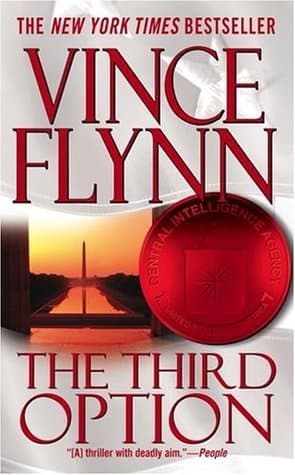
Vince Flynn (2005)
Genre
Thriller / Mystery
Reading Time
500 min
Key Themes
See below
Sign in to track this book
Mitch Rapp's final mission puts him in danger, making him face a German industrialist who arms dangerous terrorists.
CIA agent Mitch Rapp, still sad about losing his fiancé, gets what is supposed to be his last mission before moving to a desk job: kill German industrialist and arms dealer, Wolfgang Schmidt. Schmidt has been giving advanced technology to terrorist states, including Iran. Rapp, working undercover, gets into Schmidt's heavily guarded Hamburg estate. The operation is carefully planned, but during the assassination, Rapp finds a young woman, Anna R Reilly, Schmidt's mistress and a former CIA asset, in the house. He has to kill her to stay hidden, a choice that bothers him and leads to problems later. The mission is called a success, but Rapp feels the burden of the additional deaths.
After the Hamburg operation, Rapp goes back to the United States, expecting to be debriefed and start his new job. But CIA Director Irene Kennedy sees problems in the mission report and Rapp's behavior. She asks her deputy, Thomas Stansfield, to review the operation. Stansfield, an experienced intelligence officer, worries about Rapp's emotional state and if killing Anna Reilly was necessary. Rapp defends his actions, sure it was the only way to avoid being exposed. Unknown to them, the assassination has started a complex set of political and intelligence moves. Powerful people in the US government, who care about the outcome, are scrutinizing Rapp's actions.
In Washington D.C., a secret group led by Senator Hank Clark and former CIA Director, now Deputy National Security Advisor, Paul Frehley, starts a plan to expose Rapp and use the Schmidt assassination to their benefit. They want to discredit the current administration's foreign policy and push their own plan for military action in the Middle East. They manipulate intelligence, leak information, and plant false evidence to make Rapp look like a rogue agent and the Schmidt operation an unauthorized, failed assassination. They plan to use Anna Reilly's death to their advantage, saying she was an innocent victim of the CIA going too far.
As the plot grows, Rapp feels he is being watched. His apartment is bugged, and he notices surveillance. He realizes he has been set up, and the information about Anna Reilly's past as a CIA asset was hidden from him, making him look careless. With his life and reputation at risk, Rapp goes into hiding, using his training to avoid capture and start his own investigation. He knows he can only trust a few people in the agency. Kennedy and Stansfield, though unsure at first, start to see the extent of the betrayal and work to protect Rapp and find the truth from inside the CIA.
Working in secret, Rapp uses his contacts and skills to put the plot together. he finds that Anna Reilly was not just Schmidt's mistress but was involved in another sensitive intelligence operation about Schmidt's deals and a secret arms transfer. He also finds connections between Schmidt and powerful American figures who were profiting from illegal arms trade, making the official story more complicated. Rapp's investigation links the assassination, the leaks, and the attempts to frame him, pointing to a high-level plan to destabilize the government and change foreign policy.
While Rapp is on the run, Irene Kennedy and Thomas Stansfield deal with the difficult political situation within the CIA and the White House. They face pressure from Senator Clark and Paul Frehley, who want Rapp captured immediately and a public inquiry. Kennedy and Stansfield, however, secretly believe Rapp's claims and start their own internal investigation, looking through intelligence reports and interviewing staff. They realize the plot goes deep into the government, and exposing it will need great care and good timing to avoid hurting national security and the agency.
Rapp, with enough evidence, decides to confront the conspirators directly. He targets people in Frehley and Clark's network, using his methods to get information and send a message. He creates events that show the conspirators' weaknesses, causing problems and forcing them to act. This includes intercepting communications and directly threatening those who have been leaking information or manipulating evidence. His actions are meant to draw out the leaders and give Kennedy and Stansfield the proof they need to act against the powerful figures involved.
Rapp, Kennedy, and Stansfield's efforts start to work. Rapp gives important intelligence that helps Kennedy understand Frehley and Clark's full plan, including their money reasons and their goal of putting in a more aggressive administration. Stansfield uses his political skill to get support and prepare for the conflict. The conspirators, seeing their plans fail, become desperate, making mistakes that further show their involvement. The evidence points to a big breach of national security and a planned attempt to manipulate foreign policy for personal and ideological reasons.
In a big confrontation, the full plot involving Senator Clark and Paul Frehley is revealed to the President and other key officials. Rapp helps get undeniable proof, often using unusual ways. Kennedy and Stansfield present the evidence, showing how Rapp was set up, how intelligence was manipulated, and the true reasons behind the plot. The conspirators are exposed, their careers ruined, and some face criminal charges. Rapp, though cleared, remains a controversial figure, but his loyalty and effectiveness are confirmed. The experience makes his role as a critical, though unusual, asset to the CIA stronger, securing his place in the agency's fight against terrorism.
The Protagonist
Rapp begins the book burdened by grief and distrust, believing he's on his final mission. He evolves from a targeted operative to the key figure in exposing a high-level conspiracy, reaffirming his crucial, albeit controversial, role in the CIA.
The Supporting
Kennedy begins by questioning Rapp's actions but quickly realizes the deeper conspiracy at play. She strategically maneuvers within the CIA to protect Rapp and expose the truth, solidifying her leadership and trust in Rapp.
The Supporting
Stansfield moves from initial skepticism about Rapp's actions to becoming a critical partner with Kennedy in exposing the high-level conspiracy, demonstrating his loyalty and strategic intelligence.
The Antagonist
Frehley is established as the primary antagonist, meticulously planning to manipulate the government. His arc involves his detailed schemes being unraveled, leading to his eventual exposure and downfall.
The Antagonist
Clark acts as the public face of the conspiracy, applying political pressure. His arc follows his efforts to discredit Rapp and manipulate policy, culminating in his exposure and political ruin alongside Frehley.
The Mentioned
Schmidt's role is primarily as the catalyst for the entire plot, with his assassination initiating the cascade of events that expose the wider conspiracy.
The Supporting
Anna's arc is primarily as a tragic figure whose death, a result of the initial mission, is manipulated and exploited by the antagonists to frame Rapp and advance their agenda. Her hidden past as an asset is key to unraveling the conspiracy.
The Supporting
President Hayes's arc involves navigating intense political pressure and conflicting intelligence to ultimately discern the truth about the conspiracy and the validity of Rapp's actions, demonstrating his growth as a leader.
The novel looks at betrayal and corruption within the top levels of government. Paul Frehley and Senator Hank Clark, trusted national security figures, manipulate intelligence, leak information, and frame a loyal agent for personal gain and ideological reasons. This shows how power can corrupt, making people risk national security for their own plans, as seen in their willingness to profit from illegal arms deals and destabilize the government. Rapp's personal betrayal by those he serves highlights the danger of enemies within.
“"The greatest threats often come from within, Mitch. Not from the enemies we can see, but the ones hiding in plain sight."”
The book explores the complex moral side of secret intelligence operations, especially through Mitch Rapp's actions. His killing of Wolfgang Schmidt and then Anna Reilly, though seen as necessary for the mission, bring up questions about unintended harm and the ethical lines agents must cross. Rapp's internal struggle, along with the political problems, forces characters like Irene Kennedy and Thomas Stansfield to deal with the 'third option' – the uncomfortable area between what is legal and what is necessary to protect national interests. It asks if the results always justify the methods in the world of espionage.
“"There are no clean hands in this business, Mitch. Just degrees of dirt."”
A main theme is the manipulation of truth and the power of how things are seen in politics and intelligence. The conspirators, Frehley and Clark, purposely twist the facts about the Schmidt assassination and Anna Reilly's death to make Rapp look like a rogue agent and to push their political agenda. They leak carefully chosen information to the media, shaping public opinion against Rapp and the current administration. The story constantly shows how hard it is for the truth to come out when powerful figures actively try to hide it, forcing Rapp and his allies to fight not just physical threats, but also a battle over the story.
“"In Washington, the truth is often less important than the story you can sell."”
Loyalty and trust are important, especially in the relationships between Mitch Rapp, Irene Kennedy, and Thomas Stansfield. Rapp's deep distrust of bureaucracy is challenged when he realizes he has been betrayed by high-ranking officials. His ability to trust Kennedy and Stansfield, who risk their careers to defend him and uncover the plot, shows how important loyalty is in a dangerous environment. On the other hand, Frehley and Clark's betrayal shows the damaging effect of disloyalty on national security and personal integrity. The novel looks at who can truly be trusted when the stakes are highest.
“"When everyone else is trying to hang you, you learn very quickly who your real friends are."”
The manipulation of information to mislead characters and the audience.
This device is central to 'The Third Option.' The conspirators, Paul Frehley and Senator Clark, actively manipulate the narrative surrounding the Schmidt assassination. They leak partial truths, fabricate evidence, and control media perception to frame Mitch Rapp and push their political agenda. This creates a sense of uncertainty for the reader and for characters like Irene Kennedy, who must sift through layers of lies to uncover the real truth. The device highlights the dangers of disinformation and how easily public and official opinions can be swayed, making Rapp's fight not just physical, but also a battle for the truth.
Represents the morally ambiguous choices made in intelligence operations.
While not a physical object, the 'Third Option' acts as a significant metaphorical plot device. It refers to the difficult, often morally grey choices that intelligence operatives like Mitch Rapp must make when conventional methods are insufficient, and the stakes are national security. It encapsulates the dilemma of doing what is necessary, even if it is illegal or ethically questionable, to achieve a greater good. Rapp's decision to kill Anna Reilly, though later revealed to be manipulated, is a prime example of such a 'third option' that drives the plot's conflict and explores the moral complexities of his world.
The deliberate act of making an innocent person appear guilty.
The entire central conflict of 'The Third Option' hinges on the frame-up of Mitch Rapp. Paul Frehley and Senator Clark meticulously construct a scenario where Rapp appears to be a rogue, out-of-control operative who committed an unauthorized assassination and needlessly killed a civilian. This device creates immense tension and drives Rapp's actions as he fights to clear his name while simultaneously exposing the true perpetrators. It forces him underground and makes him an enemy of the state he serves, highlighting the vulnerability of even the most effective agents to internal manipulation and betrayal.
Characters with concealed loyalties or ulterior motives.
This device is crucial in revealing the depth of the conspiracy. Anna R Reilly, initially perceived as mere collateral damage, is later revealed to have been a former CIA asset, complicating the narrative of her death. More significantly, Paul Frehley, a former CIA Director and current Deputy National Security Advisor, operates with a hidden agenda. His trusted position allows him to manipulate intelligence and orchestrate the frame-up from within, making him a 'double agent' against the very government he serves. This device creates suspense and underscores the theme of betrayal within power structures.
“The price of freedom is eternal vigilance.”
— Mitch Rapp's recurring thought about the necessity of constant watchfulness against threats.
“Sometimes you have to do bad things to bad people to protect the good ones.”
— Rapp's internal justification for his violent methods.
“Trust was a luxury he couldn't afford.”
— Rapp's mindset in a world of deception and double-crossing.
“The world was a dangerous place, and someone had to be willing to get their hands dirty.”
— A reflection on the unpleasant but necessary tasks of intelligence operatives.
“He didn't seek revenge; he sought balance.”
— Rapp's motivation, framing his actions as a restoration of order rather than personal vendetta.
“In their line of work, assumptions could get you killed.”
— A lesson learned by operatives about the importance of thoroughness and caution.
“The truth was rarely simple, and often inconvenient.”
— A realization about the complexities of international politics and intelligence.
“He was a weapon, finely tuned and exceptionally deadly.”
— A description of Mitch Rapp's capabilities and training.
“Fear was a tool, and he knew how to wield it.”
— Rapp's understanding of psychological warfare and intimidation.
“Every decision had consequences, some unforeseen.”
— A general reflection on the chain reaction of events in high-stakes operations.
“Patriotism wasn't just about flags and anthems; it was about protecting what you believed in, no matter the cost.”
— An operative's deep-seated motivation for their dangerous work.
“The enemy wasn't always obvious, and sometimes came from within.”
— A theme of betrayal and internal threats within the narrative.
“He lived in the shadows so others could live in the light.”
— A summary of the thankless and hidden role of a covert operative.
Ready to see how well you understood this book? Take our interactive quiz with 10 questions.

Biography coming soon.







