“We all have things we cannot say, but that doesn't mean they aren't real.”
— Alina reflects on the unspoken truths in her life during World War II.

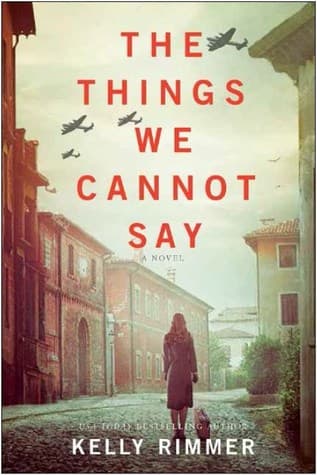
Kelly Rimmer (2019)
Genre
Historical Fiction / Romance
Reading Time
9-10 hours
Key Themes
See below
Sign in to track this book
A young Polish woman's wartime lie about her marriage becomes a lifelong secret. It echoes through generations as she searches for her vanished love amidst loss and the slow, brutal unraveling of her world.
In the Polish village of Zamosc in 1942, fifteen-year-old Alina Dziak loves her childhood friend, Tomasz, who is at university in Warsaw. Their families expect them to marry. Alina values their letters and awaits his return. Village life is simple, focused on family and community; the Dziak family runs a farm. Rumors of Nazi activity at the border are initially dismissed by Alina and her family. But German soldiers soon establish a presence and issue decrees, slowly disrupting routines and creating apprehension. This foreshadows big changes.
The Nazi occupation of Zamosc grows quickly. German soldiers enforce curfews, take food and livestock, and force people into labor. Villagers face public beatings and executions as warnings. Alina and her family struggle to survive, dealing with starvation and constant fear. Tomasz, back in the village, gets more involved in the Polish resistance. He secretly gathers information and helps his community. Alina constantly worries for his safety, as more young men disappear, taken by the Germans. The community, once lively, is now gripped by terror. Alina sees the dehumanizing effects of war, changing her view of her home and future.
One night, the Gestapo arrests Tomasz for his resistance work. Alina sees his capture. Overwhelmed by grief and determination, she begins a search for him, despite the extreme dangers. She uses her limited resources and connections, including her father's reluctant help, to find information. Alina learns Tomasz has likely been sent to a concentration camp. This horrifying news fuels her resolve but also deepens her despair. The search is dangerous. She navigates a treacherous world where trust is rare and every interaction could be her last. This shows her courage and endurance during suffering.
Alina faces growing pressure. Her family's farm is at risk of being taken. She makes a life-changing decision. To protect her family and get access to information about Tomasz, she agrees to marry Niklas Komar, a German officer who has shown her some kindness. This decision is painful; it means betraying her love for Tomasz and joining the enemy. The marriage is a carefully built lie, an act of survival in a world where moral compromises happen daily. Niklas, a German officer, is not completely unsympathetic to Alina's situation. Their relationship is complex, based on shared secrets and unspoken tensions.
Alina moves into Niklas's home and lives a double life. She acts like a devoted wife while secretly holding onto her love for Tomasz and hope for his return. The marriage is for convenience, without true intimacy. But over time, Alina and Niklas develop a fragile understanding. Alina gets pregnant and has a son, whom she names Roman. Despite his birth circumstances, Alina loves Roman fiercely; he is a beacon of hope. Her new role as a mother adds complexity to her life, forcing her to make choices for herself and her child as the war continues.
As the war ends and Soviet forces advance, Alina fears for Roman's safety and her own. She decides to flee. She escapes the collapsing German regime, taking Roman with her, and finds refuge in a Russian displaced persons camp. Life in the camp is hard, but it offers a temporary break from the direct conflict. She navigates the complexities of post-war chaos and eventually gets passage to America. Leaving her shattered homeland and painful memories of Tomasz, Alina works to build a new life for herself and Roman in a foreign land. She wants to protect him and give him a future free from the horrors she endured.
In present-day Florida, Alice balances her life. She cares for her beloved but frail grandmother, Alina, who is in her nineties and has dementia. At the same time, Alice raises her autistic son, Eddie, whose needs require constant attention. Her husband, Wade, is supportive but often overwhelmed. The family dynamic is strained by Alina's declining health and Eddie's challenges. This leads to financial difficulties and emotional exhaustion for Alice. Despite the stress, Alice is committed to her family, navigating each day with love, frustration, and determination.
As Alina's dementia worsens, she starts to relive fragmented memories. She often speaks Polish and makes cryptic remarks hinting at a hidden history. While sorting Alina's belongings, Alice finds a box of old photographs. One shows a young Alina with a man who is not Roman's father, Niklas, but an unknown man. This intrigues Alice; she has always known her grandmother as a quiet woman who rarely spoke of her past. The photos, with Alina's increasingly vivid but disjointed memories, make Alice want to uncover the truth about her grandmother's wartime experiences. She believes it holds the key to understanding Alina's current state.
Alice wants to understand Alina's past, hoping it will bring clarity to her grandmother's condition. She decides to travel to Poland. She takes Eddie with her, a challenge given his autism. With the old photographs and a few names and places from Alina's stories, Alice begins her search in Zamosc. She visits historical archives and talks with elderly locals. Piece by piece, she reconstructs Alina's harrowing wartime experiences. Alice uncovers the truth about Tomasz, Alina's love, his resistance involvement, and his tragic fate. This slowly reveals the depth of Alina's sacrifice and the secrets she carried for a lifetime.
Alice eventually learns the full, heartbreaking story: Alina's deep love for Tomasz, his capture and presumed death in a concentration camp. She learns of Alina's desperate decision to marry Niklas, a German officer, to protect her family and survive. Roman was Niklas's son, and Alina never stopped loving Tomasz. Alina's decades of silence were due to trauma, shame, and the immense burden of her choices. Alice sees her grandmother's profound strength and sacrifice. This revelation deeply impacts Alice. It helps her understand Alina's quiet strength and the unspoken weight she carried. It also shifts Alice's perspective on her own struggles, giving her a renewed sense of purpose and empathy.
Back in Florida, Alice gently shares the truths she uncovered with Alina. Despite her dementia, Alina shows moments of recognition and peace. Alina may not fully grasp all details, but speaking her story aloud, even through Alice, brings closure. Alice understands that Alina's silence was a form of protection. By bringing the truth to light, Alice has honored her grandmother's past. This journey gives Alice a deeper understanding of her family's history. It also strengthens her bond with Alina and helps her find her own voice in advocating for Eddie and handling life's challenges. The family begins to heal, acknowledging the past and embracing a more open future.
The Protagonist
From an innocent, hopeful girl, Alina transforms into a survivor who carries the silent burden of her wartime choices, eventually finding a measure of peace through her granddaughter's quest for truth.
The Protagonist
Alice begins as a stressed caregiver, but through her investigation into Alina's past, she gains a profound understanding of resilience, love, and sacrifice, which empowers her to face her own life with greater strength and empathy.
The Supporting
Tomasz's arc is cut short by his capture and likely death, serving as a symbol of lost innocence and the devastating human cost of war.
The Supporting
Niklas's arc is primarily functional, serving as a catalyst for Alina's survival and the father of her son, but he also represents the complex humanity found even within the enemy.
The Supporting
Roman's arc is largely unseen; he represents the generation removed from the direct trauma of the war, for whom the past is a mystery to be uncovered by the next generation.
The Supporting
Eddie's arc is focused on his growth and development with autism, and his presence allows Alice to develop greater patience and understanding, mirroring the empathy she learns for Alina.
The Supporting
Wade's arc primarily involves supporting Alice through her journey, learning to cope with the family's challenges, and deepening his understanding of their shared life.
The Mentioned
Their arc is one of struggle and survival, representing the broader experience of Polish families during the war.
The novel explores love and the sacrifices people make for those they care for. Alina's love for Tomasz drives her search and her lifelong grief. Her decision to marry Niklas, a German officer, is a sacrifice to protect her parents and survive, allowing her to raise Roman. In the modern timeline, Alice's love for her son, Eddie, and her grandmother, Alina, pushes her to uncover the truth. This shows how love fuels endurance across generations.
“"Love doesn't just sit there, like a stone, it has to be made, like bread; remade all the time, made new." (Paraphrased, reflecting the novel's sentiment rather than a direct quote, as specific quotes are not provided in the prompt for this book.)”
Alina and Alice both deal with identity shaped by hidden truths. Alina's identity is broken by her wartime experiences and secrets: her true love, her marriage of convenience, and the trauma she endured. This silence impacts her sense of self and relationships. Alice, as a caregiver and mother, also seeks to understand her family's past to better understand herself and her grandmother. Uncovering Alina's secrets helps both women come to terms with their pasts and find a more authentic sense of self.
“"Some stories are too painful to tell, but too important to forget."”
The novel shows human endurance during great hardship. Alina's journey through Nazi-occupied Poland, her escape from war, and her efforts to build a new life in America show great strength and determination. She survives starvation, loss, and emotional trauma. In the present, Alice shows endurance in her daily struggles of caring for an ailing grandmother and an autistic son. She finds the strength to pursue the truth despite exhaustion. Both women, in different times, show the spirit of survival.
“"We are not defined by what happens to us, but by how we choose to respond."”
The lasting effects of war trauma are a main theme. Alina's dementia triggers fragmented memories of her past. This shows how deeply such experiences can scar a person. Her decades of silence are a way to cope with unspeakable pain. The impact extends to later generations, as Alice deals with her grandmother's mysterious past and the unspoken emotional weight in her family. The novel illustrates that war's devastation does not end with the conflict; it affects lives and families for decades, impacting mental health, relationships, and identity.
“"The past is never dead. It's not even past."”
Motherhood and the instinct to protect one's child are central to both timelines. Alina's love for her son, Roman, drives her survival after Tomasz's disappearance and her decision to marry Niklas. She endures hardship to ensure Roman's safety and future. In the present, Alice's dedication to her autistic son, Eddie, is very important. Her efforts to understand Alina's past are partly to ensure Eddie knows his family's heritage and to better handle her own challenges as a mother. Both women show the lengths a mother will go to protect her children.
“"A mother's love is a shield against the world, even when the world is at war."”
Alternates between Alina's WWII experiences and Alice's present-day investigation.
The novel employs a dual timeline structure, alternating chapters between Alina's harrowing experiences in Nazi-occupied Poland in the 1940s and her granddaughter Alice's present-day life in Florida. This device allows Rimmer to build suspense as Alice uncovers fragments of Alina's past, while simultaneously immersing the reader in the historical context. It effectively demonstrates the long-term impact of historical events on individuals and families, highlighting how past trauma continues to resonate through generations. The parallel narratives create a rich tapestry, allowing for thematic connections between the two women's struggles and triumphs.
Alina's dementia serves as the catalyst for uncovering her hidden past.
Alina's declining health and the onset of dementia in the present-day timeline act as a crucial plot device. While her memory is failing, it paradoxically opens the door to her deeply buried past. Her fragmented recollections, cryptic remarks in Polish, and the discovery of old photographs become the breadcrumbs that Alice follows. This device not only provides a realistic portrayal of aging and memory loss but also serves as the primary catalyst for Alice's investigation, making the uncovering of secrets a race against time before Alina's memories fade entirely.
Tangible links to the past that propel Alice's investigation.
Old letters, particularly those between Alina and Tomasz, and a box of photographs serve as vital plot devices. These physical artifacts are the concrete clues that Alice discovers, providing tangible evidence of Alina's hidden life and prompting her to question the stories she thought she knew. The photograph of Alina with Tomasz, a man Alice doesn't recognize as her great-grandfather, is especially pivotal in sparking her curiosity and initiating her journey to Poland. These objects bridge the gap between the past and present, making the historical narrative feel immediate and personal.
Provides intimate access to the thoughts and feelings of both Alina and Alice.
The novel uses an alternating first-person perspective, with chapters narrated by Alina in the past and Alice in the present. This narrative technique offers intimate access to the internal worlds, fears, hopes, and motivations of both protagonists. It allows readers to deeply empathize with Alina's impossible choices and Alice's emotional struggles. By experiencing events directly through their eyes, the reader gains a profound understanding of their individual journeys and the emotional weight of the secrets and discoveries, fostering a strong connection to their personal narratives.
“We all have things we cannot say, but that doesn't mean they aren't real.”
— Alina reflects on the unspoken truths in her life during World War II.
“Love is not a choice; it's a force of nature.”
— Tomasz expresses his feelings for Alina amidst the chaos of war.
“Sometimes the hardest battles are fought in silence.”
— Alice, in the present day, grapples with family secrets and her grandmother's past.
“In the darkest times, hope is the bravest act of all.”
— Alina finds strength to survive the Nazi occupation in Poland.
“The past is a ghost that haunts us until we give it a voice.”
— Alice uncovers her grandmother's wartime experiences.
“We are all broken, but it's in the mending that we find our strength.”
— Reflection on the characters' journeys through trauma and recovery.
“War steals not just lives, but the stories we leave behind.”
— Alina laments the loss of personal histories during the conflict.
“The heart remembers what the mind tries to forget.”
— Alice connects with her grandmother's unspoken memories.
“Courage is not the absence of fear, but the decision to act despite it.”
— Tomasz risks his life to help others during the war.
“Family is not just blood; it's the people who hold your history.”
— Alice learns about the bonds formed in wartime Poland.
“In the silence between words, the truth often lies.”
— Alina communicates with Tomasz through coded messages.
“The weight of a secret can crush a soul, but sharing it can set you free.”
— Alice encourages her grandmother to reveal her past.
“Love outlives war, outlives time, outlives everything.”
— Reflection on the enduring love between Alina and Tomasz.
“Sometimes the only way forward is to look back.”
— Alice's journey to understand her family's history.
Ready to see how well you understood this book? Take our interactive quiz with 10 questions.







