“The only difference between a good man and a bad one is that the bad man gets found out.”
— Nick musing on morality and justice.


Dashiell Hammett (2022)
Genre
Thriller / Mystery
Reading Time
179 min
Key Themes
See below
Sign in to track this book
A retired detective and his wealthy, witty wife find their boozy, banter-filled Christmas interrupted by a perplexing disappearance and a trail of bodies, proving that even a perpetual cocktail hour can't outrun a good murder mystery.
Nick and Nora Charles, a wealthy, hard-drinking, and witty couple, arrive in New York City for the Christmas holidays with their dog, Asta. Nick, a retired detective, prefers to enjoy his leisure with Nora, avoiding detective work. However, their plans are quickly interrupted when Dorothy Wynant, the daughter of Nick's former client and acquaintance, Clyde Wynant, an eccentric inventor, approaches Nick. She asks for his help in finding her father, Clyde, who has mysteriously disappeared. Dorothy explains that Clyde was supposed to meet his ex-wife, Mimi Jorgensen, and her current husband, Chris Jorgensen, for a reconciliation attempt, but he never showed up. Nick initially tries to avoid involvement, but Nora, intrigued by the mystery, encourages him to help Dorothy, hinting at the excitement it might bring to their otherwise indulgent vacation.
Nick and Nora begin to navigate the complex and often hostile world of the Wynant family. They meet Mimi Jorgensen, Clyde's glamorous and manipulative ex-wife, and her younger, shifty second husband, Chris Jorgensen. Mimi claims to have no knowledge of Clyde's whereabouts and expresses more concern for her own financial security than her ex-husband's well-being. Nick observes the strained relationships within the family, including Dorothy's loyalty to her father and her disdain for Mimi. The initial inquiries reveal Clyde was a man with many secrets, multiple mistresses, and a history of disappearing, though never for this long. The couple's casual inquiries uncover deceit and self-interest among those closest to Clyde, suggesting that his disappearance might be more sinister than a mere flight of fancy.
The investigation takes a dark turn with the discovery of Julia Wolf, Clyde Wynant's former secretary and mistress, shot dead in her apartment. Julia had been a key figure in Clyde's life, and her murder immediately casts suspicion on Clyde, who is now the prime suspect. The police, led by Lieutenant Guild, are convinced that Clyde is responsible for Julia's death and has gone into hiding. Nick, however, is not so sure. He finds it too convenient, too obvious. The circumstances surrounding Julia's death, including the lack of a forced entry and the specific type of weapon used, lead Nick to believe there's more to the story than the police are seeing. This development firmly pulls Nick out of his retirement, as he can't resist the challenge of a real murder mystery.
Nick and Nora continue their investigation, focusing on Clyde Wynant's complicated personal and financial life. They learn that Clyde had a string of mistresses, including Julia Wolf and a woman named Sheila Wynant (though not legally married to him, she used his name). They also discover Clyde's erratic business practices and the various people who might have had a motive to see him gone, either for financial gain or personal vendetta. Nick's interactions with these characters, often over numerous cocktails, reveal their individual quirks and their potential connections to Clyde's disappearance and Julia's murder. The couple's social circle becomes intertwined with the investigation, as they host parties where potential suspects mingle, allowing Nick to observe them more closely.
The case takes another significant turn when a decomposed body is discovered in Clyde Wynant's remote workshop. The body, bearing some of Clyde's clothing and personal effects, is identified by the police as Clyde Wynant, seemingly confirming their theory that he killed Julia Wolf and then committed suicide or was murdered himself. However, Nick remains skeptical. He notices inconsistencies and details that don't quite add up, particularly regarding the body's dental records. He suspects a carefully orchestrated deception, a frame-up, rather than a straightforward resolution. Nora, ever the keen observer, supports his instincts, encouraging him to look beyond the obvious conclusions presented by the authorities. The discovery, while seemingly closing the case for the police, only deepens the mystery for the Charleses.
Driven by his skepticism, Nick meticulously investigates the details surrounding the body found in Clyde's workshop. He focuses on the dental records, knowing Clyde had a unique dental history. Through his connections and persistent questioning, Nick uncovers a critical discrepancy: the dental work on the discovered body does not match Clyde Wynant's known dental records. This revelation confirms Nick's earlier suspicions – the body is not Clyde Wynant. This discovery blows the police's case wide open and proves that Clyde is still missing, or perhaps was never the victim. The real killer, and the true identity of the body, remain a mystery, reigniting the urgency of the investigation and challenging the official narrative.
With the identity of the workshop body disproven, Nick redoubles his efforts, scrutinizing the alibis and statements of everyone involved. He revisits Mimi, Chris, Dorothy, and other peripheral characters, finding holes and inconsistencies in their stories. He realizes that many of them had motives to either harm Clyde or cover up the truth. The intricate web of relationships, financial entanglements, and hidden resentments within the Wynant family and their associates becomes clearer. Nick's method involves a lot of casual conversation, observation, and, of course, drinks, as he slowly chips away at the carefully constructed facades of the suspects, revealing their true intentions and connections to the missing Clyde and the murdered Julia.
In a classic detective move, Nick decides to gather all the main suspects for a dinner party at his apartment. He believes that by bringing them all together, he can provoke the killer into revealing themselves or create an environment where the truth will surface. The guest list includes Mimi, Chris, Dorothy, Lieutenant Guild, and other key figures involved in the case. The atmosphere is tense, charged with unspoken accusations and suspicion, yet overlaid with a veneer of polite society, fueled by copious amounts of alcohol. Nora, always at Nick's side, plays a crucial role in observing the reactions and subtle tells of their guests, her wit and charm helping to maintain the delicate balance of the unusual gathering.
During the tense dinner party, Nick, with his characteristic blend of charm and sharp intellect, systematically dismantles the lies and alibis. He reveals that Clyde Wynant was indeed murdered, and the body in the workshop was a different man, a former employee named Arthur Nunheim, who was used as a decoy. He then exposes the killer: Chris Jorgensen. Nick explains that Chris, driven by greed and a desire to secure Mimi's inheritance and control over Clyde's assets, murdered Clyde and Julia Wolf. Chris had a history of violence and a motive to eliminate Clyde and anyone who could expose his scheme. The revelation sends shockwaves through the room, as the carefully constructed facade of the Wynant family crumbles, exposing the dark truths beneath.
Upon being exposed, Chris Jorgensen, cornered and desperate, attempts to escape. A chaotic chase ensues through the apartment and into the streets of New York. Nick, with the help of Lieutenant Guild and the arriving police, manages to apprehend Chris. The case is finally closed, with justice served for Clyde Wynant and Julia Wolf. The Wynant family is left to grapple with the aftermath of the revelations, their lives irrevocably altered by the murder and exposure. Nick and Nora, having successfully solved the complex mystery, can finally return to their holiday, albeit a more eventful one than they initially planned, solidifying their reputation as an unbeatable detective duo, even in retirement.
The Protagonist
Nick transitions from a reluctant, retired detective to actively engaging in a complex murder mystery, proving his skills are as sharp as ever.
The Protagonist/Supporting
Nora evolves from an observer to an active, indispensable partner in Nick's detective work, proving her own intelligence and resourcefulness.
The Central Figure (Missing Person/Victim)
Clyde's character is revealed posthumously, evolving from a missing person to a murder victim whose true nature is exposed through the investigation.
The Supporting
Dorothy grapples with the truth about her father and family, moving from hopeful daughter to one facing harsh realities.
The Supporting
Mimi's initial indifference gives way to fear and desperation as her complicity and the truth about her family are exposed.
The Antagonist
Chris is initially a suspicious figure who is eventually unmasked as the cunning and ruthless murderer.
The Victim
Julia's character exists primarily as a victim whose death provides crucial evidence and motive for the larger mystery.
The Supporting
Lieutenant Guild moves from being a skeptical official to acknowledging Nick's superior detective skills.
The Supporting
Asta remains a beloved, consistent companion throughout the story, reflecting the stable and affectionate core of Nick and Nora's relationship.
The novel portrays the extravagant and often morally ambiguous lifestyle of the wealthy elite in 1930s New York. Nick and Nora themselves are central to this theme, with their endless rounds of cocktails, lavish parties, and seemingly carefree existence. The Wynant family, with its internal feuds, multiple affairs, and obsession with inheritance, further shows this decadence. Hammett uses their excessive drinking and casual attitude towards life and death to highlight a society on the edge, where privilege often masks corruption and unhappiness. The contrast between their superficial grandeur and the grim reality of murder is stark, as seen in the backdrop of their luxurious apartment and the dark secrets it hides.
“The only difference between a good gin and a bad gin is that a bad gin is bad.”
A core theme is the deceptive nature of appearances, both in individuals and in the unfolding mystery. Characters like Mimi Jorgensen present a glamorous facade that hides self-interest and manipulation. The initial 'solution' to Clyde Wynant's disappearance and Julia Wolf's murder (that Clyde killed Julia and then himself) is a carefully constructed illusion that Nick must dismantle. The body in the workshop is visually identified as Clyde, but Nick's deeper investigation reveals it to be someone else, showing how easily superficial evidence can mislead. This theme shows the importance of critical thinking and looking beyond the obvious, a skill Nick Charles masterfully employs.
“It was a good trick, but I’ve seen better.”
In stark contrast to the dysfunctional relationships of the Wynant family, the enduring and affectionate partnership between Nick and Nora Charles stands out. Their love is characterized by mutual respect, intellectual equality, witty banter, and shared indulgences, particularly their legendary drinking. Nora is not just a supportive wife but an active participant in Nick's detective work, often providing insights and encouragement. Their relationship provides a warm, human core to the otherwise cynical and violent world of the mystery, suggesting that even amidst chaos and corruption, genuine connection can thrive. Their playful dynamic and deep understanding of each other make them a formidable team.
“I like an honest drink, and honest people.”
The novel explores different approaches to detective work. Lieutenant Guild represents the methodical, official police procedure, often relying on obvious clues and quick conclusions. Nick Charles, however, embodies a more intuitive, psychological, and observational style of detection. He blends into the social scene, gathers information through casual conversation and observation, and trusts his instincts, often seeing through the lies that fool others. His 'retired' status allows him to operate outside conventional rules, emphasizing that true insight often comes from unconventional sources. The theme highlights that solving a mystery requires more than just facts; it demands an understanding of human motivation and deception.
“The simpler the case, the tougher it is to solve.”
Misleading clues or suspects designed to divert the reader and characters from the true solution.
Hammett masterfully employs red herrings throughout 'The Thin Man.' The most prominent example is the discovery of the decomposed body in Clyde Wynant's workshop, initially identified as Clyde. This misdirection leads the police and the reader to believe Clyde is either the murderer who then committed suicide or was killed, effectively closing the case prematurely. Various Wynant family members and their associates, with their suspicious behaviors and motives, also serve as red herrings, drawing suspicion away from the true killer, Chris Jorgensen. These diversions heighten the mystery and challenge Nick's deductive skills.
While not a first-person narrator, the information presented often reflects the biases and limited perspectives of the characters, creating an unreliable reality.
Although the novel is told in a third-person limited perspective, primarily following Nick and Nora, the information they receive from other characters is often unreliable. Suspects lie, exaggerate, or omit crucial details, forcing Nick to constantly question and verify every piece of information. This implicit unreliability of the 'sources' of information means the reader, like Nick, must sift through conflicting accounts and deliberate deceptions to discern the truth. This device immerses the reader in the investigative process, mirroring Nick's challenge in separating fact from fiction presented by the characters.
A classic detective trope where all suspects are gathered, and the detective dramatically exposes the killer.
Nick Charles employs the iconic 'dinner party revelation' device to bring the mystery to its climax. By inviting all the main suspects to his apartment for a seemingly casual gathering, Nick creates a pressure-cooker environment. This setup allows him to observe their reactions, provoke them with pointed questions, and ultimately, in a dramatic flourish, reveal the true murderer and their motive. This device not only provides a theatrical conclusion but also allows Nick to systematically dismantle the suspects' alibis and expose their lies in front of each other, leading to the killer's desperate attempt to escape.
Sharp, humorous dialogue that serves multiple functions beyond mere conversation.
The witty banter between Nick and Nora Charles is more than just entertainment; it's a crucial plot device. It establishes their unique relationship, showcasing their intelligence and mutual respect. This dialogue also serves to disarm suspects, allowing Nick to gather information while appearing less threatening. The lighthearted, often sarcastic exchanges provide comic relief, balancing the dark themes of murder and deceit, and making the characters more endearing. Furthermore, their banter often contains subtle observations or deductions that, while seemingly casual, contribute directly to the advancement of the plot and Nick's understanding of the case.
“The only difference between a good man and a bad one is that the bad man gets found out.”
— Nick musing on morality and justice.
“I don't mind a little alcohol, but I don't like to be drunk.”
— Nora commenting on her drinking habits, often humorously contradicted by her actions.
“That's the trouble with you, darling. You're always trying to make things make sense.”
— Nick to Nora, highlighting the often chaotic and illogical nature of the mystery.
“He looked like a man who had been playing solitaire with a deck of marked cards.”
— A description of a character's weary appearance.
“It's all right, darling. It's all right. We're together.”
— Nick comforting Nora during a moment of danger or stress, emphasizing their bond.
“I like to talk. It keeps my mind off my troubles.”
— A character's justification for their loquaciousness.
“The best way to get rid of a body is to keep it moving.”
— A dark, cynical remark about disposing of evidence.
“She was a woman who could make a man forget his name, and then make him remember it just to spite him.”
— A vivid description of a captivating and manipulative female character.
“I'm a detective. I detect.”
— Nick's simple, almost glib, explanation of his profession, despite his semi-retirement.
“It's a good thing I'm rich, or I'd be a terrible drunk.”
— Nora's self-deprecating humor about her lifestyle.
“There's nothing like a good murder to liven things up.”
— A darkly humorous comment reflecting the cynical tone of the narrative.
“He had a face that looked as if it had been lived in by several people.”
— Another memorable character description, suggesting a life of varied experiences.
“I don't like mysteries. I like facts.”
— A character expressing a preference for straightforwardness over intrigue, often in vain.
“We're not going to solve anything by being sober.”
— Nora's playful encouragement to Nick to continue drinking while they discuss the case.
Ready to see how well you understood this book? Take our interactive quiz with 10 questions.
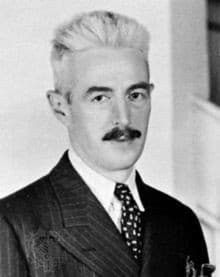
Samuel Dashiell Hammett was an American writer of hard-boiled detective novels and short stories. He was also a screenwriter and political activist. Among the characters he created are Sam Spade, Nick and Nora Charles, The Continental Op and the comic strip character Secret Agent X-9.







