“But freedom, like everything else, is relative. We are free to choose, but we are not free to choose the consequences of our choices.”
— Aunt Lydia reflecting on the nature of freedom in Gilead.

Margaret Atwood (2019)
Genre
Literary Fiction / Science Fiction
Reading Time
9-10 hours
Key Themes
See below
Sign in to track this book
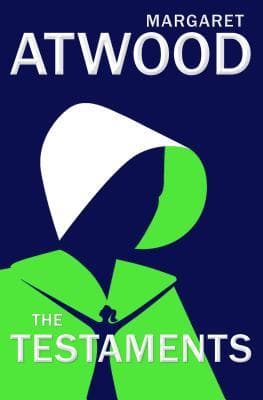
Fifteen years after Offred's uncertain fate, three women from within and without Gilead reveal the explosive truths and hidden rebellions that could finally shatter its totalitarian grip.
Aunt Lydia begins her account by detailing her life before Gilead, when she was a respected judge named Lydia Clements. She describes the transition to Gilead, her arrest, and the re-education process she endured at the Red Center, where she and other professional women were tortured. Witnessing the suffering and executions of her colleagues, Lydia decides to cooperate, believing it's the only way to survive and exert influence. She helps shape the early structure of the Aunts, particularly the training of Handmaids, and gathers information on powerful men in Gilead, storing it in her secret study at Ardua Hall.
Agnes Jemima, the adopted daughter of Commander Kyle and Tabitha, grows up in an affluent household in Gilead. She attends the 'Girls' Schools' where she learns domestic arts, scripture, and strict societal roles for women. Agnes struggles with the expectations placed upon her, particularly the pressure to marry a Commander and become a Wife, a role she finds unappealing. She forms a close bond with her adoptive sister, Nicole, and later with her friend Becka, with whom she considers becoming an Aunt to escape arranged marriages. Agnes's world is one of veiled threats, constant surveillance, and the rigid enforcement of Gilead's doctrines.
Daisy, a teenager living in Toronto, Canada, with her adoptive parents, lives a normal life, colored by her parents' activism against Gilead. On her sixteenth birthday, Gileadean agents murder her parents in a bombing. Two members of Mayday, Melanie and Ada, take her into protective custody. They reveal her true identity: she is Nicole, the daughter of a Handmaid and a figure in the resistance. Daisy learns she is a target for Gilead and must infiltrate Gilead as a 'Pearl Girl,' a young woman sent on humanitarian missions to border towns.
As Agnes approaches marriageable age, she is horrified by the prospect of marrying Commander Judd, a powerful man. Her friend Becka, traumatized by an attempted sexual assault by her own father, also seeks an alternative to marriage. Both girls confide in Aunt Lydia, who arranges their entry into Ardua Hall, the training center for Aunts. Agnes learns that her adoptive mother, Tabitha, was unable to bear children and that her biological mother was a Handmaid. This revelation, coupled with the oppressive atmosphere, strengthens her desire to become an Aunt, a path that offers autonomy and intellectual pursuit.
Daisy, under her new identity of Nicole, begins her mission as a Pearl Girl. She undergoes training and is sent with a group of other young women to a border town in Gilead, ostensibly to distribute medical supplies. Her true objective is to retrieve a package containing damaging information about Gilead's leadership, which Aunt Lydia has compiled for years. Nicole navigates the dangerous environment, interacting with both Gileadean citizens and covert Mayday contacts. Her youthful appearance and the Pearl Girl facade help her evade suspicion, but the constant threat of discovery is heavy.
Aunt Lydia, from her position of power within Ardua Hall, plans Gilead's downfall. She uses her network of spies and informants, including Agnes and Becka, to gather intelligence and manipulate key figures. She communicates secretly with Mayday operatives, orchestrating Nicole's mission to retrieve the 'tablet' — a digital archive of her collected evidence. Lydia also uses her influence to protect Agnes and Becka, ensuring their safety within the Aunts' ranks. Her primary goal is to expose the hypocrisy and corruption of Gilead's Commanders, believing it's the only way to dismantle the regime.
During Nicole's mission as a Pearl Girl, she encounters Agnes Jemima at a clandestine meeting point arranged by Mayday. Unbeknownst to them, they are biological sisters, both daughters of the original Offred. Agnes, now an Acolyte in training, is involved in a small, covert network within Ardua Hall that assists Mayday. Their meeting is brief and tense, as Nicole is under immense pressure to retrieve the tablet, and Agnes is wary of outsiders. However, a connection passes between them, though neither fully understands its significance. This encounter is a step in Aunt Lydia's plan.
Nicole, with the covert assistance of Agnes and other Mayday operatives, retrieves the tablet containing Aunt Lydia's damning evidence. The retrieval is dangerous, involving a chase and narrow escapes from Gileadean patrols. Agnes, leveraging her knowledge of Ardua Hall and her position, provides crucial diversions and assistance. Ultimately, Nicole, Agnes, and Becka escape Gilead, making their way to the Canadian border with the help of a Mayday network. The escape shows Aunt Lydia's meticulous planning and the courage of the young women involved.
After the successful extraction of the tablet, Aunt Lydia orchestrates its release to the international community. The evidence, detailing the Commanders' corruption, abuses, and secret dealings, causes a scandal and internal strife within Gilead. She remains in Ardua Hall, knowing her actions will lead to her demise, but content that she has struck a blow against the regime. Her account concludes with her anticipation of Gilead's collapse and her own end, revealing her complex motivations as a survivor who ultimately sought justice and freedom, even through morally ambiguous means.
The release of Aunt Lydia's 'testaments' and the escape of Nicole (Baby Nicole) triggers events. International pressure mounts, and internal dissent within Gilead intensifies. The regime, weakened by the exposure of its leaders' hypocrisy and the loss of its propaganda symbol, begins to unravel. The Mayday resistance gains momentum, leading to a civil war and Gilead's eventual collapse. In the aftermath, Agnes, Nicole, and Becka reunite with their biological mother, Offred, and begin the process of healing and rebuilding, contributing to the historical accounts of Gilead's rise and fall.
The Protagonist/Antagonist (complex)
Transforms from a tortured victim into a powerful, manipulative strategist who ultimately sacrifices herself to bring down Gilead.
The Protagonist
Evolves from a compliant Gileadean girl to a disillusioned Acolyte who actively participates in the resistance.
The Protagonist
Transforms from an ordinary teenager into a key operative for Mayday, embracing her destiny as a symbol of hope and freedom.
The Supporting
Escapes a traumatic home life to find safety and purpose within Ardua Hall and eventually freedom.
The Antagonist
Remains a static symbol of Gileadean corruption, his downfall orchestrated by Aunt Lydia.
The Supporting
Serve as steadfast guides and protectors for Daisy throughout her transformation into a Mayday operative.
The Mentioned/Protagonist (indirectly)
Her fate remains a mystery for most of the book, but she is ultimately reunited with her daughters, representing a victory for the resistance.
The novel explores various forms of resistance against totalitarianism, from espionage to subtle defiance. Aunt Lydia's long-term strategy of gathering intelligence and manipulating the system from within is a key example, as is Daisy's dangerous infiltration mission. Agnes and Becka's refusal of forced marriages and their involvement in the underground network within Ardua Hall also demonstrate individual acts of rebellion. The Mayday organization represents the organized, external resistance, highlighting that freedom is achieved through collective and diverse efforts. The book suggests that even in the most oppressive regimes, the human spirit finds ways to resist.
“No one is as cruel as a woman who fears she's not beautiful enough, or a woman who fears she's not a good enough mother, or a woman who fears she's not a good enough wife.”
The Testaments explores how power is acquired, maintained, and undermined in a totalitarian state. Aunt Lydia's narrative offers insight into the psychological manipulation and physical coercion used to break individuals and consolidate control. It also shows how power can be wielded from unexpected positions, as Aunt Lydia, despite being a woman in a patriarchal society, uses her knowledge and influence to sow discord and orchestrate collapse. The Commanders' abuse of power, especially over women, is a central part, demonstrating how absolute power corrupts. The story also examines the illusion of control that Gilead projects, which ultimately crumbles under internal and external pressures.
“Give me a lever long enough, and a fulcrum on which to place it, and I shall move the world.”
The journey of self-discovery is central to the narratives of Agnes and Daisy (Nicole). Agnes grapples with her identity as a Gileadean daughter, questioning the roles prescribed for her and eventually discovering her true parentage. Daisy, stripped of her assumed identity, must come to terms with being 'Baby Nicole' and embracing her role in a dangerous mission. Both characters confront who they are in the face of immense pressure and revelation. Aunt Lydia, too, reflects on her former identity as Lydia Clements, highlighting the impact of Gilead on individual selfhood and the difficult choices made for survival and purpose.
“Knowing is a burden, but it is also a freedom.”
Despite the divisions and enforced rivalries within Gilead, the novel emphasizes the power of female bonds and solidarity. The friendship between Agnes and Becka, their mutual support in navigating the horrors of Gilead, and their shared path to Ardua Hall, exemplify this. Even Aunt Lydia, in her complex way, protects and guides Agnes and Becka, and orchestrates the rescue of Nicole, driven by a broader vision for women's liberation. The eventual reunion of Offred with her daughters, Agnes and Nicole, symbolizes the triumph of familial and female connection over the forces that sought to divide and control them. The 'Pearl Girls' also form a temporary sisterhood.
“The greater the power, the greater the need for secrecy.”
The story is told through the first-person accounts of three distinct female characters.
The novel employs three distinct first-person narratives, or 'testaments': Aunt Lydia's historical account, Agnes Jemima's personal story, and Daisy/Nicole's contemporary perspective. This allows for a multifaceted view of Gilead, revealing its internal workings from different social strata and across a timeline. Aunt Lydia's perspective provides an insider's view of the regime's inception and her strategic dismantling, while Agnes offers a look at the indoctrination of the young and the lives of Commander's daughters. Daisy provides an outsider's view and the perspective of the resistance. This structure builds suspense and provides comprehensive world-building.
A digital archive of Aunt Lydia's collected evidence against Gilead's Commanders.
The tablet is the central MacGuffin of the plot, containing Aunt Lydia's meticulously compiled evidence of the Commanders' corruption, abuses, and secret dealings. It serves as the physical manifestation of her decades-long plan to undermine Gilead. Its retrieval by Daisy/Nicole is the primary objective of her mission and the culmination of Aunt Lydia's strategy. The tablet functions as the catalyst for Gilead's downfall, as its public release exposes the regime's hypocrisy and leads to widespread dissent and international condemnation.
Characters are unaware of their true parentage or are living under assumed identities.
The device of mistaken identity is crucial. Daisy lives under an assumed identity, unaware she is the legendary 'Baby Nicole,' a symbol of the resistance. Agnes grows up believing Commander Kyle and Tabitha are her biological parents, only to discover she is the biological daughter of a Handmaid. These revelations drive character arcs and propel the plot, creating dramatic irony and emotional impact. The hidden paternity of both Agnes and Nicole (as Offred's daughters) ultimately brings them together and provides a powerful familial connection that reinforces the themes of legacy and hope.
A program sending young Gileadean women to border towns, used as a cover for espionage.
The Pearl Girls program is ostensibly a humanitarian initiative by Gilead, sending young, virtuous women to impoverished border towns to spread Gileadean values and provide aid. However, it functions as a clever plot device, creating a plausible cover for Daisy/Nicole to infiltrate Gilead. It highlights Gilead's performative piety while simultaneously being exploited by Mayday and Aunt Lydia for their own ends. The Pearl Girls' innocence and perceived harmlessness allow them access to areas and situations that other operatives could not, making the program an ideal vehicle for espionage.
“But freedom, like everything else, is relative. We are free to choose, but we are not free to choose the consequences of our choices.”
— Aunt Lydia reflecting on the nature of freedom in Gilead.
“The past is a dissolve. The future is a blur. The present is a trap.”
— Agnes, one of the protagonists, describing her perception of time and her situation.
“Knowledge is power. That's what they say. But it's also a burden. It can make you feel helpless, knowing too much.”
— Daisy, later Nicole, contemplating the weight of the information she carries.
“Every dictator has a mother. And every dictator's mother is, in some way, responsible for the dictator.”
— Aunt Lydia's cynical observation about the origins of power.
“Sometimes I think I was born knowing everything, and then I just forgot it all. And now I'm trying to remember.”
— Agnes's internal monologue about her sense of an innate, lost understanding.
“One can be a victim, or one can be a survivor. It's a choice. And sometimes, it's a very hard choice.”
— Aunt Lydia musing on resilience and agency in difficult circumstances.
“The truth is a dangerous thing. Especially when it's kept hidden for too long.”
— A general reflection on secrets and their eventual impact.
“What is it about women and power? We want it, we crave it, and when we get it, we use it against each other.”
— Aunt Lydia's critical view of female dynamics within power structures.
“Fear is a great motivator. But it's also a great suppressor. It can make you do things you never thought you'd do, and it can stop you from doing things you know you should.”
— A character reflecting on the dual nature of fear.
“No empire lasts forever. There was a time before, and there will be a time after.”
— Aunt Lydia's long-term perspective on the transience of regimes, including Gilead.
“We are all just stories in the end. Just be sure your story is a good one.”
— A philosophical thought about legacy and narrative.
“To be a woman in Gilead is to be an object. A vessel. A means to an end. But even an object can have a will of its own.”
— A reflection on the dehumanizing role of women in Gilead and their potential for defiance.
“Sometimes, the most dangerous thing you can do is nothing at all.”
— A character realizing the peril of inaction in a repressive society.
“Memory is a tricky thing. It can save you, or it can destroy you.”
— A reflection on the power and pitfalls of memory.
Ready to see how well you understood this book? Take our interactive quiz with 10 questions.
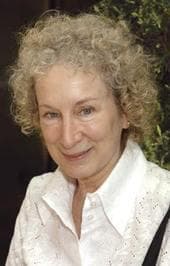
Margaret Eleanor Atwood is a Canadian poet, novelist, literary critic, essayist, teacher, environmental activist, and inventor. Since 1961, she has published eighteen books of poetry, eighteen novels, eleven books of non-fiction, nine collections of short fiction, eight children's books, two graphic novels, and a number of small press editions of both poetry and fiction. Atwood has won numerous awards and honors for her writing, including two Booker Prizes, the Arthur C. Clarke Award, the Governor General's Award, the Franz Kafka Prize, Princess of Asturias Awards, and the National Book Critics and PEN Center USA Lifetime Achievement Awards. A number of her works have been adapted for film and television.







