“We are all of us, in the end, alone.”
— Reflection on the isolation and despair faced by the crew in the Arctic.

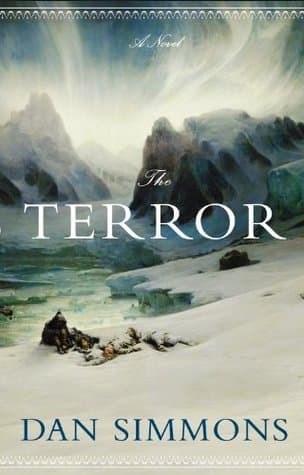
Dan Simmons (2007)
Genre
Thriller / Fantasy / Historical Fiction / Mystery
Reading Time
15-20 hours
Key Themes
See below
Sign in to track this book
In the unforgiving Arctic, the ill-fated Franklin expedition faces a chilling descent into madness as a monstrous, unseen predator stalks their ice-bound ships, threatening to devour them long before starvation or the relentless cold can.
In May 1845, Sir John Franklin leads the British Royal Navy's expedition to find the Northwest Passage with two ships, HMS Erebus and HMS Terror. By September 1846, after exploring Peel Sound, both ships become trapped in the ice of Victoria Strait. Captain Francis Crozier of the Terror, a seasoned Arctic explorer, expresses his concerns to Franklin, advocating for a return attempt, but Franklin remains optimistic, anticipating a thaw that never comes. The crew settles into winter quarters, unaware of the grim fate awaiting them. Supplies are abundant initially, but the psychological toll of the perpetual darkness and isolation begins to weigh on the men, while an unknown, massive predator begins to stalk the ships.
As the first winter deepens, a monstrous creature, dubbed the 'Tuunbaq' by the Inuit, begins to attack the ships and their crews. It kills several men, including Mr. Gore, Franklin's first lieutenant, and injures others. These attacks are initially attributed to a polar bear, but the sheer size and ferocity of the beast soon make the men doubt that. During a hunting party on the ice, Sir John Franklin is inexplicably dragged into a hole in the ice by an unseen force, presumed to be the Tuunbaq, and perishes. Command of the expedition falls to Captain Crozier, a man often overlooked due to his Irish heritage and lack of social connections, who now faces the task of saving the remaining 128 men.
After Franklin's death, a small Inuit encampment is discovered near the ships. The expedition finds an elderly man and a young woman, both of whom are mute. The old man soon dies, but the woman, whom the crew names Lady Silence, is brought aboard the Terror. She has a deep spiritual connection to the Arctic and its creatures, including the Tuunbaq. Through her, Crozier and Dr. Goodsir begin to understand that the creature is not merely an animal but a supernatural entity, a shamanic spirit-bear, and that its attacks are not random but targeted, possibly in response to the expedition's intrusion into its domain. Lady Silence becomes an interpreter of the Arctic's mysteries.
By the spring of 1848, after two years trapped in the ice and facing dwindling, contaminated provisions (the preserved food tins are found to contain lead solder poisoning), Crozier decides to abandon the ships. Despite the Erebus having a more senior officer, Captain Fitzjames, Crozier, as expedition commander, takes charge of the overland march south. He plans to trek over 800 miles to the Back River, a known fur trading route. The men begin to haul heavy boats and supplies, a physical challenge that quickly takes its toll, exacerbated by scurvy, lead poisoning, and the relentless attacks of the Tuunbaq.
The overland march becomes a death sentence for many. Men succumb to scurvy, starvation, lead poisoning, frostbite, and the sheer exhaustion of pulling heavy sledges. The Tuunbaq continues its relentless pursuit, picking off stragglers and even attacking the main group, causing terror and further demoralizing the men. Crozier struggles to maintain discipline and morale as his officers, including Fitzjames, grow increasingly weak. The expedition's numbers dwindle rapidly, and the men resort to desperate measures, including cannibalism, a horrifying secret that Crozier tries to suppress, but which further erodes their humanity and hope.
The desperate conditions and the constant threat of the Tuunbaq lead to a breakdown in discipline. Hickey, a treacherous master's mate, along with a group of disgruntled men, plots a mutiny. They steal supplies and desert the main party, intending to survive on their own. This act of betrayal further fragments the already fragile expedition. Crozier and his loyal men are forced to pursue Hickey's group, leading to violent confrontations and more deaths. The mutiny shows the descent into savagery that the men are experiencing, abandoning the rules of civilization in their fight for survival.
Lady Silence, who has remained with Crozier's group, reveals through her actions and limited communication that the Tuunbaq is not simply a monster but a powerful guardian spirit of the Arctic, tasked with protecting its sacred places from intruders. She attempts to placate the creature, even offering herself as a sacrifice at one point, but her efforts are met with brutal resistance from the desperate sailors who perceive her as a witch or an accomplice to the beast. Her insights, however, give Crozier a deeper understanding of the spiritual landscape they have trespassed upon, and the true, supernatural nature of their antagonist.
Hickey's mutineers descend into full-blown cannibalism, preying on their own and even attempting to capture Lady Silence. They believe that by consuming human flesh, particularly that of those touched by the Tuunbaq, they can gain its power or appease it. Crozier and the remnants of his loyal crew finally confront Hickey and his men. In a horrific climax, Hickey and his followers are cornered, and the Tuunbaq, drawn by the bloodshed and violation of its territory, attacks them directly. Hickey attempts to control the Tuunbaq through a ritualistic act but fails, leading to his grotesque demise.
After the bloody confrontation with Hickey's men, Crozier, severely weakened but still determined, makes a final stand. He realizes that the Tuunbaq is specifically targeting the 'intruders' and that Lady Silence, being an Inuit, might be spared. He orchestrates a plan to draw the Tuunbaq's attention to himself, using his own body as bait. In a harrowing encounter, Crozier confronts the creature, sacrificing his own hand to the Tuunbaq in a symbolic act of submission and understanding. This act, combined with Lady Silence's spiritual intervention, causes the Tuunbaq to relent its pursuit of the remaining few, allowing Lady Silence to escape.
Miraculously, Crozier survives his encounter with the Tuunbaq. He is found and cared for by Lady Silence and her people. Having lost his hand and nearly his life, Crozier chooses to abandon his British identity and fully integrate into the Inuit community. He learns their language, customs, and survival skills, becoming a hunter and a respected member of their society. He forms a deep, unspoken bond with Lady Silence. The narrative concludes with Crozier, now known as 'Kro-zhee-ay,' living a quiet, purposeful life with the Inuit, having found peace and belonging in the very wilderness that sought to destroy him, a stark contrast to the fate of the rest of the expedition.
The Protagonist
From a melancholic, undervalued captain, Crozier transforms into a resilient leader who sheds his European identity to survive and find peace among the Inuit.
The Supporting
From a silent, mysterious figure, she becomes Crozier's spiritual guide and companion, embodying the resilience of the Inuit people.
The Antagonist
Remains a consistent force of nature, its actions driving the plot and symbolizing the Arctic's resistance to human conquest.
The Supporting
Begins as the confident, if flawed, leader, but quickly meets his demise, symbolizing the hubris of the expedition.
The Supporting
From an arrogant, self-aggrandizing captain, he is humbled by the Arctic and develops respect for Crozier before his death.
The Supporting
Maintains his scientific integrity and compassion amidst chaos, documenting the crew's decline until his own tragic end.
The Antagonist
Transforms from a discontented crewman into a depraved mutineer and cannibal, representing the ultimate moral decay.
The Supporting
A steadfast and experienced sailor who maintains his resilience and practical wisdom despite grievous injury, sacrificing himself to protect the others.
The Supporting
His early, gruesome death serves as a catalyst for the crew's understanding of the terrifying threat they face.
The central theme is humanity's futile struggle against the overwhelming power of the Arctic wilderness and its supernatural guardian, the Tuunbaq. The expedition's advanced technology and naval discipline prove useless against the crushing ice, extreme cold, starvation, and the monstrous entity. The book emphasizes the arrogance of human ambition in attempting to conquer a domain that is inherently hostile and spiritually protected. Crozier's eventual survival depends not on conquering nature, but on submitting to and integrating with it.
“"The Arctic did not care for their steam power, their scientific instruments, or their brave pronouncements. It was merely... there, a vast, indifferent, and utterly dominant force."”
As the expedition faces increasing hardship, the veneer of British naval discipline and civilized behavior rapidly erodes. Starvation, lead poisoning, and the constant threat of the Tuunbaq lead to widespread illness, despair, and ultimately, cannibalism and mutiny. Characters like Hickey exemplify this moral decay, abandoning all semblance of humanity for brutal self-preservation. The theme explores how extreme circumstances strip away societal norms, revealing the primal instincts and darker aspects of human nature.
“"The rules of men, the King's regulations, the very fabric of their society, were melting faster than the ice around them."”
Many characters undergo transformations, but none more so than Captain Crozier. Initially defined by his naval rank and social insecurities, his ordeal forces him to shed his European identity and embrace the Inuit way of life. The Arctic strips away external markers of status and culture, forcing individuals to confront their core selves. Lady Silence, through her connection to the land, helps Crozier with this transformation, illustrating how true identity can be found through adaptation and respect for the environment, rather than through conquest.
“"He was no longer Captain Crozier of His Majesty's Navy. He was Kro-zhee-ay, a man of the ice, a man of the people who knew how to live here."”
The Franklin Expedition is an example of the hubris of 19th-century British colonialism, attempting to 'discover' and 'conquer' a region already inhabited and understood by indigenous peoples. The expedition's technology and Eurocentric worldview prove disastrously inadequate. The Tuunbaq is a manifestation of the Arctic's active resistance to this intrusion, a supernatural force defending its sacred spaces. The narrative critiques the idea of imposing foreign will upon natural environments and indigenous cultures, highlighting the destructive consequences of such arrogance.
“"They had come to claim this place, to chart it, to make it theirs. But the Arctic had other plans. It was not a thing to be claimed."”
The novel contrasts different forms of leadership under duress. Sir John Franklin's optimistic but ultimately naive leadership leads to disaster. Captain Crozier, though flawed, shows true leadership through pragmatism, resilience, and a deep sense of responsibility for his men, even when facing impossible odds. The theme explores the burden of command, the difficult decisions leaders must make, and the moral compromises sometimes required for survival. Hickey's mutiny, conversely, shows the destructive consequences of selfish and manipulative leadership.
“"A captain was only as good as his crew, and a crew was only as good as the ice they were trapped in."”
A silent killer exacerbating the crew's suffering and mental decline.
The lead solder used to seal the preserved food tins gradually poisons the crew, contributing significantly to their physical and mental deterioration. It causes lethargy, irritability, cognitive impairment, and weakness, often mistaken for scurvy or general illness. This insidious, man-made poison symbolizes the expedition's self-inflicted wounds and the unforeseen consequences of their 'advanced' technology, adding another layer of horror to their already dire situation and weakening their ability to fight against the elements and the Tuunbaq.
A monstrous, shamanic guardian spirit that hunts the expedition.
The Tuunbaq is not merely an animal but a powerful, supernatural entity. It acts as the physical embodiment of the Arctic's hostility and its spiritual guardian. Its mysterious nature and immense power elevate the narrative beyond historical thriller to horror and dark fantasy. It serves as a constant, terrifying threat that forces the characters to confront not just the harsh environment but also the limits of their rational understanding, pushing them towards superstition and despair. Its presence ensures that the expedition's failure is not just environmental but also spiritual.
Alternating viewpoints to provide intimacy and broader scope.
The novel predominantly uses a close third-person perspective, often focusing on Crozier, but it occasionally shifts to other characters like Goodsir or Fitzjames, and even incorporates passages from their journals. This allows the reader to experience the horrors and psychological toll from multiple angles, providing both intimate insights into individual suffering and a broader view of the expedition's unraveling. The journal entries, in particular, offer a sense of authenticity and a chilling record of the descent into madness and death.
The ultimate symbol of moral decay and desperation.
The slow, horrifying descent into cannibalism among the crew, particularly Hickey's group, serves as a powerful and visceral symbol of the complete breakdown of civilization and morality. It represents the ultimate act of desperation and depravity, marking the point of no return for many characters. It's not just a means of survival but also a psychological horror, forcing the men to confront the darkest aspects of their humanity and highlighting the extreme conditions that can drive individuals to unthinkable acts.
Symbolizing the incommunicability of indigenous knowledge and the Arctic's mysteries.
Lady Silence's inability to speak English (and her ritualistic muteness) highlights the profound communication barrier between the expedition and the indigenous understanding of the Arctic. Her silence forces the Europeans to observe and interpret, rather than dominate with their own language and culture. It symbolizes the ineffable nature of the spiritual world and the limitations of Western rationalism. Her eventual communication through gestures and actions becomes more profound than any words, conveying deep truths about the Tuunbaq and the land that the sailors initially fail to grasp.
“We are all of us, in the end, alone.”
— Reflection on the isolation and despair faced by the crew in the Arctic.
“The ice is not a place for men.”
— Observation about the harsh, unforgiving Arctic environment.
“Fear is the mind-killer.”
— A character's internal monologue on coping with terror (note: this is a famous line from Frank Herbert's Dune, but adapted here in context).
“In this white hell, we have become monsters to survive.”
— Comment on the moral degradation of the crew under extreme conditions.
“The Terror is not just the beast; it is the cold, the hunger, the madness.”
— Explanation of the multifaceted nature of the threats faced.
“We sailed for glory and found only death.”
— Reflection on the failed Franklin Expedition's ambitions.
“The silence of the ice is louder than any storm.”
— Description of the eerie, oppressive quiet in the Arctic.
“Hope is the last thing to die, and the first to betray.”
— A cynical view on hope in desperate situations.
“Every man has his breaking point, and the Arctic finds it.”
— Observation on the psychological toll of the expedition.
“We are not lost; we are abandoned by God.”
— A character's lament on their perceived divine abandonment.
“The beast is in all of us, waiting for the cold to set it free.”
— Metaphorical insight into human nature under stress.
“History will remember us as fools or heroes, but we know we are neither.”
— Reflection on the crew's legacy and self-perception.
“In the end, the greatest terror is not knowing.”
— Comment on the uncertainty and mystery surrounding their fate.
Ready to see how well you understood this book? Take our interactive quiz with 10 questions.
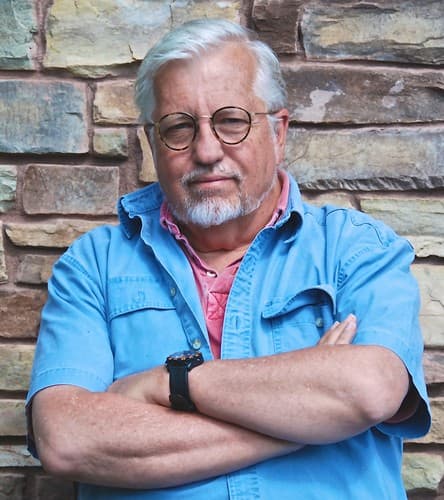
Dan Simmons is an American science fiction and horror writer. He is the author of the Hyperion Cantos and the Ilium/Olympos cycles, among other works which span the science fiction, horror, and fantasy genres, sometimes within a single novel. Simmons's genre-intermingling Song of Kali (1985) won the World Fantasy Award. He also writes mysteries and thrillers, some of which feature the continuing character Joe Kurtz.







