“The human brain is a most unusual instrument. It is the only one that can play itself.”
— A general observation on the nature of the brain and self-awareness.


Michael Crichton (1972)
Genre
Thriller / Mystery / Science Fiction
Reading Time
270 min
Key Themes
See below
Sign in to track this book
A man's experimental brain surgery to cure violent seizures backfires when he learns to control the pleasure-inducing electrodes, turning him into an unstoppable, technologically-empowered killer on a rampage through Los Angeles.
The novel opens with Dr. Roger McPherson, a neurosurgeon at University Hospital in Los Angeles, proposing a new procedure, Stage Three, to a doubtful hospital board. His patient is Harry Benson, a computer scientist with severe, violent epilepsy. Benson has a history of unprovoked attacks. McPherson believes that by implanting electrodes into Benson's brain, targeting the pleasure centers, they can stop seizures and control his violence. Despite ethical concerns from Dr. Janet Ross, a psychiatrist on the team, and the risk of addiction, McPherson's arguments, highlighting Benson's severe condition, convince the board to approve the surgery.
As Stage Three preparations begin, Dr. Janet Ross, Benson's psychiatrist, strongly opposes the procedure. She believes Benson has not only epilepsy but also deep psychological issues, including a fear of machines and paranoid delusions. Ross argues that the surgery, which connects Benson's brain directly to a mini-computer, could worsen his mental state or cause unforeseen problems. She tries to convince McPherson and others that the risks are too high given Benson's unstable personality. However, McPherson dismisses her concerns and moves forward with the operation.
The Stage Three operation is very complex. Dr. McPherson, with his team, carefully implants forty micro-electrodes into different parts of Harry Benson's brain, focusing on the pleasure centers. The surgery happens while Benson is awake for some parts, allowing the team to stimulate areas and watch his reactions. They connect the electrodes to a miniature computer and power source in his shoulder, designed to deliver mild electrical pulses to stop seizures. The first results look good; Benson reports feeling calm when pulses are given. The team is hopeful about the surgery's success, believing they have found a way to control his violent episodes.
After surgery, Harry Benson is in recovery under constant watch. The system should automatically detect a seizure and deliver a pulse. But the medical team soon finds a problem: Benson learns to manually trigger the pulses by moving his head in a specific way, which activates a motion sensor. He begins to self-stimulate, feeling intense pleasure and quickly increasing the pulse frequency. Dr. Ross immediately sees the danger, realizing Benson is becoming addicted to the electrical stimulation, a behavior seen in animal experiments and called 'terminal man.' McPherson, at first unconcerned, must now deal with the growing problem as Benson's behavior becomes more erratic.
As Harry Benson's self-stimulation addiction grows, his mental state quickly worsens. He becomes agitated, paranoid, and more aggressive when people try to limit his access to the pulses. He sees any interference as a threat to his pleasure. During an examination, Benson, in a rage fueled by his addiction, attacks a nurse and a technician. Using his strength, he overpowers the staff and escapes his hospital room. This escape triggers a hospital-wide alert and a city-wide manhunt, as the medical team realizes they have released a smart, technologically enhanced, and unstable person into Los Angeles.
After Harry Benson's violent escape, a large search begins. The Los Angeles Police Department, led by Detective Arthur Anders, works with Dr. Roger McPherson and Dr. Janet Ross to find Benson. Anders is initially skeptical of the medical details, but the seriousness of Benson's condition and the risk of more violence quickly become clear. The medical team provides important details about Benson's mental state, his increasing self-stimulation, and his implanted device. They realize Benson's behavior comes from an intense need for electrical pulses, making him unpredictable. The search focuses on areas where Benson might hide or get power to maintain his stimulation.
As the search continues, Harry Benson commits violent acts across Los Angeles. Driven by his growing addiction to brain stimulation, he becomes more desperate and aggressive. He kills a taxi driver to steal his car and later assaults and robs a gas station attendant. Each violent act relates to his need to escape or to keep his self-stimulation going. Dr. Ross believes the constant stimulation is not only addictive but also further destabilizing his already fragile mental state, possibly causing more frequent and severe seizures. The police realize they are dealing with a unique killer whose actions are driven by an internal, technologically induced need.
Dr. Janet Ross and Dr. Roger McPherson, working with Detective Anders, start to predict Harry Benson's movements. Ross remembers Benson's past as a computer scientist and his deep fear of machines, mixed with his interest in them. They believe Benson, despite his current state, might go to a place where he can understand or control his implanted device, possibly a computer center. Their theory is correct as Benson breaks into a secure computer facility, planning to use the mainframe to analyze or even improve his brain's stimulation system. This action shows Benson's intelligence and the dangerous implications of his technologically changed condition.
The police and medical team gather at the computer center where Harry Benson is hiding. Dr. Janet Ross, understanding Benson's psychological state best, insists on trying to talk to him, hoping to reach his remaining reason. She enters the computer room, facing Benson among the humming machines. Benson is very agitated, his eyes glassy, constantly triggering his internal stimulator. He sees Ross as a threat trying to stop his pleasure. A tense standoff follows, with Ross trying to explain the dangers of his self-stimulation, while Benson, lost in his addiction, reacts with paranoia and aggression. He is a man controlled by the device, no longer in charge of his own actions.
The confrontation in the computer center grows. Harry Benson, completely overwhelmed by addiction and paranoia, attacks Dr. Janet Ross. Detective Anders and his team step in, leading to a violent struggle. Benson, boosted by constant stimulation and his physical strength, is hard to stop. The police must use extreme measures. In the chaos, Benson's implanted device breaks or malfunctions, causing a massive, uncontrolled electrical discharge in his brain. This overwhelming stimulation kills him. Benson collapses and dies, a victim of the same technology meant to cure him. The incident leaves the medical team and police shaken, dealing with the ethical and unforeseen results of advanced brain surgery.
The Protagonist/Antagonist
From a man seeking a cure for his violence, Benson rapidly devolves into a victim of technological addiction, becoming a homicidal maniac driven by his own implanted device.
The Supporting
Initially confident and dismissive of ethical concerns, McPherson is forced to confront the catastrophic consequences of his experiment, leading to a profound re-evaluation of his scientific approach.
The Supporting
From a skeptical voice of caution, Ross becomes the primary psychological expert in tracking Benson, desperately trying to understand and contain the monster created by her colleagues.
The Supporting
Anders moves from skepticism about the medical explanations to a full understanding of the unique threat posed by a technologically altered individual, adapting his investigative approach accordingly.
The Supporting
Initially focused on the technical success of the device, Ellis is forced to confront the disastrous human impact of his creation, providing technical support to contain the problem he helped create.
The Mentioned
Her role is primarily to establish the severity of Benson's condition before the surgery.
The Mentioned
Their decision to approve the surgery directly leads to the central conflict of the novel.
The novel explores the dangers of scientific ambition when it ignores ethical considerations and a full understanding of human nature. Dr. McPherson's firm belief that technology can 'fix' complex human problems, especially his dismissal of Dr. Ross's psychological warnings, directly causes the disaster. His focus on a physical cure, without fully understanding Benson's deep paranoia and fear of machines, creates a monster. Trying to find a definite, technological solution to a complex problem creates a much greater danger than the original illness. The story warns against doing something just because it is possible, without considering if it is right.
““The problem with you, Roger, is you think everything can be solved with a knife and a wire.””
A main theme is the destructive power of addiction, especially when technology causes it. Harry Benson's implanted device, meant to stop seizures, accidentally becomes a source of intense pleasure, leading to compulsive self-stimulation. This addiction quickly overrides his intelligence and morals, turning him into a basic being driven only by the need for the next 'hit.' The novel clearly shows how seeking pleasure to an extreme can take away a person's humanity and control, making them a slave to their brain's reward system. His increasing violence comes directly from attempts to deny him his addiction.
““He was a terminal man, no longer human, driven by the machine within him.””
The book looks at what it means to be human when technology connects directly with the brain. Harry Benson, with his implanted computer and electrodes, becomes a 'terminal man' – a mix of human and machine. The story questions whether his later violent actions are due to his original illness, the technology itself, or a terrifying combination of both. His identity becomes unclear; is he still Harry Benson, or controlled by the impulses from his device? The story makes readers think about the philosophical implications of changing the brain, which controls consciousness and personality, and how such changes might redefine what it means to be an individual.
““The machine was inside him now. It was part of him. And it was going to kill him.””
The story shows the constant conflict between scientific progress and ethical limits. Dr. McPherson represents the drive for scientific advancement at almost any cost, believing the potential cure justifies the risks. Dr. Ross, on the other hand, represents the ethical conscience, warning against unforeseen psychological consequences and the potential for radical treatments to dehumanize. The novel does not offer easy answers but clearly shows how ignoring ethical concerns while pursuing scientific breakthroughs can lead to disastrous and morally difficult outcomes. The entire plot results from this basic conflict.
““We are playing God, Roger. And we don't even know the rules.””
A neuro-technological device designed to control seizures via brain stimulation.
The Stage Three implant is the central technological plot device. It consists of forty electrodes surgically placed in Harry Benson's brain, connected to a miniature computer and power source in his shoulder. Initially intended to detect and abort psychomotor seizures by delivering soothing electrical pulses, its design flaw allows Benson to manually trigger these pulses. This transforms the device from a therapeutic tool into an instrument of addiction and, ultimately, destruction. It serves as the catalyst for the entire plot, directly causing Benson's escape and subsequent violence, and driving the medical and police efforts to stop him.
Harry Benson's neurological condition, characterized by violent seizures.
Psychomotor epilepsy is the initial medical condition that provides the justification for the Stage Three surgery. It is presented as a severe and dangerous form of epilepsy that causes Harry Benson to experience violent, uncontrollable episodes, making him a threat to himself and others. This condition establishes the high stakes and the perceived necessity of a radical cure. However, the novel subtly suggests that Benson's epilepsy is intertwined with deeper psychological issues, blurring the lines between neurological disorder and mental illness, which ultimately contributes to the failure of the technological solution.
A narrative framework where protagonists pursue a dangerous antagonist.
The novel employs a classic manhunt thriller structure once Harry Benson escapes the hospital. This device creates immediate tension and propels the plot forward as Dr. Ross, Dr. McPherson, and Detective Anders race against time to track and apprehend Benson before he can cause further harm. The pursuit allows for escalating stakes, reveals more about Benson's deteriorating state, and provides opportunities for the characters to use their unique expertise (medical, psychological, and law enforcement) in a collaborative effort. It transforms a medical drama into a high-stakes chase, engaging the reader through suspense and urgency.
A technological solution that fails or backfires, creating the central conflict.
The 'unreliable technology' device is critical to the narrative. The Stage Three implant, despite being cutting-edge, contains an unforeseen flaw that allows Harry Benson to bypass its intended function and become addicted to self-stimulation. This technological failure is not a simple malfunction but a profound miscalculation of human-machine interaction, particularly given Benson's complex psychological profile. It underscores the theme of scientific hubris and the unpredictable nature of advanced technology when applied to the human brain, directly creating the antagonist and the central conflict of the story.
“The human brain is a most unusual instrument. It is the only one that can play itself.”
— A general observation on the nature of the brain and self-awareness.
“He always had the feeling that he was a man in the wrong body, and now the wrong brain.”
— Harry Benson's internal struggle with his identity and his neurological condition.
“It was the modern dilemma: how much to interfere with nature, and where to draw the line.”
— Reflecting on the ethical implications of advanced medical interventions.
“The patient was an epileptic. He was also a murderer. The two facts were not necessarily related.”
— Dr. Ross's cautious approach to diagnosing and understanding Harry Benson's condition.
“There was a fine line between genius and madness, and sometimes, he felt he walked it.”
— Harry Benson's self-perception as his condition progresses.
“We are creating a new kind of human being, Harry. A controlled human being.”
— A doctor explaining the goals of the brain implantation surgery.
“The problem was not that the machine was too smart, but that the human was too dumb.”
— A cynical view on the interaction between humans and advanced technology.
“He knew that fear was a very powerful motivator, especially in medicine.”
— Observing the psychological dynamics within the medical team and with the patient.
“It was not a question of 'if' but 'when' the technology would fail.”
— A pessimistic outlook on the reliability of complex technological interventions.
“The brain was a jungle, and they were trying to tame it with a few electronic wires.”
— A metaphor for the complexity of the brain and the limitations of current technology.
“Every man has his own terminal. His own ending. Whether he knows it or not.”
— A philosophical reflection on mortality and destiny.
“The greatest danger lay not in the disease itself, but in the cure.”
— A classic theme in Crichton's work, highlighting the unintended consequences of intervention.
“He was a machine now, a biological machine, programmed to kill.”
— Describing Harry Benson's state after the surgery and subsequent behavioral changes.
“They had tried to make him normal, and in doing so, they had made him something far worse.”
— A critical assessment of the outcome of the experimental treatment.
Ready to see how well you understood this book? Take our interactive quiz with 10 questions.
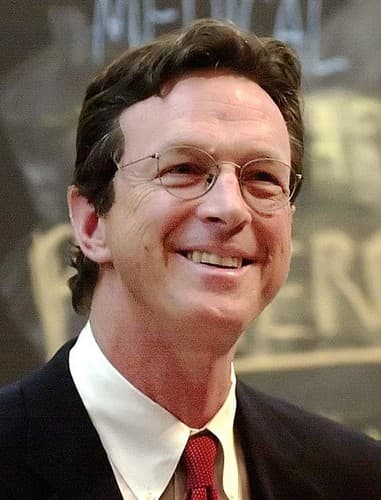
Biography coming soon.







