“The past is a foreign country; they do things differently there.”
— A general reflection on the historical setting and the differences between past and present.

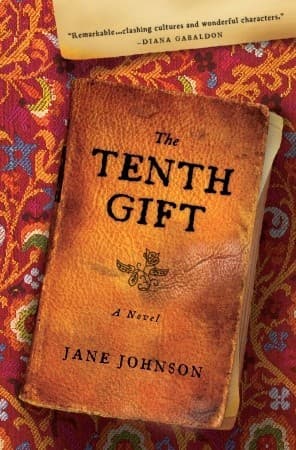
Jane Johnson (2008)
Genre
Historical Fiction / Mystery / Romance
Reading Time
513 min
Key Themes
See below
Sign in to track this book
A 17th-century embroidery book, revealing a Cornish woman's enslavement by Barbary pirates, leads a modern Londoner to Morocco, where she uncovers ancient secrets and finds her heart entangled by history.
In London, Julia Lovat, a young book restorer dealing with her mother's death and a stale relationship, gets a 17th-century embroidery book from her godmother, Lady Anne. Julia finds faint writing under the designs: diary entries from 1625. These entries, by a Cornish woman named Cat Tregenna, describe her abduction by Muslim pirates and enslavement in Morocco. Julia is immediately drawn to Cat's story, feeling a link to the past.
Cat Tregenna's diary entries describe the day in 1625 when Barbary corsairs attacked her Cornish village of Mousehole. During church, the village is raided, and Cat, her younger sister, Mary, and others are taken. They are forced onto a ship, enduring a brutal voyage across the sea, seeing their captors' cruelty and their fellow villagers' suffering. Mary gets sick during the journey, and Cat tries to protect her amid bad conditions and constant fear, as they head towards an unknown fate in North Africa.
After a difficult sea journey, Cat and Mary arrive in Salé, a pirate republic in Morocco. The sisters enter a bewildering new world. They are paraded through the streets and sold at the slave market. A wealthy embroiderer, Lalla Aïcha, buys Cat, while a different master buys Mary. The separation from her sister devastates Cat, who vows to find Mary and reunite with her, no matter the cost, as she starts her new life as a slave in Lalla Aïcha's home.
Cat's story and the book's authenticity intrigue Julia, who feels a strong need to travel to Morocco. She thinks seeing the places Cat described might help her confirm if the diary is real. Despite her boyfriend Mark's doubts and her own fear, Julia feels a deep connection to Cat's story. She decides to use her vacation time for this journey, hoping to find answers and purpose missing from her life since her mother's death. She wants to uncover the historical links to Cat.
Julia arrives in Morocco, initially overwhelmed by Salé's markets, the call to prayer, and unfamiliar customs. She meets Hassan, a charismatic and knowledgeable local guide arranged by Lady Anne, who helps her navigate the country and research Cat's story. Hassan immediately draws Julia with his charm, intelligence, and understanding of Moroccan history. As they explore, a clear connection forms, suggesting a romance that echoes Cat's own experiences in this land.
In Lalla Aïcha's home, Cat is at first resistant but slowly adjusts. She learns Moroccan embroidery, a skill Lalla Aïcha teaches her. Cat observes daily life in the harem, its customs, and the power among the women. She befriends another enslaved woman, Zahra, who helps her understand her new environment. Despite her new skills and relative comfort, Cat never forgets Mary and constantly seeks information about her, hoping for reunion and freedom.
Julia and Hassan look through historical archives, visiting kasbahs, libraries, and talking to local historians. Julia finds evidence that supports Cat's diary entries, strengthening her belief in the book's authenticity. Their shared search deepens their bond. They spend hours together, exploring, discussing, and laughing, and their professional relationship quickly becomes personal. Julia falls in love with Hassan, a feeling both exciting and unsettling, as she considers her relationship with Mark back in London.
Cat's embroidery skills get the attention of the Pasha, Lalla Aïcha's powerful husband. He is impressed by her talent and quiet strength. Cat is in a difficult position, dealing with the Pasha's interest while trying to keep her dignity and find Mary. She is offered a chance at a different life, one that could offer more freedom, but it comes with a high cost and difficult moral choices. Her understanding of the Pasha's household and the political situation complicates her life.
As Julia finishes her research, she uncovers a truth about Cat's fate and the embroidery book's origin. The discovery is both sad and revealing, providing the final pieces of the puzzle. She learns about Cat's resilience and sacrifices. This revelation affects Julia deeply, solidifying her connection to Cat and making her question destiny and how the past influences the present. The diary's authenticity is confirmed, but the implications are more profound than she imagined.
In her last diary entries, Cat reveals her most important act: the 'Tenth Gift.' This is not just embroidery patterns, but a coded message, showing her survival, love, and spirit. It contains her experiences, losses, and hopes, passed down through generations. The book itself becomes a symbol of her resilience and a plea for remembrance. Her story ends with an act of defiance and a lasting legacy that crosses time and culture, ensuring her memory lives on.
With the full truth of Cat's story, Julia is at a turning point. Her feelings for Hassan are clear, but her life in London with Mark still exists. The similarities between her situation and Cat's are striking: both women, centuries apart, must make choices about love, loyalty, and their place in the world, far from home. Julia must decide whether to embrace this new love and a new life in Morocco, or return to her familiar but unfulfilling life, facing the idea that history repeats itself.
The Protagonist
Julia transforms from a grieving, unmoored individual into a confident woman who embraces her own desires and makes bold life choices.
The Protagonist (historical)
Cat endures unimaginable suffering and loss, yet she transforms into a survivor who finds a way to leave a lasting legacy through her art.
The Supporting
Hassan acts as Julia's guide and romantic interest, opening her eyes to new possibilities and helping her connect with Cat's story.
The Supporting
Mark serves as a symbol of Julia's past and the life she must choose to leave behind to embrace her true self.
The Supporting
Lady Anne initiates Julia's journey by providing the initial 'gift' and supporting her research indirectly.
The Supporting
Mary's abduction and separation from Cat serve as a major catalyst for Cat's actions and emotional journey.
The Supporting
Lalla Aïcha teaches Cat the craft of embroidery, providing her with a skill that becomes crucial to her survival and legacy.
The Supporting
The Pasha's interest in Cat influences her path and choices within the household.
The novel shows how past events and choices affect centuries later, suggesting destiny or recurring patterns in human experience. Julia's journey to Morocco and her romance with Hassan mirror Cat's experiences of displacement, love, and difficult choices in the same land, almost 400 years apart. The story often compares the two women's emotional and physical journeys, making the reader wonder if some lives are meant to repeat similar challenges and successes. The 'tenth gift' is a direct link, a physical sign of this lasting connection.
“Is history fated to repeat itself?”
Both Cat and Julia show resilience when facing hardship. Cat endures abduction, slavery, and separation from her family, yet she adapts, learns new skills, and leaves a lasting legacy. Her ability to create beauty through embroidery even in captivity shows her strong spirit. Julia, initially lost in grief, finds strength and purpose by learning Cat's story, eventually making brave choices about her own future. The novel celebrates the human ability to survive, thrive, and find meaning amid difficulty.
“Every stitch was a prayer, a memory, a defiance against oblivion.”
The novel emphasizes the impact of stories, especially those kept through objects. Cat's diary, hidden in the embroidery book, starts Julia's journey and discovery. It allows a voice from the past to cross time, influencing a person in the present. The 'Tenth Gift' is not just an object but a living legacy, carrying Cat's experiences, love, and spirit forward. It shows how stories, written or woven, can connect generations and ensure that lives are remembered and understood.
“A story is never truly lost, only waiting for the right person to find it.”
The book clearly shows the clash and blending of cultures, particularly between 17th-century Cornwall/Europe and Morocco, and modern Britain and Morocco. Cat must adapt to a new culture, learning its language, customs, and crafts, which shapes her identity. Julia also enters a vibrant, unfamiliar culture that challenges her ideas and broadens her view. Both women deal with their sense of self when away from their homes, exploring how identity is shaped by place, experience, and the people they meet. The novel celebrates cultural diversity while acknowledging the difficulties of understanding across cultures.
“This land does not simply hold history; it breathes it, whispers it into the very air you breathe.”
A 17th-century diary concealed within an embroidery book.
The hidden diary is the primary catalyst for the entire plot. It serves as the physical link between the past (Cat's story) and the present (Julia's investigation). Its concealed nature adds an element of mystery and discovery, driving Julia's curiosity and her journey to Morocco. The diary provides Cat's first-person perspective, offering intimate details of her experiences and emotions, allowing the reader to connect directly with the historical narrative. Its authenticity becomes a central question, propelling Julia's research and the unfolding of both timelines.
Alternating chapters between two women's stories centuries apart.
The novel employs a dual narrative structure, alternating between Julia's contemporary story and Cat's 17th-century diary entries. This device allows for direct comparison and contrast between the two women's experiences, highlighting the thematic idea of historical echoes. It builds suspense in both timelines, as readers follow Julia's quest for answers while simultaneously experiencing Cat's unfolding tragedy and resilience. The parallel structure emphasizes the similarities in their emotional journeys and the enduring human spirit across different eras and circumstances, ultimately converging in an impactful way.
The physical object containing both beauty and a coded message.
The embroidery book itself, particularly the 'Tenth Gift' within it, functions as a powerful symbol and plot device. Initially appearing as a beautiful antique, it transforms into a vessel of history, a coded message, and a legacy. The intricate embroidery patterns, combined with the hidden diary, represent the dual nature of Cat's life – the outward appearance of domesticity and the inner turmoil and resilience. It is the tangible evidence that proves Cat's story, and its creation is Cat's final, most profound act, ensuring her memory and truth endure for Julia to discover.
A vibrant, historically significant backdrop that connects both timelines.
Morocco serves as more than just a setting; it is a character in itself, a crucial plot device that links both women's stories. For Cat, it is the land of her captivity and transformation. For Julia, it is the place of discovery, romance, and self-realization. The rich historical context of 17th-century Salé as a pirate republic and the sensory details of contemporary Morocco immerse the reader and Julia in an exotic, challenging, and ultimately transformative environment. The shared geography and cultural elements underscore the novel's themes of fate and historical recurrence.
“The past is a foreign country; they do things differently there.”
— A general reflection on the historical setting and the differences between past and present.
“Sometimes the greatest gifts are those we don't even realize we've received until much later.”
— Elizabeth's musings on the unexpected benefits of her experiences.
“Love, like a well-tended garden, requires constant care and attention, or it will wither and die.”
— Sophia's grandmother imparts wisdom about relationships.
“A secret is a heavy burden, and sometimes sharing it is the only way to lighten the load.”
— Characters grappling with hidden truths and their impact.
“The threads of fate are often woven in ways we cannot comprehend until we look back from a distance.”
— Reflecting on how seemingly random events connect over time.
“True courage isn't the absence of fear, but the triumph over it.”
— A character facing a difficult or dangerous situation.
“The sea, she teaches you humility. She reminds you that you are but a small part of something vast and powerful.”
— Observations about the ocean and its influence on those who sail it.
“History is not just dates and names, but the stories of people, their passions, their heartbreaks.”
— Sophia's realization about the human element of historical research.
“Some connections transcend time, like echoes across centuries.”
— Highlighting the thematic link between the two timelines.
“The greatest adventures often begin with a single, unexpected journey.”
— Elizabeth embarking on her voyage to Morocco.
“To truly understand someone, you must walk a mile in their shoes, or in this case, read their letters.”
— Sophia delving into Elizabeth's correspondence.
“Sometimes, what you're searching for is right in front of you, if only you know how to look.”
— A clue or solution to a mystery is revealed.
“The heart has its own reasons, which reason knows nothing of.”
— Exploring the irrationality and power of romantic feelings.
“Every stitch tells a story, every pattern a memory woven into the fabric of time.”
— Referring to the historical embroidery and its significance.
Ready to see how well you understood this book? Take our interactive quiz with 10 questions.







