“The wind was a living thing, breathing icy breaths down the valley, rustling the pines and making the snow dance.”
— Describing the harsh Canadian winter landscape.

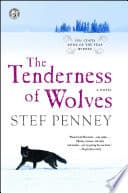
Stef Penney (2008)
Genre
Literary Fiction / Thriller / Historical Fiction / Mystery
Reading Time
10-12 hours
Key Themes
See below
Sign in to track this book
In the harsh 19th-century Canadian wilderness, a mother braves vigilantes and the elements to clear her son's name after he's accused of murder.
In the isolated, snow-covered settlement of Dove River, northern Canada, in 1867, Mrs. Ross finds the murdered body of Laurent Jammet, a trapper, outside her cabin. The scene is horrific, with Jammet's throat cut and his body mutilated. Her immediate horror turns to dread when she recognizes a unique hunting knife, carved with a wolf's head, near the corpse. This knife belongs to her seventeen-year-old son, Francis. Panic sets in as she realizes Francis is missing, having left the cabin the previous night. The discovery immediately implicates him, starting a chain of fear and determination in Mrs. Ross to find her son and understand what happened.
The local Mounted Police officer, Donald Moody, arrives to investigate the murder. Despite Mrs. Ross's pleas, the evidence points strongly to Francis. The community, already wary of the isolated Ross family, quickly turns against them. Mrs. Ross, convinced of her son's innocence despite the damning evidence, decides she cannot wait for the authorities to find him. Driven by a fierce maternal instinct, she resolves to track Francis herself, believing he has either fled in fear or is being pursued by the real killer. She begins to gather supplies, preparing for a difficult journey into the harsh wilderness.
Mrs. Ross sets out alone, following faint tracks and rumors. Her journey takes her through dangerous, snow-covered landscapes. She meets various people along the way, some helpful, some suspicious. She encounters the mysterious trapper, Thomas Sturrock, who offers cryptic advice and seems to know more than he reveals. She also crosses paths with the Métis, a mixed-blood community, and learns about their deep connection to the land and its creatures. Each encounter provides a small piece of the puzzle, hinting at a larger conspiracy or a hidden truth behind Jammet's murder and Francis's disappearance.
As news of Jammet's murder spreads, a group of trappers, led by the victim's brother, forms a vigilante posse, determined to hunt down Francis and get their own justice. Their presence adds immense pressure to Mrs. Ross's search, as she not only has to find her son but also protect him from their anger. The vigilantes are ruthless and distrustful of outsiders, especially Mrs. Ross. Their pursuit forces her to be constantly on guard, navigating the wilderness with a heightened sense of danger, knowing that if they find Francis first, his fate will be sealed without a trial.
Meanwhile, Constable Donald Moody, though initially convinced of Francis's guilt, begins to uncover inconsistencies and unsettling details in the case. He investigates Jammet's past, revealing a history of violence and a troubled reputation. Moody also learns about Jammet's involvement in illegal fur trading and his predatory behavior towards women, especially indigenous women. These discoveries lead Moody to question the initial assumption of Francis's guilt and suggest that Jammet had many enemies. His investigation becomes more complex, moving beyond a simple manhunt to a deeper exploration of the dark side of the frontier settlement.
During her search, Mrs. Ross finds a hidden diary belonging to Jammet. Reading through it, she is horrified to discover his depraved nature, his cruel acts, and his predatory sexual behavior, especially towards young indigenous girls and women. The diary reveals Jammet's true character, painting him as a monster who deserved his fate. This discovery complicates Mrs. Ross's feelings about Francis's potential involvement. It also hints at a deeper, darker secret connected to her own past and the history of the settlement, suggesting that Jammet's death might be linked to a long-held injustice or a desperate act of revenge.
After a difficult journey, Mrs. Ross finally tracks Francis to a remote cabin. She finds him alive but deeply traumatized and emaciated. Francis is initially reluctant to speak, but with his mother's gentle persistence, he confesses what truly happened. He admits to finding Jammet's body but denies killing him. He then reveals a shocking truth: he witnessed his father, Angus Ross, commit the murder. Angus, who had been presumed dead for years, had returned to seek revenge on Jammet for a past wrong involving a young woman, possibly Francis's biological mother or a close family friend. Francis fled in fear and confusion, taking the knife in his panic.
Francis's confession reveals the full, tragic history. It is shown that Angus Ross had disappeared years ago after a traumatic event involving Jammet and an indigenous woman named Amelie. Jammet had brutalized and possibly killed Amelie, who was either Angus's lover or a woman he deeply cared for. Angus, consumed by grief and a desire for justice, had been living in hiding, meticulously planning his revenge. His return to Dove River was solely to confront and kill Jammet. The murder was not a random act of violence but a calculated act of retribution for a long-standing injustice, deeply rooted in the harsh realities of frontier life.
Mrs. Ross is devastated by the revelation but understands her husband's desperate act. She confronts Angus, who confirms Francis's story. Together, they must decide how to proceed, knowing that the truth will shatter their lives. Constable Moody, having pieced together much of the story himself, eventually arrives at the cabin. Instead of arresting Angus, Moody, understanding the complexities and the deep-seated injustices, makes a difficult decision. He helps the family cover up Angus's involvement, attributing Jammet's death to an unknown assailant or an accident, protecting Francis and providing a semblance of peace for Mrs. Ross.
In the aftermath, Angus Ross disappears again, ensuring his family's safety. Mrs. Ross and Francis return to Dove River, forever changed by their ordeal. The community is left to speculate, but the official story allows them to rebuild their lives. Mrs. Ross, having faced the raw wilderness and the brutal truths of human nature, emerges stronger and more resilient. She reflects on the title's metaphor—the 'tenderness of wolves,' understanding that even in the most savage environments, there exists a fierce, protective love. The experience strengthens her bond with Francis and gives her a deeper understanding of the complex moral landscape of her world.
The Protagonist
She transforms from a sheltered settler into a hardened, independent woman capable of navigating extreme adversity and confronting brutal truths.
The Supporting
He is a traumatized boy who eventually finds the courage to reveal the truth, beginning his journey towards healing.
The Antagonist (Victim)
His death serves as the inciting incident, and his posthumous character development reveals him as a truly villainous figure.
The Supporting
He evolves from a by-the-book officer to one who understands the nuanced moral landscape of the frontier, making a difficult ethical choice.
The Supporting
He returns from the shadows to exact revenge, fulfilling a long-held promise of justice.
The Supporting
He serves as a mentor figure, subtly guiding Mrs. Ross without undergoing significant personal change himself.
The Mentioned
Her story is revealed posthumously, serving as the catalyst for the central conflict and resolution.
A mother's fierce, unwavering love for her child drives the story. Mrs. Ross's journey into the brutal wilderness, enduring extreme hardship and danger, is motivated by her desire to find and protect Francis. Her willingness to confront the unknown, defy authority, and ultimately accept a difficult truth for her son's sake shows this theme. This love pushes her beyond her perceived limits, as seen when she faces down vigilantes and braves the unforgiving Canadian winter.
“A mother will go where no man dares, for her child.”
The novel explores the tension between formal legal justice and a more personal sense of justice, especially in a lawless frontier setting. Laurent Jammet's murder, while a crime, is revealed to be an act of retribution for his own past actions, particularly against Amelie. Angus Ross's revenge highlights how, when there is no effective legal recourse, individuals might take justice into their own hands. Constable Moody's ultimate decision to cover up the truth further blurs these lines, suggesting that sometimes, true justice might not align with strict legal rules.
“There are some wrongs for which the law has no remedy, only the wilderness.”
The Canadian wilderness is not just a setting but a powerful character. It is shown as both beautiful and brutally unforgiving, constantly challenging the characters' physical and mental limits. The snow, extreme cold, and vastness are obstacles, metaphors for the characters' internal struggles, and a force that strips away societal pretenses. It forces characters like Mrs. Ross to adapt, become resilient, and confront their deepest fears, revealing the raw essence of humanity in the face of nature's indifference. It also hides secrets and offers refuge.
“The snow swallowed all sound, all time, leaving only the immense, indifferent silence of the world.”
The plot is intricately woven with layers of secrets and deception, both personal and communal. From the mystery surrounding Jammet's murder to Francis's initial silence, and eventually the revelation of Angus Ross's hidden past and his role in the killing, secrets drive the story forward. The community itself holds unspoken truths about its inhabitants, their prejudices, and their past crimes. Uncovering these secrets is central to the mystery, revealing the complex, often dark, undercurrents beneath the seemingly quiet frontier life.
“Every man and woman in this territory carries a story they'd rather keep buried beneath the snow.”
The novel consistently challenges clear-cut notions of right and wrong. While murder is typically condemned, Jammet's depraved character makes Angus Ross's act of revenge morally complex. Francis's flight, though seemingly an admission of guilt, is born of trauma and confusion. Even Constable Moody, a representative of the law, ultimately makes a morally ambiguous decision to protect the Ross family. The characters must navigate situations where the 'right' choice is not always the legal or obvious one, reflecting the difficult ethical landscape of the wild frontier.
“Sometimes, justice is a wolf with blood on its teeth, not a judge in a wig.”
Initial evidence strongly implicates Francis, misleading the reader.
The red herring in 'The Tenderness of Wolves' is the overwhelming initial evidence pointing to Francis Ross as Laurent Jammet's murderer, particularly the discovery of his distinctive wolf-head knife at the scene. This device effectively misleads both the characters (Constable Moody, the vigilantes) and the reader, creating immediate suspense and driving Mrs. Ross's desperate search to prove his innocence. It allows the narrative to explore themes of prejudice and false accusation before revealing the true perpetrator and the deeper motivations behind the crime.
Characters withhold or are ignorant of crucial information, shaping the reader's perception.
While not a single unreliable narrator, the story employs partial unreliability through the limited perspectives of its characters. Mrs. Ross is initially ignorant of her husband's past and Francis's true knowledge, leading her to misinterpret events. Francis himself is a silent, traumatized witness, withholding the crucial truth for much of the novel. This creates suspense and allows the mystery to unfold gradually, as the reader only gains access to information as the characters themselves discover it, forcing them to piece together the narrative alongside Mrs. Ross and Moody.
Subtle hints throughout the story allude to the true nature of the crime and its perpetrator.
Foreshadowing is used subtly throughout the novel to hint at the deeper truths. Thomas Sturrock's cryptic remarks about past injustices and the nature of men, the recurring motif of wolves and their protective instincts, and the gradual uncovering of Jammet's truly monstrous character all allude to the fact that the murder is not a simple crime but an act of retribution. These hints build tension and prepare the reader for the eventual revelation of Angus Ross's involvement and his powerful motive.
The wolf-head knife serves as the initial, misleading object of pursuit.
Francis's distinctive wolf-head knife functions as a MacGuffin in the initial stages of the plot. Its discovery at the murder scene immediately implicates Francis and becomes the primary piece of evidence driving Constable Moody's investigation and Mrs. Ross's desperate search. While the knife itself has symbolic meaning (the wolf's head), its primary purpose is to set the plot in motion and create the initial mystery, rather than being the ultimate key to the deeper truth, which lies in human motivations and past events.
“The wind was a living thing, breathing icy breaths down the valley, rustling the pines and making the snow dance.”
— Describing the harsh Canadian winter landscape.
“Memory is a peculiar thing. It can cling to the most trivial detail and let slip the most profound.”
— Reflecting on the unreliability of memory when recalling past events.
“Grief was a country she knew well, a landscape of sharp edges and sudden drops.”
— L'Hiver's internal struggle with the loss of her son.
“Sometimes the truth is not a single, clear thing, but a collection of shadows and half-truths, shifting with the light.”
— A character contemplating the elusive nature of truth in a mystery.
“He carried the weight of the past like a stone in his pocket, always there, always heavy.”
— Describing the lasting impact of past events on a character.
“The forest held its secrets close, whispered them only to the wind and the falling snow.”
— Emphasizing the wilderness as a keeper of secrets.
“It was a loneliness that did not diminish in company, but rather intensified, a private, unshared space.”
— A character experiencing profound isolation despite being around others.
“Every man builds his own cage, brick by brick, with his choices and his fears.”
— A philosophical observation on human agency and self-imposed limitations.
“The world was a vast and indifferent place, and human lives were but small sparks in its immensity.”
— A moment of existential reflection on humanity's place in the universe.
“There was a particular kind of silence in the North, not an absence of sound, but a vast, resonant stillness.”
— Describing the unique auditory experience of the northern wilderness.
“Love, she thought, was not just a feeling, but a fierce, protective instinct, sharp as a wolf's tooth.”
— L'Hiver's intense love for her son, driving her actions.
“He understood that some wounds never healed completely, but merely scabbed over, waiting for the right moment to bleed again.”
— A character's understanding of enduring trauma and its potential to resurface.
“The past was a labyrinth, and he was lost within its winding corridors, searching for an exit that might not exist.”
— A character grappling with an unresolved past and its complexities.
“Hope was a fragile thing, easily crushed, but sometimes, against all odds, it found a way to bloom in the harshest ground.”
— Reflecting on the resilience of hope in difficult circumstances.
Ready to see how well you understood this book? Take our interactive quiz with 10 questions.







