“Perhaps there is a world where I am not a character in a story, but the author of my own.”
— January considers her agency and the nature of her existence.

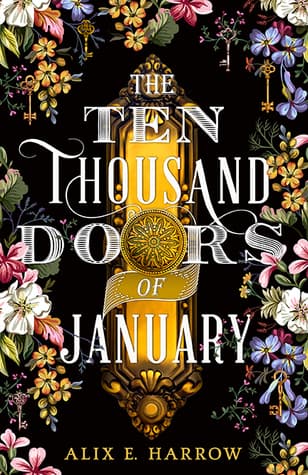
Alix E. Harrow (2019)
Genre
Fantasy / Historical Fiction / Young Adult
Reading Time
7-8 hours
Key Themes
See below
Sign in to track this book
A young woman discovers a book that reveals hidden doors to other realities, uncovering her extraordinary past in a world that suppresses such passages.
January Scaller, a young girl with an unusual olive complexion and dark hair, lives as the ward of the wealthy Mr. Locke in his Vermont mansion in the early 20th century. Her father, Julian Scaller, is an archaeologist who travels the world collecting artifacts for Mr. Locke, leaving January often alone. January feels like an oddity herself, a 'curiosity' among Mr. Locke's collection, constantly aware of her mixed heritage and her father's absences. Her only friend is Samuel Zappia, a local grocer's son, who visits her in secret. January often feels a deep longing for something more, a sense of belonging that the grand but cold mansion cannot provide.
At seven years old, January finds a strange, shimmering blue door in a field near Mr. Locke's estate. Drawn by an unexplainable curiosity, she opens it and sees a bright, sun-drenched world on the other side. Before she can step through, her father, Julian, appears, upset and angry. He pulls her away, scolding her and making her promise never to speak of it, claiming it was just her imagination. This encounter leaves a lasting mark on January, fueling her secret belief in other worlds while also making her fear her own unusual perceptions.
Years later, around her eighteenth birthday, January finds a peculiar, dark blue leather-bound book hidden in an old chest in her room. The book has no title, but its pages are filled with elegant writing. It tells the story of a young woman named Yule Ian and a man named Ade, who discover and travel through magical Doors to different worlds. The book speaks of the magic in words and the power of belief. As January reads, she notices odd things: the book seems to know about her, and its story connects deeply with her own secret longings and the memory of the blue door.
Through the book, January learns that her mother, Yule Ian, was from another world — a vibrant, sun-drenched place — and that her father, Julian, was a Door-maker. Their love story is part of the Doors themselves. She also discovers the 'Society of Ancients,' a powerful, secret group led by Mr. Locke, dedicated to finding and closing all Doors, believing them dangerous. The Society actively hunts Door-makers and those who travel through them, trying to erase all knowledge of other worlds. January realizes her parents were victims of this society.
Following clues in the book and her own feelings, January finds a hidden message from her father, Julian. He reveals he is alive and that the book itself is a Door, written for her. He explains that January, like her mother, can sense and even open Doors. He urges her to find him, giving cryptic directions and stressing the importance of her heritage and her own will. This message confirms January's deepest suspicions and sparks a desperate hope to reunite with her parents.
Mr. Locke, realizing January has the book and is discovering the truth, confines her to her room. He reveals his true, sinister plans, confirming his role in her parents' disappearance. With help from her friend Samuel Zappia, and a surprising ally in Adelaide, Mr. Locke's former maid who secretly believes in Doors, January escapes the mansion. They begin a dangerous journey, pursued by Mr. Locke's agents, determined to follow the clues in the book and find January's father. This escape marks January's first true act of rebellion and her step into her own power.
Using the book's unique properties, which acts as a Door, January, Samuel, and Adelaide begin traveling through different worlds described in its pages. Each world is distinct and amazing, from cities on the backs of giant beasts to desolate, forgotten places. They meet various characters, some helpful, some hostile, all adding pieces to the puzzle of January's family history and the nature of Doors. January learns to use her Door-opening abilities, growing more confident with each journey, while Samuel and Adelaide offer important support.
Through their travels and the book's revelations, January learns that her mother, Yule Ian, is not dead as she had believed. Instead, Yule Ian has been trapped in a Doorless world — a world where the idea of Doors has been removed, making escape impossible. This discovery strengthens January's resolve to find both her parents. She realizes that Mr. Locke's goal was not just to close Doors, but to prevent her family's reunion, fearing the power of their combined Door-making abilities. The urgency of their mission increases dramatically.
January, Samuel, and Adelaide finally find Julian in a hidden place. However, Mr. Locke and the Society of Ancients are close behind. A final confrontation happens, with Mr. Locke revealing his deep hatred and fear of Doors, stemming from a personal tragedy he blames on them. During the fight, Julian sacrifices himself to protect January, using his last moments to empower her and encourage her to fully use her abilities. His death is a deep loss, but it strengthens January's resolve to fulfill her destiny and protect all worlds.
Empowered by her father's sacrifice and her growing abilities, January, now fully accepting her role as a Door-maker, opens a Door to the Doorless world where her mother, Yule Ian, is trapped. She rescues Yule Ian, bringing her back to a world where Doors exist. Together, with Samuel and Adelaide, January uses her power, guided by the book's wisdom, to create a new world — a sanctuary where all Doors can exist safely and openly. She dedicates her life to exploring and protecting these paths between worlds, ensuring no one else suffers her parents' fate.
The Protagonist
From a passive 'curiosity' in Mr. Locke's home, January transforms into a powerful Door-maker, actively shaping her destiny and protecting the integrity of all worlds.
The Antagonist
Remains steadfast in his villainy, his motivations revealed but his actions unredeemed.
The Supporting
His story is revealed through the book, culminating in his sacrifice to empower January.
The Supporting
Revealed as trapped, her eventual rescue symbolizes the triumph of love and magic.
The Supporting
From a supportive friend, he becomes January's steadfast companion and romantic interest, embracing the fantastical world of Doors.
The Supporting
From a seemingly subservient maid, she reveals her hidden beliefs and becomes a key ally in January's quest.
The Mentioned
Her past story, as revealed in the book, provides context and guidance for January.
The novel shows that stories are not just tales, but living things that can create and shape reality. The book January finds is a Door; its words can open paths to other worlds. This theme is clear in how January's parents communicate through the book, and how January, by reading and writing, gains power and magic. Telling a story is an act of creation, challenging the 'official' story presented by Mr. Locke and the Society of Ancients. For example, Julian writes the book to guide January, his words literally leading her to her destiny.
“What is a door, if not a story? And what is a story, if not a door?”
January's mixed heritage and her status as Mr. Locke's ward make her feel like an outsider, a 'curiosity' in a world that doesn't quite fit her. She constantly searches for a place where she truly belongs. This theme is explored through her longing for her absent father, her connection to her mother's world, and her eventual realization that her identity as a Door-maker is what makes her unique and powerful. Her journey is about finding her true self and creating a world where she and others like her can exist freely, instead of trying to fit into a restrictive society.
“I was a girl made of words, a girl made of doors, a girl made of worlds.”
The Society of Ancients, led by Mr. Locke, represents a rigid, controlling force that tries to suppress the magic and wonder of other worlds, enforcing one 'safe' reality. January's journey is a direct rebellion against this conformity. Her act of reading the forbidden book, seeking her parents, and creating new Doors, is an assertion of individual freedom and imagination against oppressive power. The novel supports the idea that diversity and the unknown should be embraced, not feared or removed, as seen in January's decision to create a sanctuary for all Doors.
“The world as it is, is only one of many. And the world as it should be... that is a story we can still write.”
The central love story between January's parents, Julian and Yule Ian, crosses social barriers and the very fabric of different worlds. Their love causes many events in the story, including the creation of the book and January's own existence. This theme highlights the lasting power of love to bridge divides, inspire courage, and defy impossible obstacles. January's quest is driven by her love for her parents and her desire to reunite her family, showing how love can be a powerful force for change and connection across any boundary.
“Love, after all, is a kind of door.”
A magical, sentient book that acts as both a narrative and a literal Door to other worlds.
The mysterious, leather-bound book is the central plot device. It serves multiple functions: it tells the story of January's parents, provides clues to her heritage, and literally functions as a Door itself, allowing January to travel between worlds when she reads its passages. The book is also a form of communication from Julian to January, a guiding voice that slowly reveals the truth. Its sentience and active role in the plot make it more than just an object; it's a character in its own right, embodying the theme of stories having power.
Magical portals that connect different realities and serve as the core concept of the fantastical elements.
Doors are the fundamental magical element of the novel. They are not merely physical doorways but can manifest in various forms – a shimmering arch, a phrase in a book, a forgotten gate. They represent possibility, escape, and the vastness of existence beyond the known. The conflict of the story revolves around the existence of these Doors: Mr. Locke and the Society want to close them, while January and her family are dedicated to opening and protecting them. They are both a source of wonder and danger, driving the plot's exploration of diverse realities.
A secret, powerful organization dedicated to suppressing and closing all Doors between worlds.
The Society of Ancients acts as the primary antagonistic force, representing the forces of order, fear, and control against the chaotic wonder of the Doors. Led by Mr. Locke, they actively hunt Door-makers and Door-travelers, believing that the existence of other worlds is a threat to their own. This organization provides the external conflict and stakes for January's journey, forcing her to confront powerful opposition and highlighting the theme of rebellion against conformity. Their secrecy and pervasive influence create a sense of constant danger and oppression.
Her unique background as the child of a Door-maker and a woman from another world.
January's mixed heritage is a crucial plot device that explains her innate abilities and her connection to the world of Doors. Her 'unusual' appearance and her father's travels are initial clues to her true nature. This heritage makes her special and marks her as a target for Mr. Locke, but also empowers her as the only one capable of truly understanding and wielding the power of Doors. It grounds her personal journey of self-discovery within the broader fantastical conflict.
“Perhaps there is a world where I am not a character in a story, but the author of my own.”
— January considers her agency and the nature of her existence.
“Every door is a world. Every world a door.”
— A foundational concept in the book about the nature of portals and realities.
“You are a story, January. You always have been. And the best stories are the ones that are told, not the ones that are kept.”
— Julian Scallard speaks to January about her identity and purpose.
“To be a woman is to be a door. To be a door is to be a story. To be a story is to be a world.”
— A poetic reflection on the interconnectedness of female identity, narrative, and reality.
“Words are not just sounds or symbols. They are spells. They are bridges. They are doors.”
— January reflects on the power and magic inherent in language.
“Some doors are meant to be opened. Some are meant to be closed. And some are meant to be built.”
— A nuanced perspective on the different kinds of doors and their roles.
“There are a thousand ways to be brave, and only one of them is to be a hero.”
— January recognizes the diverse forms of courage.
“The world is not a line, but a circle. And everything comes back around.”
— A philosophical observation on the cyclical nature of events and time.
“Sometimes, the only way to find your way home is to get lost first.”
— January's journey of self-discovery often involves wandering.
“Don’t you understand? Every story is true, somewhere.”
— One of the fundamental magical truths about the existence of other worlds.
“The greatest magic is not in opening a door, but in knowing which door to open.”
— A subtle distinction about the wisdom required for true magic.
“We are all made of stories, good and bad, true and false, remembered and forgotten.”
— A reflection on how narratives shape individual and collective identity.
“What is a door, if not a question?”
— January ponders the inherent curiosity and potential of a portal.
“There is no such thing as a closed door, only a door waiting to be opened, or built.”
— A hopeful and empowering perspective on perceived limitations.
Ready to see how well you understood this book? Take our interactive quiz with 10 questions.







