“Beauty is a terrible and awful thing! It is terrible because it has no meaning for us. It is awful because it is a limit.”
— Mizoguchi's internal struggle with the nature of beauty, especially in relation to the Golden Pavilion.

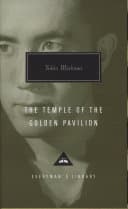
Yukio Mishima (1987)
Genre
Historical Fiction
Reading Time
360 min
Key Themes
See below
Sign in to track this book
Haunted by his father's death and a severe stutter, Mizoguchi seeks identity in Kyoto's Golden Pavilion, only to become obsessed with its beauty and eventually destroy it to feel free.
Mizoguchi, born in a remote village, has a severe stutter from childhood. His father, a Buddhist priest, has tuberculosis. Young Mizoguchi sees his mother having sex with a family friend in his father's presence, an event that deeply scars him and worsens his speech. This early trauma isolates him from other children, making him feel like an outsider. His father, on his deathbed, tells Mizoguchi to become an acolyte at the famous Kinkaku-ji (Temple of the Golden Pavilion) in Kyoto, under his old friend, the Superior Dosen Tayama. This instruction links Mizoguchi's future with the temple's beauty.
After his father's death, Mizoguchi arrives at Kinkaku-ji in Kyoto, a place he idealized through his father's stories. He is immediately struck by its beauty, though his first direct look at the building feels less grand than the perfect image he had in his mind. He becomes an acolyte under the Superior Dosen Tayama, a complex man who is both worldly and spiritual. Mizoguchi struggles to adapt to the temple's routine and monastic life. His stutter remains a major problem, stopping him from making real connections and deepening his sense of alienation, even in the temple's calm setting.
Mizoguchi meets Tsurukawa, another acolyte at Kinkaku-ji. Unlike Mizoguchi, Tsurukawa is open, friendly, and naturally charismatic. He is the first person who truly tries to understand Mizoguchi, ignoring his stutter and offering friendship. Tsurukawa's kindness and positive outlook temporarily ease Mizoguchi's deep loneliness and self-hatred. He acts as a buffer between Mizoguchi and the world's harshness, explaining Mizoguchi's unclear thoughts and defending him from others' scorn. This friendship, though a comfort, also shows Mizoguchi's inability to connect on his own, as he relies on Tsurukawa's help for social interaction.
Mizoguchi's world expands with the arrival of Kashiwagi, a university student and acolyte who, despite having clubfeet, has a sharp mind and a cynical, manipulative nature. Kashiwagi challenges Mizoguchi's quiet, thoughtful life with his radical ideas and amoral view. He introduces Mizoguchi to the idea of manipulating others and using one's own perceived flaws. Kashiwagi, who uses his disability to his advantage, embodies a view that accepts ugliness and perversion, contrasting sharply with Mizoguchi's obsession with beauty. He becomes a strong influence, pushing Mizoguchi to confront his own darkness and the complex link between beauty and destruction.
Mizoguchi sees the Superior Dosen Tayama having an affair with a geisha, Uiko. This discovery deeply upsets Mizoguchi, shattering his idealized image of spiritual purity and authority within the temple. The Superior, who should embody a higher moral standard, is revealed to be flawed and driven by desires like any ordinary man. This event further feeds Mizoguchi's growing disappointment with the world and its institutions, confirming his belief that beauty and purity are always corrupted. He feels betrayed and sees hypocrisy even in Kinkaku-ji's sacred walls.
During the American occupation, Mizoguchi encounters an American soldier and a pregnant Japanese woman near Kinkaku-ji. The soldier offers Mizoguchi chocolate, but Mizoguchi, paralyzed by his stutter and social anxiety, cannot refuse. In a moment of twisted impulse, the soldier then stamps on the pregnant woman's belly. Mizoguchi cannot intervene or even cry out, a failure that fills him with great guilt and shame. This incident deeply traumatizes him, confirming his powerlessness and inability to connect with or protect others. It highlights his deep alienation and the destructive power of his withdrawn nature.
Tsurukawa, Mizoguchi's only real friend, dies in a motorcycle accident. This loss devastates Mizoguchi, removing the one person who offered him genuine kindness and understanding. With Tsurukawa gone, Mizoguchi is increasingly drawn into Kashiwagi's cynical worldview. Kashiwagi encourages Mizoguchi to accept his perceived ugliness and alienation, advocating for a life outside conventional morality. He introduces Mizoguchi to prostitutes and encourages him to try sexual encounters, which Mizoguchi finds deeply unsatisfying due to his emotional detachment and his stutter. Kashiwagi's influence strengthens Mizoguchi's nihilistic tendencies and his growing contempt for the world.
Mizoguchi's obsession with the Golden Pavilion's beauty grows, but it turns into a suffocating presence. He begins to see the temple not as something to admire, but as a barrier that prevents him from living a full life. Its perfect, unchanging beauty mocks his own imperfections and failures. He feels that the temple's existence constantly judges him, making his own life meaningless. The Golden Pavilion, once a source of spiritual hope, becomes a symbol of his imprisonment and his inability to truly experience the world. He believes that as long as the temple exists, he cannot truly live or express himself.
Consumed by his fixation and his belief that the Golden Pavilion's beauty is an insurmountable obstacle to his own existence, Mizoguchi begins to plan its destruction. He sees this act as a desperate attempt to free himself from its oppressive influence and to finally assert his own will. The idea of destroying such an iconic symbol of beauty becomes his only focus, a twisted act of creation through destruction. He carefully plans the details, getting gasoline and preparing for the final act. This plan comes not from hatred for the temple itself, but from a desperate desire for personal freedom and transcendence.
On the night of July 2, 1950, Mizoguchi sets fire to the Golden Pavilion. He douses the ancient wooden structure with gasoline and ignites it, watching with a complex mix of terror, exhilaration, and a strange sense of liberation as the flames consume the magnificent building. The act is both destructive and cleansing for him. He initially plans to die with the temple, a final, complete union with the beauty he both loved and resented. However, at the last moment, he flees, driven by an instinct for self-preservation. He escapes to a nearby hill, where he sits and watches the temple burn, smoking a cigarette, an ambiguous end to his destructive act.
The Protagonist
Mizoguchi moves from an idealized worship of beauty to a desperate, destructive act to liberate himself from its oppressive power.
The Supporting
Tsurukawa remains consistently kind and supportive, serving as a foil to Mizoguchi's darkening worldview until his untimely death.
The Supporting
Kashiwagi consistently advocates for a cynical, manipulative worldview, deepening Mizoguchi's internal conflict and pushing him towards destructive acts.
The Supporting
The Superior's character reveals the fallibility of authority, shifting from a figure of respect to one of disillusionment for Mizoguchi.
The Mentioned
His role is foundational, setting Mizoguchi's path to the temple, but he exits the narrative early.
The Supporting
Her role is primarily as a catalyst for Mizoguchi's psychological damage, remaining a distant, unsupportive figure.
The Mentioned
Uiko serves as a static symbol of worldly corruption and disillusionment, not undergoing personal development.
The novel explores the complex and often contradictory link between beauty and ugliness. Mizoguchi, with his stutter and perceived physical flaws, is very aware of his own 'ugliness' compared to the Golden Pavilion's perfect beauty. He first worships this beauty, but it eventually torments him, becoming an oppressive force that highlights his imperfections and prevents him from living. Kashiwagi, with his clubfeet, offers a different view, embracing his 'ugliness' and using it to manipulate, suggesting that perceived flaws can be a source of power. The temple's destruction is Mizoguchi's attempt to resolve this tension, to erase the overwhelming beauty that has paralyzed him, hinting that extreme beauty can be as destructive as ugliness.
“What had prevented me from living was the excess of beauty.”
Mizoguchi's life is marked by deep isolation and alienation. His stutter, a physical sign of his inability to connect, separates him from others from childhood. The traumatic experience of seeing his mother's infidelity further entrenches his feeling of being an outsider. Even in the monastery, he struggles to form meaningful bonds, finding only temporary comfort in Tsurukawa's friendship. This isolation drives him further into his own mind, where his obsession with the Golden Pavilion grows unchecked. His inability to communicate and his perception of others' judgment confirm his belief that he is fundamentally different, leading him to seek radical ways of self-expression and liberation.
“I was always outside, a spectator, never a participant.”
A central theme is that destruction can lead to liberation or creation. Mizoguchi believes that the Golden Pavilion's overwhelming beauty is an obstacle to his own existence and self-realization. He sees its perfection as a constant judgment, paralyzing him and stopping him from experiencing life. Burning the temple is not an act of hatred, but a desperate desire to free himself from its suffocating influence. By destroying this ultimate symbol of beauty, he hopes to break free from his own paralysis and assert his individual will, believing that only through this radical act can he truly begin to live. The final image of him smoking a cigarette after the fire suggests a momentary, if unclear, sense of release.
“I felt that I had to die, or else destroy the Golden Temple.”
The novel consistently highlights the conflict between idealized perceptions and harsh realities. Mizoguchi initially has an idealized image of the Golden Pavilion, only to find the actual building somewhat disappointing compared to his internal vision. Similarly, his spiritual mentor, the Superior, is revealed to be a flawed, worldly man, shattering Mizoguchi's image of monastic purity. Mizoguchi's attempts at sexual encounters, influenced by Kashiwagi, are also deeply unsatisfying, failing to meet any romanticized ideas. This constant disillusionment fuels Mizoguchi's cynicism and his belief that the world is inherently corrupt and cannot live up to the sublime ideals he holds for beauty and purity. The temple's destruction can be seen as a final, desperate attempt to resolve this conflict by erasing an ideal that reality could not sustain.
“Nothing that existed in reality could stand comparison with the beauty that existed in my mind.”
A physical manifestation of Mizoguchi's internal barriers.
Mizoguchi's severe stutter functions as a primary plot device, both literally and symbolically. Literally, it isolates him from others, prevents him from expressing himself, and fuels his profound sense of alienation and inferiority. Symbolically, it represents his inability to connect with the world, his internal paralysis, and the gap between his rich inner life and his external reality. His stutter is often exacerbated by fear or intense emotion, highlighting his vulnerability. It is a constant reminder of his perceived ugliness and his inability to fully participate in life, driving his obsession with the Golden Pavilion and his eventual act of destruction as a means of 'speaking' through action.
A symbol of unattainable beauty, purity, and ultimately, an oppressive force.
The Golden Pavilion is the central symbolic device of the novel. Initially, it represents ultimate beauty, purity, and spiritual aspiration, a sanctuary from the world's ugliness. Mizoguchi's idealization of it becomes an obsession, but over time, it transforms into an oppressive force. Its perfect, unchanging beauty mocks his imperfections and prevents him from living his own life. It becomes a barrier, a constant reminder of his inadequacy. Its destruction is Mizoguchi's desperate attempt to break free from its suffocating influence, to kill the ideal that has paralyzed him, and to assert his own existence. The temple's symbolic meaning evolves with Mizoguchi's psychological state.
A physical deformity used as a tool for power and manipulation.
Kashiwagi's clubfeet serve as a significant plot device by providing a counterpoint to Mizoguchi's stutter and his obsession with beauty. Unlike Mizoguchi, Kashiwagi embraces his physical 'ugliness' and skillfully uses it to his advantage, manipulating others and asserting his will. His disability becomes a source of power, allowing him to operate outside conventional social norms and morality. This challenges Mizoguchi's perception of his own 'ugliness' and offers him an alternative, albeit cynical, path to dealing with his perceived flaws. Kashiwagi's clubfeet symbolize the potential for strength and cunning to emerge from perceived weakness, directly influencing Mizoguchi's shift towards a more destructive and self-assertive worldview.
“Beauty is a terrible and awful thing! It is terrible because it has no meaning for us. It is awful because it is a limit.”
— Mizoguchi's internal struggle with the nature of beauty, especially in relation to the Golden Pavilion.
“I had long been aware that I was an ugly man, but until that moment I had never fully grasped the extent of my ugliness.”
— Mizoguchi's self-perception and his physical appearance, often a source of his alienation.
“Only when I destroyed beauty, could I be free from it.”
— Mizoguchi's ultimate motivation for the destruction of the Golden Pavilion.
“The beauty of the Golden Pavilion was a beauty of such purity that it could not be defiled.”
— Mizoguchi's initial reverence for the temple and his belief in its untouchable perfection.
“To be born ugly is not a crime, but it is a misfortune.”
— Mizoguchi's reflection on his birth defect and its impact on his life.
“I felt that I was watching the world through a thin, transparent film, and that I was unable to break through it.”
— Mizoguchi's sense of detachment and his inability to fully connect with others.
“The world was always trying to tell me something, but I couldn't understand its language.”
— Mizoguchi's feeling of being an outsider, unable to comprehend the unspoken rules of society.
“Beauty is a promise of happiness, but happiness is not always beautiful.”
— Mizoguchi's philosophical musings on the relationship between beauty and happiness.
“I had always been told that beauty was a good thing, but in my heart, I knew it was a lie.”
— Mizoguchi's internal conflict regarding societal values placed on beauty versus his own experience.
“The past was a burden, the present a torment, and the future an abyss.”
— Mizoguchi's bleak outlook on time and his personal suffering.
“I had no other choice but to continue living, even if it meant living in hell.”
— Mizoguchi's resignation to his existence, despite his profound unhappiness.
“Perhaps the only way to truly possess beauty was to destroy it.”
— Another articulation of Mizoguchi's twisted logic leading to the temple's destruction.
“To be alive was to suffer, and to suffer was to be alive.”
— Mizoguchi's existential view on life and suffering.
“The fire was not merely an act of destruction; it was also an act of creation.”
— Mizoguchi's justification of his actions, seeing a new beginning in the ashes.
Ready to see how well you understood this book? Take our interactive quiz with 10 questions.
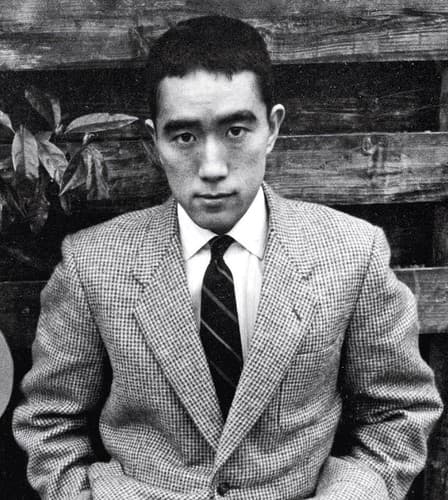
Kimitake Hiraoka , also known as Yukio Mishima , was a Japanese author, poet, playwright, actor, model, Shintoist, nationalist, and founder of the Tatenokai , an unarmed civilian militia. Mishima is considered one of the most important writers of the 20th century. He was considered for the Nobel Prize in Literature in 1968, but the award went to his countryman and benefactor Yasunari Kawabata. His works include the novels Confessions of a Mask and The Temple of the Golden Pavilion , and the autobiographical essay Sun and Steel . Mishima's work is characterized by "its luxurious vocabulary and decadent metaphors, its fusion of traditional Japanese and modern Western literary styles, and its obsessive assertions of the unity of beauty, eroticism and death", according to author Andrew Rankin.







