“We are such stuff / As dreams are made on, and our little life / Is rounded with a sleep.”
— Prospero's famous reflection on the ephemerality of human existence after dismissing the spirits.


William Shakespeare (2015)
Genre
Fantasy
Reading Time
240 min
Key Themes
See below
Sign in to track this book
On a remote, magic-filled island, the sorcerer duke Prospero creates a storm to lure his brother and their conspirators, weaving a story of revenge, love, and forgiveness through his spirits and monstrous servant.
The play starts with a violent storm at sea, created by Prospero, the rightful Duke of Milan, using his magic. A ship carrying King Alonso of Naples, his son Ferdinand, Alonso's brother Sebastian, Prospero's brother Antonio, and Gonzalo, is caught in the storm. The sailors struggle, and the ship appears to be breaking apart. Miranda, Prospero's daughter, sees the chaos from the island and asks her father to stop the storm, showing her kind nature. Prospero tells her that no one is harmed and explains that the storm is part of his plan to restore them to their proper place.
Prospero tells Miranda the story of their exile. Twelve years earlier, Prospero, focused on his magic studies, gave control of Milan to his brother Antonio. Antonio, ambitious and disloyal, worked with Alonso, the King of Naples, to take Prospero's dukedom. In exchange for tribute to Naples, Antonio became Duke, and Prospero and a three-year-old Miranda were left in a rotten boat, eventually landing on the remote island. Gonzalo, a kind counselor, secretly gave them food, water, and books from Prospero's library. Prospero explains that fate has brought their enemies to the island, offering a chance for his revenge and their return.
Prospero summons his spirit servant, Ariel, who reports on the storm's success. Ariel describes how the ship's passengers were scattered but safe, and how Ferdinand, believing his father dead, was separated from the main group. Ariel wants his freedom, which Prospero promises after his tasks are done. Prospero then calls Caliban, the deformed, enslaved son of the witch Sycorax, who lived on the island before Prospero arrived. Caliban curses Prospero for taking his island and enslaving him, while Prospero reminds Caliban of his past attempts to rape Miranda and the kindness he first showed him. Their exchange shows the power struggle and deep resentment.
Led by Ariel's music, Ferdinand, believing himself the only survivor, meets Prospero and Miranda. Miranda, having seen no man other than her father and Caliban, is immediately drawn to Ferdinand, calling him a 'thing divine.' Ferdinand is equally smitten, believing Miranda to be the island's goddess. Prospero, seeing their instant connection, is pleased but pretends to be angry to test Ferdinand's sincerity and make the courtship harder. He accuses Ferdinand of being a spy and a usurper and magically binds him, forcing him to do menial tasks.
Meanwhile, King Alonso, Sebastian, Antonio, Gonzalo, and other lords wander the island, tired and without hope. Gonzalo tries to cheer them up by imagining a perfect society, but Antonio and Sebastian mock his ideas. Ariel, unseen, makes the group fall asleep, except for Antonio and Sebastian. Antonio, having taken his own brother's place, now tempts Sebastian to murder his sleeping brother, King Alonso, and take the throne. Sebastian, at first hesitant, is convinced by Antonio's ambition and the promise of power. As they draw their swords, Ariel wakes Gonzalo, who then wakes Alonso, stopping the assassination attempt.
Elsewhere on the island, Trinculo, King Alonso's jester, and Stephano, the King's drunken butler, are separated from the main group. Trinculo, seeking shelter from a storm, finds Caliban hiding under a cloak. Believing Caliban to be a strange fish, Trinculo joins him. Stephano then arrives, also drunk, and offers Caliban wine, which Caliban has never tasted. Caliban, believing Stephano to be a god and Trinculo a brave spirit, pledges his loyalty to them, seeing them as new masters who can free him from Prospero's rule. They form a foolish alliance, with Caliban urging them to kill Prospero and take the island.
Prospero continues to make Ferdinand do hard tasks, like carrying logs, to test his resolve and love for Miranda. Miranda, feeling sorry for Ferdinand, offers to help him, but he refuses, determined to prove his worth. During their talk, they openly declare their love for each other. Miranda proposes marriage, and Ferdinand happily accepts. Prospero, hidden and watching, is pleased with the outcome of his test, seeing the true affection between them. He admits that his harshness has strengthened their bond and made their union more precious.
Caliban, Trinculo, and Stephano continue their drunken plotting. Caliban strongly urges Stephano to kill Prospero, suggesting burning his books, which are the source of his power, and then taking Miranda as his queen. He describes the island's riches and promises Stephano leadership. Ariel, unseen, overhears their entire conversation and reports it to Prospero. As they approach Prospero's cell, guided by Ariel's music, Ariel distracts them with tempting clothes, leading them into a foul-smelling pond. Prospero then sends spirits in the form of hounds to chase and torment them, stopping their plan.
Prospero, having approved Ferdinand and Miranda's marriage, presents them with a magical show, performed by spirits, celebrating marriage, fertility, and abundance. Iris, Ceres, and Juno bless the couple. This peaceful scene is suddenly interrupted when Prospero remembers Caliban's plot. After the spirits vanish, Prospero gives a speech, reflecting on the short nature of life, comparing human existence to 'such stuff as dreams are made on.' He then decides to give up his magic after his plans are complete, break his staff, and drown his book, choosing forgiveness over revenge.
Ariel brings Alonso, Antonio, Sebastian, and Gonzalo before Prospero, who sees their tormented and regretful state. He acknowledges their suffering but decides to forgive rather than punish. Prospero then reveals himself in his ducal robes, surprising his enemies. Alonso, full of remorse, begs Prospero's pardon and restores his dukedom. Prospero then shows Ferdinand and Miranda playing chess, to Alonso's joy and relief. He confronts Antonio and Sebastian about their betrayal, but ultimately forgives them, though Antonio remains silent and unrepentant.
Prospero reveals that the ship is whole and the crew safe. He frees Ariel, granting him the liberty he has wanted. Caliban, Trinculo, and Stephano are brought before the group, looking messy and foolish. Caliban, seeing Prospero's power, expresses remorse and promises to be wise in the future. Prospero invites the royal party to spend one last night in his cell, where he will tell his life story. The next morning, they will sail back to Naples for Ferdinand and Miranda's wedding, and then Prospero will return to Milan to rule. The play ends with Prospero's epilogue, asking the audience for their applause to set him free.
The Protagonist
From a vengeful magician, Prospero evolves into a wise ruler who chooses forgiveness and renounces his magic for the sake of humanity.
The Supporting
Miranda transitions from an innocent island-dweller to a betrothed princess, representing new beginnings and hope for the future.
The Supporting
Ariel serves Prospero faithfully, ultimately gaining his deserved freedom.
The Antagonist/Supporting
Caliban rebels against Prospero, seeks new masters, and ultimately recognizes Prospero's power, promising to be wise.
The Supporting
From a grieving, guilt-ridden king, Alonso finds redemption and joy through the reunion with his son and the forthcoming marriage.
The Supporting
Ferdinand overcomes trials to prove his love, securing a future with Miranda and uniting the kingdoms.
The Antagonist
Antonio remains largely unchanged, a static character representing unrepentant villainy.
The Supporting
Sebastian succumbs to temptation, plots regicide, but ultimately fails and is forgiven by Prospero.
The Supporting
Gonzalo remains a steadfastly kind and optimistic character, serving as a moral compass.
The Supporting
Stephano rises from butler to would-be king, only to be humiliated and returned to his original status.
The Supporting
Trinculo participates in a failed rebellion, driven by opportunism and drunkenness.
The play explores colonialism through Prospero's relationship with Caliban. Prospero arrives on the island, asserts his intellectual and magical superiority, and enslaves Caliban, the island's native. Caliban sees Prospero as a usurper who stole his birthright and used his initial kindness. Prospero, in turn, justifies his rule by citing Caliban's attempted rape of Miranda and his 'savage' nature. This power struggle reflects historical colonial encounters, raising questions about rightful ownership, exploitation, and the imposition of culture and language. Ariel's servitude also touches on different forms of service and the desire for freedom. For example, Caliban's lament, 'This island's mine, by Sycorax my mother, / Which thou tak'st from me,' directly highlights dispossession.
“This island's mine, by Sycorax my mother, / Which thou tak'st from me.”
At the play's core is the journey from vengeance to forgiveness. Prospero, initially driven by a desire for revenge against those who wronged him, orchestrates the entire plot to bring his enemies to his island and torment them. However, with Ariel's gentle urging and his own reflection, he chooses mercy over revenge. He publicly forgives Antonio, Alonso, and Sebastian, and even offers a path to redemption for Caliban. This theme emphasizes forgiveness's power in breaking cycles of hatred and restoring harmony, leading to a hopeful resolution where past wrongs are acknowledged but not endlessly punished. This is clear in Prospero's speech where he declares, 'The rarer action is / In virtue than in vengeance.'
“The rarer action is / In virtue than in vengeance.”
Magic and illusion fill 'The Tempest,' blurring the lines between what is real and what is conjured. Prospero's entire plot relies on elaborate illusions: the storm itself, Ariel's disguises, the magical banquet, and the masque. The characters often question the reality of their experiences on the island, wondering if they are dreaming or mad. This theme highlights the power of perception and how appearances can deceive. It also shows Prospero's control as a master illusionist, manipulating events and perceptions to achieve his desired outcome. The play itself, as a work of theatrical illusion, reflects this theme, ending with Prospero's epilogue where he acknowledges the 'insubstantial pageant' of the play.
“We are such stuff / As dreams are made on, and our little life / Is rounded with a sleep.”
This theme is most clearly seen through Caliban. Prospero tries to 'civilize' Caliban by teaching him language and manners, but Caliban remains largely resistant, keeping his 'savage' and 'brutish' nature. Prospero sees Caliban as inherently evil, a 'born devil' incapable of goodness, suggesting that some natures cannot be improved by education or kindness. Conversely, Miranda, raised in isolation, embodies natural goodness and compassion, suggesting that an uncorrupted environment can foster virtue. The debate over whether character is determined by innate qualities or by upbringing is central to understanding the limits of Prospero's power and the inherent qualities of the island's inhabitants.
“A devil, a born devil, on whose nature / Nurture can never stick.”
Prospero's character is defined by his pursuit and use of power and control. Having lost his dukedom due to neglecting political power, he arrives on the island and immediately establishes control over its inhabitants: Ariel, Caliban, and implicitly, Miranda. He uses his magic to manipulate events, test characters, and orchestrate their fates. His ultimate goal is not just to regain his title but to show his mastery over both the natural and human worlds. The play examines the responsibilities that come with such power, and Prospero's eventual decision to give up his magic suggests a recognition that true leadership may not require absolute control.
“My high charms work, / And these mine enemies are in my power.”
Prospero's supernatural abilities and the source of his control.
Magic is the central plot device, driving nearly every event in 'The Tempest.' Prospero's ability to conjure storms, control spirits like Ariel, and create illusions allows him to manipulate the characters and their circumstances. It serves as the primary means by which he seeks revenge and ultimately achieves reconciliation. Magic also provides the fantastical element of the play, creating a unique atmosphere and allowing for the suspension of disbelief. Prospero's decision to renounce his magic at the end symbolizes his return to the human world and his embrace of forgiveness over supernatural power.
A remote, isolated location that serves as a crucible for transformation.
The uninhabited island functions as a symbolic space, isolated from civilization, where normal societal rules are suspended. It allows Prospero to wield absolute power and orchestrate events without outside interference. The island becomes a testing ground for the characters, revealing their true natures and forcing them to confront their past actions. Its wild, untamed nature contrasts with the 'civilized' world, and its magical properties allow for the fantastical events of the play. The isolation also fosters the pure love between Ferdinand and Miranda, untouched by courtly corruption.
A theatrical performance within the play, celebrating marriage and fertility.
The masque, performed by spirits at Prospero's command for Ferdinand and Miranda, is an allegorical interlude. It serves multiple functions: it blesses the young couple's union, symbolizes hope and renewal, and demonstrates Prospero's benevolent use of his magic. The classical deities Iris, Ceres, and Juno represent fertility, harvest, and marriage, reinforcing the themes of new beginnings and a harmonious future. Its abrupt interruption by Prospero, remembering Caliban's plot, serves as a reminder of the ever-present threat of disorder and the ephemeral nature of even the most beautiful illusions.
A recurring motif representing altered states of consciousness and revelation.
Sleep and awakening are used repeatedly to signify shifts in perception and moments of revelation. Ariel frequently induces sleep on characters (e.g., Alonso and Gonzalo) to facilitate plots or prevent them. These moments of unconsciousness often lead to characters waking up in a new, disoriented state, questioning their reality, and sometimes experiencing a moral awakening. For instance, Alonso's deep sleep after the banquet of spirits precedes his profound grief and remorse. This device underscores the theme of illusion vs. reality and the transformative journey the characters undergo on the magical island.
“We are such stuff / As dreams are made on, and our little life / Is rounded with a sleep.”
— Prospero's famous reflection on the ephemerality of human existence after dismissing the spirits.
“O brave new world, / That has such people in't!”
— Miranda's awe-struck reaction upon seeing Ferdinand and the other men for the first time.
“Hell is empty / And all the devils are here.”
— Ariel's report to Prospero about the shipwreck and the fear of the mariners.
“Full fathom five thy father lies; / Of his bones are coral made; / Those are pearls that were his eyes; / Nothing of him that doth fade, / But doth suffer a sea-change / Into something rich and strange.”
— Ariel's song to Ferdinand, making him believe his father is dead and transformed by the sea.
“Misery acquaints a man with strange bedfellows.”
— Trinculo, seeking shelter from the storm, finds Caliban under his cloak.
“The rarer action is / In virtue than in vengeance.”
— Prospero's realization that forgiveness is a nobler path than revenge.
“Thou dost here usurp / The name thou ow'st not, and hast put thyself / Upon this island as a spy, to win it / From me, the lord on't.”
— Prospero's initial accusation towards Ferdinand, testing his character.
“I will be wise hereafter, / And seek for grace. What a thrice-double ass / Was I, to take this drunkard for a god / And worship this dull fool!”
— Caliban's repentance and realization of his foolishness after Prospero's magic is revealed.
“Though this island fetch thee back, there is / Some defect in thy beauty.”
— Prospero's teasing remark to Miranda about Ferdinand, pretending to find fault with him.
“I have used thee, / Filth as thou art, with human care, and lodged thee / In mine own cell, till thou didst seek to violate / The honour of my child.”
— Prospero's explanation to Caliban of why he enslaved him.
“My high charms work, / And these mine enemies are all knit up / In their distractions; they now are in my power.”
— Prospero observing the success of his magical plan to ensnare his enemies.
“A devil, a born devil, on whose nature / Nurture can never stick; on whom my pains, / Humanely taken, all, all lost, quite lost.”
— Prospero's frustrated assessment of Caliban's incorrigible nature.
“For I / Have cursed them enough. Now I will beg with them, / For my sake.”
— Alonso, humbled and remorseful, speaks of his past actions.
“This thing of darkness I / Acknowledge mine.”
— Prospero's acceptance of Caliban as part of his responsibility, or as a dark aspect of himself.
Ready to see how well you understood this book? Take our interactive quiz with 10 questions.
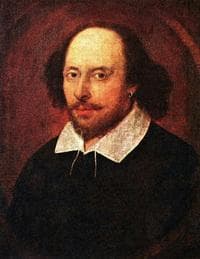
William Shakespeare was an English playwright, poet and actor. He is widely regarded as the greatest writer in the English language and the world's pre-eminent dramatist. He is often called England's national poet and the "Bard of Avon". His extant works, including collaborations, consist of some 39 plays, 154 sonnets, three long narrative poems, and a few other verses, some of uncertain authorship. His plays have been translated into every major living language and are performed more often than those of any other playwright. Shakespeare remains arguably the most influential writer in the English language, and his works continue to be studied and reinterpreted.







