“True!—nervous—very, very dreadfully nervous I had been and am; but why will you say that I am mad?”
— The opening lines of 'The Tell-Tale Heart,' where the narrator immediately tries to convince the reader of his sanity.

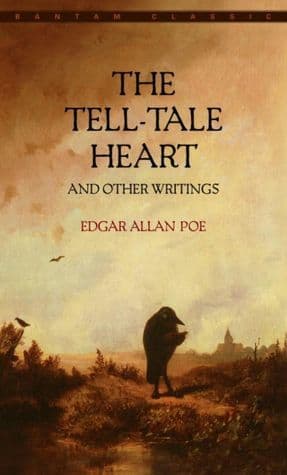
Edgar Allan Poe (1943)
Genre
Fantasy / Mystery
Reading Time
15-20 hours (assuming average reading speed for 448 pages)
Key Themes
See below
Sign in to track this book
Poe's collection delves into the chilling depths of the human mind, where madness, murder, and the supernatural intertwine in tales like 'The Tell-Tale Heart' and poems such as 'The Raven'.
The unnamed narrator, a meticulous and seemingly sane individual, denies his madness while recounting how he murdered an old man with whom he lived. His motive is not greed or passion, but an irrational hatred for the old man's pale blue, film-covered 'vulture eye.' Each night, for seven nights, the narrator stealthily enters the old man's room, shining a single ray of light from a lantern onto the eye, only to find it closed. He boasts of his cunning and caution, taking an hour to slowly open the door, ensuring the old man remains undisturbed. This ritualistic approach shows his distorted idea of sanity and control, building tension toward the act.
On the eighth night, the old man awakens and cries out. The narrator remains still for a long hour in the darkness, listening to the old man's terrified heartbeat. When he finally shines the light, the 'vulture eye' is open. Overwhelmed by the sight and the increasingly loud beat of the old man's heart, which he perceives as a drum driving him to fury, the narrator springs into the room, pulls the heavy bed over the old man, suffocating him. He then dismembers the body in the bathtub, carefully placing the remains under the floorboards. Convinced he has committed the perfect murder, he cleans up every trace of blood and confidently awaits the morning.
At four in the morning, three police officers arrive. A neighbor heard a shriek. The narrator, calm and self-assured, invites them in, explaining that the shriek was his own in a dream and that the old man is away in the country. He confidently shows them around the house, even bringing chairs into the old man's room for a chat. However, as they converse, the narrator begins to hear a low, dull, quick sound – the beating of the old man's heart, growing louder in his ears. Convinced the officers also hear it and are mocking him, he can no longer bear the torment and screams his confession, revealing the body hidden beneath the floorboards.
In a locked fourth-story apartment in the Rue Morgue, Paris, Madame L'Espanaye and her daughter, Mademoiselle Camille, are found brutally murdered. Madame L'Espanaye's throat is cut so deeply her head is nearly severed, and her body is found in the courtyard below, thrown from the window. Camille's body is stuffed head-first into a chimney. The apartment is locked from the inside, and witnesses heard two voices arguing, one French and one speaking an unknown language. The police are bewildered by the sheer brutality and the seemingly impossible circumstances of the crime. There is no clear entry or exit for the killer, and no apparent motive or robbery.
C. Auguste Dupin, an eccentric detective, and his companion (the narrator) become interested in the Rue Morgue murders. Dupin, known for his observation and reasoning, criticizes the police's conventional methods and begins his own investigation. He examines newspaper reports, witness testimonies, and the crime scene layout, focusing on small details the authorities missed. Dupin dismisses common assumptions and uses logical deduction to reconstruct the events. He considers possibilities beyond human capabilities, particularly regarding the impossible escape route and the nature of the 'foreign' voice.
Through his analysis, Dupin concludes that the murderer could not have been human. He deduces that the 'unknown' language was unintelligible sounds, and the strength and agility required for the murders and escape point to an animal. He publishes an advertisement in the newspaper, knowing the owner of such an animal would likely recognize the description. An old sailor appears, confessing that his escaped orangutan, having observed him shaving, mimicked the act with a razor, leading to the horrific murders. The orangutan had escaped through a spring-loaded window and then fled, leaving the sailor to discover the aftermath. Dupin's logic triumphs, exposing the truth behind the crime.
The narrator is summoned to the desolate, decaying House of Usher by his childhood friend, Roderick Usher, who suffers from a severe nervous ailment. The house itself seems to embody Roderick's illness, with a fissure running down its facade and an oppressive, melancholic atmosphere. Roderick is hypersensitive to light, sound, and smell, believing the house possesses a malevolent influence. His twin sister, Madeline, also suffers from a mysterious cataleptic illness, growing weaker. The narrator tries to comfort and distract Roderick, but the pervasive gloom and impending doom weigh heavily on him, reflecting Roderick's deteriorating mental and physical state.
Madeline eventually succumbs to her illness, or so it seems. Roderick, fearful of her body being exhumed for scientific study, decides to entomb her temporarily in a vault within the house. The narrator assists him, noting Madeline's rosy cheeks and lingering smile, which unnerves him. Days later, a storm rages, and Roderick becomes agitated, convinced he hears Madeline. The narrator reads to him from a medieval romance, but the sounds described in the story seem to echo within the house. Finally, Madeline, gaunt and bloodied, appears at the door, having escaped her premature burial. She collapses onto Roderick, dragging him down with her in their final embrace. The narrator flees in terror as the House of Usher cracks along its fissure and collapses into the tarn.
The unnamed narrator, condemned by the Spanish Inquisition, awakes in absolute darkness, overwhelmed by dread. He fears being buried alive and attempts to explore his cell by pacing, only to discover a deep pit in the center. He narrowly avoids falling into it. Later, he is drugged and awakens to find himself bound to a wooden frame, watching a massive, razor-sharp pendulum slowly descending from the ceiling, swinging directly towards his chest. The psychological torture of the slow, inevitable approach of death, combined with sensory deprivation and the unknown dangers of the pit, pushes him to the brink of madness. He watches the blade move closer with each swing.
Just as the pendulum is about to reach his chest, the narrator devises a desperate plan. He smears meat given to him by his captors onto the ropes binding him, attracting hordes of rats that chew through the restraints, freeing him just moments before the blade would have struck. However, his torment is far from over. The walls of his cell begin to glow red-hot and slowly move inward, threatening to push him into the pit. The narrator is forced to the very edge, facing certain death. In his final moments of despair, he hears trumpets and voices, and the walls recede. A French general, Lasalle, has seized the prison, and the narrator is rescued at the last possible second from the Inquisition.
Late one bleak December night, a weary scholar sits in his chamber, trying to distract himself from the memory of his lost love, Lenore, by reading ancient lore. He hears a mysterious tapping at his door, and upon opening it, finds only darkness. He then hears the tapping at his window and, opening it, a stately raven flies in and perches upon a bust of Pallas above his door. Amused by the bird's solemn demeanor, the scholar asks its name. To his astonishment, the Raven replies, 'Nevermore.' This single, repeated word becomes a haunting refrain, deepening the scholar's despair as he presses the bird for answers about Lenore. Each query is met with the same crushing response.
The scholar, initially intrigued, soon grows tormented by the raven's unvarying response. He interprets 'Nevermore' as a definitive answer to his increasingly desperate questions: will he ever find solace? Will he ever see Lenore again, even in the afterlife? The raven's presence and its monotonous utterance intensify his grief, transforming it from a melancholic remembrance into an unbearable, eternal anguish. He realizes the bird is not merely a bird but a symbol of his inescapable sorrow, a constant reminder that his soul will never again be lifted from the shadow of Lenore's memory. The raven remains perched, its shadow a permanent fixture, signifying the scholar's lasting despair.
Montresor, a nobleman, recounts how he took revenge upon Fortunato, a proud and respected wine connoisseur, who had allegedly insulted him numerous times. Montresor meticulously plans his revenge, ensuring Fortunato's destruction while avoiding any personal risk. During the carnival season, when Fortunato is intoxicated and clad in a jester's costume, Montresor encounters him and tempts him with the promise of a rare Amontillado sherry, supposedly stored in his family catacombs. Fortunato, eager to display his expertise and taste the wine, follows Montresor into the damp, dark vaults, despite a lingering cough and the increasingly eerie atmosphere. He is unaware of Montresor's sinister intentions.
As they descend deeper into the catacombs, passing by the skeletal remains of Montresor's ancestors, Montresor repeatedly offers Fortunato more wine, further intoxicating him. They reach a niche where Montresor claims the Amontillado is stored. Fortunato, still unsuspecting, steps inside. Montresor quickly chains him to the wall. As Fortunato begins to realize the gravity of his situation, Montresor calmly begins to brick up the opening of the niche, sealing Fortunato inside. Fortunato's pleas and screams gradually diminish as the wall rises, culminating in a final, chilling jingle of his bells. Montresor completes his work, sealing Fortunato's tomb, leaving him to die in the darkness, unavenged for fifty years.
The narrator, a man who once loved animals, particularly his black cat, Pluto, recounts his gradual decline into alcoholism and depravity. His once gentle nature gives way to irritability and violence. One night, in a drunken rage, he seizes Pluto, who has bitten him, and cuts out one of the cat's eyes. Overcome by a perverse sense of remorse, he later hangs Pluto from a tree, fully aware of his act. Soon after, his house mysteriously burns down, leading him to believe it is divine retribution for his cruelty. This event marks a turning point, intensifying his guilt and foreshadowing further tragic acts fueled by his addiction and self-loathing.
The Protagonist/Antagonist
Begins as a seemingly rational individual planning a 'perfect' crime, but descends into self-confessed madness due to an overwhelming auditory hallucination of the victim's heartbeat.
The Protagonist
Remains a consistently brilliant and logical mind, demonstrating his superior intellect by repeatedly solving cases that baffle professional authorities.
The Protagonist
Begins as a frail, melancholic recluse, gradually succumbing to his mental and physical ailments, ultimately consumed by fear and collapsing with his sister and the house itself.
The Supporting
Progressively weakens and appears to die, only to return from her premature burial as a terrifying, vengeful figure, directly causing Roderick's death.
The Protagonist
Undergoes extreme physical and psychological torture, but consistently displays ingenuity and a will to survive until miraculously rescued.
The Protagonist
Starts as a melancholy scholar grieving for Lenore, but his encounter with the raven drives him to a state of absolute, eternal despair.
The Antagonist/Protagonist
Remains consistently cold, calculating, and unrepentant, successfully executing his revenge and living without consequence for fifty years.
The Supporting
Begins as a respected, proud connoisseur, but his vanity and trusting nature lead him to his ironic, horrifying death at the hands of Montresor.
The Protagonist/Antagonist
Transforms from a loving animal owner into a violent alcoholic, committing heinous acts against animals and humans, eventually leading to his own capture and impending death.
Poe often explores how an individual's psychological state, especially guilt, can appear in terrifying ways, often leading to their downfall. In 'The Tell-Tale Heart,' the narrator's guilt over the murder manifests as an auditory hallucination of the victim's beating heart, driving him to confess. Similarly, in 'The Black Cat,' the narrator's initial guilt after mutilating Pluto gives way to a deeper depravity fueled by alcohol, eventually leading to murder and his own capture. The characters' attempts to deny or suppress their guilt only amplify its destructive power, proving inescapable.
“I heard all things in the heaven and in the earth. I heard many things in hell. How, then, am I mad?”
Many of Poe's characters are on the brink of sanity. Their minds are susceptible to obsession, fear, and irrationality. Roderick Usher's hypersensitivity and belief in the sentience of his decaying house in 'The Fall of the House of Usher' show a mind succumbing to its own morbid imaginings. The scholar in 'The Raven' is driven to despair by a bird's single word, reflecting his own fragile mental state. Poe suggests that the human mind, when pushed to its limits by grief, isolation, or inherited predispositions, can be its own worst tormentor. This blurs the lines between reality and delusion.
“I had myself been an eye-witness of the fearful influence of the utterly dreary and grim aspect of the old mansion upon the spirits of my friend.”
The fear of death, particularly premature burial, is a recurring and terrifying idea in Poe's works. In 'The Fall of the House of Usher,' Madeline's apparent death and subsequent entombment, only for her to return from the grave, is the horrifying climax. This theme taps into a primal human fear of helplessness and being trapped. In 'The Pit and the Pendulum,' the narrator's initial fear of being buried alive is quickly replaced by the equally terrifying, slow descent of the pendulum, a prolonged anticipation of death. Poe uses these scenarios to amplify terror and explore the psychological impact of impending doom.
“I scarcely ventured to breathe, fearing lest I should disturb the slumber of the entombed in their eternal slumber.”
The careful planning and execution of revenge are central to stories like 'The Cask of Amontillado.' Montresor's cold, calculated plot to entomb Fortunato for an unspecified 'insult' highlights the dark side of human nature when driven by a desire for vengeance. Conversely, 'The Black Cat' can be seen as a twisted form of retribution, where the narrator believes the burning of his house is divine punishment for his cruelty to Pluto. Poe explores both the act of revenge and the idea of karmic retribution, often with ironic and chilling consequences for the characters involved.
“I must not only punish but punish with impunity. A wrong is unredressed when retribution overtakes its redresser.”
Poe creates suspense and horror by hinting at unseen forces or unknown origins. In 'The Murders in the Rue Morgue,' the bizarre nature of the crime, the impossible entry/exit, and the 'unknown' voice initially baffle the police, creating an aura of horror before Dupin reveals the logical, albeit shocking, truth. Similarly, the 'vulture eye' in 'The Tell-Tale Heart' is an unseen, yet deeply felt, source of terror for the narrator. This theme plays on human fear of what cannot be easily explained or understood, allowing the imagination to conjure the most terrifying possibilities.
“There are points of a great difficulty, which no data, however minute, can enable us to fathom.”
A narrator whose credibility is compromised, often due to madness, obsession, or malicious intent.
Poe frequently employs unreliable narrators to heighten suspense and psychological horror. In 'The Tell-Tale Heart,' the narrator insists on his sanity while recounting his meticulous murder, forcing the reader to question his perspective. Montresor in 'The Cask of Amontillado' calmly details his revenge without remorse, presenting himself as justified. This device blurs the line between truth and delusion, drawing the reader into the disturbed mind of the character and making the horror more internal and subjective.
Hints or clues about future events, often creating an atmosphere of dread.
Poe expertly uses foreshadowing to build tension and an ominous mood. In 'The Fall of the House of Usher,' the fissure in the house's façade foreshadows its eventual collapse, mirroring Roderick's mental state. In 'The Black Cat,' the narrator's initial act of violence against Pluto hints at his further descent into depravity and the escalating horrors to come. These subtle clues create a sense of inevitability and dread, preparing the reader for the tragic or horrifying events without explicitly revealing them.
The use of decaying, isolated, and oppressive environments to enhance mood and themes.
Poe's stories are often set in desolate, decaying, and isolated locations that reflect the characters' psychological states. The crumbling House of Usher, with its oppressive atmosphere and sentient presence, mirrors Roderick's deteriorating mind. The dark, labyrinthine catacombs in 'The Cask of Amontillado' provide a claustrophobic and macabre backdrop for Montresor's revenge. These settings are not just backdrops but active participants in the narrative, contributing to the pervasive sense of dread, decay, and psychological torment that defines Poe's Gothic style.
The use of objects, characters, or actions to represent abstract ideas or deeper meanings.
Poe imbues many elements in his stories with symbolic meaning. The 'vulture eye' in 'The Tell-Tale Heart' symbolizes the narrator's irrational fear and obsession. The Raven, in the poem of the same name, symbolizes the narrator's inescapable grief and eternal despair. The House of Usher symbolizes the decaying family lineage and Roderick's own fragmented psyche. These symbols add layers of meaning to the narratives, allowing Poe to explore complex psychological and philosophical themes without explicit exposition, enriching the reader's understanding of the underlying dread.
A method of logical, deductive reasoning used to solve complex mysteries.
Introduced through the character of C. Auguste Dupin in 'The Murders in the Rue Morgue,' ratiocination is a key plot device for Poe's detective fiction. It involves the meticulous analysis of seemingly insignificant details, challenging conventional police methods. Dupin uses his superior intellect to connect disparate facts and deduce the truth from complex, baffling scenarios. This device not only provides a framework for solving mysteries but also highlights the power of the human mind to overcome chaos through logic and observation, distinguishing Dupin's approach from mere intuition.
“True!—nervous—very, very dreadfully nervous I had been and am; but why will you say that I am mad?”
— The opening lines of 'The Tell-Tale Heart,' where the narrator immediately tries to convince the reader of his sanity.
“It is the eye of a vulture—a pale blue eye, with a film over it. Whenever it fell upon me, my blood ran cold; and so by degrees—very gradually—I made up my mind to take the life of the old man, and thus rid myself of the eye forever.”
— The narrator of 'The Tell-Tale Heart' explaining his irrational motivation for murder.
“I heard all things in the heaven and in the earth. I heard many things in hell. How, then, am I mad? Hearken! and observe how healthily—how calmly I can tell you the whole story.”
— From 'The Tell-Tale Heart,' the narrator asserting his heightened senses as proof against madness, ironically detailing his own descent.
“The boundaries which divide Life and Death are at best shadowy and vague. Who shall say where the one ends, and where the other begins?”
— From 'The Premature Burial,' a reflection on the uncertainty of death and the horror of being buried alive.
“All that we see or seem / Is but a dream within a dream.”
— The concluding lines of the poem 'A Dream Within a Dream,' expressing existential doubt.
“I was sick—sick unto death with that long agony; and when they at length unchained me, and I was permitted to sit, I felt that my senses were leaving me. The sentence—the dread sentence of death—was the last of distinct accentuation which reached my ears.”
— The opening of 'The Pit and the Pendulum,' describing the narrator's state after his condemnation by the Inquisition.
“There are chords in the hearts of the most reckless which cannot be touched without emotion.”
— From 'The Masque of the Red Death,' speaking about the inherent human fear of death, even among the carefree.
“From childhood's hour I have not been / As others were—I have not seen / As others saw—I could not bring / My passions from a common spring.”
— The opening lines of the poem 'Alone,' reflecting a sense of isolation and difference from others.
“The Raven, sitting on the placid bust, spoke only / That one word, as if his soul in that one word he did outpour.”
— From 'The Raven,' describing the bird's repetitive, haunting utterance of 'Nevermore.'
“Deep into that darkness peering, long I stood there wondering, fearing, / Doubting, dreaming dreams no mortal ever dared to dream before.”
— From 'The Raven,' the narrator's state of mind as he confronts the mysterious knocking at his chamber door.
“I became insane, with long intervals of horrible sanity.”
— From 'Eleonora,' a character reflecting on their mental state after a traumatic event.
“I hold that a long poem does not exist. I maintain that the phrase, 'a long poem,' is simply a contradiction in terms.”
— From 'The Philosophy of Composition,' Poe's critical theory on the ideal length and impact of poetry.
“The best mode of proof is the most direct. The best mode of disproof is the most direct.”
— From 'The Murders in the Rue Morgue,' Dupin's logical approach to solving mysteries.
“There is no exquisite beauty without some strangeness in the proportion.”
— From 'Ligeia,' a reflection on the unique and unconventional nature of true beauty.
“With me, poetry has not been a purpose, but a passion.”
— From a letter by Poe, reflecting his personal connection to his craft.
Ready to see how well you understood this book? Take our interactive quiz with 10 questions.
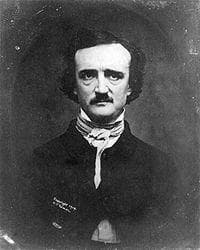
Edgar Allan Poe was an American writer, poet, editor, and literary critic who is best known for his poetry and short stories, particularly his tales of mystery and the macabre. He is widely regarded as a central figure of Romanticism in the United States, and of American literature. He was one of the country's earliest practitioners of the short story, and is considered the inventor of the detective fiction genre, as well as a significant contributor to the emerging genre of science fiction. He is the first well-known American writer to earn a living through writing alone, resulting in a financially difficult life and career.







