“Every morning, I'd bring her a cup of tea, and she'd tell me stories.”
— Greta recalling her grandmother's routine and storytelling.

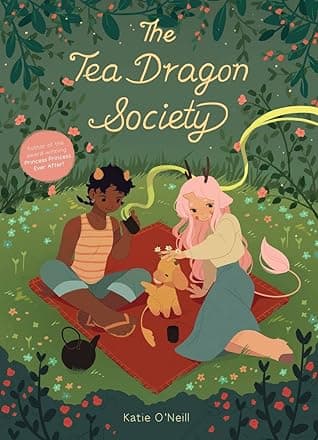
Katie O'Neill (2017)
Genre
Fantasy / Children's
Reading Time
30 min
Key Themes
See below
Sign in to track this book
A blacksmith apprentice finds a lost tea dragon, uncovering a gentle world of ancient caretaking, quiet mentorship, and the bonds made over shared cups of magical tea.
Greta, a young blacksmith apprentice, walks through the marketplace and sees a small, leafy creature struggling on the ground. It is a small Jasmine tea dragon. Knowing they are domestic creatures, Greta carefully picks it up. After asking around, she is directed to a tea shop owned by Hesekiel and Erik, known for caring for tea dragons. She brings the lost dragon to their shop, where Hesekiel warmly greets her, recognizing the dragon as one of theirs. This act of kindness sparks Greta's interest in these creatures and their caretakers.
Hesekiel and Erik explain tea dragons to Greta. They are small, gentle creatures that grow tea leaves and flowers from their horns, tails, and bodies, which can be brewed into tea. Each dragon type makes a different kind of tea, and they bond deeply with their caretakers, reflecting their experiences and memories in the tea they produce. Hesekiel shares that the Jasmine dragon Greta found belongs to their shy ward, Minette. Greta is fascinated by this ancient tradition and the deep connection between the dragons and their human companions, a world new to her.
Greta returns to the tea shop and meets Minette, a quiet young woman who is very shy. Minette is happy to have her Jasmine dragon back and shows Greta how she cares for it. Through this, Greta learns that Minette has a deep connection with her tea dragon, which reflects Minette's gentle nature. Minette's shyness makes conversation difficult at first, but Greta's genuine interest in the tea dragons slowly helps her open up. Hesekiel and Erik encourage Greta to learn more about the craft.
Intrigued, Greta starts visiting the tea shop often. Hesekiel and Erik patiently teach her the basics of tea dragon care, explaining how to feed them, groom their leaves, and understand their personalities. They say that caring for tea dragons is a dying art, a tradition few young people want to learn. Greta, with her practical blacksmithing skills, finds joy in the careful work and begins to appreciate the calm aspect of the craft. She also sees the strong bond between Hesekiel and Erik and their own powerful tea dragons.
During one of Greta's visits, Erik shares his past. He was once a dragon hunter, but after an accident that left him injured, he met Hesekiel, who introduced him to the gentle world of tea dragons. Erik explains how caring for tea dragons healed him, both physically and emotionally, and gave him a new purpose. He shows the deep bond he shares with his own tea dragon, a large, protective creature that reflects his strength and loyalty. This shows Greta that even those with different pasts can find comfort and meaning in tea dragon care.
As Greta and Minette spend more time together, Minette slowly opens up. She reveals that she lost her memory due to trauma, and her Jasmine dragon, which she found after her accident, is a vital link to her forgotten past. The tea it produces sometimes gives her brief memories. This shared vulnerability deepens their friendship. Greta sees how the tea dragon is not just a pet but a companion and a key to Minette's identity, making tea dragon care even more meaningful in Greta's eyes.
Greta finds herself drawn to the tea dragons and Minette's quiet companionship. They spend hours together, tending to the dragons, sharing stories, and simply enjoying each other's presence. Greta discovers a sense of peace and purpose in this new pursuit, which contrasts with the physical demands of blacksmithing. Minette, in turn, becomes more comfortable and expressive around Greta, finding a kindred spirit who understands her connection to the dragons. Their friendship grows, nurtured by their shared love for these magical creatures.
Under Hesekiel and Erik's guidance, Greta participates in her first tea harvest from the dragons. She learns the delicate process of plucking the leaves and flowers and preparing them for brewing. The experience is magical, as she sees the bright colors and smells the fresh tea. Later, she brews her own cup, tasting the unique flavor and feeling the subtle energy from the dragon. This hands-on experience strengthens her commitment to learning the full art of tea dragon care and deepens her appreciation for the craft.
During one of their tea-making sessions, Minette sips the tea from her Jasmine dragon, and a powerful memory returns. It is a clear memory of her finding the Jasmine dragon in a field of flowers, a moment of comfort after her traumatic memory loss. The memory is bittersweet but also brings clarity and peace. Greta is there to witness this emotional breakthrough, which highlights the deep connection between Minette and her tea dragon, and confirms the healing power of the creatures and their tea.
Greta, now deeply involved in the art, starts to include tea dragon care in her daily routine. While still an apprentice blacksmith, she spends significant time learning and practicing the craft. Hesekiel and Erik are proud of her progress and her genuine passion, seeing her as a potential inheritor of their fading tradition. Greta feels a sense of belonging and purpose, having discovered a new part of herself through the gentle world of tea dragons. She realizes this is not just a hobby, but a meaningful way of life.
As the seasons pass, the bonds between Greta, Minette, Hesekiel, and Erik grow stronger. They become more than just mentors and students; they form a loving, unconventional family. They share meals, stories, and the quiet joy of caring for their tea dragons. Greta finds a sense of belonging she did not realize she was missing, and Minette continues to grow, becoming more confident and open. The tea shop becomes a haven, not just for tea dragons, but for the people who care for them, creating a sense of community and shared purpose.
Greta fully embraces her role as a tea dragon caretaker. She understands the importance of preserving this gentle art and is committed to continuing the tradition alongside Minette, Hesekiel, and Erik. The book ends with a sense of hopeful continuity, showing Greta and Minette tending to their dragons, illustrating that the ancient practice of tea dragon care, though once fading, has found new life through their dedication and passion. The Tea Dragon Society continues to thrive, a story of friendship, compassion, and the quiet magic of these creatures.
The Protagonist
Greta transforms from a focused blacksmith apprentice to a passionate tea dragon caretaker, finding a new sense of purpose and a found family.
The Supporting
Minette gradually overcomes her shyness and processes her memory loss, finding comfort and strength in her friendships and her tea dragon.
The Supporting
Hesekiel continues his role as a nurturing mentor, successfully passing on the tea dragon tradition to a new generation.
The Supporting
Erik continues to find peace and purpose in his life as a tea dragon caretaker, having fully embraced his new path.
The Mentioned
The Jasmine dragon continues to be a source of comfort and memory for Minette, deepening their bond.
The Mentioned
The Chamomile dragon continues to embody peace and wisdom within the tea shop.
The Mentioned
The Roobios dragon continues to be a loyal and protective companion to Erik.
The story shows how individuals, initially unconnected, can form deep, supportive bonds, creating a 'found family.' Greta, a blacksmith's apprentice, finds a sense of belonging with Hesekiel, Erik, and Minette, who welcome her into their lives and share their unique tradition. Minette also finds comfort and a home with her guardians and eventually with Greta. The tea shop becomes a haven, a place where everyone is accepted and cared for. Family is defined not just by blood but by shared love and purpose. This is clear in the quiet, domestic scenes where they share meals and tend to the dragons together.
““Tea dragons are a lot like people. They have their own personalities, and they grow and change over time.””
Caring for the tea dragons is a source of healing and purpose for several characters. Erik, a former dragon hunter, recovers emotionally and physically through the gentle art of tea dragon care, which changes his life's direction. Minette, with memory loss, finds comfort and a vital link to her past through her Jasmine dragon, whose tea sometimes triggers lost memories. Greta, initially focused on a demanding trade, discovers a quieter, more reflective joy and purpose in nurturing these creatures. Gentle, consistent care helps the caretakers grow, not just the dragons.
““They helped me heal. Gave me a new purpose.””
The story highlights the importance of preserving ancient, meaningful traditions in a world that might otherwise forget them. Hesekiel and Erik are dedicated to the 'dying art' of tea dragon care, regretting that few young people are interested. Greta's genuine curiosity and dedication give new life to this craft. The story emphasizes the value of hands-on skills, patience, and knowledge passed down through generations. By embracing this tradition, Greta and Minette ensure that the unique relationship between humans and tea dragons will continue, preventing a beautiful cultural practice from disappearing.
““It’s a dying art, you know. Not many young people are interested in learning to care for them.””
Memory and identity are central to Minette's story and the broader understanding of tea dragons. Minette's amnesia makes her Jasmine dragon a crucial link to her past, as its tea sometimes brings back lost memories. This connection suggests that our identities are deeply tied to our experiences and relationships, and that even forgotten memories can leave a mark. The tea dragons themselves absorb the memories and experiences of their caretakers, literally embodying parts of their human companions' lives, making them living records of personal history and identity.
““My tea dragon… sometimes when I drink its tea, I remember things.””
Magical creatures whose leaves produce tea reflecting their caretakers' memories.
The tea dragons are the central magical element and the primary plot device. They are not merely pets but sentient companions whose bodies produce tea leaves and flowers. Crucially, the tea they yield is infused with the memories and experiences of their caretakers, making them living repositories of personal history. This magical property allows for plot points such as Minette's tea triggering her lost memories and provides a unique metaphor for the bond between humans and nature, as well as the passage of time and shared experiences.
A narrative structure that facilitates learning and character development.
Greta's journey from a blacksmith apprentice to a tea dragon caretaker follows a classic apprenticeship narrative. This device allows the reader to learn about the world of tea dragons alongside Greta, as Hesekiel and Erik patiently teach her the craft. It provides a clear structure for her character arc, showing her growth in skill and understanding, and her immersion into a new community. It also highlights the theme of preserving tradition by showcasing the process of knowledge transfer.
A character condition that adds mystery and emotional depth.
Minette's amnesia serves as a significant plot device, driving much of her personal narrative and deepening the emotional stakes. It creates a sense of vulnerability for her character and provides a compelling reason for her deep connection to her Jasmine tea dragon, as the dragon's tea is her only link to her past. This device allows for moments of introspection and discovery, highlighting the themes of memory, identity, and the healing power of the tea dragons.
“Every morning, I'd bring her a cup of tea, and she'd tell me stories.”
— Greta recalling her grandmother's routine and storytelling.
“Taking care of them is a lot of work, but it's very rewarding.”
— Erik explaining the effort and joy of raising tea dragons.
“You can learn a lot from a tea dragon.”
— Greta observing the unique personalities and lessons from tea dragons.
“Different tea dragons have different personalities, just like people.”
— Greta making an observation about the diversity among tea dragons.
“Sometimes you just need a quiet moment with a cup of tea.”
— A general sentiment reflecting the calming nature of tea.
“It's not about being perfect, it's about being patient.”
— Likely advice given regarding the care of tea dragons or personal growth.
“They grow with you, and their leaves reflect your shared memories.”
— Hesekiel explaining how tea dragons' leaves change based on their bond with their owner.
“Some things are worth waiting for.”
— A general statement about the value of patience and anticipation.
“It's always nice to have someone to share a cup of tea with.”
— A reflection on the joy of companionship.
“Even the smallest creatures have their own unique stories.”
— A general observation about the richness of all life.
“You can't rush nature, or a good cup of tea.”
— A humorous but wise statement about the importance of allowing things to develop naturally.
“Memories can be sweet, or a little bitter, but they're all part of who we are.”
— A reflection on the complexity and importance of past experiences.
“The best kind of magic is the magic you make yourself.”
— A statement encouraging creativity and personal endeavor.
“Finding joy in the small things, that's the secret.”
— A piece of wisdom about appreciating everyday moments.
Ready to see how well you understood this book? Take our interactive quiz with 10 questions.

Biography coming soon.







