“Children are apt to internalize the lessons of the stories they are told, and that can be a powerful force for good, or ill.”
— Dumbledore's commentary on 'The Wizard and the Hopping Pot'.

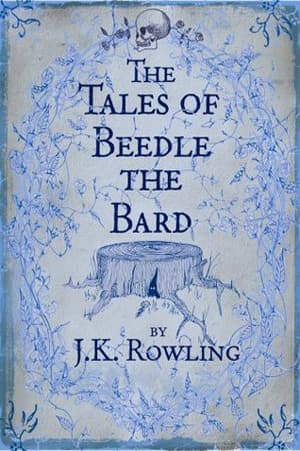
J.K. Rowling (2008)
Genre
Fantasy / Children's / Young Adult
Reading Time
90 min
Key Themes
See below
Sign in to track this book
Five wizarding fairy tales, annotated by Albus Dumbledore, bridge the magical world with Muggle understanding through witty and insightful commentary.
A kind old wizard, known for his charity, owns a magical hopping pot that activates when people nearby need help. When he dies, his son, a reclusive wizard who dislikes Muggles, inherits the pot. The son refuses to help villagers who come to his door with problems. Each time he refuses, the pot shows the villagers' symptoms—first a foot, then boils, a weeping eye, and later an earwax-filled ear and groaning stomach. The pot's worsening magical ailments and the son's inability to stop its hopping and groaning eventually force him to use his magic to cure the villagers. As he helps them, the pot expels a slipper, becoming quiet.
Once a year, a hidden Fountain of Fair Fortune offers one person good fortune. Three witches—Asha, ill; Altheda, robbed of magic; and Amata, heartbroken—decide to make the dangerous journey together. Sir Luckless, a Muggle knight without magic, joins them. They overcome obstacles: Asha uses herbology to cross a river, Altheda outsmarts a beast, and Amata heals Sir Luckless after a rock hits him. At the fountain, Sir Luckless is chosen to bathe. He proposes to Amata, who realizes she loves him. Asha finds her illness gone, and Altheda discovers her magic returned. They realize their 'fortune' came from helping each other, not the fountain.
A handsome, rich Warlock, afraid of love's vulnerability, uses Dark Magic to avoid it. He removes his heart, putting it in a crystal casket hidden in his dungeon. He boasts of his invulnerability. One day, he overhears servants talking about his lack of a wife, which hurts his pride. He decides to find a beautiful, rich witch to marry, believing he can fake affection. He courts a woman and, to impress her, brings her to his dungeon to show her his heart. She is horrified. To prove he has a 'heart,' he forces it back into his chest, but it is hairy and monstrous. He tries to embrace the witch, but his monstrous heart demands a truly beating one, and he rips hers out, then dies with his own hairy heart still thumping in his hand.
A foolish King, wanting to be the only wizard in his kingdom, bans all magic. He starts an 'Academy of Magic' to learn and teach magic, though he has none. He demands a tutor and a charlatan approaches him, claiming to be a powerful wizard. Babbitty Rabbitty, a clever old witch, lives nearby and secretly uses magic. When the charlatan fails to produce magic, Babbitty secretly helps him by casting spells from a nearby tree stump. The King, believing he is doing magic, is happy. However, when the charlatan demands Babbitty be punished for exposing his fraud, she turns into a rabbit. The charlatan, unable to bring her back, is revealed as a fraud and imprisoned. The King, ashamed, ends the anti-magic law and builds a statue of Babbitty on the stump, which cackles when charlatans pass.
Three wizard brothers—Antioch, Cadmus, and Ignotus Peverell—traveling at twilight, come to a dangerous river. They conjure a bridge, angering Death, who feels cheated. Death pretends to congratulate them and offers each a reward. Antioch, the eldest, asks for an unbeatable wand, getting the Elder Wand. Cadmus, the middle brother, asks for power to recall the dead, getting the Resurrection Stone. Ignotus, the youngest and wisest, asks for a way to hide from Death, getting the Cloak of Invisibility. Antioch, seeking power, is murdered for the Elder Wand. Cadmus, consumed by grief, uses the Stone to bring back his dead love, but she is cold; he kills himself to join her. Ignotus lives a long life, hidden from Death until he willingly removes the Cloak in old age, greeting Death as a friend.
Albus Dumbledore's commentary explains the context and morals of 'The Wizard and the Hopping Pot.' He clarifies that the old wizard's will set up the pot's magic to teach his son empathy. Dumbledore points out the son's initial prejudice against Muggles, a common theme in wizard history, and how the pot's symptoms force him to help others. He stresses that true magic, here, means compassion and community responsibility, not just spells. Dumbledore also thinks about the historical persecution of Muggles by wizards and the importance of using magic for good, a lesson the young wizard learns from the pot's magical prodding.
Dumbledore's notes on 'The Fountain of Fair Fortune' discuss destiny versus self-determination. He argues that the characters' good fortune came from their own actions, courage, and support during their journey, not the fountain itself. He notes that each character's 'blessing' at the end was a direct result of their efforts: Asha's healing came from her herbology, Altheda's magic returned after she showed wit, and Amata's love for Sir Luckless grew from their shared experience. Dumbledore questions the wizarding world's focus on external sources of luck and power, favoring strength found within oneself and in genuine human connection.
In his commentary on 'The Warlock's Hairy Heart,' Dumbledore gives a warning about denying human emotion, especially love. He explains that the Warlock's choice to remove his heart was extreme Dark Magic, leading to a horrifying, self-destructive end. Dumbledore emphasizes that real power comes not from emotional detachment but from the courage to experience all human feelings, including vulnerability. He connects the Warlock's fate to other historical figures who tried to conquer death or deny natural human experience, always with bad results. He also mentions the mistaken belief that love is a weakness, which he strongly rejects.
Dumbledore's notes on 'Babbitty Rabbitty and her Cackling Stump' offer insight into wizard politics and the historical persecution of magic. He compares the King's foolish laws against magic to real-world historical suppression of difference and knowledge. Dumbledore highlights Babbitty's cleverness and resilience against tyranny, and magic's inherent, untameable nature. He also discusses the charlatan's deception as a common theme, where those without real ability try to exploit power. The cackling stump symbolizes magic's lasting spirit and warns against those who try to control or extinguish it. He also briefly mentions Muggle witch hunts.
Dumbledore's commentary on 'The Tale of the Three Brothers' is important, as he confirms the existence of the Deathly Hallows—the Elder Wand, the Resurrection Stone, and the Cloak of Invisibility—and their true history. He explains that the story, while a warning, also holds a deep truth about accepting death. Dumbledore praises Ignotus Peverell's wisdom in seeking to evade Death rather than conquer it, contrasting his peaceful end with the tragic fates of Antioch and Cadmus, who gave in to greed and grief. He reflects on his own past desire to unite the Hallows and his eventual understanding that true mastery over death comes from accepting its inevitability.
The Supporting
His character serves as a moral compass and catalyst for his son's transformation, even after his death.
The Protagonist
Transforms from a selfish, prejudiced recluse into a compassionate and helpful member of his community.
The Supporting
Learns that her own abilities are her greatest fortune, leading to a cure for her illness.
The Supporting
Discovers her own inner strength and wit are the source of her magic, leading to its return.
The Supporting
Overcomes grief and discovers new love and happiness through shared experience and self-discovery.
The Supporting
Proves that kindness and courage are more valuable than magical ability, finding love and happiness.
The Antagonist/Protagonist
His arc is one of tragic self-destruction, from fearing love to becoming a monstrous embodiment of that fear.
The Protagonist
From a hidden practitioner of magic, she becomes a symbolic protector of magic against tyranny and deceit.
The Narrator/Commentator
As a commentator, he guides the reader's understanding, reflecting his own lifelong journey of wisdom and understanding.
The Protagonist
Lives a full life by wisely accepting the inevitability of death, achieving a peaceful end.
The Antagonist
Remains an omnipresent force, highlighting the futility of attempting to conquer mortality.
The book explores the idea that magic is about compassion, inner strength, and wisdom, not just spells and power. In 'The Wizard and the Hopping Pot,' the wizard's son learns that real magic means helping others. In 'The Fountain of Fair Fortune,' the characters find 'fortune' through their own efforts and mutual aid. Dumbledore's commentary often supports this, arguing that the deepest magic comes from the heart and one's choices.
“For the truth is that the Fountain of Fair Fortune bestowed no enchantment upon them. Each of them found their fortune by their own wits, their own hard work, and their own sheer good luck.”
This theme is most clear in 'The Tale of the Three Brothers,' where Antioch, Cadmus, and Ignotus Peverell's different fates show various ways of facing death. Antioch tries to conquer death, Cadmus tries to reverse it, and both end tragically. Ignotus, however, accepts death as part of life and greets it as a friend, leading to a peaceful end. Dumbledore's commentary openly discusses his own past struggles with this theme and his eventual understanding that accepting death is true mastery.
“The youngest brother, however, was a humble man, and asked for something that would enable him to go forth from that place without being followed by Death.”
The dangers of denying love are shown in 'The Warlock's Hairy Heart.' The Warlock's attempt to avoid emotional pain by removing his heart leads to a monstrous change and his death. This tale warns against emotional repression and fear of vulnerability. Dumbledore's commentary stresses that love is a strength, not a weakness, and that true humanity means embracing emotions.
“And the Warlock, who had believed himself invincible, fell upon the floor and died.”
Several tales touch on prejudice, especially between Muggles and wizards. In 'The Wizard and the Hopping Pot,' the son's initial dislike for Muggles is challenged, forcing him to show compassion. 'Babbitty Rabbitty and her Cackling Stump' shows the foolishness of a King who tries to suppress magic. Dumbledore's commentary often compares this to real-world intolerance and highlights the importance of understanding and empathy.
“The old wizard's son, however, was of a very different disposition. 'Let them come here for succour,' he sneered, 'and I shall slam the door in their faces!'”
This theme is seen in the tragic deaths of Antioch Peverell, murdered for the Elder Wand, and the Warlock with the hairy heart, whose pursuit of invulnerability causes his downfall. The King in 'Babbitty Rabbitty' also shows misuse of power through his tyrannical laws against magic. The stories collectively warn against unchecked power and selfish gain, contrasting it with using abilities for the common good.
“And he took the Elder Wand, a wand more powerful than any in existence, and boasted of its might, for he believed that with it, he was invincible.”
A magical, sentient pot that forces a wizard to feel the suffering of others.
The hopping pot serves as a magical catalyst for character development. It is enchanted to manifest the symptoms of human suffering, physically and audibly, when people in need are ignored. Its purpose is to teach the selfish wizard's son empathy. By making the wizard experience the discomfort he inflicts on others, the pot functions as a moral compass and a relentless teacher, forcing him to overcome his prejudice and engage with his community. It's an external manifestation of conscience.
A magical landmark believed to grant eternal good fortune, but which actually reveals inner strength.
The Fountain of Fair Fortune acts as a MacGuffin, a desired object that drives the plot and motivates the characters' journey. While initially believed to be the source of their happiness, the fountain ultimately proves to be a symbolic destination. The true 'fortune' is found through the characters' shared experiences, their individual strengths, and their mutual support during the perilous quest, highlighting that inner qualities are more valuable than external magical blessings. It subverts the traditional fairy tale trope of magical wishes.
Three legendary magical artifacts offered by Death, each with a specific power and a cautionary tale.
The Deathly Hallows – the Elder Wand, the Resurrection Stone, and the Cloak of Invisibility – are powerful magical objects that serve as central plot devices in 'The Tale of the Three Brothers.' Each Hallow represents a different temptation regarding death (conquest, reversal, evasion) and their acquisition leads to the distinct fates of the Peverell brothers. They are more than just magical items; they are symbolic representations of humanity's relationship with mortality, and their existence provides a crucial link to the wider Harry Potter narrative.
Meta-narrative notes providing context, moral lessons, and insights into the wizarding world.
Dumbledore's Commentary is a framing device that elevates simple fairy tales into deeper allegories. It provides an authoritative and beloved voice, offering historical context, explaining magical concepts, and drawing out the moral lessons of each story. This device allows for an exploration of themes beyond the immediate narrative, connecting the tales to broader philosophical ideas and the established lore of the Harry Potter universe. It also offers glimpses into Dumbledore's own character and past.
“Children are apt to internalize the lessons of the stories they are told, and that can be a powerful force for good, or ill.”
— Dumbledore's commentary on 'The Wizard and the Hopping Pot'.
“It is the mark of a truly good story that it can be enjoyed again and again, and still offer something new with each reading.”
— Dumbledore's general introduction to the collection.
“The greatest magic of all is that which we find within ourselves, the courage to face our fears, the kindness to help others, and the wisdom to learn from our mistakes.”
— A recurring theme, particularly evident in 'The Fountain of Fair Fortune'.
“Many a Muggle story has a moral that applies to witches and wizards too.”
— Dumbledore's commentary on 'Babbitty Rabbitty and her Cackling Stump'.
“What is important, in the end, is not how much gold you have, or how many spells you know, but the company you keep and the love you share.”
— A lesson from 'The Fountain of Fair Fortune'.
“The message of this story, as I understand it, is that we must always be wary of those who promise easy answers, for true wisdom is often found in the most difficult paths.”
— Dumbledore's commentary on 'The Warlock's Hairy Heart'.
“For those who are truly wise, the greatest treasures are not material possessions, but knowledge and understanding.”
— A general lesson reinforced throughout the collection.
“It is a curious thing, but often the most powerful magic is that which comes from a good heart.”
— Dumbledore's commentary on 'The Wizard and the Hopping Pot'.
“The desire to conquer death is a common human failing, and one that rarely brings happiness.”
— Dumbledore's commentary on 'The Tale of the Three Brothers'.
“True happiness is not something that can be found in a potion or a spell, but in the choices we make and the way we treat others.”
— A lesson from 'The Fountain of Fair Fortune'.
“Even the most powerful magic cannot mend a broken heart, only time and the love of others can do that.”
— A subtle underlying message, particularly in 'The Warlock's Hairy Heart'.
“The best stories are not just entertaining, but also teach us something valuable about ourselves and the world around us.”
— Dumbledore's overall sentiment about the fables.
“It is never too late to learn to be kind, even if you have spent your life being cruel.”
— A lesson from 'The Wizard and the Hopping Pot'.
Ready to see how well you understood this book? Take our interactive quiz with 10 questions.

Joanne Rowling, best known by her pen name J. K. Rowling, is a British author and philanthropist. She wrote Harry Potter, a seven-volume children's fantasy series published from 1997 to 2007. The series has sold over 600 million copies, been translated into 84 languages, and spawned a global media franchise including films and video games. The Casual Vacancy (2012) was her first novel for adults. She writes Cormoran Strike, an ongoing crime fiction series, under the alias Robert Galbraith.







