“They each put on their three best clothes for callers, and they kept on making their clothes too tight.”
— The kittens getting dressed up for company.

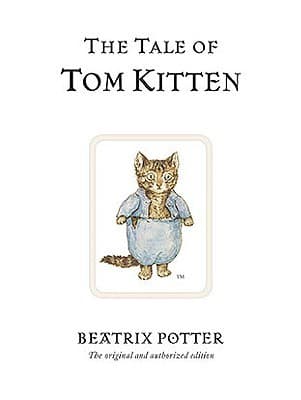
Beatrix Potter (1987)
Genre
Fantasy / Children's
Reading Time
10 min
Key Themes
See below
Sign in to track this book
Three mischievous kittens, dressed in their best, go on a garden adventure that turns into a delightful, muddy mess just before their mother's guests arrive.
Mrs. Tabitha Twitchit, a fussy old cat, is getting ready for a tea party. She has dressed her three kittens, Tom, Mittens, and Moppet, in their best clothes. Tom wears a blue coat with brass buttons, red pants, and a feathered hat. Mittens and Moppet are in clean aprons and bonnets. Mrs. Tabitha is very proud of how they look, thinking they seem smart and proper. However, she is also aware of their natural naughtiness and worries they might get dirty before her guests arrive. She sends them into the garden with strict orders to stay clean.
As soon as the kittens are outside, their natural energy takes over. Their fine clothes feel stiff and uncomfortable, making it hard to play. Tom Kitten, especially, finds his pants and hat too tight. They decide the garden wall, a high stone structure, is the perfect place for a game. They start to climb and tumble on the wall, completely forgetting their mother's warnings about staying clean. Their playing quickly makes their clothes messy and dirty.
While playing on the wall, Tom Kitten's red pants, which were already tight, begin to split and then fall off completely. He is left in his shirt. Mittens and Moppet, seeing Tom's problem, also start to lose their clothes. Their bonnets fall off, and their aprons come undone and get caught on the rough stone of the wall. The fine clothes are now scattered across the wall and the ground, dirty and torn, showing the kittens' wild play.
Just as the kittens have taken off all their bothersome clothes, three large, white puddle-ducks named Jemima, Rebeccah, and another duck waddle past. They find the pile of discarded kitten clothes. Thinking they are new additions to their own wardrobes, the ducks eagerly try them on. Jemima Puddle-duck puts on Tom Kitten's hat and coat, while Rebeccah and the other duck wear Mittens' and Moppet's bonnets and aprons. They look quite silly in the ill-fitting clothes.
Mrs. Tabitha Twitchit, hearing her guests approaching, calls for her kittens to come inside. To her horror, she finds them completely naked, having lost all their clothes to the puddle-ducks. They are dirty and messy. Mrs. Tabitha is horrified and deeply embarrassed by how they look. Her plans for a proper tea party are ruined by her children's naughtiness and the loss of their fine clothes. She scolds them severely for not obeying.
Just as Mrs. Tabitha is losing hope, her guests arrive: Mrs. Ribby and Mrs. Pussy-cat. To everyone's surprise, the three puddle-ducks waddle past the front door, still wearing the kittens' stolen clothes. Jemima Puddle-duck, in Tom Kitten's hat and coat, looks especially funny. The ducks, unaware of the trouble they've caused, seem to think they are dressed properly for the tea party and try to enter the house, causing more mess and embarrassment for Mrs. Tabitha.
Mortified by the sight of her kittens' clothes being worn by the puddle-ducks, Mrs. Tabitha Twitchit acts quickly. She rushes out, shooing and chasing the ducks, determined to get the clothes back. The ducks, surprised by the sudden chase, squawk and flap, eventually losing the ill-fitting clothes as they run away. Mrs. Tabitha manages to collect the clothes, but they are now even dirtier and more torn from the ducks' wear and the chase.
With the clothes found but ruined, Mrs. Tabitha Twitchit's patience runs out. She sends Tom, Mittens, and Moppet straight to bed, saying they are too naughty to be seen and will have no supper. She then returns to her guests, Mrs. Ribby and Mrs. Pussy-cat, and has to awkwardly explain the situation. The tea party continues, but Mrs. Tabitha is clearly flustered and embarrassed by the whole event, a direct result of her kittens' disobedience.
The next day, Mrs. Tabitha Twitchit makes new clothes for her kittens: plain, practical aprons for Mittens and Moppet, and a simple brown suit for Tom. She no longer trusts them with fancy clothes. She hopes that with plainer clothes, they might be less likely to cause trouble, or at least cause less damage. However, the narrator suggests that despite the new, simpler wardrobe, the kittens' natural naughtiness is unlikely to be fully cured. Mrs. Tabitha continues to watch her lively offspring.
The story ends by showing that the three puddle-ducks, always resourceful, are later seen near the pond. They have gathered the remnants of the kittens' original fine clothes – the torn coat, the ripped pants, the tattered bonnets and aprons – and are using the fabric to make little cushions for their nests. This final detail adds a funny touch, showing that while the kittens were punished for their mischief, the ducks found a practical use for the discarded finery, continuing their own simple, carefree lives.
The Supporting
She begins as a proud, hopeful mother and ends as a resigned but still loving parent, accepting her kittens' wild nature to some extent.
The Protagonist
He remains largely unchanged in his mischievous nature, learning little from punishment, highlighting the inherent wildness of youth.
The Supporting
Her character arc is static, serving to reinforce the theme of inherent childhood mischief alongside her siblings.
The Supporting
Her character arc is static, reinforcing the theme of inherent childhood mischief alongside her siblings.
The Supporting
She remains a simple, resourceful duck, finding practical use for others' discards.
The Supporting
She remains a simple, resourceful duck, finding practical use for others' discards.
The Mentioned
Her character is static, serving as a catalyst for Mrs. Tabitha's anxiety and a witness to the kittens' antics.
The Mentioned
Her character is static, serving as a catalyst for Mrs. Tabitha's anxiety and a witness to the kittens' antics.
This theme is central to the story, showing Mrs. Tabitha's attempts to teach proper behavior (nurture) to her naturally wild and mischievous kittens (nature). Even when dressed in elegant clothes and given strict rules, the kittens' natural urge to play and climb quickly overrides their mother's wishes. Their inability to act 'properly' highlights the lasting power of inborn personality over forced training. This is clear when Tom's pants split from his energetic play, symbolizing his resistance to limits.
“But the kittens were not behaving very well... They kept tumbling off the wall; and Tom Kitten was always getting caught in the buttons of his clothes.”
The story humorously explores how outward appearances can be misleading and easily ruined. Mrs. Tabitha thinks it's very important for her kittens to look 'smart' for her tea party, believing their fine clothes suggest good manners. However, these clothes quickly get in the way of the kittens' natural play and are eventually lost and worn by the puddle-ducks, creating a funny scene. The ducks in ill-fitting human clothes show how silly it is to try and force an unnatural look, especially when it clashes with one's true self. The ruined clothes also show that superficial beauty doesn't last.
“Then they all came tumbling down the wall, and the three Puddle-ducks picked up the clothes and put them on.”
At its core, the tale is a classic picture of childhood mischief and the struggles of parents to manage their children's endless energy and curiosity. Tom, Mittens, and Moppet are typical naughty children, unable to resist the urge to play and explore, even when it means disobeying their mother's direct orders. Their disobedience leads to expected results – being sent to bed without supper – but the story hints that such punishments are only temporary. The kittens' actions come from an innocent, yet destructive, desire for fun, a universal part of childhood.
“They had to be put to bed; and they did not have any more of the party.”
Mrs. Tabitha Twitchit shows the frustration and eventual acceptance often felt by parents of lively children. She starts with high hopes and wants her kittens to be well-behaved, but is repeatedly disappointed. Her frustration grows as she sees the clothes destroyed and the embarrassment caused by the puddle-ducks. By the end, she gives up on fancy clothes, choosing practical, plain ones. This shows a type of parental acceptance that some battles are not worth fighting, and that children will be children.
“Mrs. Tabitha Twitchit came out and found the kittens without any clothes. She was very much vexed.”
Animals with human characteristics, thoughts, and behaviors.
The entire story relies on anthropomorphism, as the characters are animals (cats and ducks) who live in houses, wear clothes, host tea parties, and exhibit human-like emotions and social structures. Mrs. Tabitha Twitchit acts as a human mother, concerned with propriety and her children's appearance, while the kittens behave like boisterous human children. This device allows the story to explore universal themes of childhood, parenting, and social expectations in a charming and accessible way for young readers, making the animal characters relatable.
Hints or suggestions of future events without explicit statements.
Beatrix Potter uses implicit foreshadowing early in the story. When Mrs. Tabitha Twitchit dresses her kittens, the narrator comments on their 'naughtiness' and Mrs. Tabitha's worry that they 'might get dirty.' This subtle hint immediately suggests that despite their fine clothes and their mother's wishes, the kittens are highly likely to get into trouble and soil their attire. This sets up the central conflict and the inevitable unraveling of Mrs. Tabitha's plans, making the subsequent events feel both predictable and humorous.
Humor created by placing two contrasting elements side-by-side.
A significant source of humor in 'The Tale of Tom Kitten' comes from the juxtaposition of the kittens' fine, restrictive clothes with their wild, playful nature, and most notably, the sight of the dignified puddle-ducks wearing the ill-fitting, human-like garments. The image of Jemima Puddle-duck in Tom Kitten's hat and coat, or the other ducks in bonnets and pinafores, is inherently absurd and visually comical. This contrast between the intended purpose of the clothes (propriety) and their absurd new wearers (clumsy ducks) provides much of the story's lightheartedness and memorable imagery, amplifying Mrs. Tabitha's distress.
Clothing represents social conformity and parental expectations.
The kittens' fine clothes – Tom's breeches and coat, Mittens' and Moppet's pinafores and bonnets – symbolize the social expectations and parental desires for them to be well-behaved, proper, and presentable. The clothes are restrictive and uncomfortable, mirroring the kittens' discomfort with enforced good behavior. Their rapid shedding and subsequent ruin of these garments symbolize their rejection of these constraints and their embrace of their wilder, natural instincts. The eventual replacement with plain, practical clothes signifies Mrs. Tabitha's resignation and a shift away from superficial appearances to a more realistic acceptance of her children's nature.
“They each put on their three best clothes for callers, and they kept on making their clothes too tight.”
— The kittens getting dressed up for company.
“I am sure I have heard that before somewhere.”
— Mrs. Tabitha Twitchit commenting on the kittens' predicament.
“The three kittens went up to the front door to call upon their Mother.”
— The kittens, having lost their clothes, return to their mother.
“Tom Kitten was fat, and he had grown too big for his clothes.”
— Introduction to Tom Kitten's struggle with his attire.
“They rolled themselves up in the hearth-rug, and sat laughing.”
— The Puddle-ducks after stealing the kittens' clothes.
“I am sorry to say she was not a good manager.”
— Description of Mrs. Tabitha Twitchit's housekeeping skills.
“The Puddle-ducks came up the garden path, looking sweet and innocent.”
— The Puddle-ducks approaching the house.
“They had just finished their dinner, and were tidying up the hearth.”
— Mrs. Tabitha Twitchit and Moppet and Mittens before the callers arrive.
“Never mind, my dears; it doesn't signify. I will make you some fresh clothes as soon as ever I have finished my ironing.”
— Mrs. Tabitha Twitchit comforting her kittens after their clothes are lost.
“Tom Kitten, however, had to be put to bed.”
— Tom Kitten's ultimate fate for being too naughty.
“And the callers came.”
— The arrival of the Puddle-ducks.
“They all three tumbled down the rockery, and Mother Tabitha Twitchit came out and cuffed them.”
— The kittens falling down and their mother's reaction.
“The Puddle-ducks were going to a party.”
— The reason the ducks wanted the kittens' clothes.
Ready to see how well you understood this book? Take our interactive quiz with 10 questions.
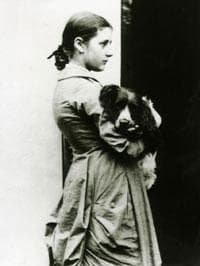
Helen Beatrix Potter was an English writer, illustrator, natural scientist, and conservationist. She is best known for her children's books featuring animals, such as The Tale of Peter Rabbit, which was her first published work in 1902. Her books, including 23 Tales, have sold more than 250 million copies. An entrepreneur, Potter was a pioneer of character merchandising. In 1903, Peter Rabbit was the first fictional character to be made into a patented stuffed toy, making him the oldest licensed character.







