“Once upon a time there were four little Rabbits, and their names were Flopsy, Mopsy, Cotton-tail, and Peter.”
— Opening line introducing the main characters.


Beatrix Potter (2004)
Genre
Fantasy / Children's / Young Adult
Reading Time
5 min
Key Themes
See below
Sign in to track this book
A mischievous rabbit named Peter defies his mother's warning and embarks on a thrilling, forbidden adventure into Mr. McGregor's vegetable garden, narrowly escaping its grumpy owner.
Mrs. Rabbit, a widow living with her four children – Flopsy, Mopsy, Cotton-tail, and Peter – in a sand-bank under a large fir-tree, gives a clear warning. She tells them they can go into the fields or down the lane, but they must not enter Mr. McGregor's garden. Their father died there, put into a pie by Mrs. McGregor. While Flopsy, Mopsy, and Cotton-tail, who are 'good little bunnies', gather blackberries, Peter, who is 'very naughty', ignores his mother's advice and squeezes under the gate into Mr. McGregor's vegetable garden to eat.
Once in Mr. McGregor's garden, Peter eats some lettuces, French beans, and then some radishes. He finds the vegetables tasty and enjoys his forbidden meal. However, his meal stops when he sees Mr. McGregor, who is bending down to tie up some onions. Mr. McGregor sees Peter and jumps up, holding a rake and yelling, 'Stop thief!' This sudden sight and the farmer's angry shouts make Peter panic, ending his carefree snacking and starting his desperate escape.
Mr. McGregor immediately chases Peter Rabbit. Peter is scared and runs all over the garden, having forgotten how to get back to the gate. In his rush and fear, he runs into a gooseberry net and gets caught by the big buttons on his blue jacket. He struggles to get free, and Mr. McGregor, thinking he has caught the rabbit, is about to grab him with a sieve. Luckily, Peter gets free, leaving his jacket in the net. As he continues his frantic escape, he also loses his shoes among the cabbages, making it harder to move and leaving him with fewer things than he started with.
After losing his jacket and shoes, Peter runs into a tool-shed, hoping to hide. He quickly sees a watering-can and dives head-first into it, thinking he is completely hidden. However, the watering-can is full of water, making his hiding spot uncomfortable. Mr. McGregor, who has been looking for Peter, eventually comes to the shed and turns over flower-pots. He soon finds Peter when Peter sneezes loudly, giving away his position. Mr. McGregor tries to grab him, but Peter escapes out of the shed window, again barely avoiding capture.
Peter, still lost in the large garden, sees some sparrows and asks them for directions to the gate. The sparrows, though kind, cannot help him much. As Peter keeps wandering, he sees a white cat sitting very still and looking at some goldfish. He decides not to ask the cat for directions, sensing danger. The cat, watching Peter's worry, twitches its tail but does not move, showing it might be a predator. Peter moves away from the cat, continuing his search for a way out of Mr. McGregor's dangerous garden.
Peter, still running and breathing hard, eventually sees the gate he used to enter the garden. He races towards it, only to find Mr. McGregor there, trying to trap him. Mr. McGregor tries to step on Peter, but Peter manages to squeeze under the gate just in time, barely escaping the farmer's grasp. He rushes out of the garden and does not stop running until he is safely back in the fir-tree under the sand-bank, completely tired and out of breath. He has made it home, but the adventure has left him shaken and without his clothes.
When he returns to the burrow, Peter is completely tired and quite sick from his scary adventure and the cold water in the watering-can. He falls onto the floor, unable to speak. Mrs. Rabbit immediately sees his messy state and that his blue jacket and shoes are gone. She is worried and puts him straight to bed, giving him chamomile tea, a common remedy for an upset stomach. Meanwhile, his 'good little sisters,' Flopsy, Mopsy, and Cotton-tail, eat a healthy dinner of bread and milk and blackberries, a big contrast to Peter's bad evening.
The Protagonist
Peter learns a harsh lesson about the consequences of disobedience, returning home ill and chastened, though his inherent adventurous spirit is likely to remain.
The Supporting
Her role is consistent; she acts as a wise, nurturing, and cautionary figure throughout the story.
The Antagonist
Mr. McGregor remains a consistent antagonist, focused on protecting his garden from pests.
The Supporting
They remain consistently obedient and are largely static characters, serving to emphasize Peter's journey.
The Mentioned
His story is complete before the book begins, serving as a cautionary tale.
The Supporting
They have no significant arc, serving as a brief interaction point for Peter.
The Supporting
The cat's role is static, representing a natural predator within the garden.
The main theme is Peter Rabbit's disobedience of his mother's clear warning and the immediate, scary results. Mrs. Rabbit warns her children about Mr. McGregor's garden because of their father's fate, but Peter ignores this advice. His chase, losing clothes, near-captures, and later illness are direct results of his breaking the rule. The story shows that ignoring rules can lead to trouble, while his sisters' obedience leads to a calm evening.
“'Now run along, and don't get into mischief. I am going out.'”
The story looks at the difference between the wild world of the rabbits and the human-made, orderly world of Mr. McGregor's garden. Peter, a wild animal, enters a human space for food, causing a conflict. The garden, while providing food, is also very dangerous for the wild rabbits. This idea is clear in Peter's struggle to get through human structures (nets, sheds, gates) and the fact that his father was 'put into a pie' – a strong reminder of human control over nature.
“'First he ate some lettuces, and then some French beans; and then he ate some radishes.'”
A large part of the story describes Peter's strong fear and desperate attempts to live after Mr. McGregor finds him. From the moment Mr. McGregor yells 'Stop thief!', Peter is overcome by panic. He loses his clothes, gets caught in a net, hides in a watering-can, and barely escapes various dangers. His frantic running, fast heartbeat, and eventual tiredness and sickness when he gets home clearly show the strong need to survive when facing a life-threatening situation. This idea is central to the chase.
“'Peter was most dreadfully frightened; he rushed all over the garden, for he had forgotten the way back to the gate.'”
Mrs. Rabbit shows the theme of a mother's guidance and protection. She gives clear instructions to her children, warning them of dangers based on her own difficult experience. While Peter disobeys, her first advice sets the moral base of the story. When Peter returns, despite his bad behavior, her main concern is his well-being; she puts him to bed and gives him medicine. This shows a mother's constant care and her role in keeping her children safe.
“'Your Father had an accident there; he was put into a pie by Mrs. McGregor.'”
Attributing human characteristics to animal characters.
Beatrix Potter's use of anthropomorphism is central to 'The Tale of Peter Rabbit.' Peter and his family wear clothes (blue jacket, shoes), live in a house (a sand-bank), engage in human activities (eating vegetables, making tea), and exhibit human emotions (fear, mischief, maternal concern). This device makes the animal characters relatable to young readers, allowing the story's moral lessons and adventures to resonate more deeply than if they were purely animalistic.
Mrs. Rabbit's warning about Mr. McGregor's garden hints at future danger.
Mrs. Rabbit's explicit warning at the beginning of the story, recounting the fate of Peter's father, serves as a clear instance of foreshadowing. It immediately establishes the stakes and the potential danger of the garden, making Peter's subsequent entry into it feel particularly perilous. This device builds tension and emphasizes the gravity of Peter's disobedience, as the reader is aware of the potential consequences from the outset.
Highlighting differences between Peter and his sisters to emphasize the moral.
The story employs contrast to highlight the difference between Peter's mischievous behavior and his sisters' obedience. Flopsy, Mopsy, and Cotton-tail are consistently described as 'good little bunnies' who gather blackberries in the lane, while Peter is 'very naughty' and goes to the forbidden garden. Their peaceful, well-fed evening stands in stark contrast to Peter's terrifying ordeal and subsequent illness, effectively underscoring the story's moral about the consequences of disobedience versus the rewards of good behavior.
Peter's lost jacket symbolizes his loss of innocence and the consequences of his actions.
Peter's blue jacket is a significant symbolic item. It represents his initial state of comfort and perhaps his childish innocence (being 'dressed up'). When he loses it in the gooseberry net during his frantic escape, it symbolizes his shedding of this innocence and the tangible consequences of his misbehavior. Mr. McGregor even uses the jacket as a scarecrow, a permanent reminder of Peter's transgression and a symbol of what he left behind in his harrowing adventure.
“Once upon a time there were four little Rabbits, and their names were Flopsy, Mopsy, Cotton-tail, and Peter.”
— Opening line introducing the main characters.
“Now, my dears, said old Mrs. Rabbit one morning, you may go into the fields or down the lane, but don't go into Mr. McGregor's garden.”
— Mrs. Rabbit warns her children about the dangers of the garden.
“Peter was most dreadfully frightened; he rushed all over the garden, for he had forgotten the way back to the gate.”
— Peter panics after being chased by Mr. McGregor.
“Mr. McGregor was on his hands and knees planting out young cabbages, but he jumped up and ran after Peter, waving a rake and calling out, 'Stop thief!'”
— Mr. McGregor discovers Peter in his garden and gives chase.
“Peter gave himself up for lost, and shed big tears; but his sobs were overheard by some friendly sparrows, who flew to him in great excitement, and implored him to exert himself.”
— Peter feels hopeless but is encouraged by sparrows.
“He lost one of his shoes among the cabbages, and the other shoe amongst the potatoes.”
— Peter loses his shoes while fleeing through the garden.
“After losing them, he ran on four legs and went faster, so that I think he might have got away altogether if he had not unfortunately run into a gooseberry net, and got caught by the large buttons on his jacket.”
— Peter's escape is hindered by his clothing.
“It would have been a beautiful thing to hide in, if it had not had so much water in it.”
— Peter considers hiding in a watering can but finds it too wet.
“Peter sat down to rest; he was out of breath and trembling with fright, and he had not the least idea which way to go.”
— Peter takes a moment to recover after narrowly escaping.
“He was so tired that he flopped down upon the nice soft sand on the floor of the rabbit-hole and shut his eyes.”
— Peter returns home safely and rests.
“But Flopsy, Mopsy, and Cotton-tail had bread and milk and blackberries for supper.”
— The obedient rabbits enjoy a meal while Peter is unwell.
“Peter was not very well during the evening. His mother put him to bed, and made some camomile tea; and she gave a dose of it to Peter!”
— Peter suffers the consequences of his disobedience.
“One table-spoonful to be taken at bed-time.”
— Mrs. Rabbit administers medicine to Peter.
“I am sorry to say that Peter was not very well during the evening.”
— Narration emphasizes the outcome of Peter's actions.
Ready to see how well you understood this book? Take our interactive quiz with 10 questions.
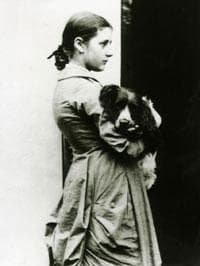
Helen Beatrix Potter was an English writer, illustrator, natural scientist, and conservationist. She is best known for her children's books featuring animals, such as The Tale of Peter Rabbit, which was her first published work in 1902. Her books, including 23 Tales, have sold more than 250 million copies. An entrepreneur, Potter was a pioneer of character merchandising. In 1903, Peter Rabbit was the first fictional character to be made into a patented stuffed toy, making him the oldest licensed character.







