“How I wish I had been born in this world as a man! Then I might have gone to China and seen its wonders, or traveled to India to behold the teachings of Buddha.”
— Genji reflects on the limitations placed upon women in his society.

Murasaki Shikibu (2001)
Genre
Fantasy / Creativity
Reading Time
1500 min
Key Themes
See below
Sign in to track this book
In the Heian court, Prince Genji navigates forbidden loves, political plots, and sorrow, always seeking beauty and connection.
The Kiritsubo Emperor favors his concubine, Kiritsubo Lady, above all others, including the powerful Kokiden Consort. This favoritism causes intense jealousy and hostility from other court ladies. Kiritsubo Lady gives birth to a beautiful son, Genji, but her delicate health worsens from the constant harassment. Despite the Emperor's deep love and his wish for Genji to be his heir, Kiritsubo Lady dies. Her death leaves the Emperor heartbroken and Genji, a child, orphaned and without a strong maternal line to protect his court position. The Emperor raises Genji, but the boy is denied the status of crown prince because his mother lacked powerful connections.
Fearing for Genji's safety and future amidst court politics, the Kiritsubo Emperor gives him the surname Minamoto and makes him a commoner, though he still holds a high rank. Genji grows into a handsome and talented young man, skilled in arts and academics. His beauty and charm attract many, leading to his first romantic relationships. He marries Aoi no Ue, a high-born and reserved woman, but their marriage is strained by her cool nature. Genji also has an affair with Lady Rokujo, an older, sophisticated woman whose intense jealousy later becomes a vengeful spirit.
During a visit to Kitayama, Genji meets Murasaki, a young girl who strongly resembles his deceased mother, Kiritsubo Lady. He learns she is the niece of Fujitsubo, the Reizei Emperor's mother, whom Genji also deeply admires and secretly loves. Captivated by Murasaki's beauty and innocence, Genji takes her to his Nijo mansion. He educates her in all the skills suitable for a lady, preparing her to be his perfect companion and lover. Murasaki grows into a graceful and beautiful woman, fulfilling Genji's ideal of a partner, though their relationship begins without formal marriage.
Genji has a deep, forbidden love for Fujitsubo, his father's consort, who looks much like his mother. Despite her initial resistance, Genji seduces her. Their affair results in Fujitsubo becoming pregnant. The Kiritsubo Emperor, unaware of the true father, believes the child is his own. This child, Reizei, is born and later becomes emperor, carrying Genji's secret lineage. The guilt and the secret of Reizei's parentage weigh heavily on both Genji and Fujitsubo, adding moral complexity to Genji's character and his future interactions with the imperial family.
Genji's many love affairs and his perceived arrogance, especially his involvement with Oborozukiyo, a lady-in-waiting to Emperor Suzaku (Fujitsubo's stepson), give his political enemies, led by the Kokiden faction, a chance to harm him. A scandal breaks out, forcing Genji into exile in the remote provinces of Suma and later Akashi. During his exile, he endures hardship and separation from loved ones. In Akashi, he meets the Akashi Lady, a beautiful and accomplished woman from a wealthy provincial family. They fall in love, and she gives birth to his daughter, the Akashi Princess, who is destined for a high court position.
After several years in exile, Genji is pardoned and called back to the capital, largely due to his loyal supporters and Emperor Suzaku's declining health. His return is met with relief and celebration. He quickly regains his former prestige and even surpasses it, rising to the highest government ranks. He builds the Rokujo-in mansion, a large estate for his beloved women, including Murasaki, the Akashi Lady, and others. This period marks the peak of Genji's political power and personal happiness, though his past actions still cast long shadows.
Genji's first wife, Aoi no Ue, becomes pregnant and gives birth to their son, Yugiri. However, shortly after childbirth, Aoi becomes gravely ill. Her illness is blamed on a malevolent spirit, later revealed to be Lady Rokujo's tormented soul. Rokujo's intense jealousy, fueled by Genji's neglect and Aoi's perceived slights, appears as a ghost that attacks Aoi. Despite prayers and rituals, Aoi dies, leaving Genji with a young son and deep guilt and sorrow. Lady Rokujo, though unaware of her spirit's actions, is horrified by the results of her uncontrolled emotions.
Despite their loving relationship, Murasaki suffers from a long and weakening illness. Genji cares for her devotedly, showing her affection and seeking every possible cure. However, her condition gradually worsens. Murasaki, tired of life and her unfulfilled wish for a formal Buddhist tonsure, eventually dies. Her death devastates Genji, plunging him into deep grief and loss. He withdraws from public life, becoming more introspective and thoughtful, reflecting on life's impermanence and the futility of worldly attachments. Her death is a turning point in Genji's life, marking the beginning of his own decline.
After Murasaki's death, Genji's lively spirit fades. He withdraws from his political duties and social events, spending more time in solitary thought and religious devotion. He moves to a secluded mountain retreat, seeking spiritual comfort and reflecting on the transient nature of existence, a central Buddhist concept. Though he still holds great prestige, his former energy and engagement with the world are gone. This period of Genji's life is marked by deep sadness as he deals with loss, aging, and the realization of his own mortality, preparing for his eventual exit from the story.
The story shifts to the next generation, focusing on Kaoru, widely thought to be Genji's son but secretly the child of Genji's wife Onna Sanomiya and Kashiwagi. Kaoru is a melancholic and thoughtful young man, known for his unique scent. He is often contrasted with Niou, Genji's grandson, a flamboyant and pleasure-seeking prince. The story follows their intertwined lives and their complex relationships with three sisters in Uji: Oigimi, Nakanokimi, and Ukifune. This section explores themes of unrequited love, destiny, and continuing romantic relationships, echoing Genji's life but with a more somber tone.
Ukifune, the youngest of the Uji sisters, becomes the object of affection for both Kaoru and Niou. Kaoru, despite his deep feelings for her, is hesitant and somewhat detached, while Niou is passionate and insistent. Ukifune finds herself in an impossible situation, feeling pressured by both men and fearing the consequences of choosing either. Overwhelmed by the emotional turmoil and societal expectations, she tries to commit suicide by throwing herself into a river. A monk rescues her, and she chooses to leave the secular world, becoming a nun to escape the endless cycle of worldly suffering and desire.
Distraught by Ukifune's disappearance, Kaoru searches for her. He eventually learns she survived and became a nun. He tries to persuade her to return to the world, but Ukifune, firm in her new spiritual path, refuses. The novel ends without a clear resolution to Kaoru's situation or Ukifune's future. The ending is famously ambiguous, leaving many questions unanswered and highlighting the Buddhist theme of impermanence and the endless cycle of human desire and suffering. The narrative simply fades, reflecting the transient nature of even the most passionate human efforts.
The Protagonist
Genji transforms from a passionate, somewhat reckless young man into a more contemplative and sorrowful figure, eventually withdrawing from the world after experiencing profound loss.
The Supporting
Murasaki grows from an innocent child into a devoted, graceful woman who ultimately finds peace in quiet contemplation before her death.
The Supporting
Fujitsubo maintains a dignified facade while grappling with the secret of her affair and eventually seeks spiritual solace.
The Supporting
Lady Rokujo's pride and jealousy consume her, leading to her spirit's destructive actions, before she eventually withdraws to become a nun.
The Supporting
Aoi's character remains largely static in her reserved nature until her tragic death after childbirth.
The Supporting
The Kiritsubo Emperor experiences profound joy and sorrow, eventually dying without knowing the truth about his 'son' Reizei.
The Supporting
Reizei grows into a wise and just emperor, eventually learning the truth of his parentage and acknowledging Genji.
The Protagonist (Later Chapters)
Kaoru struggles with his identity and emotional detachment, endlessly searching for an elusive ideal and facing constant disappointment.
The Supporting (Later Chapters)
Niou remains largely consistent in his pursuit of pleasure and love, often acting as a foil to Kaoru's introspection.
The Supporting (Later Chapters)
Ukifune transforms from a passive object of affection into a woman who takes agency by renouncing the world and becoming a nun.
A central theme is 'mono no aware,' the pathos of things, a deep awareness of the fleeting nature of beauty, love, and life itself. This theme runs through the story, from Genji's early sorrow over his mother's death to his later grief over Murasaki. The court's beauty, the temporary nature of romantic attachments, and the inevitable decline of even powerful figures like Genji all contribute to this melancholic understanding. The Uji chapters, with Ukifune's renunciation of the world, further stress the Buddhist concept of suffering in worldly attachments and the search for release.
“How fleeting is this life, how quickly it passes! Even the most beautiful blossoms are scattered by the wind.”
The novel explores love in many forms: romantic, filial, platonic, and forbidden. Genji's life is defined by his passionate pursuits, often driven by an idealized image of women resembling his mother and Fujitsubo. The story looks at the complexities of desire, jealousy, fidelity, and infidelity, showing both the joy and suffering they bring. From Genji's consuming love for Murasaki to Lady Rokujo's destructive jealousy and the tragic love triangle in the Uji chapters, the story shows how love can uplift and destroy, often leading to sorrow and unfulfilled longing.
“He sought in every woman a faint echo of the one he had lost, or the one he could not possess.”
Despite Genji's personal charm and talent, his life is constantly shaped by the strict social hierarchy and political schemes of the Heian court. His demotion to commoner status, his exile, and his eventual rise to power are all tied to the changing alliances and rivalries among powerful families, especially the Kokiden faction. The importance of lineage, the strategic use of marriage for political gain, and the constant struggle for influence are recurring elements. Even Genji's secret parentage of Emperor Reizei shows how personal desires can affect the highest levels of political power, shaping the nation's destiny.
“Even a prince, however brilliant, is but a pawn in the intricate game of courtly power.”
The Tale of Genji values beauty in all its forms: natural landscapes, poetry, music, calligraphy, fashion, and the human form. Characters are constantly judged by their aesthetic achievements and their ability to appreciate beauty. Genji himself is the epitome of aesthetic refinement, and his pursuit of beauty often intertwines with his romantic desires. The detailed descriptions of court life, clothing, and seasonal changes reflect this emphasis. This aestheticism is not just superficial; it often reflects a character's inner virtue or spiritual state, linking outward beauty to inner grace.
“His beauty was such that even the flowers seemed to blush in his presence.”
Buddhist concepts of karma and fate (inga) play a significant role in shaping the characters' lives and misfortunes. The story often suggests that present sufferings result from past actions, whether in this life or previous ones. Genji's exile, the tragic deaths of Aoi and Murasaki, and the unfulfilled desires of characters like Kaoru and Ukifune can be seen through the lens of karmic retribution or predestined fate. This theme provides a philosophical framework for understanding the often-unpredictable turns of events and the cyclical nature of suffering, suggesting that escape from this cycle can only be found through spiritual detachment.
“It was the karma of former lives that had bound them together in such a cruel fate.”
A living person's spirit, driven by intense emotion, leaves the body to harm others.
The concept of an 'ikiryo' is a significant plot device, most notably with Lady Rokujo. Her overwhelming jealousy and resentment towards Genji's other lovers, particularly Aoi no Ue, cause her spirit to unconsciously leave her body and torment them, leading to Aoi's death. This device introduces a supernatural element, highlighting the destructive power of unchecked human emotions and the psychological toll of unrequited love and pride. It adds a layer of dread and moral consequence to Genji's philandering, suggesting that even unspoken feelings can have tangible, devastating effects.
Characters who bear striking resemblances to others, often fueling obsession.
The recurring motif of characters resembling others is a powerful device. Genji's mother, Kiritsubo Lady, and the Empress Fujitsubo are strikingly similar, which fuels Genji's forbidden love for his stepmother. Later, Murasaki's resemblance to Fujitsubo (and thus to his mother) leads Genji to adopt and raise her as his ideal woman. This device highlights Genji's psychological need to recapture lost love or possess an idealized image. It suggests a cyclical nature to his desires and the way past attachments influence present choices, driving much of his romantic pursuits and shaping his personal destiny.
The use of short poems to convey emotions, deepen character, and advance plot.
Waka (Japanese poetry) is an integral part of communication and courtship in the Heian court, serving as a sophisticated plot device. Characters frequently exchange poems to express love, sorrow, longing, or even veiled criticism, often responding to each other's verses. These poetic exchanges reveal characters' innermost thoughts, their wit, their education, and their aesthetic sensibility. They are crucial for conveying nuanced emotions that might be difficult to express directly, adding layers of subtext and cultural richness to interactions. A character's skill in composing and responding to poetry is often indicative of their refinement and intelligence.
The story's conclusion leaves many fates unresolved, emphasizing impermanence.
The narrative's shift in focus to the Uji chapters and its famously ambiguous ending serve as a significant plot device. Genji's own death is never explicitly described, and the fates of characters like Kaoru and Ukifune remain unresolved. This narrative choice reinforces the theme of impermanence and the Buddhist concept of the transient nature of existence. It suggests that life simply continues, with new generations facing similar struggles, and that definitive resolutions are often elusive in the human experience. The lack of closure forces the reader to contemplate the cyclical nature of desire and suffering, rather than providing a neat, satisfying conclusion.
“How I wish I had been born in this world as a man! Then I might have gone to China and seen its wonders, or traveled to India to behold the teachings of Buddha.”
— Genji reflects on the limitations placed upon women in his society.
“The world is a place where one must constantly be on guard against the unexpected.”
— A general reflection on the unpredictability of life.
“Even the most beautiful blossom is fated to scatter.”
— A poignant observation on the ephemeral nature of beauty and life.
“He who thinks he is without fault is the one most likely to stumble.”
— A warning against arrogance and self-deception.
“There is nothing in this world that does not change.”
— A central theme of Buddhist philosophy woven throughout the narrative.
“A man's worth is not in his words, but in his deeds.”
— A common sentiment regarding integrity and action.
“The moon, though it shines ever so brightly, still has its dark side.”
— A metaphorical reflection on the dual nature of people and things.
“To hide one's true feelings is often a necessity in this world.”
— A comment on social etiquette and the complexities of human interaction.
“What a strange thing it is to be a woman, always at the mercy of others' desires.”
— A lament on the lack of agency for women in Heian society.
“Even a brief encounter can leave an indelible mark on the heart.”
— Reflecting on the lasting impact of even fleeting relationships.
“The beauty of a woman is like a flower; it is admired, but rarely understood in its depths.”
— A commentary on the superficial appreciation of female beauty.
“One can never truly know another's heart, no matter how close they seem.”
— A recurring theme about the inscrutability of human emotions and intentions.
“The past is a mirror, reflecting both our joys and our sorrows.”
— A reflection on the enduring influence of past experiences.
“Life is a dream, and we are but figures in it.”
— A philosophical musing on the illusory nature of existence, influenced by Buddhist thought.
Ready to see how well you understood this book? Take our interactive quiz with 10 questions.
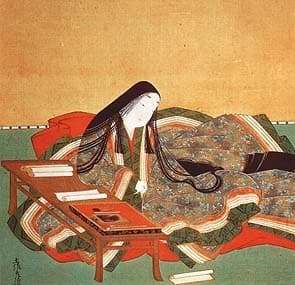
Murasaki Shikibu was a Japanese novelist, poet and lady-in-waiting at the Imperial court in the Heian period. She is best known as the author of The Tale of Genji, widely considered to be one of the world's first novels, written in Japanese between about 1000 and 1012. Murasaki Shikibu is a descriptive name; her personal name is unknown, but she may have been Fujiwara no Kaoriko (藤原香子), who was mentioned in a 1007 court diary as an imperial lady-in-waiting.







