“Every night he dreamed, and every morning he wrote down his dreams in a small notebook.”
— Describing Monsieur Bibot's nightly routine.

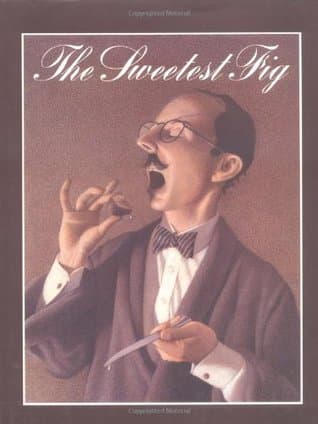
Chris Van Allsburg (1993)
Genre
Fantasy / Children's / Science Fiction
Reading Time
5 min
Key Themes
See below
Sign in to track this book
A grumpy dentist discovers that two magical figs turn his nighttime dreams into reality, leading to a whimsical battle of wills with his long-suffering dog, Marcel.
Monsieur Bibot, a Parisian dentist known for his bad temper and unkindness, especially towards his small dog, Marcel, extracts a tooth from an old woman. The woman, instead of money, offers him two ordinary-looking figs, claiming they can make dreams come true. Bibot, a man of science and cynicism, scoffs at this idea, finding the payment absurd. He grudgingly accepts them, but his dismissive attitude is clear, reflecting his general dislike for anything outside his rigid, materialistic view. He sees the transaction as a minor inconvenience.
That evening, Bibot, still annoyed by the unusual payment, eats one of the figs as a bedtime snack. He finds the fig to be very sweet and delicious, to his surprise. Later, he falls asleep and has a peculiar dream: the streets of Paris are upside down, with people walking on their hands. He dismisses the dream as nonsense, blaming indigestion or the strange fig. This dream, however, subtly hints at the fig's power, setting the stage for the bizarre events to follow.
The next morning, Bibot takes Marcel for his usual walk, still in a bad mood. As they step outside, Bibot is astonished to find that the entire city of Paris is indeed upside down, just as in his dream. People are walking on their hands, and everything is inverted. This surreal scene confirms the old woman's claims about the figs' magic. Bibot, initially disbelieving, now faces undeniable evidence of the supernatural, forcing him to rethink his cynical view and the power he now possesses.
Overwhelmed by the upside-down reality, Bibot quickly connects the strange phenomenon to the fig he ate the previous night and his dream. He realizes the great power he now holds with the remaining fig. His immediate thought is not of wonder or helping others, but of personal gain and revenge. He plans to use the second fig to achieve his deepest, most selfish desires, which primarily involve making Marcel disappear and acquiring wealth and fame for himself.
Determined to control his dreams, Bibot spends the day carefully planning his ideal dream for the second fig. He constructs a scenario where Marcel vanishes and he becomes a rich and famous dentist. He focuses intensely on these images before going to sleep, believing he can manipulate the fig's magic to his exact specifications. He is convinced that with careful planning, he can achieve his selfish desires and rid himself of his disliked pet, paving the way for a life of luxury and recognition.
Bibot wakes up the next morning, eager to see his dream fulfilled. However, he quickly discovers a horrifying twist: he is no longer in his own body. He is now Marcel, looking up at his own human form, which is now occupied by Marcel's consciousness. The dream, instead of making Marcel disappear, has caused a body swap. Bibot, trapped in the small, furry body of his dog, is utterly distraught and powerless, realizing the ironic result of his cruel intentions.
Marcel, now in Bibot's human body, quickly takes advantage of the situation. He enjoys his newfound human existence, indulging in all the luxuries and comforts Bibot previously denied him. He eats good meals, sleeps in the comfortable bed, and generally lives a life of ease, completely ignoring the distraught Bibot (now Marcel the dog). Marcel's actions contrast Bibot's previous mistreatment, highlighting the reversal of their roles and the dog's subtle, yet potent, revenge.
Trapped in Marcel's body, Bibot is forced to experience life from his dog's perspective. He is dragged around on a leash, eats dog food, and endures the same indignities and neglect he inflicted upon Marcel. This complete role reversal serves as a profound punishment for Bibot's cruelty. He now receives the treatment he gave, learning firsthand the misery he caused. His new reality is a stark and ironic result of his selfish wishes.
The story concludes with Marcel, still in Bibot's body, taking Bibot, now in Marcel's body, for a walk through the streets of Paris. The image is poignant and powerful, symbolizing the complete and irreversible role reversal. The former master is now the subservient pet, and the former pet is now the dominant master. There is no indication that the situation will ever revert, leaving Bibot permanently trapped in his canine form, forever subject to the whims of his former dog.
The final scene solidifies the permanent nature of Bibot's transformation. No magical solution or reversal is offered. Bibot lives out his days as Marcel, experiencing the world as a dog, under the care (or lack thereof) of his former pet. This ending emphasizes the story's moral about the consequences of cruelty and selfishness. Bibot's fate is a direct result of his desire to eliminate Marcel and his general unkindness, leaving him to endure the very life he wished to escape.
The Protagonist/Antagonist
Bibot transforms from a cruel master to a subservient pet, experiencing firsthand the consequences of his unkindness.
The Supporting/Protagonist (after transformation)
Marcel transforms from a downtrodden pet into a dominant human, enjoying a life of luxury and freedom from his former master's cruelty.
The Supporting/Mentioned
She serves as a catalyst, her role complete after bestowing the figs.
The central theme is that unkind actions and selfish desires lead to fitting repercussions. Bibot's constant mistreatment of Marcel and his self-serving wishes for the second fig directly result in his ironic and permanent transformation into his own dog. The upside-down Paris in the first dream is an initial, less personal consequence, but the body swap is the ultimate manifestation of this theme, forcing Bibot to experience the suffering he inflicted. His fate mirrors his character.
“''These figs are very special,'' the woman whispered. ''They can make your dreams come true.''”
This theme highlights the dramatic reversal of power and status between Bibot and Marcel, serving as poetic justice. Bibot, the cruel master, becomes the subservient pet, while Marcel, the long-suffering dog, becomes the dominant human. This reversal is not just a change in circumstance but a fundamental shift in identity and experience, forcing Bibot to literally 'walk a mile in Marcel's paws.' The ending suggests that those who inflict suffering may eventually find themselves on the receiving end.
“And the man who had been Monsieur Bibot, the dentist, found himself staring up at the man who had been Marcel, the dog.”
Van Allsburg explores the blurred lines between dreams and reality, suggesting that the subconscious can powerfully shape one's waking world. The figs act as a conduit, making dreams manifest physically. Bibot's initial dream of an upside-down Paris becomes real, and his subsequent, more controlled dream of Marcel disappearing and himself becoming rich also manifests, though with a cruel twist. The story questions the solidity of reality when dreams hold such transformative power, highlighting the unpredictable and often ironic nature of wish fulfillment.
“Although it was possibly the finest, sweetest fig he had ever tasted, it wasn't until the next morning that Monsieur Bibot realized it indeed had the power to make his dreams come true.”
Bibot's downfall is a cautionary tale about the dangers of unchecked and selfish desires. Given a magical way to fulfill his dreams, Bibot's first thought is to eliminate his dog and acquire wealth, rather than to improve himself or others. His inability to control his malicious impulses, even in his dreams, leads to an outcome far worse than his original situation. The story suggests that wishes granted without wisdom or kindness can lead to ironic and devastating consequences, showing that not all dreams are worth pursuing.
“Determined to make good use of the second fig, Monsieur Bibot learned to control his dreams.”
Ordinary reality infused with fantastical elements.
The story seamlessly integrates a magical element (the dream-fulfilling figs) into an otherwise ordinary Parisian setting. The sudden appearance of an upside-down city or a body swap is presented with a matter-of-fact tone, making the fantastical events feel subtly unsettling rather than overtly supernatural. This device allows for a profound exploration of human nature and consequences within a familiar, relatable world, making the magical events feel more impactful.
An unexpected outcome that is the opposite of what is intended, often with a sense of justice.
The central plot device is the ironic twist at the climax: Bibot's carefully planned dream to make Marcel disappear and himself rich results in him swapping bodies with Marcel. This unexpected reversal serves as the ultimate form of poetic justice, directly punishing Bibot for his cruel intentions. It subverts the reader's expectations and delivers a powerful moral lesson, making his selfish desires literally backfire in the most personal way possible.
A visual metaphor for a world turned on its head.
The initial manifestation of Bibot's dream—the upside-down city of Paris—serves as a powerful visual symbol. It foreshadows the complete inversion of Bibot's life and status that is to come. It represents a world where norms are disrupted and reality is skewed, mirroring the moral imbalance in Bibot's character and preparing the reader for the more personal, yet equally dramatic, reversal of his fate later in the story.
Hints or clues about future events.
The old woman's mysterious warning about the figs and Bibot's initial dream of an upside-down Paris both act as strong foreshadowing. The dream, in particular, hints at the theme of reversal and a world turned on its head, preparing the reader for the ultimate body swap. These subtle clues build anticipation and make the eventual, dramatic twist feel both surprising and inevitable within the story's magical framework.
“Every night he dreamed, and every morning he wrote down his dreams in a small notebook.”
— Describing Monsieur Bibot's nightly routine.
“The fig was extraordinary. It was the sweetest fig Bibot had ever tasted. And it was chewy, almost like candy.”
— Bibot tasting the first magical fig.
“Bibot decided to save the other fig. He put it in his pocket and went to bed.”
— Bibot's initial decision to hoard the second fig.
“That night he dreamed he was a dog.”
— Bibot's first dream after eating a fig, directly influencing reality.
“He woke with a start, remembering his dream. His hands felt peculiar. He looked down and saw two hairy paws.”
— Bibot waking up to find his dream has come true.
“Bibot knew what had happened. The fig! The second fig! It had made his dream come true.”
— Bibot realizing the power of the figs.
“He would dream of being rich, powerful, and admired. He would dream of living in a palace.”
— Bibot's selfish plans for the remaining fig.
“Marcel, the dog, sat on the bed, watching Bibot. He watched him put the last fig on the nightstand.”
— Marcel observing Bibot's actions, foreshadowing his own role.
“Bibot fell asleep and began to dream. He dreamed he was a powerful, respected man.”
— Bibot's final dream before Marcel intervenes.
“While Bibot dreamed, Marcel chewed the fig.”
— Marcel eating the last fig, altering Bibot's fate.
“The next morning Bibot woke up. He felt completely normal. But when he looked in the mirror, he saw not his own reflection, but Marcel's.”
— Bibot's ultimate transformation into his dog.
“Marcel, who now looked exactly like Monsieur Bibot, smiled and walked out the door.”
— Marcel, in Bibot's form, leaving the house.
“Bibot, the dog, watched Marcel walk down the street and disappear. Then he turned and went back to his bed.”
— Bibot, as the dog, accepting his new reality.
“He dreamed of chasing squirrels and barking at cats.”
— Bibot's first dream as a dog.
Ready to see how well you understood this book? Take our interactive quiz with 10 questions.
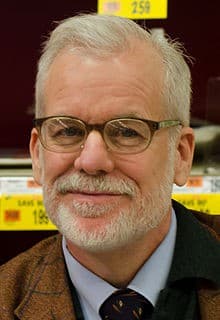
Chris Van Allsburg is a celebrated author and illustrator known for his whimsical and often surreal children's books. He has won the Caldecott Medal twice for his distinctively illustrated works, "Jumanji" and "The Wretched Stone." His other notable books include "The Polar Express" and "The Sweetest Fig," which have captivated readers with their imaginative storytelling and unique visual style.







