“The sea is not just a collection of water; it is a living, breathing entity, with its own will and its own memory.”
— Early in the novel, setting the stage for the ocean's sentience.


Frank Schätzing (2009)
Genre
Thriller / Fantasy / Mystery / Science Fiction
Reading Time
1200 min
Key Themes
See below
Sign in to track this book
Marine life rebels against humanity, unleashing an ancient, intelligent force from the deep ocean that threatens human existence.
The novel starts with strange and increasingly violent incidents from the ocean. Off British Columbia, whale researcher Leon Anawam finds whales acting very aggressively, then intentionally sinking a tourist boat. In Norway, a fisherman named Harald dies after finding a strange, cold, pulsating organism in the sea. Off Peru, an underwater landslide creates a large tsunami, destroying coastal areas. These events seem separate at first, but the scale and unusual precision of some, like the whale attack, begin to worry scientists and government agencies, suggesting a coordinated, intelligent force.
In France, marine biologist Dr. Cécile Roche investigates a new, deadly type of toxic jellyfish that spreads quickly. In the United States, molecular biologist Dr. Samantha Crowe studies a strange, eyeless crab species that has appeared in large numbers off Long Island, polluting water with a strong neurotoxin. Sigur Johanson, a Norwegian marine biologist and oil industry consultant, investigates the strange organism Harald found, identifying it as a new species with unusual traits. These scientists, along with others like Canadian whale expert Leon Anawam, slowly realize their different findings point to a global, organized threat, not just separate natural disasters.
The crisis worsens when the North Sea shelf collapses, causing a huge tsunami that devastates European coastlines, killing hundreds of thousands and causing massive economic and social chaos. This disaster, along with continued marine life attacks and new pathogens, forces world leaders to see how serious the situation is. The United Nations forms a special task force, bringing together leading scientists who have been studying these events. Sigur Johanson, Samantha Crowe, Cécile Roche, and Leon Anawam are among those chosen, tasked with understanding the threat and finding a solution.
The international team, based on a research vessel, begins to combine their findings. Sigur Johanson, using his knowledge, suggests the 'Yrr' hypothesis: an intelligent, collective organism, previously unknown, living deep in the oceans, is causing the attacks. He thinks the Yrr are manipulating marine life and creating new species to fight humanity. This idea is met with doubt at first but gains support as more evidence appears, including complex, coordinated behaviors in marine animals and the fast evolution of new, hostile organisms. The team feels great pressure to prove their theory and find the Yrr's central intelligence.
To confirm the Yrr hypothesis and understand it, the team plans a risky deep-sea expedition. Using advanced submersibles, they go down into the abyssal plains, an area once thought to lack such complex life. They find vast, connected colonies of the Yrr: a gelatinous, bioluminescent, and very intelligent collective organism. The Yrr communicate through complex chemical signals and bio-electrical impulses, showing an advanced form of distributed intelligence. During this exploration, the team has direct, unsettling contact with the Yrr, realizing how large and alien their enemy is.
Through genetic analysis, observing behavior, and interpreting the Yrr's communication, the scientists start to understand the Yrr's reasons. They conclude that the Yrr are not evil but are reacting to humanity's constant pollution, overfishing, and climate change, which have badly harmed their ocean home. The Yrr see humanity as a parasitic threat to Earth's ecosystem and have started a planned, systematic response to remove humans and restore the ocean's balance. This realization creates a difficult moral problem for the team: are they fighting for survival, or are they the aggressors being rightly punished?
As the team deals with the Yrr's motives, attacks increase worldwide. More coastal cities are submerged by tsunamis, new pathogens appear, and marine life continues its coordinated assaults. Humanity's infrastructure breaks down, and society is close to collapse. Governments consider desperate measures, including military action, despite scientists' warnings that such actions would be useless and only cause a more severe response from the Yrr. The world faces a threat to its existence, and the scientific team works fast to find a peaceful solution or a way to stop the threat without further harming the planet.
Knowing that military force is not an option, the scientific team, led by Sigur Johanson and Samantha Crowe, develops a risky plan: to try to communicate directly with the Yrr. Their plan involves creating a synthetic chemical signal that copies the Yrr's own complex communication patterns, hoping to show humanity's understanding of their complaints and a request for coexistence. This needs a lot of scientific skill, as they must decode and copy an alien language from a species with a very different view of reality. The plan's success depends on the Yrr's ability to understand and their willingness to stop their destructive campaign.
A small, specialized team, including Sigur Johanson and Samantha Crowe, goes down in an advanced submersible to the deepest known Yrr colony, where they believe the main intelligence is. They deploy their specially designed communication device, sending the synthesized chemical message. The encounter is dangerous, as the Yrr respond with strong bio-electrical pulses and physical signs, testing the team's resolve. The message includes an apology for humanity's destructive actions and a promise of change and a request for a chance at living together, emphasizing shared responsibility for the planet's health. The tension is high as they wait for a response, unsure if their plea has been understood or if it will be met with more aggression.
After a period of quiet, the Yrr respond, not with words, but with complex bioluminescent patterns and subtle environmental changes. The scientists interpret this as a conditional truce. The Yrr signal that they understand humanity's message but demand concrete, immediate action to fix the ecological damage. They do not completely stop their operations but greatly reduce the intensity and frequency of their attacks, giving humanity a break. The novel ends with humanity facing the huge task of changing its relationship with the planet, knowing that the Yrr are still watching, and human survival depends on keeping their promise to protect the oceans. The future remains uncertain, with a fragile peace.
The Protagonist
From a cynical observer of environmental degradation, he evolves into the leading advocate for understanding and communicating with the alien intelligence, ultimately becoming humanity's primary negotiator.
The Protagonist
Starting as a specialist focused on a localized threat, she becomes a global leader in understanding and attempting to bridge the biological gap between humanity and the Yrr.
The Supporting
From a witness of early, localized attacks, he contributes his unique understanding of marine life to the global effort against the Yrr.
The Supporting
She transitions from investigating a localized biological anomaly to contributing her specialized knowledge to a global, existential threat.
The Supporting
He provides critical geological insights that help confirm the Yrr's capacity for large-scale environmental manipulation.
The Supporting
She moves from a conventional military mindset to accepting and facilitating an unconventional scientific approach to global catastrophe.
The Supporting
He transitions from a skeptical intelligence operative to a key facilitator for the scientific team's radical solutions.
The Antagonist
From an unknown, destructive force, they are revealed as a reactive, intelligent species defending their habitat, ultimately entering a conditional truce with humanity.
The main theme of 'The Swarm' is the destructive impact of human activity on the global environment, especially the oceans. The Yrr's 'revenge' comes directly from pollution, climate change, and overfishing. The novel details the scientific evidence of ecological harm, from plastic pollution to ocean acidification, arguing that humanity is destroying its own habitat. This theme warns that nature's retaliation, though fictional, is a possible result of uncontrolled environmental damage. The entire global crisis comes from this basic imbalance caused by human neglect.
“We are a plague, a cancer on this planet, and the planet is finally fighting back.”
The book explores humanity's belief that it is the top predator and only intelligent species. The initial failure to understand the Yrr's existence or reasons comes from this human-centered view. Scientists first dismiss the events as natural disasters, showing a failure to consider life forms beyond human understanding. Even when the Yrr's intelligence is clear, there is a struggle to accept that another species could plan such a complex attack. This theme criticizes human pride and highlights the vastness of unknown life forms and intelligences that might exist, questioning our place in the global ecosystem.
“We thought we were alone at the top of the food chain, alone in our intelligence. The ocean just proved us wrong.”
'The Swarm' shows how connected global ecosystems are. The Yrr, as a collective intelligence, shows this theme, demonstrating how a single, widespread species can affect everything from whale behavior to geological stability. The ripple effects of humanity's environmental damage, from local pollution to global climate change, are shown to have far-reaching results across the planet. The novel argues that no part of Earth's system exists alone, and disrupting one element can lead to unexpected and disastrous chain reactions across the whole biosphere.
“Every molecule, every creature, every current is part of an unimaginable whole. We broke it.”
A main theme is the challenge of communication, especially between very different forms of intelligence. The Yrr's actions are first seen as random attacks, but later understood as a form of communication—a desperate plea and then a declaration of war against humanity. The scientific team's goal is to create a shared language with the Yrr, not with words, but with chemical signals and a shared understanding of ecological principles. This theme highlights how hard, yet important, it is to bridge conceptual differences with alien intelligences, even when planetary survival is at stake.
“How do you apologize to an ocean? How do you ask for peace from something that doesn't think in our terms?”
The novel looks at the ethical duties of scientists, especially when facing global disaster and the chance for big discoveries. The scientists on the task force deal with the moral meaning of their findings—admitting humanity's fault, considering military solutions versus peaceful coexistence, and taking on the big task of communicating with an alien intelligence. The book questions science's role not just in discovery, but in offering solutions and guiding humanity toward a more sustainable future, even when those solutions are extreme and demand big societal change.
“Our job isn't just to understand the threat, it's to find a way for us to survive it, even if that means changing everything we are.”
The primary antagonist, an alien intelligence spread across the global ocean.
The Yrr serve as the central plot device, representing an entirely new form of life and intelligence. Unlike a single antagonist, the Yrr is a collective organism, a 'swarm intelligence' that communicates and acts as a unified entity across vast oceanic distances. This device allows for a global threat that can manipulate diverse marine life and geological forces simultaneously. It challenges human assumptions about intelligence and agency, forcing the characters to confront a foe that is everywhere and nowhere, making traditional military responses obsolete and necessitating a scientific and diplomatic approach.
A series of increasingly severe and coordinated events driving the plot forward.
The narrative employs a device of escalating global catastrophes. The plot begins with isolated, strange events (whale attacks, toxic crabs) and gradually builds to continent-spanning tsunamis and worldwide ecological collapse. This continuous escalation maintains high stakes and urgency, forcing humanity to acknowledge the threat and compelling the scientific team to act quickly. Each new disaster reveals another facet of the Yrr's capabilities and further narrows humanity's options, driving the characters towards increasingly desperate and unconventional solutions.
The use of diverse scientific specialists to piece together a complex puzzle.
The novel utilizes a device where different scientific specialists (marine biologists, molecular biologists, geophysicists, whale researchers) contribute their unique expertise to a unified investigation. This allows for a multi-faceted understanding of the complex, global threat posed by the Yrr. Each character's initial localized investigation eventually feeds into a larger, interconnected picture, demonstrating how diverse fields of science are necessary to comprehend a truly global and interdisciplinary phenomenon. It also helps to build a sense of realism and scientific rigor within the narrative.
Combines detailed scientific exposition with high-stakes action and mystery.
Schätzing employs a scientific thriller pacing, blending extensive scientific detail and exposition with a fast-moving, high-stakes plot. Chapters often alternate between detailed explanations of marine biology, geology, and chemistry, and dramatic action sequences involving natural disasters or dangerous expeditions. This device educates the reader about complex scientific concepts while simultaneously building suspense and maintaining the urgency of the unfolding crisis. It allows the author to explore scientific realism without sacrificing the tension and excitement of a thriller.
The central problem of establishing contact with a non-human intelligence.
A crucial plot device is the challenge of establishing communication with the Yrr. Since the Yrr are an alien intelligence with a fundamentally different biology and communication method (chemical and bio-electrical signals), the scientists must decipher and replicate this 'language.' This device creates intellectual suspense and drives much of the latter half of the plot, as the team works to develop a message that can be understood by the Yrr. It highlights the profound difficulty of interspecies dialogue, especially when one species is actively trying to eradicate the other.
“The sea is not just a collection of water; it is a living, breathing entity, with its own will and its own memory.”
— Early in the novel, setting the stage for the ocean's sentience.
“Humanity's greatest flaw is its inability to see beyond its own species.”
— A recurring theme as characters struggle to understand the yrr.
“We are not alone. We never have been.”
— A realization by one of the scientists about the yrr's presence.
“What if the monster isn't coming from outside, but from within?”
— Reflecting on humanity's role in environmental destruction.
“The ocean doesn't forgive. It simply reclaims.”
— Describing the power and indifference of the deep sea.
“Fear is a powerful motivator, but it can also blind us to the truth.”
— Characters making irrational decisions due to panic.
“Every action has an equal and opposite reaction. The ocean is simply responding.”
— Suggesting the yrr's actions are a direct response to human impact.
“Sometimes, the most terrifying thing is not what we don't know, but what we refuse to believe.”
— Scientists facing skepticism and denial from authorities.
“We are guests on this planet, not its owners.”
— A philosophical point about humanity's place in the ecosystem.
“The deeper you go, the stranger it gets. And the deeper you go, the more it knows.”
— Referring to the mysteries and intelligence of the deep ocean.
“There are more things in heaven and earth, Horatio, than are dreamt of in your philosophy.”
— An allusion used to emphasize the unknown nature of the yrr.
“The swarm is not just a collection of individuals; it is a single, unified consciousness.”
— Explaining the collective intelligence of the yrr.
“To survive, we must adapt. But what if adaptation means changing who we are?”
— Pondering the drastic measures humanity might need to take.
“The greatest threat to life on Earth might not be an asteroid, but the very life that thrives beneath the waves.”
— A chilling thought about the hidden dangers of the ocean.
Ready to see how well you understood this book? Take our interactive quiz with 10 questions.
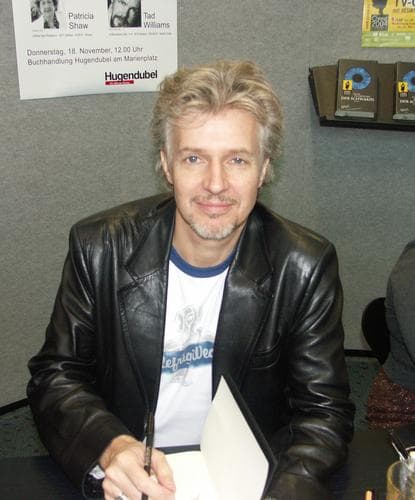
Biography coming soon.







