“Art is a way of possessing the world.”
— Robert Clark's reflection on the nature of artistic creation and motivation.

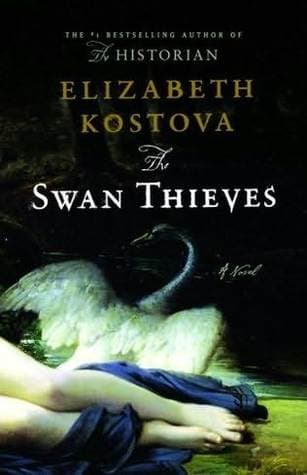
Elizabeth Kostova (2009)
Genre
Literary Fiction / Historical Fiction / Creativity / Mystery / Romance
Reading Time
1500 min
Key Themes
See below
Sign in to track this book
A psychiatrist's ordered life shatters when a renowned painter's violent obsession with a 19th-century French Impressionist mystery pulls him into a labyrinth of lost loves, artistic genius, and historical tragedy spanning generations and continents.
The novel opens with Dr. Andrew Marlowe, a psychiatrist and amateur painter, learning of a shocking incident: acclaimed artist Robert Oliver has attacked a famous Impressionist painting, 'L'Heure Bleue' by Antoine Vernet, at the National Gallery of Art in Washington D.C. Oliver is admitted to the psychiatric hospital where Dr. Marlowe works. Oliver is unresponsive and refuses to speak, only sketching images of swans. This behavior and the public outcry intrigue Marlowe, who is assigned to Oliver's case. Marlowe is drawn into the mystery of why a celebrated artist would destroy art, particularly one so similar to his own.
As Marlowe tries to understand Robert Oliver's mind, he discovers unsent letters in Oliver's studio, addressed to a woman named Beatrice. These letters, filled with passionate declarations and artistic discussions, hint at a complex relationship. Marlowe realizes that understanding Beatrice is key to unlocking Oliver's psychological state. He begins to piece together Oliver's life, learning about his reclusive nature and intense focus on his art. The letters reveal a deep connection between Oliver's artistic inspiration and this mysterious woman, Beatrice.
Driven by professional curiosity and a growing personal interest, Dr. Marlowe seeks out Alexandra, Robert Oliver's estranged wife and a fellow artist. Alexandra is initially wary but agrees to speak with Marlowe. She recounts their complicated marriage, Oliver's artistic intensity, and the dissolution of their relationship, hinting at his single-minded pursuit of art and a growing distance between them. Alexandra provides details about Oliver's artistic journey and his retreat into his own world, offering the first glimpse into the man behind the enigma.
Marlowe's investigation leads him to Kate, Robert Oliver's former student and current lover. Kate, a talented art restorer, is devastated by Oliver's actions and his silence. She shares her knowledge of Oliver's artistic process and his connection to the Impressionist period, particularly the works of Antoine Vernet. Kate reveals Oliver's obsession with a specific painting and his belief that an artistic secret was hidden within Vernet's work. Her perspective adds to Oliver's motivations, suggesting his breakdown is tied to a deeper artistic quest.
As Marlowe delves deeper into the letters and Oliver's past, a parallel narrative unfolds: the story of Antoine Vernet, the late 19th-century French Impressionist painter, and his clandestine affair with Beatrice de Clerval. The letters, written in Vernet's hand and discovered by Oliver, describe their intense love, their shared artistic sensibilities, and the challenges they faced in a rigid society. Oliver's fascination with this historical romance becomes clear; he believes Beatrice de Clerval was not just Vernet's muse but also an uncredited artist herself, whose work might have been attributed to Vernet.
Robert Oliver's research into Vernet and Beatrice de Clerval becomes an all-consuming quest. He travels to France, tracing Vernet's footsteps and searching for any evidence of Beatrice's own artistic output. Oliver believes that Beatrice was a significant artist, whose contributions were overshadowed or even stolen by Vernet. He becomes convinced that the attacked painting, 'L'Heure Bleue,' holds a clue to her lost works, possibly even containing a hidden layer or signature. This obsession consumes him, isolating him from Alexandra and later, Kate.
As Dr. Marlowe continues his sessions with Robert Oliver and pieces together the stories from Alexandra and Kate, his professional distance erodes. He becomes invested in Oliver's journey, recognizing the artistic passion and the pain of lost love that drive him. Marlowe, an amateur painter himself, understands the artistic impulse and the desire for recognition. He begins to see parallels between Oliver's obsession and his own quiet longing for deeper connection, blurring the lines between doctor and patient.
Through Oliver's confessions, the historical letters, and art historical research, Dr. Marlowe finally understands Robert Oliver's actions. Oliver's attack on 'L'Heure Bleue' was not destruction but an attempt to reveal a painting he believed was hidden beneath Vernet's masterpiece—a painting by Beatrice de Clerval herself. He was convinced that Vernet had painted over his lover's work, either to protect her reputation, claim her genius, or preserve a secret. Oliver's breakdown stemmed from the frustration of being unable to prove his theory and restore Beatrice's artistic legacy.
The novel concludes with Dr. Marlowe gaining an understanding of Robert Oliver's motivations. While the immediate outcome of Oliver's actions is his continued psychiatric care, his story highlights the power of art, love, and the unseen contributions of women artists. Marlowe, affected by Oliver's case, finds his own perspective on art and life changed. He continues his painting, now with a renewed sense of purpose and a deeper appreciation for the stories art can tell, both visible and hidden.
The Protagonist
Marlowe transforms from a detached observer to an emotionally invested participant, gaining a deeper understanding of human passion and the power of art, which enriches his own life and art.
The Antagonist/Central Figure
Oliver's arc is less about personal growth and more about the unveiling of his motivations, revealing the depth of his artistic and romantic obsession.
The Supporting
Alexandra moves from resentment and hurt to a more resigned understanding of Oliver's nature, finding peace in her own artistic path.
The Supporting
Kate grapples with the shock and pain of Oliver's actions, eventually seeking to understand and support him.
The Supporting/Historical Figure
Beatrice's arc is revealed retrospectively, showing her struggle for artistic identity and her tragic fate, ultimately being 'discovered' through Oliver's actions.
The Mentioned/Historical Figure
Vernet's character is revealed through historical fragments, his actions shaping the central mystery and the lives of the present-day characters.
The novel explores different facets of obsession, from artistic dedication to romantic fixation. Robert Oliver's pursuit of Beatrice de Clerval's hidden art consumes his life, leading to his public breakdown and the destruction of his personal relationships. Dr. Marlowe, initially a detached observer, finds himself drawn into a professional and personal obsession with understanding Oliver, blurring ethical boundaries. The historical narrative of Vernet and Beatrice also portrays an intense, consuming love that borders on obsession, highlighting its power to both create and destroy. This theme suggests that while obsession can drive artistic achievement, it can also lead to isolation and self-destruction, as seen in Oliver's tragic unraveling.
“He understood then what he was up against: not madness, but a passion so profound it had warped the very fabric of Oliver's existence.”
Art in 'The Swan Thieves' is a powerful medium for expression, love, and the preservation of history, but also a repository of secrets and hidden truths. The central mystery revolves around the idea of a painting within a painting, symbolizing how art can conceal as much as it reveals. Oliver's belief that 'L'Heure Bleue' hides Beatrice's work underscores the novel's exploration of artistic legacy and the potential for historical injustice. Art transcends time, connecting characters across centuries, and serves as a mirror for human emotions and aspirations. The act of creation itself is significant, capable of both immense beauty and pain.
“A painting, he realized, was not just paint on canvas. It was a story, a secret, a life captured in color and light.”
The novel highlights the plight of unrecognized talent, particularly that of women artists. Beatrice de Clerval's story is an example of a brilliant artist whose contributions were subsumed by a male counterpart and societal expectations. Robert Oliver's quest is an attempt to rectify this historical injustice, to give voice and recognition to a talent that was silenced. This theme prompts reflection on how history is written, whose stories are told, and how many brilliant minds might have been lost or forgotten due to bias and circumstance. It underscores the importance of actively seeking out and restoring marginalized narratives.
“How many hands, how many brilliant minds, had been erased from the canvases of history?”
Love, in its various forms—romantic, platonic, artistic—is a driving force throughout the novel, linked with themes of loss and longing. The passionate, forbidden love between Vernet and Beatrice forms the historical heart of the mystery, marked by its secrecy and eventual tragic separation. In the present day, Robert Oliver's deep love for Alexandra and later Kate is overshadowed by his artistic obsession, leading to the loss of those relationships. Dr. Marlowe, too, experiences a subtle form of loss in his solitary life, altered by his exposure to such emotions. The novel suggests that while love can inspire and elevate, its loss can lead to suffering and desperate acts.
“Sometimes, the greatest love was also the greatest prison, built by hands that meant only to protect.”
Unsent letters bridge the historical and contemporary narratives.
The discovery of unsent letters, both from Robert Oliver to Beatrice and historically from Antoine Vernet and Beatrice de Clerval, serves as a crucial plot device. These letters provide direct access to the characters' inner thoughts, motivations, and the emotional core of their relationships, bypassing direct narration. They are instrumental in unraveling the central mystery, revealing the historical romance, and illustrating Oliver's descent into obsession. The act of reading these private communications also draws Dr. Marlowe, and by extension the reader, deeper into the characters' worlds, blurring the lines of observation.
The novel alternates between present-day investigation and 19th-century historical romance.
The story unfolds through two intertwined narratives: Dr. Marlowe's present-day investigation into Robert Oliver's mental state and the historical tale of Antoine Vernet and Beatrice de Clerval in 19th-century France. This structure allows the reader to gradually piece together the puzzle alongside Marlowe, understanding how the past directly influences the present. The parallels between Oliver's obsession and Vernet's artistic choices, and between the women in Oliver's life and Beatrice, enrich the thematic exploration of love, art, and obsession across different eras.
Characters' perspectives offer fragmented and subjective truths.
While Dr. Marlowe is the primary lens through which the present-day story is told, the novel employs an implicit form of unreliable narration by presenting fragmented truths through the subjective accounts of Alexandra, Kate, and Oliver himself. Each character offers a biased, incomplete perspective shaped by their personal experiences and emotional states. Marlowe must synthesize these disparate accounts, along with the historical letters, to construct a coherent truth. This device highlights the difficulty of truly knowing another person and the subjective nature of memory and perception.
Swans represent beauty, grace, and hidden truths.
Swans are a recurring motif throughout the novel, appearing in Oliver's initial sketches, the title, and subtly woven into the narrative. They symbolize several key themes: beauty, grace, and artistic inspiration, particularly in the context of painting. However, they also represent hidden truths and the potential for darkness or complexity beneath a serene surface, echoing the 'painting within a painting' mystery. The swan can also signify metamorphosis and transformation, reflecting the changes in Marlowe and the revelation of Beatrice's hidden identity. They are a visual shorthand for the elegance and enigma at the heart of the story.
“Art is a way of possessing the world.”
— Robert Clark's reflection on the nature of artistic creation and motivation.
“Every painting is a kind of secret.”
— Reflecting on the hidden meanings and stories within artworks.
“The past is never really gone, it just waits for us to find it.”
— Examining how historical events and personal histories resurface.
“Love, like art, is a process of seeing more deeply.”
— Exploring the parallels between artistic perception and romantic understanding.
“To truly see a painting, you must give yourself to it.”
— The idea that engagement with art requires vulnerability and surrender.
“Obsession is a kind of love, but a dangerous one.”
— Considering the intensity and peril of Robert Clark's artistic and personal fixations.
“There are always two stories: the one you tell, and the one that is true.”
— Highlighting the subjective nature of narrative and hidden truths.
“A great artist steals from his influences, but makes the theft his own.”
— Discussing the role of influence and originality in artistic development.
“The act of creation is always an act of faith.”
— Emphasizing the belief and commitment required for artistic endeavor.
“Sometimes the greatest mysteries are not in what is hidden, but in what is plainly seen.”
— Challenging the conventional understanding of mystery and revelation.
“Every life is a collection of brushstrokes, some bold, some delicate.”
— Metaphorically comparing a human life to a painting, full of varied experiences.
“We are all trying to fill a void, some with art, some with love, some with distraction.”
— Exploring the universal human quest for fulfillment and meaning.
“The silence of a painting can speak volumes.”
— Reflecting on the evocative power of visual art, even without words.
“To understand the present, you must dig into the past.”
— Underlining the interconnectedness of time and the importance of history.
Ready to see how well you understood this book? Take our interactive quiz with 10 questions.

Biography coming soon.







