“It was not right, the old man knew, to give up the old ways, but what else was there to do?”
— Archie's father, Modeste, reflects on the changing world and the decline of their traditional way of life.

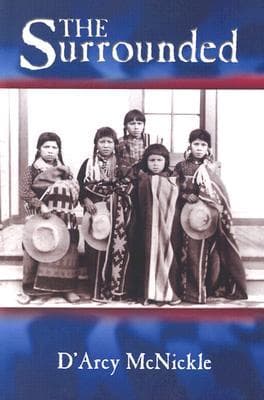
D'Arcy McNickle (1978)
Genre
Literary Fiction / Historical Fiction
Reading Time
297 min
Key Themes
See below
Sign in to track this book
A young man, educated in the white man's world, returns to his family's ranch on the Flathead Reservation. He is caught between clashing cultures, his family's struggles, and the reservation's destructive hold, leading to his ruin under the law he tried to avoid.
Archilde León, educated in a federal Indian boarding school and later in the city, returns to his family's ranch on the Flathead Indian Reservation in Montana. He plans a short stay before returning to his life away from the reservation. His father, Max, is a Spanish immigrant who built a successful ranch, while his mother, Catharine, is a Salish woman who is increasingly returning to traditional ways in her old age. Archilde feels alienated, caught between his European education and Salish culture, and between his parents' different expectations. He sees the stagnation and despair among his childhood friends and the younger generation on the reservation, which strengthens his desire to leave.
Archilde finds his mother, Catharine, increasingly distant from the Catholic faith and European customs she once accepted. She spends more time with her Salish relatives, especially her brother Narcisse, and participates in traditional ceremonies. This change creates tension with Max, who sees her return to tradition as a rejection of their life together and his values. Archilde, while not fully accepting his mother's path, feels drawn to understand her heritage. He also meets his old friend Mike, now a bootlegger, and other young men like Louis, who struggle with alcoholism and a lack of direction. This shows the destructive effects of reservation life on the youth.
Archilde goes with his mother, Catharine, and her brother, Narcisse, on a deer hunt in the mountains. During the hunt, Narcisse, who is old and somewhat frail, accidentally shoots a game warden. In a moment of panic and a desire to protect her brother, Catharine insists they bury the body and hide the crime. Archilde is horrified but feels forced to help his mother and uncle, becoming an unwilling accomplice. This event ties Archilde to the reservation and his family's actions, making his planned departure difficult and dangerous.
The secret of the game warden's death creates a heavy psychological burden on Archilde. He struggles with guilt and fear of discovery, which isolates him further. The incident also increases family tensions. Max, unaware of the full truth, senses a change in his wife and son, leading to more arguments and misunderstandings. Catharine, though firm in her decision, becomes more withdrawn and focused on protecting her family. Archilde finds himself caught between his desire for justice or confession and his loyalty to his mother, understanding the deep implications of their shared secret.
Louis, one of Archilde's childhood friends, is sinking into deeper despair, marked by alcoholism and reckless behavior. He is in a relationship with Elise, a pregnant young woman. Louis, overwhelmed by his situation, becomes more erratic. He confides in Archilde, seeking help, but his actions often cause more trouble. Archilde, despite his own internal struggle, tries to help Louis, but his efforts often fail, drawing him further into the troubled world of the reservation's youth. Louis's desperation hints at further tragedy and complicates Archilde's already unstable situation.
Louis is found dead, seemingly from a drunken fall or exposure. However, the circumstances are unclear, with hints of foul play or neglect. Archilde, along with others, moves Louis's body and tries to make his death appear accidental, or at least to avoid official investigation. This second act of hiding a death deepens Archilde's involvement and further traps him in the cycle of secrecy and fear on the reservation. Louis's death highlights the pervasive hopelessness and lawlessness that often go unpunished among the marginalized community.
The authorities eventually begin to investigate the game warden's disappearance, and their presence on the reservation creates fear and suspicion. Federal agents and local law enforcement question residents, and pressure builds on Archilde and his family. The investigators' questions and surveillance make Archilde increasingly paranoid, as he fears discovery of both the game warden's death and Louis's unclear demise. This outside threat pushes Archilde further into a corner, reducing any hope of escaping the reservation and its problems.
As the investigation closes in, Catharine, realizing the danger Archilde faces and the possibility of him being involved in both deaths, makes a desperate choice. In a powerful act of maternal love and sacrifice, she tries to take the blame for the game warden's death herself, or perhaps to create a diversion. Her actions are driven by a deep, almost instinctive need to protect her son, even if it means sacrificing her own life or freedom. This moment shows the depth of her love for Archilde and her connection to her traditional ways of protecting her family, no matter the consequences.
The story ends in a tragic confrontation between Archilde and law enforcement. Cornered and with no apparent escape, Archilde is either killed or fatally wounded by the authorities. The circumstances of his death are unclear, mirroring the many unresolved conflicts and injustices in the story. His death is a direct result of his initial decision to help his mother and uncle, and his later inability to break free from the cycle of violence and secrecy on the reservation. Archilde, caught between two worlds, becomes a victim of both.
The story concludes with a sense of loss and the lasting impact of the tragedies. Max is left to deal with the loss of his wife and son, and the destruction of his family. The reservation community continues to face its struggles, with little hope for resolution or justice. Archilde's journey, from his hopeful return to his tragic end, comments on the destructive forces on the Flathead Reservation in the 1930s: the clash of cultures, the breakdown of traditional ways, and the weight of poverty and discrimination. The ending emphasizes the inescapable nature of Archilde's 'surrounded' existence.
The Protagonist
Archilde begins with a desire to leave the reservation and forge his own path but is inexorably drawn into a cycle of secrets and violence, ultimately sacrificing his freedom and life.
The Supporting
She moves from an assimilated life to a profound embrace of her Salish heritage, culminating in a desperate act of sacrifice for her son.
The Supporting
Max maintains his European values throughout, struggling to comprehend the cultural shifts around him, ultimately suffering profound personal loss.
The Supporting
His accidental act of violence triggers the main plot, and he remains a passive figure burdened by his actions.
The Supporting
Louis descends further into alcoholism and despair, becoming a casualty of reservation life.
The Supporting
Her brief appearance highlights the vulnerability of women and children in the community.
The Mentioned
His death serves as the catalyst for the entire narrative, without personal development.
The novel explores the clash between Indigenous Salish culture and dominant white American culture. Archilde León embodies this conflict, educated in white schools yet pulled by his mother's return to traditional ways. Scenes like Catharine's participation in traditional ceremonies, contrasted with Max's European values, highlight the differences. The younger generation's despair, caught between two worlds and belonging to neither, further shows the destructive impact of this cultural clash on identity, leading to a sense of being 'surrounded' by forces they cannot control.
“He was a Salish, and he was nothing else. But he had been to school, and he had learned the white man's ways. He was caught between two worlds, and he belonged to neither.”
A sense of loss and despair fills the story, especially among the younger generation on the Flathead Reservation. Characters like Louis show this, succumbing to alcoholism and aimlessness due to a lack of opportunities and a breakdown of traditional social structures. The novel portrays the destructive impact of poverty, discrimination, and forced assimilation. The frequent deaths and the characters' inability to escape their circumstances highlight the deep hopelessness, suggesting a community 'surrounded' by decline. Archilde's initial desire to leave the reservation is a direct response to this despair.
“There was no place to go, no way out. They were surrounded.”
The accidental killing of the game warden and the cover-up form the central secret that binds Archilde and his family. This secrecy creates psychological pressure, guilt, and paranoia for Archilde, controlling his actions and sealing his fate. The repeated acts of concealing death, first the game warden's and later Louis's, show how secrets can trap individuals and communities, leading to further tragedy and an inability to seek justice or healing. The weight of these hidden truths changes relationships and drives the plot toward its tragic end.
“The secret was a living thing, growing within him, choking him.”
The novel explores the complex and often conflicting ideas of justice and law between white society and Indigenous traditions. The game warden's death, though accidental, is hidden by Catharine and Narcisse according to their understanding of protecting family and community, which clashes with white legal principles. The investigation by white authorities shows the imposition of a foreign legal system onto a community with its own ways of dealing with wrongs. Archilde's tragic end shows the harsh consequences when these two systems of justice collide, often with devastating results for the Indigenous characters.
“The white man's law was a net, and they were caught in it.”
Hints of future tragedy and Archilde's inescapable fate.
The novel employs foreshadowing through Archilde's initial feelings of unease and the palpable sense of despair on the reservation. His inability to leave, despite his intentions, subtly hints that he will become entangled. The early descriptions of the declining state of the younger generation, particularly Louis, and Catharine's increasing reversion to traditional ways, all suggest that events will spiral beyond Archilde's control. The first tragic incident, the killing of the game warden, then foreshadows the subsequent deaths and Archilde's ultimate demise, reinforcing the idea that he is 'surrounded' by forces leading to a predetermined fate.
The central metaphor representing confinement and inescapable forces.
The title itself, 'The Surrounded,' serves as a powerful symbol throughout the novel. It represents the physical and psychological encirclement of the Indigenous people on the reservation by white society, its laws, and its cultural influences. It also symbolizes Archilde's personal predicament: surrounded by conflicting cultural expectations, family loyalties, and the consequences of tragic events. The characters are 'surrounded' by poverty, despair, and a lack of agency, with no clear path to escape. This pervasive sense of being trapped and hemmed in is central to the novel's tragic atmosphere and theme.
Situations where cultural intentions lead to unintended, often tragic, outcomes.
Cultural irony is evident in Catharine's actions. Her return to traditional Salish ways, driven by a desire for cultural authenticity and protection of her family, leads her to conceal the game warden's death according to a traditional, albeit desperate, logic. However, this act directly clashes with white law and ultimately entraps her son, Archilde, in a cycle of secrecy and violence. The very traditions meant to preserve and protect ultimately contribute to the family's downfall in the context of a dominant white legal system, highlighting the tragic clash of worldviews.
“It was not right, the old man knew, to give up the old ways, but what else was there to do?”
— Archie's father, Modeste, reflects on the changing world and the decline of their traditional way of life.
“The white man’s law was a net, and once you were in it, you couldn’t get out.”
— Archie struggles with the legal system after his brother's crime, feeling trapped by its foreignness.
“He knew that he belonged to neither world completely, but was caught between them, a man without a country.”
— Archie reflects on his mixed heritage and education, feeling alienated from both white and Salish societies.
“The land was theirs, always had been, but it was being taken away, piece by piece.”
— The elders lament the encroachment of white settlers and the loss of their ancestral lands.
“There was a quiet desperation in the eyes of the old people, a knowledge that their time was ending.”
— Archie observes the weariness and resignation of the older generation as their culture fades.
“He had gone away to learn the white man’s ways, but now he was back, and the old ways were still strong in his blood.”
— Archie returns from boarding school, finding himself pulled between his education and his roots.
“The young ones, they didn’t remember the old songs, the old stories. They were lost.”
— Modeste expresses sorrow over the younger generation's disconnection from their cultural past.
“It was a strange sort of freedom, to be free to starve, free to be nothing.”
— Archie ponders the limited choices and impoverished conditions faced by his people.
“The mountains, they had seen everything. They would remain long after the white men and the Indians were gone.”
— A character reflects on the enduring presence of nature amidst human struggles and transience.
“He felt a great weariness, a profound sadness for all the things that had been lost and could never be regained.”
— Archie experiences a deep emotional toll from the cumulative losses suffered by his family and community.
“They had learned to be ashamed of who they were, and that was the greatest tragedy of all.”
— The narrator comments on the internalized shame imposed by the dominant culture on the native people.
“The past was not dead; it was alive, a living wound that bled into the present.”
— The lingering effects of historical injustices and trauma are felt by the characters.
“Sometimes, he thought, it was better not to know too much, not to see too clearly.”
— Archie contemplates the burden of awareness regarding the grim realities faced by his people.
“The river flowed on, indifferent to the sorrows of men, carrying its secrets to the sea.”
— A reflection on the stoicism of nature contrasted with human suffering, as the river symbolizes continuity.
Ready to see how well you understood this book? Take our interactive quiz with 10 questions.

D'Arcy McNickle was a Salish author and activist, known for his novel "The Surrounded." His writing often explored the complexities of Native American identity and the clash between Indigenous and European-American cultures. McNickle was also a key figure in Native American advocacy and education.







