“There are no monsters, not really. Only people who are a little different.”
— Cosmo Hill's early realization about the 'monsters' at the orphanage.

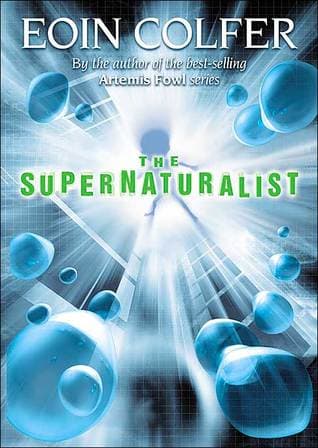
Eoin Colfer (2004)
Genre
Fantasy / Children's / Science Fiction / Young Adult
Reading Time
270 min
Key Themes
See below
Sign in to track this book
In a future of corporate orphanages and deadly product testing, a runaway boy sees life-draining specters, joins a team of teen hunters, and uncovers a conspiracy bigger than the monsters themselves.
Cosmo Hill, a fourteen-year-old orphan, lives at the Clarissa Frayne Institute for Parentally Challenged Boys, Freight Class, in Satellite City. The Institute is more a forced labor camp than an orphanage, where boys test dangerous products for the Myishi Corporation. Daily, Cosmo and boys like Ziplock get hurt from these tests. They know 'graduation' means being sent to the equally bad Work Experience Program. Cosmo, needing to survive and feeling the injustice, plans his escape, knowing staying at Clarissa Frayne will lead to his death.
During a chaotic product test with a super-adhesive, Cosmo sees his chance. As the adhesive fails and chaos erupts, he slips past guards and escapes into Satellite City's alleys. Exhausted, he collapses. While recovering, he sees a strange, glowing creature feeding on an unconscious man. Before he can understand, a group of kids appears, armed with odd devices, and attacks the creature. Cosmo realizes these kids also see the 'Parasite'.
The kids, the Supernaturalists, are Stefan Bashkir, the leader; Mona Lisa, a tech-savvy girl; and Ditto, a young, quiet boy. They tell Cosmo they, like him, see energy-draining creatures they call 'Parasites.' They believe these Parasites slowly kill humans and hunt them with their gadgets, which disrupt the creatures' energy. Stefan invites Cosmo to join their group and mission, offering him a sense of belonging he has never known.
Cosmo settles into the Supernaturalists' hideout: an old blimp high above the city in an abandoned 'No-Man's-Land' district. He learns how to use their 'Blast-sticks' to stop Parasites. He sees the group's roles: Stefan's leadership, Mona's tech skills, and Ditto's quiet observation. Despite their shared goal, Cosmo senses a deeper mystery about their mission and where they came from. He starts to bond with his new friends, finding camaraderie and purpose that contrasts with his past at Clarissa Frayne.
As the Supernaturalists continue their hunts, their actions draw the attention of the Myishi Corporation, which runs Satellite City and the Clarissa Frayne Institute. Myishi security, especially Commander Vex, starts watching the children, seeing them as a threat. The Supernaturalists realize they are not just fighting unseen beings, but now also the most powerful corporation in their world, making their dangerous lives even riskier.
During a tough encounter, Myishi security ambushes and captures the Supernaturalists. They are taken to a Myishi facility, where they meet the scientist, Dr. Kowloon. Kowloon reveals the truth: the 'Parasites' are not evil beings but parts of human souls, or 'auras,' that leave the body at death. He explains that Myishi, saying it's 'improving life,' has been secretly developing technology to capture and use these auras as a new energy source. The children's 'Blast-sticks' do not destroy the Parasites, but only disrupt them.
Dr. Kowloon also reveals that the Supernaturalists are from Myishi's genetic experiments, designed to see and interact with these auras. Their ability is not natural but created. He explains that the Clarissa Frayne Institute is a place to find subjects, and the dangerous product tests help auras detach faster, making them easier to collect. This news shatters the children's understanding of themselves and their mission, turning their world upside down and forcing them to rethink their purpose.
The Supernaturalists face a difficult ethical problem. They learn Myishi's research, while possibly offering new energy, involves using and possibly destroying human souls. Dr. Kowloon argues this research benefits humanity, but the children are horrified. They realize they have been unknowingly part of a morally questionable project, believing they saved lives when they were interfering with a natural process or helping its exploitation. Their previous ideas of good and evil become unclear.
United by betrayal and a new purpose, the Supernaturalists, including Cosmo, decide to escape the Myishi facility and expose the corporation's unethical actions. They realize the real 'enemy' is Myishi. Using their combined skills—Mona's tech knowledge, Stefan's strategy, Cosmo's quick thinking, and Ditto's unexpected abilities—they plan a daring escape and to sabotage Myishi's aura-harvesting. Their goal is not just freedom, but to stop Myishi's morally wrong experiments.
The Supernaturalists begin their plan. They create diversions, get past security, and move through the Myishi facility, facing resistance from Commander Vex and his security. The escape is dangerous. During the chaos, Ditto shows a surprising ability to manipulate energy, helping their escape. They reach the central aura-harvesting chamber, planning to disable the machinery and release the captured auras, hoping to disrupt Myishi's operation and expose its secrets.
In the central chamber, the Supernaturalists confront Dr. Kowloon, who tries to defend his work, and Commander Vex, who tries to stop them. A tense situation combines discussion with physical conflict. The children, aware of the risks, are determined to shut down the operation. Cosmo, thinking fast, causes a critical system overload. Stefan and Mona work to disable the main aura containment field, while Ditto uses his abilities to cause more disruptions, turning Myishi's own technology against them.
The Supernaturalists overload the Myishi system, causing a chain reaction. The captured auras are released, swirling before disappearing, a powerful sight. The facility starts to fall apart. With Commander Vex defeated and Dr. Kowloon's plans ruined, the children make a desperate escape from the crumbling Myishi complex. They emerge into Satellite City, no longer naive hunters of 'Parasites,' but survivors with a deeper understanding of life, death, and the corporations that try to control them.
After exposing Myishi's secrets and freeing the auras, the Supernaturalists are free but without a clear goal. They are no longer hunting 'Parasites,' as they now understand their true nature. They are heroes, though mostly unknown, for stopping Myishi's unethical plan. The experience has changed them, making Cosmo, Stefan, Mona, and Ditto closer. They look at Satellite City, still polluted and controlled by corporations, but now with hope, knowing they made a difference and are ready for new challenges, together.
The Protagonist
Cosmo transforms from a self-preserving orphan into a courageous and morally driven hero, finding a true family and purpose.
The Supporting
Stefan learns to question his long-held beliefs and adapts his leadership to a new understanding of their world.
The Supporting
Mona's scientific curiosity is redirected from 'hunting' to understanding, leading her to challenge corporate ethics.
The Supporting
Ditto's latent powers are revealed, transforming him from a quiet observer into a powerful force for good.
The Antagonist
Kowloon remains steadfast in his scientific pursuit, even as his unethical methods are exposed and thwarted.
The Antagonist
Vex remains a loyal enforcer until his defeat, never questioning the morality of his actions.
The Mentioned
Ziplock's arc is incomplete within the narrative, serving primarily to illustrate the grim fate Cosmo avoids.
The novel explores what makes up a soul and the ethics of changing it. The 'Parasites' are first thought to be evil, but are later revealed as human auras (souls) leaving the body at death. This makes characters and readers question life and death, and if a 'soul' can be an energy source. Dr. Kowloon's experiments show a view where even a person's core can be a product, which strongly contrasts with the Supernaturalists' eventual respect for these auras as parts of human life.
“What if the very essence of a person could be harnessed? What if the soul itself was just another form of energy?”
Satellite City shows a corporate-controlled future, where the Myishi Corporation controls everything, from orphanages to energy. The Clarissa Frayne Institute, where children are used for experiments, shows how unchecked corporate greed and control can dehumanize people. The widespread pollution and lack of freedom paint a grim picture of a society where profit and power are more important than human dignity. The Supernaturalists' fight becomes a rebellion against this oppressive system.
“In Satellite City, Myishi was everything. Myishi was the air you breathed, the food you ate, the dreams you dared to dream.”
Cosmo, as an unwanted orphan, constantly seeks belonging. His initial escape is for survival, but joining the Supernaturalists gives him a family and purpose he has never had. The other Supernaturalists, also outcasts, find their identity in their shared ability and mission. However, this identity breaks when they learn Myishi created their powers. They then must find a new identity, not as 'Parasite' hunters, but as protectors of ethics and truth, strengthening their bond through shared hardship.
“He had found a family, a purpose. Even if that purpose was a lie, the family was real.”
The story has much moral uncertainty. The Supernaturalists first believe they are doing good by 'destroying' Parasites, only to find they are interfering with human souls. Dr. Kowloon, the villain, truly believes his unethical experiments are for humanity's 'greater good,' forcing the heroes to deal with complex ethical questions. Is it okay to sacrifice individual souls for society's benefit? The story challenges simple ideas of good and evil, showing a world where intentions do not always match results, and where scientific progress can lead to moral decline.
“Sometimes, for the greater good, one must make difficult choices. Choices that lesser minds might call 'evil'.”
The unique ability to see the energy forms of souls (Parasites).
The aura sight is the central supernatural ability shared by Cosmo and the Supernaturalists. It allows them to perceive the 'Parasites' – which are later revealed to be human auras – that are invisible to ordinary people. This ability initially defines their mission, making them feel special and purposeful. It also serves as a crucial plot device by being the very trait Myishi engineered in them, thereby tying their existence directly to the corporation's unethical experiments. The revelation of its true nature fundamentally shifts the narrative and the characters' understanding of their world.
A dystopian orphanage serving as a testing ground for Myishi's experiments.
The Clarissa Frayne Institute acts as the catalyst for Cosmo's escape and introduction to the main plot. It establishes the dystopian nature of Satellite City and the ruthless corporate control of Myishi. More than just a setting, it is revealed to be a crucial plot device: a clandestine facility for Myishi to identify and cultivate children with the latent ability to see auras, making it directly linked to the Supernaturalists' origins and Dr. Kowloon's research. It underscores the theme of corporate exploitation and the dehumanization of the vulnerable.
The omnipresent, controlling corporate entity of Satellite City.
Myishi Corporation functions as the primary antagonist and the overarching symbol of corporate control. It is not merely a company but the governing power of Satellite City, dictating every aspect of life. As a plot device, Myishi drives much of the conflict, from the harsh conditions at Clarissa Frayne to the pursuit of the Supernaturalists. Its secret research into aura harvesting provides the central mystery and ethical dilemma, revealing the true nature of the 'Parasites' and the Supernaturalists' abilities, thereby unraveling the entire initial premise of the story.
A derelict blimp serving as the Supernaturalists' secret base.
The blimp hideout provides a physical representation of the Supernaturalists' status as outcasts and their defiance of the city's control. Tethered high above the 'No-Man's-Land,' it offers them a secure, secluded base of operations for their nightly hunts. As a plot device, it fosters a sense of camaraderie and family among the group, serving as a safe haven and a symbol of their independence. Its eventual abandonment signifies their forced confrontation with Myishi and their transition from hidden rebels to active challengers of the corporate regime.
“There are no monsters, not really. Only people who are a little different.”
— Cosmo Hill's early realization about the 'monsters' at the orphanage.
“The truth was, the world was a crazy place, and you were either crazy enough to survive it, or you weren't.”
— Cosmo reflecting on his life and the nature of their reality.
“Sometimes you just had to make a leap, even if you weren't sure where you'd land.”
— Cosmo's internal monologue when making a risky decision.
“There was a fine line between genius and madness, and sometimes it was a tightrope walk.”
— Reflecting on the inventors and scientists in the story.
“It was amazing how quickly you could get used to the impossible.”
— After encountering supernatural phenomena multiple times.
“Friends were like that. They didn't always make sense, but they were always there.”
— Cosmo thinking about his fellow Supernaturalists.
“The greatest discoveries often came from the most unlikely places.”
— Referring to the origins of their powers and knowledge.
“Fear was a powerful motivator, but hope was even stronger.”
— During a moment of despair, finding the will to continue.
“Every secret had a price, and some were too high to pay.”
— Considering the consequences of uncovering certain truths.
“Even in the darkest corners, there was always a flicker of light.”
— A moment of optimism in a bleak situation.
“The future was not set in stone; it was a path you forged yourself.”
— Encouragement to take control of their destiny.
“Sometimes, the only way to save something was to let it go.”
— A difficult decision involving sacrifice.
“Being different wasn't a curse; it was a superpower.”
— Embracing their unique abilities and differences.
Ready to see how well you understood this book? Take our interactive quiz with 10 questions.
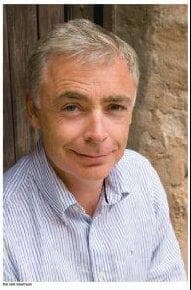
Biography coming soon.







