“Call me a devil, call me a demon, just don't call me normal.”
— Sal's defiant introduction to the town, embracing his perceived otherness.

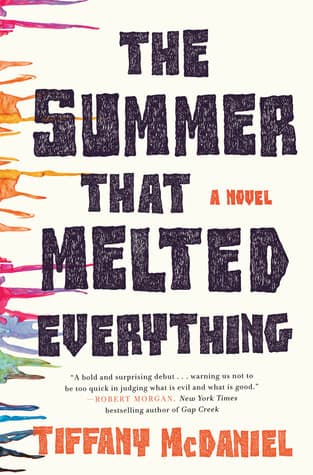
Tiffany McDaniel (2016)
Genre
Literary Fiction / Fantasy / Historical Fiction
Reading Time
480 min
Key Themes
See below
Sign in to track this book
In the summer of 1984, an Ohio town's invitation to the devil brings a mysterious boy named Sal, whose presence reveals the community's deepest fears and the true nature of good and evil.
In the summer of 1984, the small, isolated town of Breathed, Ohio, suffers from a heatwave. Autopsy Bliss, the town's prosecutor, places an advertisement in the local newspaper, inviting the Devil to come to Breathed. He wants to confront evil, believing it might bring understanding. Townspeople react with amusement, confusion, and unease, mostly seeing it as another of Autopsy's odd intellectual ideas. However, this act sets the stage for an unsettling arrival that will change the Bliss family and the community.
Days after Autopsy's invitation, Fielding Bliss, Autopsy's son, finds a young boy outside the courthouse. The boy, about thirteen, is bruised and disoriented by the heat. When asked his name, he says 'Sal' and then, more unsettlingly, claims to be the Devil, having accepted Autopsy's invitation. Despite this claim, Fielding, out of compassion, brings the boy home. The Blisses—Autopsy, his wife Grand Mary, and Fielding—are at first skeptical, thinking he is a runaway suffering from heatstroke or trauma, and welcome him, offering care.
Sal quickly fits into the Bliss household, showing an ability to understand and empathize, especially with Grand Mary. He helps her with chores, listens to her stories, and offers comfort. However, his presence affects Autopsy, who is both interested and bothered by Sal's deep and often unsettling observations about human nature, good, and evil. Sal speaks in riddles, has knowledge beyond his age, and seems to see into people's souls. While Fielding finds a strange friendship in Sal, Autopsy struggles with the boy's identity, unsure if he is a troubled child or the evil he invited.
As the heatwave continues, strange and disturbing incidents begin in Breathed. Gardens wither, animals get sick, and minor accidents happen more often. While many of these are due to the extreme weather, superstitious and paranoid townspeople, already on edge, start to link these misfortunes to Sal's arrival. Whispers spread about the 'Devil boy' and his bad influence. Sal's strange manner, unusual knowledge, and claims only increase the growing fear and hostility towards him, turning him from a curious stranger into a suspected bringer of doom.
Fielding Bliss, initially protective of Sal, forms a deep friendship with the mysterious boy. Sal shows Fielding new ways of seeing the world, sharing insights and stories that challenge Fielding's understanding of life and morality. However, Fielding also notices Sal's unsettling ability to know things he shouldn't, to seemingly influence events, and to provoke strong, often negative, reactions in others. These moments create doubt in Fielding's mind, making him question if Sal is just a troubled child or if there is a more supernatural truth to his claims. This internal conflict weighs on Fielding as he tries to balance his affection for Sal with the growing evidence against him.
The town's suspicion turns into open anger after a disturbing event at the local creek. A local boy, known for bullying, is found severely injured after an encounter with Sal. The exact details are unclear, but the community, already angry from fear and heat, quickly blames Sal. This event transforms general apprehension into open hostility and a desire for revenge. It strengthens the town's belief that Sal is a dangerous, evil force, creating a divide between the Bliss family, who still protect Sal, and the increasingly unified and vengeful community of Breathed.
Haunted by his invitation and the chaos Sal's presence has caused, Autopsy Bliss investigates Sal's background. He travels to nearby towns, gathering information about a missing boy named Sal, whose family was involved in a tragic incident of abuse. Autopsy's journey reveals a horrifying truth: Sal is not the Devil, but a deeply traumatized child who suffered extreme cruelty. This discovery shatters Autopsy's ideas of evil, forcing him to face the reality that true malevolence often comes from human cruelty rather than supernatural forces. He realizes his invitation brought a victim, not a demon, into their town.
The town's fear and hatred, fueled by rumors and the suffocating heat, reach a peak. A mob, led by figures representing the town's darker side, gathers, determined to rid Breathed of what they see as the Devil. They march towards the Bliss home, their intentions clear and violent. Autopsy, now knowing the truth about Sal, tries to reason with the angry crowd, attempting to expose the real evil they have overlooked. The scene becomes a dramatic standoff, a clash between understanding and ignorance, compassion and mob mentality, with Sal's life in danger.
As the mob closes in, the situation at the Bliss home spirals out of control. To protect Sal and expose the town's prejudice, the Bliss family makes a tragic sacrifice. The house, a symbol of their sanctuary and the truth they tried to uphold, catches fire. This act is a desperate plea for understanding and a stark demonstration of what fear and ignorance can cause. The fire consumes not just the house, but the town's innocence, leaving a lasting mark on its conscience and forcing it to confront the true nature of evil within humanity.
After the fire and the mob's actions, Breathed faces the tragedy and its role in it. The heatwave eventually breaks, but the emotional scars remain, forcing the townspeople to confront the evil they persecuted and the innocence they destroyed. Years later, an adult Fielding Bliss reflects on that summer. He carries the weight of the events, the lessons learned from Sal, and his family's sacrifices. The experience changed him, giving him a deep, painful understanding of human nature's capacity for both cruelty and compassion, and the lasting power of truth even in overwhelming darkness.
The Protagonist
Fielding transforms from an innocent boy into a man deeply marked by trauma and wisdom, carrying the lessons of the summer into adulthood.
The Central Figure/Catalyst
Sal's character arc is less about personal development and more about the unveiling of his true, tragic identity, forcing others to confront the real sources of evil.
The Protagonist/Moral Compass
Autopsy's arc sees him transition from a theoretical pursuer of evil to a practical defender of innocence, culminating in a heroic sacrifice.
The Supporting/Maternal Figure
Grand Mary remains steadfast in her compassion, embodying unwavering love and acceptance even in the face of adversity.
The Antagonist/Supporting
Reverend Banning's arc demonstrates the destructive power of dogma and fear, as he leads the town down a path of violence.
The Collective Antagonist/Setting
The town's arc reveals its descent from a seemingly ordinary community into a violent, prejudiced mob, ultimately forced to confront its own culpability.
The Narrator/Protagonist
The narrator's arc is one of processing trauma and transforming it into profound wisdom, providing a reflective lens for the entire story.
The novel explores where evil truly resides. The town, and Autopsy Bliss, initially believe evil is an external, supernatural force. However, through Sal's tragic past and the town's cruelty, the story shows that true evil is human prejudice, fear, ignorance, abuse, and mob mentality. The town's persecution of Sal, an innocent child, shows that the greatest darkness is within humanity. This is clear in the town's quick descent into violence and the Bliss family's sacrifice to show this truth.
“''The Devil, Fielding, isn't a red man with horns and a pitchfork. He's the man next door who lets his fear turn to hate. He's the whispers in the dark that become a roar.''”
The summer heatwave intensifies the town's hidden prejudices, leading them to blame Sal. Faced with unexplained problems and their own anxieties, the townspeople readily believe Sal, the mysterious outsider who claims to be the Devil, is the cause of all their troubles. This theme shows how easily communities turn against those seen as different, projecting their fears onto an 'other.' Reverend Banning helps fuel these flames, using his influence to solidify Sal's image as an enemy. The town's hysteria blinds them to Sal's vulnerability and the real sources of their suffering.
“''People don't want to look for the devil in their own reflection, Fielding. It's easier to find him in a strange boy on your doorstep.''”
A main conflict in the novel is the contrast between compassion and fear. The Bliss family, especially Grand Mary and Fielding, show compassion, offering Sal unconditional love and protection despite his claims. In contrast, the town of Breathed, driven by fear and misinformation, becomes a violent mob. The story shows how fear can corrupt individuals and communities, leading to irrationality and cruelty, while compassion, even in the face of the unknown, can reveal truths and offer redemption. The Bliss family's sacrifice highlights the power of compassion over fear.
“''Love, Fielding, is the only thing that can truly melt the devil away. Not fire, not hate, but love.''”
Sal's character, whether he is the Devil or a traumatized child, relates to the power of storytelling and belief. His enigmatic tales and insights captivate and disturb, shaping how the town sees him. The novel suggests that what people choose to believe about a story, or a person, can become their reality, regardless of objective truth. Autopsy's initial invitation, a story itself, sets the stage for Sal's arrival. The town's belief in Sal as the Devil drives their actions, showing how narratives can create reality and cause consequences. Fielding, as the narrator, later uses storytelling to reclaim the truth.
“''The stories we tell about ourselves, Fielding, are the only devils that truly exist.''”
The novel is a coming-of-age story for Fielding Bliss. The summer of 1984, with its heat and Sal's arrival, breaks his childhood innocence. He must face the harsh realities of human cruelty, prejudice, and the complexities of good and evil. His friendship with Sal, and the tragedy, changes his understanding of the world. The events force him to mature quickly, gaining a painful wisdom he carries into adulthood. The 'melting' of summer also symbolizes the melting away of Fielding's naive views.
“''That summer, Fielding, was when the world stopped being black and white and started bleeding in shades of red.''”
An oppressive, record-breaking summer heatwave that mirrors and exacerbates the rising tension and irrationality in the town.
The scorching heatwave is a pervasive and powerful plot device. It serves as both a literal and metaphorical element, creating an atmosphere of discomfort, irritability, and claustrophobia that mirrors the town's escalating fear and irrationality. Physically, it dehydrates and exhausts the characters, making them more susceptible to extreme emotions and hasty judgments. Metaphorically, it symbolizes the pressure cooker environment in Breathed, where prejudices and superstitions are brought to a boiling point. The heat 'melts' away reason, exposing the raw, ugly underbelly of the community and accelerating their descent into mob mentality. Its eventual breaking signifies a shift, but the scars remain.
Autopsy Bliss's newspaper advertisement challenging the Devil to visit Breathed, serving as the inciting incident.
Autopsy Bliss's audacious newspaper advertisement is the novel's central inciting incident. It acts as a deliberate provocation, setting in motion the entire chain of events. Initially intended as a philosophical exercise or a challenge to evil, the invitation ironically brings a profoundly traumatized child, Sal, into the town, forcing the community to confront the true nature of malevolence. This device highlights Autopsy's intellectual curiosity and moral conviction, but also his initial naivety regarding the practical consequences of such a grand gesture. It creates an immediate expectation of supernatural evil, which is then subverted to reveal a more human, and arguably more horrifying, form of darkness.
Sal's claim to be the Devil, functioning as a sustained red herring and a powerful symbol.
Sal's consistent claim to be the Devil is a crucial and multi-layered plot device. It serves as a powerful red herring, leading both the townspeople and the reader to initially suspect a supernatural threat. This misdirection allows the true nature of evil—human prejudice, abuse, and mob mentality—to be slowly revealed as the more insidious force. The 'Devil' persona also acts as a coping mechanism for Sal, a way for him to articulate the immense suffering and evil he has personally experienced. It forces the characters to grapple with their preconceived notions of good and evil, ultimately revealing that the real 'devil' is the fear and hatred within the human heart.
The story is recounted by an older, reflective Fielding Bliss, providing a retrospective and thematic lens.
The use of an adult Fielding Bliss as the narrator is a significant plot device. It allows for a reflective, retrospective tone, imbuing the events with a deeper sense of meaning and tragedy. The adult Fielding can provide context, foreshadowing, and thematic insights that a younger, in-the-moment narrator could not. His voice carries the weight of memory and the wisdom gained from processing trauma, guiding the reader through the complexities of the story. This narrative choice emphasizes the lasting impact of that fateful summer on Fielding and underscores the novel's themes of memory, truth, and the enduring lessons learned from profound experience.
“Call me a devil, call me a demon, just don't call me normal.”
— Sal's defiant introduction to the town, embracing his perceived otherness.
“The devil, if he exists, is not a man with horns and a tail. He is a man who can make you believe he is good.”
— Elderly Felix reflecting on the nature of evil and deception.
“Sometimes, the things we fear the most are the things that set us free.”
— Felix's internal struggle with his past and the arrival of Sal.
“A secret is like a wound. It festers. It poisons everything around it.”
— The town grappling with hidden truths and their corrosive effects.
“The summer was a crucible, burning away everything that wasn't real.”
— Narrator's observation about the transformative power of that particular summer.
“We are all made of stories, some we tell, some we keep locked away.”
— Felix contemplating the narratives that define individuals and communities.
“Hope is a dangerous thing, but it's all we have sometimes.”
— One of the characters facing despair but clinging to a sliver of optimism.
“The truth doesn't always set you free. Sometimes it just makes you lonely.”
— A character experiencing the isolation that can come with painful revelations.
“Grief is a house with many rooms, and you can get lost in any one of them.”
— A poignant description of the multifaceted nature of grieving.
“Miracles are just ordinary things seen with extraordinary eyes.”
— A perspective offered on finding wonder in the mundane.
“The past isn't dead. It isn't even past. It's breathing down your neck.”
— The town's inability to escape its historical prejudices and events.
“Sometimes, the only way to heal is to break completely.”
— A character undergoing a profound and necessary emotional breakdown.
“Love, like a wildfire, can either warm you or burn you to ashes.”
— Exploring the powerful and sometimes destructive nature of love.
“The world doesn't need more light, it needs more eyes to see the light it already has.”
— A philosophical reflection on perspective and appreciating existing beauty.
Ready to see how well you understood this book? Take our interactive quiz with 10 questions.







