“The past is like a string of pearls, each one a memory, and you can hold them in your hand, but they don't weigh anything.”
— Sets a reflective tone about memory and its ephemeral nature.

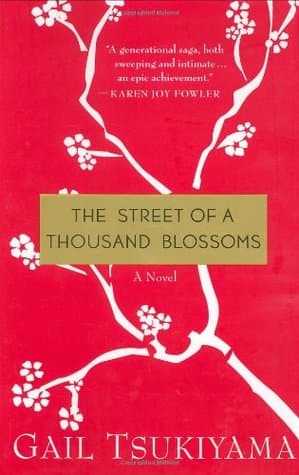
Gail Tsukiyama (2007)
Genre
Historical Fiction
Reading Time
10-12 hours
Key Themes
See below
Sign in to track this book
During WWII and Japan's transformation, two orphaned brothers—one a sumo wrestler, one a Noh mask artisan—work to keep traditions alive and pursue their dreams, navigating love, loss, and family bonds on the Street of a Thousand Blossoms.
In Tokyo, 1939, brothers Hiroshi and Kenji live with their grandparents, Yoshio and Michiko, on the Street of a Thousand Blossoms. Their parents died in the Great Kanto Earthquake. Hiroshi, the older brother, is drawn to sumo wrestling, showing natural strength. Kenji, more artistic, is fascinated by Noh mask carving. Their grandparents provide a loving and stable home, teaching them traditional Japanese values and encouraging their talents. Yoshio, a former fisherman, often shares wisdom, while Michiko manages the household. The boys' childhood is shaped by their neighborhood and the growing anticipation of their futures.
Meanwhile, across Tokyo, sisters Aki and Haru live with their parents, the renowned sumo master Sho Tanaka and his wife. Aki is the elder sister, sensitive and often lost in thought. Haru, in contrast, is independent, practical, and more assertive. Their father, Tanaka, is a respected figure in sumo, and their home reflects the sport's discipline and tradition. The girls have a comfortable upbringing, but their personalities lead them on different paths; Aki seeks beauty, while Haru is more grounded and focused on her sister.
As the boys grow, their paths meet the Tanaka family. Hiroshi's talent for sumo wrestling is recognized, leading to an invitation to train under Sho Tanaka. This is a great honor and a step toward his dream of becoming a professional rikishi. At the same time, Kenji's interest in Noh mask carving grows. He begins an informal apprenticeship with the respected mask-maker, Genjiro, known for his craftsmanship. Both brothers start their chosen vocations, filled with hope for their futures, unaware of the coming global conflict.
The peaceful aspirations of both families end with the attack on Pearl Harbor, marking Japan's entry into World War II. The war affects daily life in Tokyo, bringing rationing, air raid drills, and uncertainty. Hiroshi's sumo training is interrupted as resources become scarce and national priorities shift. Kenji finds his mask-making supplies dwindling, and demand for traditional art lessens under the shadow of conflict. The war forces everyone to put dreams on hold, as survival and national duty come first. The once lively Street of a Thousand Blossoms becomes quieter, reflecting the nation's somber mood.
As the war continues, life in Tokyo becomes harder. Food is rationed, and bombing raids are a constant threat. Hiroshi is conscripted into the Japanese army, separating him from his family and sumo career. This changes his life path. Kenji, due to an eye condition, avoids military service but struggles to find work and continue his mask carving amid scarcity. The Tanaka family also faces challenges, with their sumo stable affected by the war. The war's brutality begins to take a toll on both families, testing their endurance.
The war ends with devastating firebombing raids on Tokyo, leaving much of the city in ruins, including the Street of a Thousand Blossoms. Kenji and his grandparents survive, but their home and neighborhood are destroyed. Hiroshi returns from the war, scarred physically and emotionally. The Tanaka family also endures loss, though they survive. The immediate post-war period is a struggle for survival, marked by scarcity, the smell of ash, and the task of rebuilding. The families reunite, but the Japan they knew is gone, replaced by rubble and grief.
In the years after the war, Hiroshi and Kenji slowly rebuild their lives. Hiroshi, though injured, tries to return to sumo, facing physical and mental challenges to regain his strength. It is a long and hard path. Kenji, with his grandparents' encouragement, works to revive his mask carving, finding comfort and purpose in his art. He seeks out his old master, Genjiro, to continue his apprenticeship, hoping to help preserve traditional Japanese culture. Resilience guides them as they navigate a changed world, holding onto their pre-war dreams.
As years pass, the lives of the two families become more deeply connected. Kenji and Aki, both sensitive and artistic, find understanding and affection for each other. Their shared appreciation for beauty draws them together in a world still recovering. Hiroshi, initially reserved and dealing with war trauma, connects with Haru, whose practical nature and strong spirit offer him stability. These relationships, formed from shared hardship and mutual respect, provide hope and happiness amid the challenges of post-war Japan, offering a sense of normalcy.
Hiroshi's return to sumo shows his determination. Despite war injuries, he pushes himself, regaining his form and confidence, eventually achieving recognition in the sumo world, though with setbacks. Kenji dedicates himself to mask carving, mastering techniques under Genjiro's guidance. His work gains acclaim, and he becomes a respected mask maker, helping revive Noh theater. Both brothers, through perseverance, achieve their dreams, showing the power of passion and resilience in a world that tried to break them.
Throughout their lives, Yoshio and Michiko's wisdom and love guide Hiroshi and Kenji. Their grandparents' emphasis on tradition, perseverance, and purpose stays with the brothers as they navigate adulthood. They see their grandsons achieve their dreams and build families, ensuring that the legacy of love, art, and sport continues. The Street of a Thousand Blossoms, though physically changed, lives on in the spirit of its people, embodying the lasting strength of family and culture in a changing Japan. The cycle of life continues, enriched by their experiences.
The Protagonist
From a promising sumo prodigy, Hiroshi becomes a war veteran battling trauma, ultimately finding his way back to sumo and building a family.
The Protagonist
Kenji evolves from a curious apprentice into a renowned mask maker, embodying the preservation of culture amidst destruction, and finding love with Aki.
The Supporting
Aki grows from a delicate dreamer into a resilient woman who finds love and purpose with Kenji, embodying grace through hardship.
The Supporting
Haru develops from an independent young woman into a steadfast and supportive wife to Hiroshi, providing strength and stability.
The Supporting
Yoshio remains a steadfast source of wisdom and love for his grandsons, witnessing their growth and the continuation of their family legacy.
The Supporting
Michiko remains a constant source of comfort and love, a quiet pillar of strength for her family.
The Supporting
Tanaka navigates the challenges of war and its aftermath while continuing to uphold the traditions of sumo and supporting his daughters.
The Supporting
Genjiro acts as a steadfast guardian of traditional art, passing on his legacy to Kenji despite the world's upheavals.
Throughout the novel, family bonds and Japanese tradition offer comfort and guidance amid social change. Yoshio and Michiko's loving upbringing of Hiroshi and Kenji, instilling values of perseverance, forms the basis of their resilience. Even after war destroys their home, the family's spirit lasts. Kenji's dedication to Noh mask carving and Hiroshi's commitment to sumo wrestling represent the continuation of cultural heritage, showing how tradition can provide stability and identity in a changing world. The intertwined lives of the brothers and the Tanaka sisters highlight how family connections heal and rebuild.
“"Just remember," Yoshio said quietly to his grandsons. "Every day of your lives, you must always be sure what you're fighting for."”
The novel explores human resilience in the face of hardship. The characters endure WWII's horrors, including the firebombing of Tokyo, loss, and trauma. Hiroshi's struggle to return to sumo after war injuries, and Kenji's determination to continue mask carving amid scarcity, exemplify this theme. Their ability to rebuild lives, pursue passions, and find love after such devastation shows lasting spirit. The community's effort to reconstruct Tokyo reflects collective resilience, showing that even after great loss, hope and the will to live can prevail.
“Even in the ruins, life found a way to bloom, just as a single blossom could push through cracked pavement.”
The war is a central, transformative force in the novel, disrupting dreams, causing suffering, and changing Japan's landscape. Hiroshi's conscription and trauma, Kenji's struggle with his art, and the destruction of the Street of a Thousand Blossoms show the war's direct impact on lives and communities. Beyond physical devastation, the war also threatens traditional Japanese arts like sumo and Noh mask carving. The characters' efforts to revive these traditions after the war highlight the cultural struggle to recover and preserve identity in a world forever changed by conflict.
“The war had taken so much, not just lives and homes, but the very texture of their days, the quiet rhythm of their dreams.”
A main theme is pursuing one's passion and finding purpose, even when facing great obstacles. Hiroshi's drive to become a sumo wrestler and Kenji's fascination with Noh mask carving are central to their identities. Despite the war forcing them to temporarily abandon their dreams, they both return to their chosen paths with renewed determination. Their dedication to their crafts brings them personal fulfillment and contributes to the cultural fabric of a recovering Japan. Their journeys show that true purpose can sustain individuals through the darkest times.
“He knew, with a certainty that transcended the rubble of their city, that his hands were meant for carving.”
The story follows the converging and diverging paths of two sets of siblings.
The novel employs parallel journeys by following the lives of Hiroshi and Kenji, and separately, Aki and Haru. Initially, their stories unfold in distinct settings, highlighting their unique interests and family dynamics. The war acts as a catalyst, bringing their paths closer through shared hardship and eventually intertwining their destinies through marriage. This device allows the author to present a broader view of Japanese society during a tumultuous period, showcasing how different individuals and families experienced the same historical events while also exploring the universal themes of love, loss, and resilience through varied perspectives.
Sumo wrestling and Noh mask carving symbolize tradition, discipline, and the preservation of culture.
Sumo wrestling and Noh mask carving serve as powerful symbols throughout the narrative. Sumo, embodied by Hiroshi and Sho Tanaka, represents physical strength, discipline, and a deep connection to ancient Japanese traditions and ritual. It signifies the enduring spirit and honor of Japan. Noh masks, crafted by Kenji and Genjiro, symbolize artistic expression, spiritual depth, and the preservation of cultural heritage. They embody the beauty and intricate craftsmanship of traditional Japan, acting as a metaphor for the face of a nation, both revealed and concealed, through times of change and devastation. Both arts represent a commitment to mastery and a link to the past.
The physical street serves as a metaphor for the enduring spirit of a community.
The 'Street of a Thousand Blossoms' is more than just a setting; it functions as a central metaphor for the community, its traditions, and its resilience. Initially, it represents a vibrant, peaceful neighborhood steeped in tradition, a place of growth and dreams. Its destruction during the war symbolizes the immense loss and devastation inflicted upon Japan. However, the eventual rebuilding and the continued lives of the characters signify that while the physical street may change, the spirit and essence of the community—its ability to 'blossom' again after hardship—endures. It embodies memory, loss, and the cyclical nature of life.
“The past is like a string of pearls, each one a memory, and you can hold them in your hand, but they don't weigh anything.”
— Sets a reflective tone about memory and its ephemeral nature.
“Sometimes the most beautiful things are the ones we can't quite grasp, like the scent of cherry blossoms carried on the wind.”
— Discussing the fleeting nature of beauty and desire.
“A woman's heart is a garden, and sometimes it needs rain, even if the sky is clear.”
— Exploring the inner emotional landscape of a character.
“The greatest strength is not in never falling, but in rising every time we fall.”
— A character offering encouragement and wisdom after a setback.
“We carry our ancestors within us, their hopes and their sorrows, like the very blood in our veins.”
— Reflecting on family legacy and inherited experiences.
“Silence can be a language all its own, speaking volumes when words fail.”
— Observing the unspoken communication between characters.
“To truly see someone, you must look beyond their surface, into the stories they carry.”
— A character's realization about empathy and perception.
“Love is not a single blossom, but a thousand tiny petals, each one a moment, a touch, a shared breath.”
— Describing the multifaceted nature of enduring love.
“War takes more than just lives; it takes the colors from the world, leaving only shades of gray.”
— Reflecting on the devastating impact of conflict on daily life.
“The present moment is a gift, and sometimes we are too busy unwrapping the past or anticipating the future to truly appreciate it.”
— A character's contemplation on mindfulness and living in the now.
“Even in the darkest times, there is always a flicker of light, if you only know where to look for it.”
— Offering a message of hope amidst despair.
“The scent of rice cooking, the sound of laughter, these are the small anchors that hold us to life.”
— Highlighting the importance of simple, everyday pleasures.
“Regret is a heavy burden, but forgiveness, especially of oneself, can lighten the load.”
— A character struggling with past choices and seeking peace.
“Art is not just what we create, but how we see the world, how we choose to interpret its beauty and its pain.”
— Discussing the philosophy behind artistic expression.
Ready to see how well you understood this book? Take our interactive quiz with 10 questions.







