“It was a Monday morning, and Michael Brock was not thinking about the homeless.”
— Opening line, introducing Michael Brock's initial detachment from the world of the homeless.

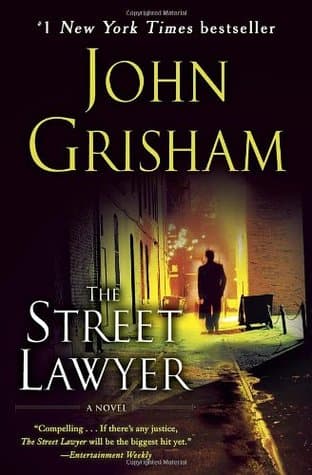
John Grisham (1989)
Genre
Thriller / Mystery
Reading Time
450 min
Key Themes
See below
Sign in to track this book
A D.C. corporate lawyer's life changes after a violent encounter with a homeless veteran, leading him to steal a top-secret file from his firm and dedicate his life to defending the people he once ignored.
Michael Brock, a rising lawyer at the D.C. firm Drake & Sweeney, is in a meeting when a homeless man named DeVon Hardy storms into the conference room. Hardy takes Michael and eight other lawyers hostage. Armed, Hardy demands to speak to the managing partners, accusing the firm of evicting his family. The situation escalates, leading to a standoff with police. An FBI sniper eventually kills Hardy, but not before he reveals a file number and mentions 'Riverton' and '999'. This traumatic event deeply affects Michael, making him think about homelessness and the firm's possible involvement.
After the hostage crisis, Michael struggles to return to his normal life. Hardy's image and desperate accusations stay with him. Driven by unease and a need for answers, Michael quietly investigates Hardy. He learns Hardy was a mentally ill veteran who had been in shelters. His family had been evicted from a building owned by a client of Drake & Sweeney. Michael's initial questions raise suspicion among his colleagues and superiors, especially partners in real estate law.
Michael's investigation leads him to a pro bono legal clinic for the homeless, where he meets Mordecai Green, a dedicated street lawyer. Mordecai helps Michael understand homelessness and introduces him to the Riverton Project. Michael uncovers a truth: Drake & Sweeney, through a shell corporation, illegally evicted thousands of poor families from a condemned building called Riverton Terrace. The firm then demolished the building to sell the land for a profitable development, leaving former residents, including DeVon Hardy's family, with nowhere to go.
With this information, Michael confronts his senior partners, especially Braden Chance, a powerful lawyer involved in the Riverton Project. Michael expects them to be horrified and to fix the situation, but they dismiss him, threaten him, and try to discredit him. The partners care more about the firm's reputation and profits than about the injustice. Realizing he cannot fight them from within, Michael makes a drastic decision: he secretly copies important documents about the Riverton Project before resigning from Drake & Sweeney.
Michael's resignation from Drake & Sweeney is a major turning point. He gives up his career, apartment, and comfortable life to join Mordecai Green's legal clinic, a small, underfunded organization helping the homeless. Michael, now a 'street lawyer,' begins to immerse himself in the difficult work of advocating for the marginalized. He learns the realities of life on the streets, the bureaucratic hurdles, and the human cost of poverty and homelessness, finding a new purpose for his legal skills.
With the stolen files, Michael and the clinic staff, including Mordecai and social worker Sofia, begin the hard task of finding the thousands of families illegally evicted from Riverton Terrace. This involves sorting through old records, visiting shelters, and canvassing streets. The process is slow and discouraging, as many former residents are scattered, distrustful, or have disappeared. The goal is to gather enough evidence and find enough victims to build a class-action lawsuit against Drake & Sweeney.
Drake & Sweeney, angry about Michael's betrayal and the stolen documents, starts a campaign of intimidation. They accuse Michael of theft and misconduct, trying to revoke his law license. Braden Chance uses his influence to obstruct the clinic's efforts, making it hard to gather information and find witnesses. Michael and the clinic staff face constant legal threats and harassment, but they remain determined, driven by their commitment to justice for the Riverton victims. The stakes are very high, as the powerful firm uses all its resources to protect its reputation.
Despite immense pressure and challenges, Michael and Mordecai gather enough evidence and find many former Riverton residents. They file a class-action lawsuit against Drake & Sweeney, accusing the firm of conspiracy, fraud, and illegal eviction. The lawsuit gets media attention, bringing the scandal to public view and forcing Drake & Sweeney to address the allegations. The legal battle is fierce, pitting the small clinic against one of the country's most powerful law firms, with millions of dollars and countless lives at stake.
Michael's transformation is both professional and personal. He divorces his estranged wife, Claire, who cannot understand his new life. He forms a close bond with Sofia, the compassionate social worker at the clinic, finding comfort and shared purpose. His relationship with Mordecai grows into a mentorship, and he learns about empathy, resilience, and true justice. Michael leaves his materialistic past, embracing a simpler, more meaningful existence, finding fulfillment in helping others instead of pursuing corporate success.
Facing strong evidence and public scrutiny, Drake & Sweeney is forced to settle the class-action lawsuit. While the exact terms are not fully detailed, it results in significant compensation for the Riverton victims, providing financial relief and acknowledging the injustice they suffered. The settlement also includes housing assistance and other support services, offering a chance for the displaced families to rebuild their lives. Michael, Mordecai, and Sofia celebrate this victory, knowing they made a tangible difference.
After the settlement, Michael stays dedicated to the legal clinic and its mission. He has found his true calling, leaving behind the pursuit of corporate power and wealth. He continues to work with Mordecai and Sofia, advocating for the rights of the homeless and marginalized. The experience fundamentally changed him, transforming him from an ambitious lawyer into a compassionate advocate for social justice. Michael's journey ends with an understanding that true success is serving others and fighting for what is right, regardless of personal cost.
The Protagonist
Michael transforms from a materialistic, self-absorbed corporate lawyer into a compassionate, dedicated advocate for the homeless, finding true purpose in social justice.
The Supporting
Mordecai remains a steadfast beacon of justice, successfully guiding Michael and achieving a major victory for the homeless.
The Antagonist
Braden Chance remains unrepentant, representing the forces of corporate greed, but is ultimately forced to concede to Michael's efforts.
The Supporting
Sofia continues her vital work, forming a strong partnership and romantic bond with Michael.
The Mentioned
Though his life tragically ends, DeVon Hardy's actions and story serve as the inciting incident for Michael's awakening and quest for justice.
The Supporting
Claire and Michael divorce, solidifying Michael's break from his former life.
The Supporting
Lyle provides a constant human connection to the homeless community, benefiting from Michael's advocacy.
This is the novel's main conflict, placing Drake & Sweeney's pursuit of profit and power against the basic human rights of the homeless. The Riverton Project shows corporate greed, where thousands are illegally evicted for a profitable development. Michael's journey shows the fight for social justice, as he gives up his career to help the marginalized. The story highlights the contrast between the firm's lavish lives and the desperate lives of the homeless, making readers confront the ethical issues of unchecked capitalism. The narrative suggests that true justice often means challenging powerful institutions.
“You can't save the world, Michael, but you can save a few people. That's good enough.”
Michael Brock's character arc explores redemption. Initially, he is a self-absorbed corporate lawyer, unaware of suffering. The hostage crisis acts as a catalyst, forcing him to see his moral blindness. His decision to leave Drake & Sweeney and dedicate his life to the homeless is an act of redemption, showing a complete change in his values. He leaves his materialistic past, finds purpose in service, and redefines his understanding of success and fulfillment. His journey shows that even those deep in a flawed system can find a path to moral awakening.
“He was a rising star with no time to waste, no time to stop, no time to toss a few coins into the cups of panhandlers. No time for a conscience.”
The novel clearly portrays the harsh realities, challenges, and human dignity of the homeless. Through Michael's time at the street law clinic, readers see the daily struggles, bureaucratic hurdles, mental health issues, and dehumanization experienced by those living on the streets. The story emphasizes that homelessness is not just an individual failing but often a result of systemic failures and corporate indifference, as seen with the Riverton evictions. The narrative aims to build empathy and understanding for a population often ignored or stereotyped, giving voice to their struggles and advocating for their rights.
“The streets were full of stories, and all of them were sad.”
The novel shows the dual nature of the legal system: its capacity for both injustice and powerful advocacy. Drake & Sweeney manipulates the law through shell corporations and loopholes to commit illegal evictions and protect profits, showing the law's potential for corruption. Conversely, Michael and Mordecai use the law for justice, fighting for the rights of the dispossessed through class-action lawsuits and pro bono work. The story illustrates that the law itself is neutral; its impact depends on the ethics and intentions of those who use it, highlighting the importance of legal professionals using their skills for ethical ends.
“The law, like a sword, could cut both ways.”
A violent event that forces the protagonist to confront his moral compass.
The hostage crisis at Drake & Sweeney is the pivotal inciting incident that shatters Michael Brock's complacent world. DeVon Hardy's desperate act forces Michael to witness the direct consequences of societal neglect and corporate greed. This traumatic event acts as a powerful catalyst, igniting Michael's conscience and compelling him to investigate the truth behind Hardy's accusations. Without this shocking confrontation, Michael would likely have continued his ascent up the corporate ladder, remaining oblivious to the injustices his firm perpetrated. It sets him on a path of radical transformation and moral reckoning.
Crucial documents that propel the investigation and legal battle.
The confidential files Michael copies from Drake & Sweeney, detailing the Riverton Project, serve as both a MacGuffin and a crucial plot catalyst. While their specific contents are not always fully detailed, their existence and Michael's possession of them are essential for building the case against the firm. These files represent the concrete evidence needed to expose Drake & Sweeney's wrongdoing and provide the legal clinic with the ammunition to pursue a class-action lawsuit. They also create a direct conflict, as Drake & Sweeney aggressively pursues Michael for their return, escalating the stakes of the narrative.
A wise and experienced guide who helps the protagonist navigate a new world.
Mordecai Green functions as a classic mentor figure for Michael Brock. He introduces Michael to the realities of street law, provides guidance on navigating the challenges of working with the homeless, and offers ethical counsel. Mordecai's wisdom, patience, and unwavering commitment to justice help Michael shed his corporate mindset and embrace his new calling. He teaches Michael that meaningful legal work is not about wealth or power, but about serving the vulnerable. Mordecai's presence is crucial for Michael's transformation, providing him with the knowledge and support needed to succeed in his new role.
The protagonist faces a choice between personal gain and ethical action.
Michael Brock faces a profound moral dilemma early in the story: continue his comfortable, lucrative career at a firm he knows is corrupt, or sacrifice everything to fight for justice for the victims of that corruption. This dilemma is central to his character arc. His choice to leave Drake & Sweeney and steal the files is a definitive break from his past, demonstrating his commitment to ethical action over personal gain. This internal conflict drives much of his initial struggle and defines his transformation, forcing him to weigh his conscience against his professional future and personal security.
“It was a Monday morning, and Michael Brock was not thinking about the homeless.”
— Opening line, introducing Michael Brock's initial detachment from the world of the homeless.
“He was a street lawyer now, whether he liked it or not.”
— Michael's realization after being forced into a new role following the office invasion.
“The law was supposed to be blind, but it had a way of seeing only what it wanted to see.”
— A reflection on the often-biased application of justice, particularly against the poor.
“There are two types of lawyers in this world: those who make a lot of money and those who actually help people.”
— Spoken by Modesto, highlighting the stark contrast in legal motivations and practices.
“The poor had no voice, no power, and certainly no money to hire real lawyers.”
— Michael's growing awareness of the systemic disadvantages faced by the homeless.
“He had traded a corner office for a folding chair, a high-rise view for a street-level reality.”
— Describing Michael's drastic change in lifestyle and perspective.
“Sometimes the only way to get justice is to make a lot of noise.”
— Modesto's advice on how to fight for the marginalized, suggesting direct action.
“The law was a weapon, and it could be used for good or for evil.”
— A philosophical observation on the dual nature of legal power.
“He was learning that true power wasn't in wealth or status, but in the ability to make a difference.”
— Michael's evolving understanding of what truly matters in life.
“The homeless weren't statistics; they were people, with stories and dreams, just like everyone else.”
— Michael's empathetic realization, breaking down his prior misconceptions.
“Fear was a powerful motivator, but so was injustice.”
— Michael grappling with the dangers of his new path versus his moral imperative.
“He felt a strange sense of freedom, a lightness he hadn't known in years, perhaps ever.”
— Michael's emotional state after shedding his corporate life and embracing his new purpose.
“The biggest lies are often told in the quietest voices, by those in power.”
— A cynical but realistic observation about the nature of corporate and governmental deception.
“Sometimes you have to break the rules to do what's right.”
— Michael's internal struggle and eventual decision to take unconventional legal action.
Ready to see how well you understood this book? Take our interactive quiz with 10 questions.

Biography coming soon.







