“He knew that he ought to be grateful to the farmer for rescuing him, but somehow he wasn't. He just felt sad and lonely.”
— The puppy, Jim, after being rescued from the river by Farmer Giles.

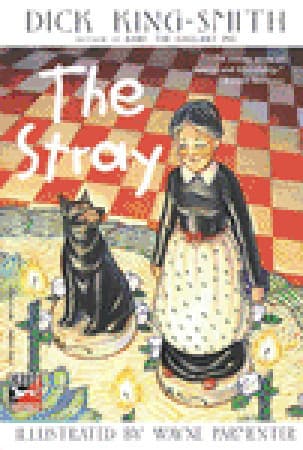
Dick King-Smith (1996)
Genre
Children's / Young Adult
Reading Time
120 min
Key Themes
See below
Sign in to track this book
An eccentric elderly woman, initially a stranger, finds an unexpected and loving home with a boisterous family who embraces her quirky charm.
The story begins with the Dollop family living in their comfortable home. One day, a very old woman, Mrs. Gray, appears at their front door. She is small, frail, and dressed in old clothes, carrying only a small suitcase. Mrs. Dollop, the mother of the large Dollop family, is initially wary and a bit direct, suspecting Mrs. Gray might be a con artist or a nuisance. However, Mrs. Gray explains she has nowhere else to go. With her gentle manner and a touch of eccentricity, she manages to win over Mrs. Dollop and the children. Mr. Dollop, with his kinder nature, is more immediately sympathetic, and the children are instantly captivated by the mysterious newcomer, especially young Rosie.
Mrs. Gray is invited in and slowly becomes part of the busy Dollop household. Her habits are unusual; she often talks to herself, hums old tunes, and seems to live in her own world. She loves animals, especially cats, and has an uncanny ability to understand them. The Dollop children, especially Rosie, find her endlessly interesting. She tells them stories about her past, filled with talking animals and magical events, which the children love but Mrs. Dollop dismisses as old age. Despite Mrs. Dollop's initial doubt, Mrs. Gray's gentle presence begins to subtly soften the household.
As days turn into weeks, Mrs. Gray's presence becomes a comforting part of the Dollop home. The children love her stories and her kind, patient nature. Even Mrs. Dollop, though she tries to keep her practical, no-nonsense front, finds herself growing fond of the old woman. Mrs. Gray helps with small tasks, like mending clothes, and her quiet wisdom occasionally offers unexpected insights. Her love for animals is clear as she befriends the family cat, Marmalade, and seems to communicate with it in a unique way. The family, once just a unit, now feels more complete with Mrs. Gray's quirky addition.
One afternoon, Mrs. Gray takes Rosie to the local park. While there, they see a scruffy, sad-looking stray dog. Mrs. Gray, with her natural empathy for animals, immediately feels a connection with the dog. She approaches it gently, talking to it in her soft, soothing voice. The dog, initially wary, responds to her kindness, allowing her to pet it. Rosie is amazed by Mrs. Gray's ability to calm the frightened animal. They decide to bring the dog home, much to Mrs. Dollop's initial dismay, as she is hesitant about adding another 'stray' to the household, especially a dog.
Despite Mrs. Dollop's concerns, Mr. Dollop and the children want to keep the stray dog. Mrs. Gray insists the dog needs a home and love. After some persuasion, Mrs. Dollop reluctantly agrees, as long as the dog is well-behaved and doesn't cause trouble. Mrs. Gray suggests naming the dog 'Stray,' explaining it marks his journey and new beginning. The dog, now named Stray, quickly settles into the Dollop household, forming a special bond with Mrs. Gray, who seems to understand his every bark and whimper. He becomes her constant companion, following her everywhere.
As Stray becomes more comfortable, his intelligence and unique abilities become clear. He is not just a regular dog; he seems to understand human conversations and instructions with remarkable clarity. Mrs. Gray often talks to him as if he were a person, and Stray responds with an understanding look. One day, when Rosie loses her favorite toy, Mrs. Gray calmly tells Stray to 'find it.' To everyone's astonishment, Stray sniffs around and quickly locates the toy. This incident shows Stray's extraordinary talent for finding lost objects, a skill that delights the children and even impresses Mrs. Dollop.
Word of Stray's incredible talent for finding lost items begins to spread throughout the village. People start coming to the Dollop house, bringing their problems of lost keys, jewelry, or even pets. Mrs. Gray, with Stray by her side, becomes the informal 'lost and found' department of the community. Stray, guided by Mrs. Gray's gentle prompts, always finds the missing articles, to the amazement and gratitude of the villagers. This new fame brings excitement to the Dollop household and further strengthens Mrs. Gray's place within the family and the community.
Throughout these events, clues about Mrs. Gray's past begin to appear. Her stories, once dismissed as ramblings, now seem to hold a deeper truth, especially her claims of understanding animals. Her connection with Stray is almost telepathic, and her knowledge of animal behavior is deep. Mrs. Dollop, while still practical, starts to wonder if there is more to Mrs. Gray than meets the eye. The children, of course, have always believed in her magical qualities. The reader starts to realize that Mrs. Gray might not be just an ordinary old lady but someone with a unique, almost mystical, bond with the animal kingdom.
One day, Mrs. Gray quietly announces she must leave the Dollop family. Her reasons are vague but suggest a sense of duty or a calling she must follow. The news devastates the children, especially Rosie, and even Mrs. Dollop feels a pang of sadness. The family has grown to love Mrs. Gray dearly, and the thought of her leaving is heartbreaking. They try to persuade her to stay, but Mrs. Gray, with her usual gentle resolve, explains it is simply her time to move on. Stray, sensing her imminent departure, becomes particularly clingy and sad.
The day of Mrs. Gray's departure arrives. It is a quiet, emotional farewell. She thanks the Dollop family for their kindness and love. As she prepares to leave, she gives Stray a special, heartfelt goodbye, almost as if entrusting him with a mission. Mrs. Gray assures the family that Stray will continue to be a source of joy and help. With a final wave, she walks away, disappearing as mysteriously as she arrived. The Dollop family is left with a deep sense of loss but also with Stray, who now seems to embody some of Mrs. Gray's unique spirit and connection to the world.
After Mrs. Gray's departure, Stray continues to live with the Dollop family. He maintains his remarkable ability to find lost items, and his reputation grows even further. He becomes a local legend, a sign of the extraordinary bond he shared with Mrs. Gray. The Dollop family, though they miss Mrs. Gray, finds comfort and joy in Stray's presence and his continued helpfulness. He is a living reminder of the kind, eccentric old woman who brought so much wonder into their lives. Stray's story reinforces the idea that love and kindness can transcend the ordinary, leaving a lasting positive impact on a community.
The Protagonist
She begins as a homeless stranger, is adopted by the Dollops, and through her kindness and unique abilities, transforms their lives before moving on, leaving a lasting legacy.
The Supporting
Starts as wary and skeptical of Mrs. Gray, but gradually opens her heart and accepts her, and later Stray, into her family.
The Supporting
Remains consistently kind and accepting, serving as a stable, loving force throughout the story.
The Supporting
Starts as an imaginative child, her belief in magic is affirmed by Mrs. Gray, and she matures slightly through the experience.
The Supporting
Transforms from a lost, timid stray to a beloved, helpful, and locally renowned member of the community.
The Mentioned
Remains a consistent, comforting presence, highlighting Mrs. Gray's unique bond with animals.
The novel shows how kindness and open-hearted acceptance can change lives. Mrs. Gray, a homeless stranger, is taken in by the Dollop family, who, despite Mrs. Dollop's initial reservations, offer her a home and love. This act of kindness not only gives Mrs. Gray comfort but also enriches the Dollop family's lives, bringing wonder and unexpected joy. Similarly, adopting Stray, the dog, shows how compassion for the overlooked can lead to good outcomes, as Stray becomes a valuable member of the community. This theme is central to the entire narrative, showing how empathy can bridge divides and create belonging.
“'She's a stray,' said Mrs. Gray. 'Just like me. She needs a home.'”
The story explores the idea that magic and wonder can be found in everyday life, often through an open and imaginative view. Mrs. Gray's stories, at first dismissed as ramblings, are embraced by the children, especially Rosie, and eventually reveal a deeper truth about her unique connection to animals. Stray's ability to find lost objects is a tangible example of this 'magic.' The book suggests that by looking beyond the surface and keeping a childlike sense of wonder, one can discover extraordinary elements in seemingly ordinary people and situations, making the mundane enchanting. It challenges a purely practical view of the world.
“''She doesn't just talk to them,' said Rosie. 'She understands them.'”
A core theme is the definition and importance of family, belonging, and what makes a 'home.' Mrs. Gray, a literal 'stray,' finds a loving home with the Dollops, showing that family is not just about blood but about love, care, and acceptance. The Dollop family expands its understanding of home to include not just people but also animals, like Stray, who become important members. The story shows how creating a sense of belonging for those who are lost or alone can lead to a richer, more complete family unit. Mrs. Gray's eventual departure reinforces that even temporary belonging can leave a lasting impact.
“'You're family now, Mrs. Gray,' Mr. Dollop had said, and she'd known he meant it.”
The novel emphasizes the wisdom and unique qualities of animals, and humanity's ability to connect with them. Mrs. Gray's ability to understand and communicate with animals, particularly Stray, highlights a deeper, intuitive knowledge often overlooked by humans. Stray's talent for finding lost items goes beyond simple training, suggesting an inherent intelligence and a connection to the world that humans might not fully grasp. The story encourages respect and appreciation for the animal kingdom, portraying them not just as pets but as thinking beings with their own forms of understanding and contribution.
“Mrs. Gray often said that animals knew more than people gave them credit for.”
An enigmatic character whose arrival disrupts and ultimately enriches the established order.
Mrs. Gray functions as the mysterious stranger. Her sudden appearance, lack of clear backstory, and eccentricities immediately pique the interest of both the characters and the reader. Her unknown origins allow for a sense of wonder and speculation, and her unique qualities gradually unfold, transforming her from a mere guest into a beloved, almost magical, figure. This device allows for the introduction of new perspectives and challenges the existing norms of the Dollop household, driving much of the plot's development and thematic exploration.
Attributing human characteristics or behavior to animals.
While not full anthropomorphism in terms of speaking, the novel heavily relies on depicting animals, particularly Stray, with human-like understanding and emotions. Stray is shown to comprehend complex instructions, respond to emotional cues, and even possess a 'talent' for finding things, implying a level of intelligence beyond a typical dog. Mrs. Gray's ability to 'understand' animals further blurs the line between human and animal communication, fostering a deeper empathy for the animal characters and reinforcing the theme of animal wisdom.
Hints or clues about future events or character revelations.
The novel uses subtle foreshadowing, particularly regarding Mrs. Gray's true nature and her eventual departure. Her fantastical stories, initially dismissed, gradually begin to seem more plausible as Stray's abilities are revealed, hinting that there's more to Mrs. Gray's 'magic' than simple imagination. Her vague mentions of needing to 'move on' or having a 'calling' subtly prepare the reader for her eventual, equally mysterious, departure. This device builds anticipation and adds layers to Mrs. Gray's enigmatic character, making her exit both sad and understandable within the story's logic.
An animal character with extraordinary, almost supernatural, abilities.
Stray embodies the 'magical' pet device. His exceptional intelligence and his unique ability to find lost objects elevate him beyond a typical animal companion. This device serves multiple purposes: it provides a tangible manifestation of the 'magic in the ordinary' theme, it creates plot points as people seek his help, and it acts as a lasting legacy of Mrs. Gray's influence after her departure. Stray's abilities are not overtly magical but are presented as extraordinary, blurring the lines between natural talent and a touch of enchantment.
“He knew that he ought to be grateful to the farmer for rescuing him, but somehow he wasn't. He just felt sad and lonely.”
— The puppy, Jim, after being rescued from the river by Farmer Giles.
“He was a good dog, Jim, a very good dog, and he loved his new home.”
— Narrator describing Jim's settling in at the farm.
“He was a sheepdog, and sheepdogs were meant to work, not to sit around doing nothing.”
— Jim's internal struggle with his purpose before discovering his talent.
“It was the best game in the world, and he was the best at it.”
— Jim's joy and confidence while herding the hens.
“The farmer's wife, Mrs. Giles, was a kind woman, and she understood dogs.”
— Introduction of Mrs. Giles and her compassionate nature.
“He didn't just chase them; he guided them, gently, firmly, exactly where they needed to go.”
— Description of Jim's unique herding style with the hens.
“Sometimes the best way to find your place is to try something new.”
— Implied lesson from Jim's journey from stray to hen-herder.
“A stray is just a dog who hasn't found his forever home yet.”
— A gentle philosophical thought about strays.
“He was a dog with a past, but he was also a dog with a future.”
— Narrator reflecting on Jim's journey and potential.
“Even the smallest creature can make a big difference.”
— The impact Jim, a small puppy, has on the farm.
“Love, like a good bone, can make a dog's tail wag.”
— A lighthearted metaphor about the power of affection.
“He had found his purpose, and it was a joyful one.”
— Jim's realization after successfully herding the hens.
“The farm wasn't just a place to live; it was a place to belong.”
— Jim's ultimate feeling about his new home.
“Sometimes, the family you find is better than the family you were born into.”
— Jim's experience finding a loving home after being abandoned.
Ready to see how well you understood this book? Take our interactive quiz with 10 questions.

Dick King-Smith was a celebrated British author known for his charming and humorous children's books, often featuring animals. His most famous work, 'The Stray,' published in 1988, earned him critical acclaim and widespread popularity. King-Smith penned over 100 books during his prolific career, leaving a lasting legacy in children's literature.

Dan Gemeinhart
4.5

Kate O'Hearn
4.4

Jeanne Birdsall
4.4

Jen Wang
4.4

Wendelin Van Draanen
4.3

John Marsden
4.3

Chris Van Allsburg
4.3
Jennifer A. Nielsen
4.2