“Mother died today. Or maybe yesterday; I don't know.”
— The opening line of the novel, setting the tone of indifference.

Albert Camus (1954)
Genre
Fantasy / Children's / Mystery
Reading Time
166 min
Key Themes
See below
Sign in to track this book
In a sun-drenched, indifferent world, a man's impulsive murder thrusts him into an absurd legal dance, stripping away societal connection until he embraces the 'benign indifference of the universe' from his prison cell.
The novel begins with Meursault, a young man in Algiers, receiving a telegram about his mother's death at the Marengo old people's home. He takes a two-hour bus ride to the home, where he refuses to see his mother's body. He smokes a cigarette and drinks coffee during the vigil. He notices the heat and his discomfort more than any grief. During the funeral procession the next day, under the hot sun, he watches the other mourners, including the home's director and Thomas Perez, his mother's close friend, but feels no strong emotions. He returns to Algiers, feeling only tired and wanting to sleep.
The day after his mother's funeral, Meursault goes to the public beach and meets Marie Cardona, a former typist from his office. They swim, flirt, and Marie comes to his apartment that evening. They make love, then go to the cinema to watch a comedy, laughing together. Marie is surprised by his mother's recent death, but Meursault finds her presence comforting. He feels no remorse or grief about his mother's death, simply enjoying the present moment with Marie, despite the recent solemn event.
Meursault's neighbor, Raymond Sintès, a man known as a pimp, invites Meursault to dinner. During the meal, Raymond says he found his mistress cheating and then beat her. He asks Meursault to write a letter to his mistress, meant to lure her back so he can publicly humiliate her. Meursault, feeling indifferent and having no strong opinion against it, agrees to write the letter. He feels no moral judgment about Raymond's actions or plans, simply doing what was asked.
After Raymond sends the letter, his mistress's brother confronts him, leading to a fight where Raymond is hurt. Meursault acts as a witness for Raymond with the police, saying the woman had been unfaithful. Later, Meursault sees his elderly neighbor, Salamano, who often abuses his old dog but is upset when the dog goes missing. Salamano's real grief over his lost pet contrasts with Meursault's lack of emotion about his mother's death, a detail Meursault notes without much thought.
Raymond invites Meursault and Marie to spend Sunday at a beach house owned by his friend, Masson, and his wife. The four swim and have lunch. Afterward, while walking on the beach, they see a group of Arabs, including the brother of Raymond's mistress. A fight starts, and Raymond is cut with a knife. Masson and Meursault help Raymond. The tension stays high, and later, Raymond, with a gun, returns to the beach alone, followed by Meursault.
Meursault, having taken Raymond's gun to stop more violence, walks back to the beach alone. He sees one of the Arabs, Raymond's mistress's brother, by a spring. The sun is very hot, and Meursault feels overwhelmed by the glare and heat. The Arab moves slightly, and Meursault, feeling a sudden, almost involuntary urge from the oppressive heat and light, fires the gun. He then fires four more shots into the still body. The murder happens without clear motive or emotion from Meursault, mostly because of the physical discomfort of the sun.
Meursault is arrested and jailed for the murder. During questioning, he describes the events factually, without showing remorse or giving a usual motive beyond the sun and his discomfort. He finds prison life boring but manageable, focusing on routines and physical feelings. His lawyer finds him hard to defend because he shows no emotion, especially about his mother's death. Meursault's main concern seems to be losing his freedom and his cigarettes, rather than the seriousness of his crime.
The trial begins, attracting public and media attention. The prosecution, led by the zealous Public Prosecutor, quickly moves from the murder itself to Meursault's character, especially his behavior at his mother's funeral. Witnesses, including the director of the old people's home and Céleste, the restaurant owner, are asked about Meursault's lack of tears and his smoking during the vigil. Marie testifies about their relationship, but her testimony is twisted to make Meursault seem like a heartless person, further emphasizing his perceived lack of morality.
The Public Prosecutor gives an emotional closing argument, portraying Meursault as a soulless monster who threatens society. He highlights Meursault's emotional detachment and connects his mother's death to the murder. He argues that Meursault's lack of remorse is more dangerous than the act itself. Meursault's lawyer tries to argue for less severe circumstances, blaming the act on the sun, but his defense is weak against the prosecution's emotional attack. The jury finds Meursault guilty of premeditated murder, and he is sentenced to be publicly guillotined.
A chaplain visits Meursault in his cell several times, urging him to turn to God and find comfort in faith. Meursault consistently refuses, stating his disbelief and his satisfaction with his current life. During the chaplain's last visit, Meursault has an outburst, grabbing the chaplain and angrily rejecting his beliefs. At this moment, Meursault realizes the meaninglessness of life and the 'benign indifference of the universe.' He accepts this truth, finding a strange peace and freedom in it, and wishes for a large, hostile crowd to witness his execution.
The Protagonist
Meursault begins as a passive observer of life, detached from emotional meaning. He ends by embracing the 'benign indifference of the universe,' finding a form of peace and freedom in his acceptance of life's absurdity, even in the face of death.
The Supporting
Marie remains largely static, representing conventional desire and affection, which Meursault cannot fully reciprocate.
The Supporting
Raymond remains a static character, representing a certain kind of raw, unrefined masculinity and moral ambiguity.
The Supporting
Salamano's character arc highlights the universality of grief and attachment, even in unexpected forms.
The Antagonist
The Public Prosecutor remains a static character, a personification of societal judgment and the demand for conventional meaning.
The Supporting
The Chaplain's persistent attempts to impose religious meaning ultimately provoke Meursault's final, defiant embrace of the absurd.
The Supporting
Celeste remains a static character, representing simple human goodness and a limited understanding of Meursault's complexity.
The Supporting
Masson remains a static character, representing a typical, unassuming individual.
The Mentioned
The Examining Magistrate remains a static character, representing the legal system's and society's struggle to comprehend Meursault's nature.
The central idea of 'The Stranger' is the philosophical concept of the absurd: the basic conflict between humanity's search for meaning and the universe's quiet indifference. Meursault shows this absurdity through his emotional detachment and his lack of typical reactions to important life events, like his mother's death or his own murder. His actions often come from immediate physical sensations rather than reason or moral concern. The trial itself highlights this, as society tries to put a rational, moral framework on Meursault's irrational and amoral life. He is condemned not for the murder, but for failing to meet expected emotional and social norms. His final realization, accepting the 'benign indifference of the universe,' is his ultimate embrace of this absurd state.
“For the first time, in that night alive with signs and stars, I opened myself to the gentle indifference of the world.”
Meursault's key trait is his deep emotional detachment and indifference to events that would usually cause strong reactions in others. He shows no grief at his mother's funeral, feels no special love for Marie, and commits murder without clear remorse or motive. This indifference extends to his own fate during the trial and his upcoming execution. This theme looks at human emotion and society's demands for people to feel and show certain emotions. Meursault's inability or refusal to show these expected emotions truly separates him from society and leads to his condemnation, more so than the murder itself.
“Maman died today. Or yesterday maybe, I don't know.”
The novel questions the unfair and often contradictory nature of societal judgment and the legal system. Meursault's trial quickly becomes an attack on his character, where he is condemned not for his crime but for failing to meet societal norms of grief and remorse. The prosecution creates a story of a heartless monster, using Meursault's indifference at his mother's funeral as the main proof of his moral failing. This shows how society demands meaning and conventional emotional responses, and how those who differ are quickly judged and punished, even if their actions are not evil but simply indifferent.
“I was accused of burying my mother with the heart of a criminal.”
For Meursault, the physical world and its sensory experiences are most important, often outweighing emotional or intellectual thoughts. The intense heat and bright sun are often described as major influences on his mind and actions, especially in the murder scene where the sun's glare is a direct cause. He lives through his senses – the feel of sand, the taste of coffee, Marie's warmth, the discomfort of heat. This focus on the tangible and immediate shows his detachment from abstract ideas like morality, justice, or future results, grounding his life in the present, sensory reality.
“The sun was the same as on the day I'd buried Maman, and like then, my forehead especially was hurting me, all the veins throbbing under the skin.”
Despite his imprisonment and upcoming execution, Meursault eventually finds a deep sense of freedom and acceptance. This freedom comes not from escape, but from his final talk with the chaplain and his defiant acceptance of the universe's indifference. By rejecting false hope, religious comfort, and societal expectations, Meursault finds liberation in accepting life's meaninglessness and death's certainty. This acceptance turns his fear into a calm, almost joyful, anticipation of his fate, as he aligns himself with the 'benign indifference' of the world, making him truly free from society's psychological demands.
“For everything to be consummated, for me to feel less alone, I had only to wish that there be a large crowd of spectators the day of my execution and that they greet me with cries of hate.”
The story is told entirely from Meursault's perspective.
The novel is narrated in the first person by Meursault, offering direct insight into his thoughts and perceptions. This device is crucial for understanding his emotional detachment and his unique way of experiencing the world. Readers are privy only to what Meursault observes and feels, often presented in a factual, almost journalistic style, devoid of deep emotional introspection or moral judgment. This perspective forces the reader to confront Meursault's indifference directly, mirroring society's struggle to understand him, and highlighting the subjective nature of reality.
The extreme heat and sun often reflect or influence Meursault's emotional state and actions.
The relentless heat and blinding sun are recurring motifs and act as a form of pathetic fallacy, reflecting and influencing Meursault's physical and psychological state. The sun is consistently presented as an oppressive force that causes discomfort, irritation, and even exhaustion. It is explicitly cited by Meursault as a primary factor in his decision to shoot the Arab, serving as a physical manifestation of the overwhelming, irrational forces that govern his actions, and underscoring his sensory-driven existence over logical or emotional reasoning.
Contrasting elements are placed side-by-side to highlight differences.
Camus frequently uses juxtaposition to emphasize Meursault's unique perspective and the absurd nature of existence. For example, Meursault's indifference at his mother's funeral is sharply contrasted with Salamano's intense grief over his lost dog. Similarly, the mundane details of Meursault's daily life are juxtaposed with the gravity of his crime and trial. This device highlights the disconnect between Meursault's internal world and societal expectations, forcing the reader to recognize the inherent contradictions and arbitrary nature of human values.
The crucifix represents societal and religious attempts to impose meaning.
The crucifix, particularly when brandished by the Examining Magistrate, symbolizes the conventional religious and societal frameworks that attempt to impose meaning, morality, and hope onto human existence. Meursault's repeated rejection of the cross and the chaplain's pleas for faith underscore his defiance against these imposed meanings and his embrace of the absurd. The cross represents the very comfort and structure that Meursault finds meaningless, serving as a physical representation of the forces he ultimately rebels against in his final moments.
“Mother died today. Or maybe yesterday; I don't know.”
— The opening line of the novel, setting the tone of indifference.
“I looked up at the sky. The sun was almost at its zenith and pressing down on the beach.”
— Meursault's observation of the oppressive heat, a recurring motif.
“I had understood that I was guilty.”
— Meursault reflecting on his perceived guilt, though not in the conventional sense.
“It was then that I realized that you could either shoot or not shoot.”
— Meursault's simplified view of his actions leading to the murder.
“I opened myself to the gentle indifference of the world.”
— Meursault's epiphany in his cell, embracing the absurdity of existence.
“The sun was like a hammer on my head.”
— Meursault describing the intense heat during the murder on the beach.
“I had been right, I was still right, I was always right.”
— Meursault's defiant internal monologue after his confrontation with the chaplain.
“To feel it so like myself, at last, to feel so brotherly, I had only to wish that there should be a large crowd of spectators the day of my execution and that they should greet me with cries of hate.”
— Meursault's final wish, a paradoxical embrace of his alienation.
“I didn't think anything.”
— Meursault's frequent response when asked about his thoughts or feelings.
“It occurred to me that I might be able to find some kind of happiness in a routine.”
— Meursault's musing about life's simple pleasures and habits.
“What did it matter if Raymond was my pal or Céleste was my friend?”
— Meursault's realization that personal relationships hold little ultimate meaning in the face of the absurd.
“I had always wanted to know what it was like to be a bird.”
— A brief, unusual thought from Meursault, showing a rare moment of imaginative longing.
“Man is mortal, and that may be; but let us die in our own beds, and let us not be killed by the sun.”
— A somewhat ironic reflection on the nature of death, contrasting the ordinary with the absurd circumstances of the murder.
Ready to see how well you understood this book? Take our interactive quiz with 10 questions.
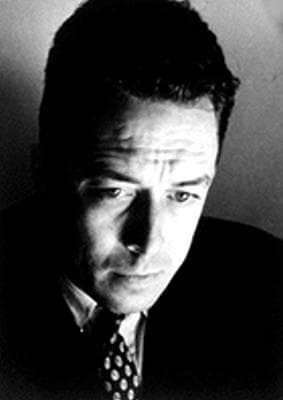
Albert Camus was a French-Algerian philosopher, author, dramatist, and journalist. He was the recipient of the 1957 Nobel Prize in Literature at the age of 44, the second-youngest recipient in history. His works include The Stranger, The Plague, The Myth of Sisyphus, The Fall, and The Rebel.







