“All human beings, as we meet them, are commingled out of good and evil: and Edward Hyde, alone in the ranks of mankind, was pure evil.”
— Dr. Jekyll reflecting on the nature of Hyde and humanity.

Robert Louis Stevenson (1875)
Genre
Fantasy / Mystery / Science Fiction
Reading Time
224 min
Key Themes
See below
Sign in to track this book
A respected doctor's chilling transformation into a monstrous alter-ego reveals the Victorian era's darkest worries about human nature, science, and hidden depravity.
Mr. Utterson, a reserved London lawyer, often walks with his friend and kinsman, Mr. Richard Enfield. On one walk, they pass a sinister-looking door on a pleasant street. Enfield tells a shocking story: he once saw a man, Edward Hyde, trample a young girl without reason. Hyde, an unlikable and deformed man, paid the girl's family with a check signed by a respectable gentleman. This made Enfield suspicious about the connection between Hyde and this benefactor. Utterson is troubled by the tale, as it reminds him of his client, Dr. Henry Jekyll, and a strange clause in Jekyll's will that leaves everything to Edward Hyde.
Disturbed by Enfield's story and Jekyll's will, Utterson investigates Mr. Hyde. He reviews Dr. Jekyll's will, which states that if Jekyll disappears or is absent for more than three months, Hyde inherits everything. Utterson asks Dr. Lanyon, a mutual friend, about Jekyll's recent odd behavior, but Lanyon dismisses Jekyll's scientific work as 'unscientific nonsense.' Determined to see Hyde, Utterson waits by the mysterious door and eventually meets the man. Hyde's appearance immediately fills Utterson with an unexplainable sense of hatred and deformity, confirming his worst fears about Hyde's character.
After his unsettling meeting with Hyde, Utterson visits Dr. Jekyll at his comfortable home. He finds Jekyll looking pale and unwell. Utterson questions Jekyll about Hyde, expressing his worries about the man and the will. Jekyll tries to reassure Utterson, saying he can get rid of Hyde whenever he chooses and asks Utterson to drop the matter. He admits to a strong interest in Hyde but refuses to say more, stating the situation is more complex than it seems. Despite Jekyll's assurances, Utterson remains uneasy, sensing a deeper secret and a dangerous hold Hyde has over his friend.
A year later, a murder occurs in London. Sir Danvers Carew, a respected Member of Parliament and Utterson's client, is brutally beaten to death with a cane. A maid, who saw the attack from her window, identifies the attacker as Mr. Hyde. The police contact Utterson, who recognizes the broken cane found at the scene as one he had given to Dr. Jekyll years ago. Utterson leads the police to Hyde's lodgings in a poor part of Soho, where they find signs of a hasty departure and the other half of the broken cane, confirming Hyde's guilt. Hyde, however, has vanished.
After the murder, Utterson visits Dr. Jekyll, who looks ill and upset. Jekyll claims he has cut all ties with Hyde and shows Utterson a letter supposedly from Hyde, stating his intention to disappear. Jekyll explains he fears for his reputation and denies helping Hyde escape. Utterson takes the letter to his head clerk, Mr. Guest, who is a handwriting expert. Guest notices a striking similarity between Hyde's handwriting and Jekyll's, especially in the slant, suggesting Jekyll forged the letter. Utterson is deeply disturbed by this, suspecting Jekyll is either protecting Hyde or is involved in his crimes.
Weeks pass, and Dr. Jekyll becomes more reclusive, refusing visitors. Utterson tries to visit him but is turned away. He then visits Dr. Lanyon, whom he finds gravely ill, looking as if he has suffered a profound shock. Lanyon refuses to discuss Jekyll, stating he is done with him and will never recover. He dies a few weeks later, leaving Utterson a sealed letter with instructions not to open it until after Dr. Henry Jekyll's death or disappearance. Utterson, respecting Lanyon's wishes, locks the letter away, further deepening the mystery around Jekyll and Hyde.
During one of their usual Sunday walks, Utterson and Enfield pass Jekyll's house. They see Jekyll sitting by a window, looking terribly ill. They call out to him, and Jekyll responds with a faint smile. However, as they speak, a sudden expression of horror and despair contorts Jekyll's face, and he slams the window shut. The sight deeply disturbs both men, especially Utterson, who feels a chill of terror and an unexplainable sense of evil from the house. This incident confirms Utterson's growing fear that Jekyll is in great danger or harbors a terrible secret.
One evening, Jekyll's butler, Poole, visits Utterson, visibly distressed and fearing foul play. He tells Utterson that Jekyll has locked himself in his laboratory for weeks, refusing to see anyone, and communicating only through notes. Poole describes strange sounds from the lab and recounts how the voice speaking to him through the door is not Jekyll's, but a different, strained voice. He also mentions seeing a small, ape-like man rummaging in the lab. Convinced that Jekyll has been murdered and an imposter is living in the lab, Poole asks Utterson to help him investigate.
Utterson and Poole, with other servants, break down the laboratory door. Inside, they find Edward Hyde's body, dressed in Jekyll's clothes, dead on the floor from self-administered poison. There is no sign of Dr. Jekyll. On Jekyll's desk, they find a large packet containing a new will, a note to Utterson, and a confession from Jekyll. Utterson instructs Poole to call the police but first decides to read the documents, hoping to finally understand the horrifying truth behind the strange case of Dr. Jekyll and Mr. Hyde.
Utterson first reads Dr. Lanyon's sealed narrative. Lanyon recounts receiving an urgent, bizarre letter from Jekyll, asking him to retrieve specific chemicals and a phial from Jekyll's laboratory and await a messenger. The messenger, Mr. Hyde, arrives and, after mixing the chemicals, drinks the concoction in front of a horrified Lanyon. Lanyon describes seeing Hyde's agonizing transformation into Dr. Jekyll. This shocking sight, revealing Jekyll's monstrous secret, explains Lanyon's subsequent illness and death. Lanyon's narrative ends with his deep distress and disbelief at the scientific heresy he witnessed.
Finally, Utterson reads Dr. Jekyll's full confession. Jekyll explains his belief that humanity has two distinct natures, good and evil, and his goal to separate them. He developed a potion that allowed him to transform into Edward Hyde, a pure embodiment of his evil side, free from conscience. Jekyll initially enjoyed the freedom Hyde offered, but Hyde grew stronger and more depraved with each transformation, committing more heinous acts, including the murder of Sir Danvers Carew. Jekyll found it harder to control Hyde, and eventually, the transformations began to occur spontaneously, without the potion, and he struggled to return to his original form.
Jekyll's confession continues, detailing his desperate attempts to stop Hyde. He reveals that the initial supply of the transforming salt ran out, and later batches from chemists were impure and ineffective. He was trapped, unable to create the antidote to reverse the spontaneous transformations into Hyde. The final transformation was permanent, and he wrote his confession as Hyde, knowing that his existence as Jekyll was over. The story concludes with the implication that Hyde, facing capture and unable to revert to Jekyll, chose to take his own life, thereby ending the tortured existence of both personalities.
The Protagonist
Utterson begins as a rational skeptic but is gradually forced to confront the limits of his understanding and the darker aspects of human nature, though he never fully grasps the full, horrific truth until the very end.
The Protagonist/Antagonist (as Hyde)
Jekyll descends from a respected scientist into a tormented soul, losing control over his evil alter ego and ultimately being consumed by it.
The Antagonist
Hyde rapidly grows in power and malevolence, eventually overpowering and consuming Jekyll entirely, leading to both their deaths.
The Supporting
Lanyon, initially dismissive of Jekyll's 'balderdash,' is utterly shattered and killed by the horrifying truth of Jekyll's experiments.
The Supporting
Enfield remains largely static, serving as a catalyst and witness to early events.
The Supporting
Poole's concern for Jekyll grows into terror, culminating in his desperate plea to Utterson to uncover the truth.
The Mentioned
Carew's role is primarily as a victim, serving as a catalyst for the plot's escalation.
The Supporting
Guest provides a pivotal clue without being fully aware of its implications.
This is the central theme, exploring the inherent good and evil within every person. Dr. Jekyll's experiment tries to separate these two aspects, believing that by isolating his 'evil' side as Hyde, he can purify his 'good' side. However, the novel shows that these two forces are closely linked and that suppressing one only strengthens the other. Jekyll's struggle is a metaphor for the universal human battle against temptation and darker impulses, showing how indulging in evil can lead to its dominance, as seen in Hyde's increasing power and malice after the Carew murder.
“Man is not truly one, but truly two.”
Victorian society valued reputation and outward appearances greatly. Dr. Jekyll, a respected gentleman, carefully maintains his public image while secretly indulging in depraved acts as Hyde. The novel exposes the hypocrisy of this societal emphasis, where the 'respectable' facade often hides a darker, secret life. Utterson's concern throughout the story focuses on protecting Jekyll's reputation, showing how social standing could overshadow moral truth. The contrast between Jekyll's elegant home and Hyde's squalid lodging further highlights this theme.
“I had always been a Jekyll, but I was also a Hyde.”
The novel explores the ethical implications of scientific experimentation, especially when it goes beyond natural law and morality. Dr. Jekyll's ambition to tamper with the fundamental nature of humanity is presented as a dangerous overreach of scientific inquiry. His creation of Hyde is a perversion of science, leading to destruction rather than progress. Dr. Lanyon's horror at seeing the transformation emphasizes that some knowledge is best left undisturbed, and that scientific advancement without ethical consideration can have devastating results, as seen in the tragic end of both Jekyll and Hyde.
“The most racking pangs succeeded: a grinding in the bones, deadly nausea, and a horror of the spirit that cannot be exceeded at the hour of birth or death.”
The story shows how evil, once unleashed and indulged, has a self-perpetuating and corrupting effect. Hyde, initially a smaller, less developed being, grows stronger and more dominant with each transformation and each act of depravity. Jekyll finds it increasingly difficult to control Hyde, and eventually, the transformations become spontaneous, meaning evil has completely taken over. The murder of Sir Danvers Carew is a key moment, showing Hyde's escalating brutality and Jekyll's diminishing ability to resist his darker self, ultimately leading to Jekyll's complete subjugation.
“My devil had been long caged, he came out roaring.”
The use of letters and confessions to reveal the truth.
The novel primarily employs a third-person limited perspective through Utterson, but the climax is revealed through two first-person documents: Dr. Lanyon's narrative and Dr. Jekyll's full statement. This epistolary device allows Stevenson to withhold critical information and maintain suspense, only unveiling the supernatural truth in the final chapters. It also provides intimate, unfiltered insight into the characters' inner turmoil and scientific motivations, making the revelations more impactful and personal. This shift in perspective adds layers of depth and authenticity to the horrifying conclusion.
The physical representation of secrecy, transformation, and hidden evil.
The mysterious door, first described by Enfield, serves as a potent symbol. It is the entrance to Hyde's hidden world and Jekyll's laboratory, representing the threshold between respectability and depravity, and the secretive nature of Jekyll's experiments. The laboratory itself, attached to Jekyll's respectable house but accessible through a separate, neglected entrance, symbolizes the hidden, 'back-door' access to Jekyll's suppressed desires. It is the place of forbidden knowledge and monstrous creation, a physical manifestation of the duality within Jekyll and the secrecy that shrouds his dark activities.
Jekyll's initial attempts to deceive Utterson and himself.
While not a full unreliable narrator, Jekyll's early interactions with Utterson, where he reassures him about Hyde and presents a forged letter, introduce an element of deception that shapes the lawyer's understanding. Jekyll actively tries to control the narrative and conceal the truth, both from Utterson and from himself. This creates dramatic irony and suspense, as the reader (along with Utterson) struggles to piece together the truth from partial and misleading information, only to have the full, shocking reality revealed in the confessions.
Early clues and unsettling details that hint at the coming horror.
Stevenson masterfully uses foreshadowing throughout the narrative. Enfield's initial story of Hyde's cruelty, Utterson's immediate sense of revulsion upon meeting Hyde, and the peculiar clause in Jekyll's will all serve as early indicators of the dark and unnatural connection between the two men. Lanyon's growing illness and refusal to speak of Jekyll, and the incident at the window where Jekyll's face briefly transforms, create an escalating sense of dread and anticipation, preparing the reader for the shocking revelations of the final confessions.
“All human beings, as we meet them, are commingled out of good and evil: and Edward Hyde, alone in the ranks of mankind, was pure evil.”
— Dr. Jekyll reflecting on the nature of Hyde and humanity.
“I learned to recognise the primitive duality of man; I saw that, of the two natures that contended in the field of my consciousness, even if I could rightly be said to be either, it was only because I was radically both.”
— Dr. Jekyll's scientific and philosophical realization about human identity.
“If I am the chief of sinners, I am the chief of sufferers also.”
— Dr. Jekyll's tormented confession in his final statement.
“It was on the moral side, and in my own person, that I learned to recognise the thorough and primitive duality of man; I saw that, of the two natures that contended in the field of my consciousness, even if I could rightly be said to be either, it was only because I was radically both.”
— Dr. Jekyll's explanation of his initial scientific motivation.
“Man is not truly one, but truly two.”
— Dr. Jekyll's core thesis that led to his experiments.
“He is not easy to describe. There is something wrong with his appearance; something displeasing, something downright detestable. I never saw a man I so disliked, and yet I scarce know why.”
— Mr. Enfield's description of Mr. Hyde to Mr. Utterson.
“Hence it came about that I concealed my pleasures; and that when I reached years of reflection, and began to look around me and to critically examine my life, I was already plunged deep in the sea of libidinousness.”
— Dr. Jekyll's admission of his youthful indulgences and their impact.
“And this again shows the difference between them; for Jekyll was no pure evil, and Hyde no pure good.”
— A reflection on the distinct moral essences of Jekyll and Hyde.
“I had but to drink the cup, and it was done. A moment of nausea, an agony of the most dreadful shuddering, and the potion had done its work, and I was Hyde.”
— Dr. Jekyll describing his first transformation into Hyde.
“The problem of my life was how to reconcile my two consciences.”
— Dr. Jekyll explaining the core conflict he sought to resolve with his experiments.
“My devil had been long caged, he came out roaring.”
— Dr. Jekyll reflecting on Hyde's escalating evil after long suppression.
“He had an approved tolerance for others; sometimes wondering, almost with envy, at the high pressure of spirits involved in their misdeeds.”
— Description of Mr. Utterson's character and his perspective on human flaws.
“I found it hard to reconcile with my notions of Jekyll's character.”
— Mr. Utterson's internal struggle to understand the connection between Jekyll and Hyde.
“It was Hyde, after all, and Hyde alone, that was guilty.”
— Dr. Jekyll's attempt to rationalize his actions and separate himself from Hyde's crimes.
Ready to see how well you understood this book? Take our interactive quiz with 10 questions.
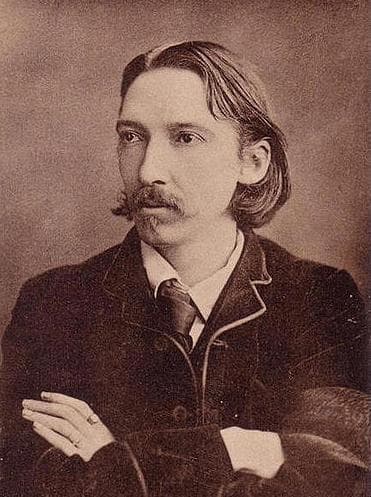
Robert Louis Stevenson was a Scottish novelist, essayist, poet and travel writer. He is best known for works such as Treasure Island, Strange Case of Dr Jekyll and Mr Hyde, Kidnapped and A Child's Garden of Verses.







