“For a long time I was a little girl, a daughter, a sister, a friend, a lover. I was a girl who had once been a girl who had once been a girl. And then I was a woman.”
— Ava reflecting on her life and coming of age.

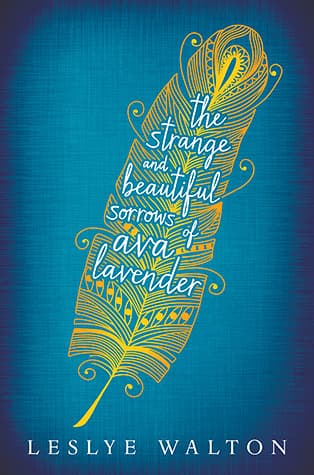
Leslye Walton (2014)
Genre
Fantasy / Historical Fiction / Young Adult / Romance
Reading Time
6-7 hours
Key Themes
See below
Sign in to track this book
Born with wings into a family cursed by love, a young woman's search for acceptance takes a dangerous turn when a devout boy believes she is an angel, leading to a violent Summer Solstice where feathers and rain meet human hearts.
The story starts by showing the Roux family's unique background, especially their women, who often have unusual and devastating romantic attachments. Ava Lavender, the narrator, tells of the generations before her, beginning with her great-grandmother, a French baker who fell in love with a talking bear. This sets the magical realism tone for their lives and hints at Ava's own strange existence. The family's history is marked by a series of unfortunate loves, each adding to a shared sadness and a sense of destined romantic bad luck. This introduction highlights the inherited nature of their 'foolish love' and the magical parts of their ordinary lives in the Pacific Northwest.
Ava Lavender is born with fully formed, feathered wings, a clear sign of her family's magical background. Her mother, Viviane, a quiet woman scarred by her own tragic love for a lighthouse keeper, raises Ava and her twin brother, Henry, alone in their old, creaky house. Ava's wings are a constant source of wonder and discomfort, making her an outsider. She spends her early years hidden, her wings a secret, which makes her long for connection and understanding while also making her aware of her difference. Her childhood is marked by quiet longing and a strong connection to nature, especially the birds she feels a bond with.
When Ava and Henry are teenagers, Viviane decides to move the family to the small, isolated town of Grimsby, where she opens a bakery. This move is a turning point, pushing Ava and Henry out of their secluded life and into a community. Henry quickly adjusts and finds friends, but Ava struggles to hide her wings, often wearing cloaks and staying indoors. The bakery becomes a central place where townsfolk gather, and Ava watches human interactions and relationships from a distance. The move also introduces her to local superstitions and the community's general distrust of outsiders, especially those as unusual as the Roux women.
In Grimsby, Ava meets the Sorrows family, a very religious group. The son, Nathaniel Sorrows, immediately becomes interested in Ava. He is a young man driven by religious passion and a strict reading of the Bible. When he sees Ava's wings, he immediately believes she is an angel sent from God, a divine messenger meant for him. This misunderstanding leads to a dangerous obsession. Nathaniel's devotion to Ava is not earthly love but spiritual zeal, seeing her as a symbol rather than a person. His intensity makes Ava uncomfortable, but she is also drawn to the idea of being seen, even if it is through a warped view.
As Ava deals with life in Grimsby, she develops a crush on a local boy named Jack. This is her first experience with romantic interest, a normal teenage wish to be seen and loved for who she is, wings and all. However, her new feelings are constantly overshadowed by Nathaniel Sorrows's increasingly intense and possessive devotion. Nathaniel's 'love' for Ava is not returned and comes from delusion, creating a suffocating pressure that isolates Ava further. She longs for a simple, human connection, but her unique physical trait and Nathaniel's strong belief prevent it, trapping her between her wish for normalcy and her extraordinary reality.
Nathaniel's obsession with Ava grows, fueled by his firm belief that she is an angel. He starts to follow her, sending her strange, religious gifts and declarations of his 'sacred love.' He sees every interaction, every glance, as a sign from God confirming her divine nature and his role as her earthly keeper. His actions become more intrusive and frightening, ending in him trying to 'purify' her, believing she needs to be cleansed of her human flaws to fully accept her angelic status. This escalation shows the danger of misinterpreting the unique and beautiful through a narrow, rigid view, turning wonder into a threat.
The Summer Solstice celebration arrives, a big event in Grimsby marked by bonfires, dancing, and a general loosening of rules. This night mixes pagan tradition and community gathering, creating an atmosphere that is both festive and subtly unsettling. Ava, despite usually being reclusive, attends the celebration, hoping to experience some normalcy and perhaps a connection with Jack. However, the festive air is thick with tension for Ava, as she knows Nathaniel will be there, watching her. The Solstice, a time of light and renewal, becomes for Ava a night full of dread, a setting for the inevitable confrontation with Nathaniel's growing madness.
During the peak of the Summer Solstice celebration, Nathaniel Sorrows, consumed by his religious fervor and twisted love, confronts Ava. Believing he must 'free' her from her human form to fully realize her angelic potential, he tries to forcibly remove her wings. This brutal act is a horrific end to his obsession, a violent attack born from delusion and misguided reverence. The scene is chaotic and terrifying, with Ava fighting for her life and her identity. The attack is a devastating turning point, physically and emotionally scarring Ava and destroying any remaining innocence she had about the world and human nature.
Ava survives Nathaniel's attack, but her wings are permanently damaged, and she is deeply traumatized. The physical wounds heal, but the emotional scars are deep, strengthening her belief in the danger of her uniqueness. The attack forces her to face the darker side of human nature and the destructive power of obsession. Her family supports her, providing comfort, but the incident leaves a lasting mark on Ava's spirit. She withdraws further, dealing with the violation and the loss of what her wings represented, both a burden and a part of her identity. The event changes her understanding of love, desire, and how the world sees the extraordinary.
After Ava's trauma, Viviane, her usually quiet mother, finally speaks and shares the full, heartbreaking story of her own love for the lighthouse keeper. She reveals the depth of her grief and the reasons for her emotional withdrawal. This confession is a moment of deep connection between mother and daughter, as Ava finally understands her mother's sorrow and how much the Roux family's cursed love affects them. Viviane's story gives Ava a new perspective on her own pain, showing her that she is not alone in her suffering and that the legacy of love and loss runs deep in their bloodline.
Slowly, Ava begins to heal and accept herself. While her wings may never fully recover, she starts to understand that her uniqueness is not a curse but a part of who she is. She grapples with the complexities of love — its beauty, its pain, and its potential for both creation and destruction. The trauma forces her to mature, to look inward, and to define her own path rather than being defined by her family's history or what others think. She acknowledges the 'sorrows' that are her birthright but also recognizes her ability to shape her own future, seeking a love that is genuine and accepting, not obsessive or conditional.
The story ends with Ava, now older and wiser, reflecting on her life and choices. She has found a quiet peace, embracing her identity and the Roux family's legacy. While the scars of her past remain, they no longer define her. She has learned to navigate the world with her unique perspective, understanding that love, in all its strange and beautiful forms, is a part of the human experience. The ending suggests a future where Ava continues to live authentically, perhaps finding a love that is truly her own, one that goes beyond her ancestors' tragic patterns and celebrates her extraordinary self.
The Protagonist
Ava evolves from a sheltered, self-conscious girl longing for normalcy to a resilient woman who accepts her unique identity and the complexities of love and sorrow.
The Supporting
Viviane transitions from a withdrawn, silent figure to a mother who finally shares her painful past, allowing for deeper connection and understanding with her daughter.
The Supporting
Henry remains a steadfast, supportive figure, representing normalcy and unconditional familial love amidst the family's magical peculiarities.
The Antagonist
Nathaniel's character arc is a descent into dangerous, delusional obsession, culminating in a violent act driven by his twisted faith.
The Mentioned
Erlend's story is static, serving as a catalyst for Viviane's character and a foundational element of the family's tragic legacy.
The Supporting
Emmaline's story, told in retrospect, establishes the magical and romantic legacy of the Roux family, remaining a foundational, fixed point.
The Supporting
Maman's story, like Emmaline's, serves to further illustrate the generational pattern of the Roux family's peculiar and tragic loves, providing context for Ava's own experiences.
The Supporting
Jack serves as a brief, positive romantic interest for Ava, representing a potential for normalcy that is ultimately thwarted by external forces.
The novel deeply looks at the many sides of love, comparing true affection with dangerous obsession. The Roux women's inherited 'foolish love' often brings sadness, but it is Nathaniel Sorrows's twisted, religiously driven obsession with Ava that causes the most harm. He does not love Ava for who she is, but for what he believes she represents (an angel), leading to his violent attempt to 'free' her wings during the Summer Solstice. This shows how love, when warped by delusion and possessiveness, can become a force of great harm, sharply contrasting with the true love Ava longs for and the quiet, lasting love within her family.
“For the Roux women, foolish love was a birthright. And for Ava, it was a prophecy.”
Ava's wings are the main symbol for her struggle with identity and belonging. They physically set her apart, making her an outsider from the 'normal' world and fueling her desire for acceptance. Her journey is about accepting her unique self, moving from hiding her wings to understanding that they are a part of her. The conflict between her desire to fit in and her inherent difference is a constant tension. The novel suggests that true belonging comes not from conforming, but from self-acceptance and finding others who can see and love her for all of who she is, wings and all.
“I was born with wings. And that, I suppose, made me different.”
The Roux family history is a story of inherited 'sorrows' and unusual loves, suggesting a generational pattern or curse. Each woman's story, from Emmaline's love for a bear to Viviane's grief over the lighthouse keeper, adds to a shared legacy that Ava must deal with. This theme explores how past experiences, especially those involving love and loss, can shape the lives of future generations, influencing their choices and views. Ava's challenge is to understand this legacy without being completely defined by it, to break free from the cycle of sorrow while embracing the unique magic of her family line.
“My family history was a tapestry of strange and beautiful sorrows.”
The novel smoothly blends magical elements into an otherwise realistic setting, typical of magical realism. Ava's wings, the talking bear, and other subtle wonders are presented as normal occurrences within the Roux family's world, challenging the reader's idea of what is real. This blend allows the story to explore deep human emotions and experiences — love, grief, identity — through an extraordinary lens. The magic is not fantasy escapism but a heightened reality that reflects the characters' inner lives and emotional states, making their sorrows and joys more vivid and moving.
“In our family, we understood that the impossible was not only possible but likely.”
Ava Lavender narrates her own story, looking back on her past experiences.
The entire novel is narrated by Ava Lavender in the first person, but crucially, it's a retrospective narration. This means Ava is recounting her story from a point in the future, after the events have unfolded. This allows for a reflective, often melancholic tone, as she can offer insights and wisdom gained from experience. It also creates a sense of foreboding, as the narrator knows the outcome of the events she is describing, particularly regarding Nathaniel Sorrows's obsession, building suspense for the reader who is unaware of the climax.
Ava's wings symbolize her uniqueness, freedom, and vulnerability.
Ava's wings are the central symbolic image of the novel. Initially, they represent her profound difference and isolation, making her an outcast. They also symbolize a potential for freedom and escape, a longing for something beyond her confined existence. However, they also make her incredibly vulnerable, as evidenced by Nathaniel's attack. The damage to her wings after the attack symbolizes her trauma and the loss of innocence, but her eventual acceptance of them, even imperfect, signifies her coming to terms with her unique identity and resilience.
The narrative includes detailed accounts of past generations of the Roux family.
Before delving fully into Ava's own story, the novel dedicates significant portions to recounting the peculiar and often tragic love stories of Ava's female ancestors: her great-grandmother, grandmother, and mother. This device establishes the 'curse' or 'legacy' of 'foolish love' that runs through the Roux women, providing crucial context for Ava's own experiences. It creates a sense of destiny and inherited sorrow, making Ava's struggles feel like a continuation of a long-standing family pattern, while also highlighting the magical realism inherent in their lineage.
Subtle hints and prophecies throughout the narrative suggest future tragic events.
The novel employs pervasive foreshadowing, particularly through the narrator's retrospective voice and the recurring theme of 'foolish love' as a Roux family birthright. Early mentions of the family's tragic romantic history and the narrator's melancholic tone hint at the sorrow to come. More specifically, Nathaniel Sorrows's early, intense declarations and his religious fanaticism subtly but consistently build towards his eventual violent act, creating a palpable sense of dread and inevitability around the Summer Solstice celebration. This technique heightens suspense and emphasizes the idea of a predetermined fate.
“For a long time I was a little girl, a daughter, a sister, a friend, a lover. I was a girl who had once been a girl who had once been a girl. And then I was a woman.”
— Ava reflecting on her life and coming of age.
“Love, like a chicken, comes home to roost.”
— A colloquial saying often repeated by the Lavender women, particularly Ava's grandmother.
“We are all born with a little bit of the wild within us. It is up to us to let it out.”
— A general observation about human nature and the inherent wildness of spirit.
“Some secrets are like birds, they want to fly away.”
— Ava's thoughts on the nature of secrets and their eventual revelation.
“Grief, I’ve learned, is really just love. It’s all the love you want to give but cannot. All of that unspent love gathers in the corners of your eyes, the lump in your throat, and in that hollow part of your chest. Grief is just love with no place to go.”
— Ava's profound understanding of grief after a loss.
“The world was a book, and those who did not travel read only a page.”
— A sentiment about the importance of experience and exploration, often attributed to the family's adventurous spirit.
“It was a strange and beautiful sorrow, the kind that made you want to cry and sing at the same time.”
— Describing a complex emotional state, central to the book's title.
“People are like birds. Some are meant to fly, and some are meant to stay in the nest.”
— A reflection on different people's destinies and desires.
“There are some things you can't outrun, no matter how fast you fly.”
— A realization about inescapable aspects of life or fate.
“Sometimes the most beautiful things are the ones that hurt the most.”
— A common theme throughout the story, often related to love and loss.
“We are all made of stories, and our stories are made of us.”
— Ava's understanding of how personal narratives shape identity.
“Love is a dangerous thing. It can make you do foolish things, and it can break your heart.”
— A cautionary thought about the power and risks of love.
“The past is never truly gone; it merely waits for us to remember it.”
— A reflection on memory and the enduring presence of history.
“Sometimes, the quietest people have the loudest stories.”
— An observation about hidden depths and untold narratives.
Ready to see how well you understood this book? Take our interactive quiz with 10 questions.

Biography coming soon.







