“There are some things you can't outrun, no matter how fast you are.”
— Early in the book, reflecting on the past and secrets.


Jodi Picoult (2013)
Genre
Literary Fiction
Reading Time
1000 min
Key Themes
See below
Sign in to track this book
A baker grappling with her own grief confronts the unimaginable when an elderly friend, a seemingly kind man, confesses his Nazi past and asks her to help him die, forcing her to choose between justice and mercy.
Sage Singer, a young, introverted baker in a small New Hampshire town, works nights to avoid social interaction. She copes with her mother's death and a disfiguring facial scar. Her only social outlet is a grief support group, where she meets Josef Weber, a kind, elderly German man. Josef, a retired teacher, begins visiting Sage at her bakery, buying baked goods and talking. Despite their age difference and Sage's initial reluctance, they become friends. Josef often shares stories and appreciates her company, slowly breaking down Sage's emotional walls.
One day, Josef makes a shocking confession to Sage. He reveals he was a Nazi SS officer during World War II, responsible for the deaths of many Jewish people, including Sage's own grandmother, Minka. He admits to his horrific past, detailing his involvement in Auschwitz atrocities, and expresses deep guilt and a desire for atonement. Josef then makes an extraordinary request: he asks Sage, who is Jewish, to kill him. He wants to die by her hand, believing it would be justice and a way to pay for his sins. This revelation shatters Sage's view of him and causes a moral and emotional crisis.
Sage is deeply conflicted by Josef's request. The idea of taking a life, even a former Nazi's, is terrible to her, yet she feels a strange pull towards justice. She confides in her sister, Darcy, and her grandmother, Minka, a Holocaust survivor, about Josef's confession, though she omits his request for her to kill him. This prompts Minka to begin sharing her own harrowing experiences in Auschwitz, a topic she had largely avoided for decades. As Minka recounts the horrors she endured, Sage begins to understand the profound impact of the Holocaust on her family and the broader Jewish community, making Josef's request even more complex.
Minka begins to tell Sage the full, agonizing story of her youth during the Holocaust. She describes her life in the Łódź Ghetto with her family, including her younger sister, Ania. They faced starvation, disease, and constant fear, witnessing terrible cruelty. Eventually, they were transported to Auschwitz. Minka recounts the brutal selection process, the loss of her parents, and the daily struggle for survival alongside Ania. She details the horrific conditions, the forced labor, the constant threat of death, and the psychological torment from SS guards, including a specific officer named Franz, whose cruelty left a lasting scar.
In Auschwitz, Minka's artistic talent becomes a means of survival. An SS officer, seeing her skill, forces her to create a fairytale book for his daughter. This terrifying task puts her in a dangerous position, but it also offers a temporary break from the hardest labor and the gas chambers. She secretly puts hidden messages and acts of defiance in her artwork, using her creativity to maintain humanity and resistance. Ania, her sister, also plays a crucial role in Minka's survival, offering emotional support and sharing meager resources, showing the enduring power of sisterly love amid unimaginable suffering.
Adam, a federal agent from the Department of Justice's Office of Special Investigations (OSI), learns about Josef Weber and his suspected Nazi past. He begins a thorough investigation, driven by a personal commitment to bringing former Nazis to justice. Adam interviews Sage, who provides information about Josef's confession, though she remains vague about the details of his request. He meticulously gathers evidence, cross-referencing archives and survivor testimonies, determined to build an undeniable case against Josef. Adam represents the legal demand for accountability for Holocaust perpetrators, contrasting with Sage's more personal and moral dilemma.
As Sage continues to hear Minka's harrowing stories, she grapples with the concept of justice. Is it through legal prosecution, as Adam pursues? Is it through personal vengeance, as Josef seems to seek? Or is it something else entirely? Sage feels the weight of history and her grandmother's suffering, making Josef's request even more compelling. She visits Josef multiple times, trying to understand his motives and her own feelings. The line between punishment, forgiveness, and mercy blurs for her, and she questions whether she has the right, or even the moral obligation, to fulfill his wish, knowing the legal and ethical repercussions.
Sage thinks about the difference between forgiveness and revenge. Josef claims he seeks atonement, but is his request for death a form of twisted self-punishment, or a way to escape justice on his own terms? Sage worries about the spiritual and psychological toll it would take on her to kill another human being, regardless of their past. She reflects on the millions of lives lost in the Holocaust and whether her act would truly honor their memory or simply reduce her to the level of her grandmother's tormentors. The decision weighs heavily on her conscience, forcing her to confront her deepest beliefs about morality and humanity.
Minka finally reveals the most painful and complex part of her story to Sage: her relationship with Franz, the SS officer who had her draw the fairytale book. She confesses that, despite the power imbalance and the horrific circumstances, she fell in love with him. This revelation deeply disturbs Sage, who struggles to reconcile her grandmother's love for a Nazi with the atrocities he committed. Minka explains the complexities of survival, the psychological manipulation, and the desperate search for humanity in an inhumane world. This admission challenges Sage's simple understanding of good and evil, victim and perpetrator.
After much internal struggle and processing Minka's full, complicated story, Sage makes her decision regarding Josef. She visits him, bringing a cake. While the exact details of her action are somewhat ambiguous, the implication is that she does fulfill his request, though in a way that allows her to maintain some of her own moral integrity. This act, while legally dangerous, is presented as Sage's complex form of justice, influenced by her understanding of her grandmother's suffering, the weight of history, and her own deeply personal interpretation of right and wrong. The narrative suggests she finds a way to deliver justice without descending into pure vengeance.
In the aftermath, Adam continues his investigation into Josef Weber, eventually discovering evidence that confirms Josef's identity as a former SS officer. While the specific circumstances of Josef's death remain legally ambiguous, the community is left to grapple with the revelations about their beloved former teacher. Sage, having confronted the darkest parts of human history and her own family's past, begins to heal. Her scar, once a source of shame, now feels like a mark of resilience. She continues her baking, but with a renewed sense of purpose and connection, having navigated profound moral challenges and come to terms with the complex legacy of her heritage.
The Protagonist
Sage evolves from a solitary, scarred individual hiding from the world to a woman who confronts historical trauma and makes a deeply personal, morally complex choice about justice and vengeance.
The Antagonist/Catalyst
Josef's arc is less about development and more about revelation; he transitions from a beloved community figure to a confessed war criminal seeking a specific form of penance.
The Supporting/Primary Storyteller
Minka moves from a silent bearer of trauma to a powerful storyteller, finding a form of catharsis and imparting crucial historical and personal truths to her granddaughter.
The Supporting
Adam remains steadfast in his mission to bring former Nazis to legal justice, serving as a foil to Sage's more ambiguous pursuit of justice.
The Supporting/Mentioned
Ania's arc is cut short by the Holocaust, but her memory profoundly shapes Minka's survival and narrative.
The Supporting
Darcy remains largely static, serving as a stable, if sometimes uncomprehending, presence in Sage's life.
The Mentioned/Antagonist
Franz's 'arc' is revealed through Minka's flashbacks, showcasing the twisted dynamics of power and survival in the camps.
The novel deeply explores the complex interplay between justice, vengeance, and forgiveness in the context of historical atrocities. Sage grapples with Josef's request to kill him, questioning whether it's an act of justice for his crimes, a personal vengeance, or a form of atonement he seeks. Adam represents legal justice, while Minka's story complicates the notion, particularly with her confession about Franz. The book forces readers to consider if true justice can ever be achieved for such immense suffering, and where the line between punishment and mercy lies, especially decades after the fact.
“How do you mete out justice when the crime is a galaxy away?”
Storytelling is central to the narrative, particularly through Minka's vivid recounting of her Holocaust experiences. Her stories not only educate Sage but also serve as a means of bearing witness, preserving memory, and confronting trauma. The act of telling and listening allows Minka to process her past and Sage to understand her heritage. The book emphasizes that stories, both personal and historical, shape identity, transmit culture, and hold perpetrators accountable, ensuring that the past is not forgotten or repeated. The fairytale book Minka creates in Auschwitz also embodies this theme, carrying hidden messages and a testament to survival.
“A story is not a thing. A story is an act. It is a thing you do.”
The novel explores the nuanced and often uncomfortable nature of evil, challenging simple interpretations. Josef Weber, the seemingly kind elderly man, reveals himself to be a monstrous SS officer, forcing Sage and the reader to confront how evil can reside within seemingly ordinary individuals. Minka's confession about Franz further complicates this, showing that even in the most horrific circumstances, human emotions, including love, can manifest in unexpected and disturbing ways. The book suggests that evil is not always a clear entity but can be intertwined with human frailty, survival instincts, and psychological manipulation, making it all the more terrifying.
“How could a man who loved fairytales also be the monster who killed children?”
Sage's journey is deeply tied to her Jewish identity and the inherited trauma of the Holocaust, even though she didn't experience it directly. Her mother's death and her facial scar are metaphors for the deeper, historical wounds she carries. Minka's stories force Sage to confront her heritage and the immense suffering of her people, shaping her understanding of herself and her place in the world. The novel explores how the past, particularly traumatic history, profoundly influences subsequent generations, affecting their sense of self, their moral compass, and their relationships.
“You don't have to be in a place to be affected by it.”
Minka's detailed recounting of her Holocaust experiences to Sage.
This device is central to the novel, as Minka's vivid and extensive narrative of her time in the Lódz Ghetto and Auschwitz forms a significant portion of the book. It serves multiple purposes: educating Sage (and the reader) about the atrocities, providing historical context for Josef's confession, and revealing the complex psychological and emotional impact of the Holocaust on survivors. Minka's storytelling is not just exposition; it's an act of remembrance and healing, gradually unburdening her and shaping Sage's moral decision-making. The structure allows for a deep dive into the past while grounding the present-day ethical dilemma.
Sage's agonizing choice of whether to kill Josef Weber, a former Nazi.
The core of the novel's plot is the profound moral dilemma faced by Sage: whether to fulfill Josef Weber's request to kill him. This dilemma forces her to weigh personal ethics against historical justice, vengeance, and forgiveness. It's a no-win situation that challenges her deepest values and pushes her to confront the darkest aspects of human nature. This device engages the reader directly in the ethical complexities, preventing easy answers and highlighting the ambiguity inherent in profound moral choices. It's the engine that drives Sage's character development and her investigation into her family's past.
Sage's facial scar, a physical manifestation of her emotional wounds and personal history.
Sage's facial scar, a result of an accident, serves as a powerful symbol throughout the novel. Initially, it represents her feelings of isolation, self-consciousness, and the lingering pain of her mother's death. It's a physical manifestation of her reluctance to engage with the world. As the narrative progresses and Sage confronts the historical scars of her family's past, the scar takes on new meaning. It becomes a testament to her resilience and a connection to the deeper, unseen wounds of her heritage, ultimately transforming from a source of shame to a mark of strength and identity.
The book Minka is forced to draw for an SS officer's daughter in Auschwitz.
The fairytale book that Minka is compelled to illustrate for Franz, an SS officer, is a potent symbolic plot device. On one hand, it represents the perverse normalcy and twisted humanity of the perpetrators, who could demand art amidst genocide. On the other hand, it becomes a tool of survival and subtle resistance for Minka. She secretly embeds messages and a testament to her humanity within its pages. The book highlights the power of art to endure, to communicate, and to maintain a flicker of hope and defiance even in the most dehumanizing circumstances, contrasting innocence with unimaginable evil.
“There are some things you can't outrun, no matter how fast you are.”
— Early in the book, reflecting on the past and secrets.
“Every life has a story, and every story has a truth, even if that truth is sometimes buried deep.”
— Misha, the main character, contemplating the stories people tell themselves.
“Forgiveness is a choice, but it's not always an easy one.”
— Discussing the possibility of forgiving a perpetrator of atrocities.
“How do you tell someone that the person they love, the person who made them feel safe, was a monster?”
— Misha grappling with the revelation about her grandmother's past.
“The greatest evil is not done by evil men, but by men who believe they are doing good.”
— Exploring the mindset of those who committed atrocities during the Holocaust.
“Sometimes the hardest stories to tell are the ones we tell ourselves.”
— Misha reflecting on her own internal struggles and self-deception.
“Justice is not always about punishment. Sometimes it's about remembering.”
— Considering different forms of justice for historical crimes.
“Silence is not the absence of sound; it's the absence of truth.”
— Discussing the impact of keeping secrets and the importance of speaking out.
“You can't erase the past, but you can choose how you live with it.”
— Misha coming to terms with her family's history.
“A storyteller has a responsibility to the truth, even when the truth is ugly.”
— Josef's perspective on the role of a storyteller and bearing witness.
“There are monsters in the world, yes. But there are also heroes. And sometimes, it's hard to tell the difference.”
— Exploring the complexities of human nature and moral ambiguity.
“Grief is a landscape, and you have to learn to navigate it.”
— Reflecting on the enduring impact of loss and trauma.
“The hardest part of being human is learning to forgive yourself.”
— Misha's internal struggle with her own perceived shortcomings and choices.
“When you deny someone's story, you deny their existence.”
— Emphasizing the importance of acknowledging and validating individual experiences.
Ready to see how well you understood this book? Take our interactive quiz with 10 questions.
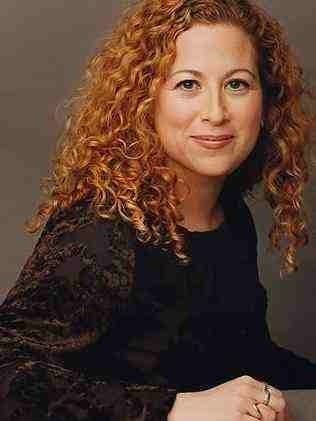
Biography coming soon.







